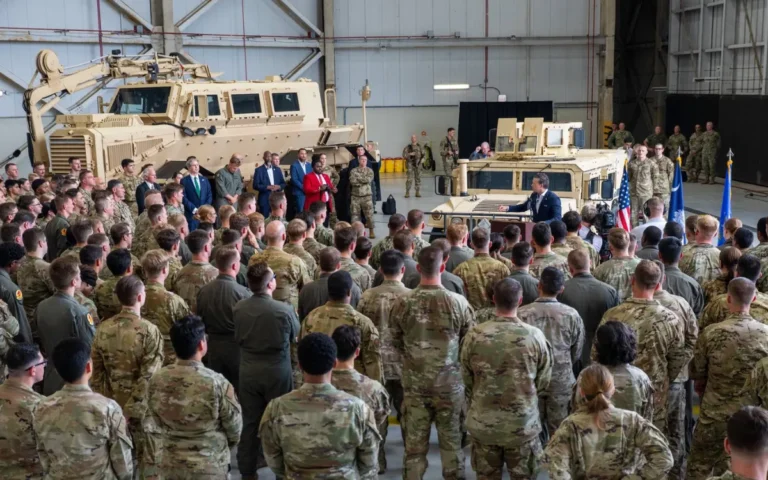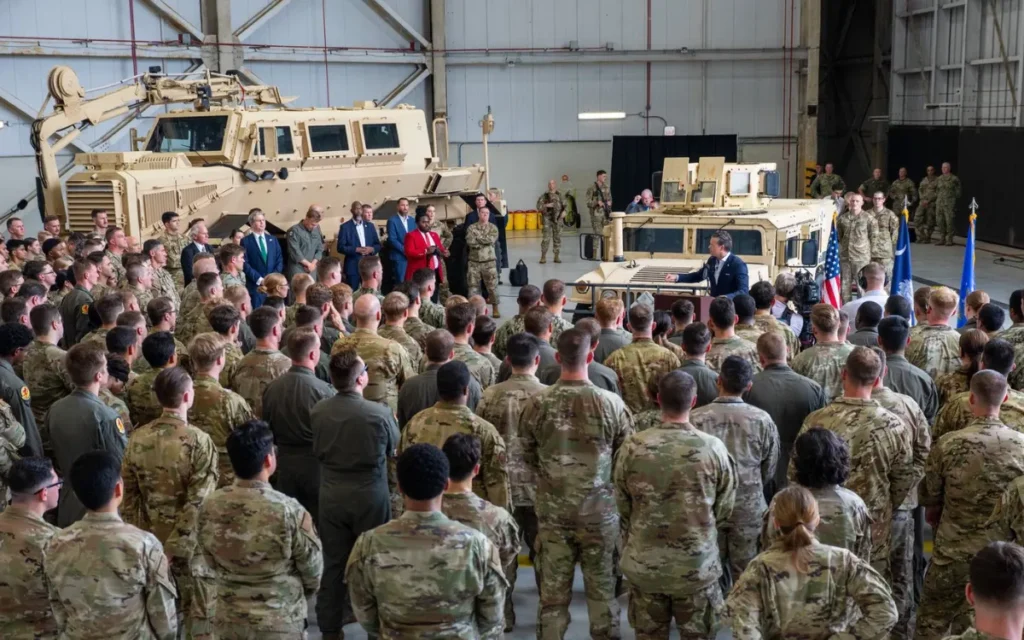

The U.S.-led coalition formally ended its Operation Inherent Resolve mission in Iraq on Wednesday, completing its withdrawal from Erbil Air Base as Washington transitions toward a bilateral defense relationship with Baghdad.
U.S. Central Command (CENTCOM) said American forces and equipment had completed an orderly departure from Erbil, which served as the coalition’s main operational hub and hosted most of the 1,500 U.S. and coalition personnel supporting counter-ISIS operations. American and coalition forces began leaving federal Iraq last October under a withdrawal process agreed by Washington and Baghdad in 2024. The coalition task force remains operational from Jordan and will continue counter-ISIS operations in Syria, while the Pentagon said Washington would provide targeted training and intelligence support to Iraqi forces.
“ISIS no longer poses a systemic threat to Iraq’s national security and Iraqi security forces, including the Peshmerga and other Iraqi Kurdistan Region security forces, now possess the capacity, leadership, and operational independence to unilaterally manage threats to their homeland,” CENTCOM commander Adm. Brad Cooper said.
The withdrawal ends a coalition mission launched in 2014 after ISIS seized large areas of Iraq and Syria. Iraqi Prime Minister Ali al-Zaidi hailed the transition as a new phase defined by Iraqi sovereignty and stronger state institutions, with October 1 designated Sovereignty Day. However, the departure comes as Baghdad seeks to bring weapons under state control. Several powerful Iran-aligned factions that fought ISIS have yet to disarm, while Kataeb Hezbollah described the coalition withdrawal as a step toward “full sovereignty” but also threatened Zaidi’s government. Kurdish military commander Sirwan Barzani separately raised concerns about Kurdistan’s ability to defend its airspace without coalition forces.
The end of Operation Inherent Resolve therefore shifts Iraq’s security challenge rather than resolving it. Iraqi forces now assume primary responsibility for containing any ISIS resurgence while Baghdad faces the politically sensitive task of bringing powerful armed factions under state authority. Washington’s continued training and intelligence support, alongside the coalition’s regional presence, preserves a limited security backstop without maintaining the former mission inside Iraq. Whether Baghdad can consolidate control over armed groups while independently containing ISIS will be an early test of whether the withdrawal strengthens Iraqi sovereignty or exposes new security vulnerabilities. (AFP+EIR)