
Senegal’s debt crisis began with a startling discovery. When the new government opened the books in 2024, public accounts had a far bigger hole than expected. Audits exposed large discrepancies in previously reported public finances. The revelation froze a $1.8 billion IMF program and shut Senegal out of international capital markets. The IMF later estimated public-sector debt at roughly 132 percent of GDP at the end of 2024.
But a debt crisis this deep is no longer settled by numbers alone; it turns on whether a president can work with a parliament he does not control. Senegal’s crisis has become a test of political coordination, institutional discipline, and the ability to restore confidence as the ruling camp fractures from within.
Senegal’s debt crisis has become a test of political coordination, institutional discipline, and the ability to restore confidence as the ruling camp fractures from within
Political Realignment and Fiscal Power
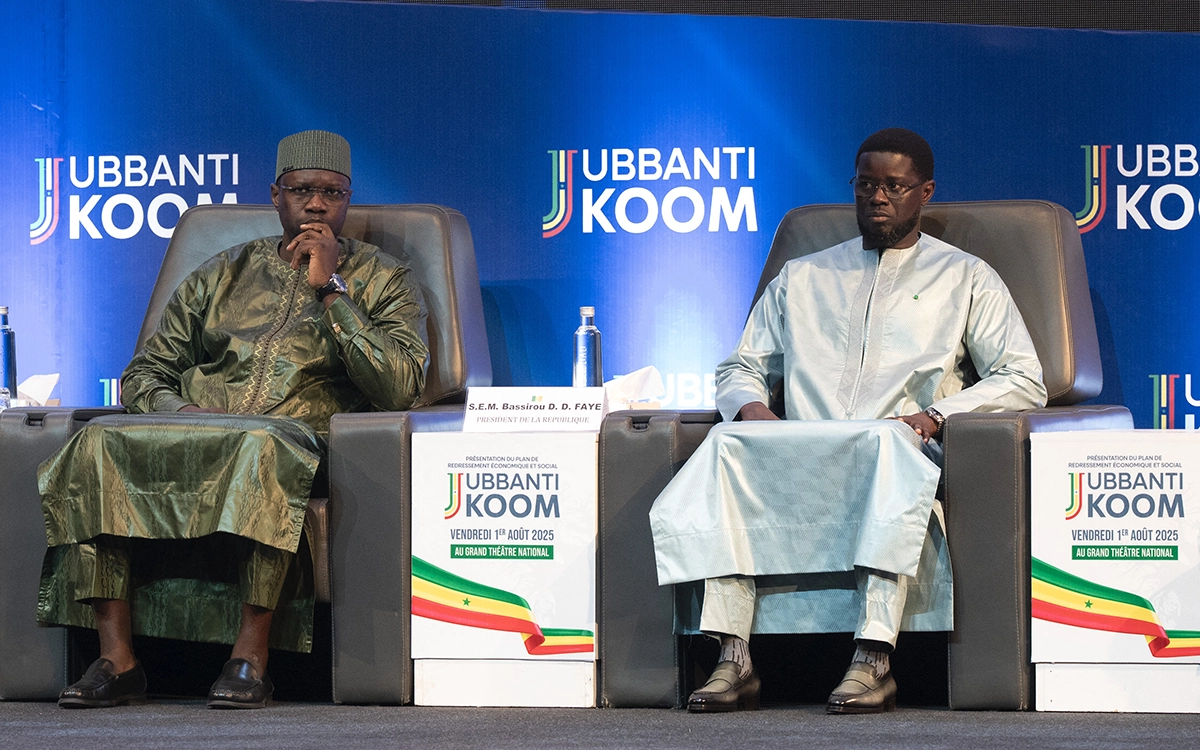
The political context now matters as much as the fiscal data. President Bassirou Diomaye Faye and Ousmane Sonko came to power through a shared anti-establishment project. Sonko had backed Faye in the 2024 election after being barred from running by a defamation conviction, and Faye appointed him prime minister shortly after taking office.
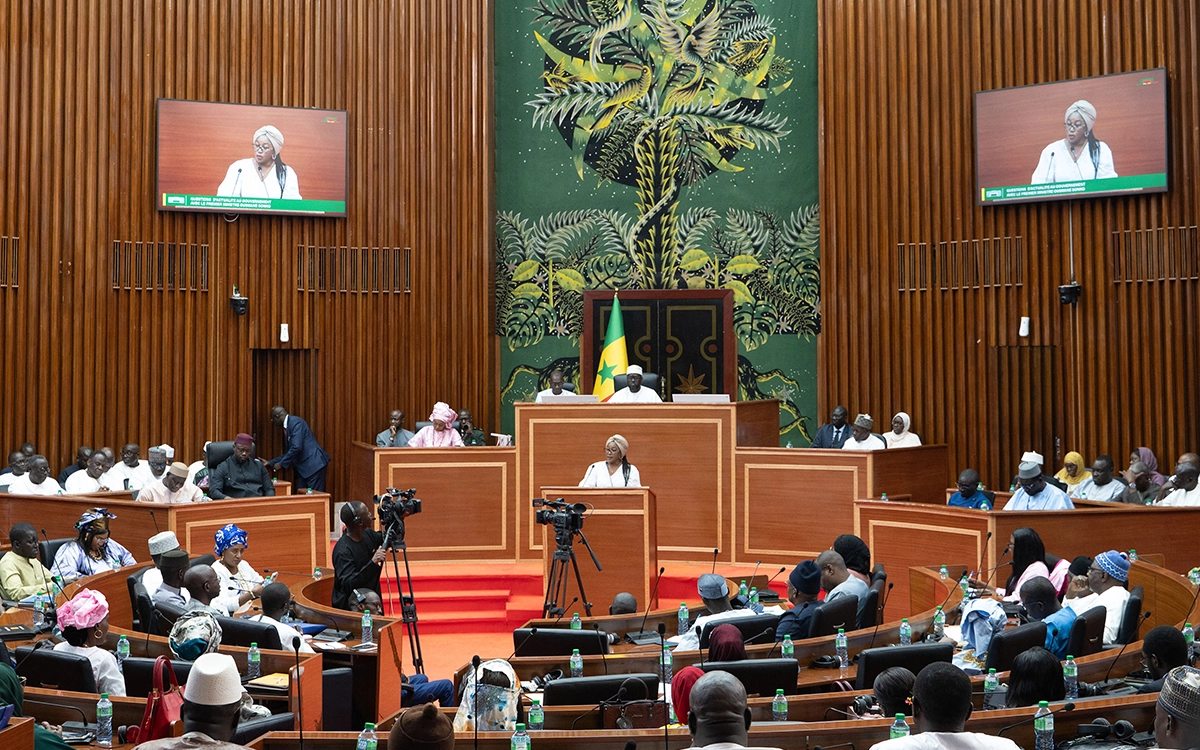
That alliance fractured in May 2026. Faye dismissed Sonko as prime minister and dissolved the government. Days later, lawmakers elected Sonko president of the National Assembly, where his PASTEF party holds 130 of 165 seats. Authority over the debt response is now split between Faye’s presidency and a legislature led by the man he removed.
The divide is both political and economic. Faye has moved toward direct engagement with the IMF to restore fiscal credibility. Sonko has been more skeptical of the process, rejecting debt restructuring and calling it “a disgrace.” For Faye, the priority is financial stabilization; for Sonko, the issue is bound up with sovereignty and political control. This split matters because debt repair cannot be achieved by the executive alone. Negotiating with the IMF, passing a budget, and adjusting subsidies all require a parliament that Sonko now leads.
Debt and Political Authority
Debt management is ultimately political, as governments under fiscal pressure must make decisions on taxation, spending, borrowing, and creditor relations. These decisions require both technical design and political backing. Senegal’s negotiations with the IMF illustrate this challenge. The country is seeking to restore confidence after the discovery of previously unreported liabilities. The challenge is that authority within the ruling movement is no longer concentrated in one political center.
Senegal is seeking to restore confidence after the discovery of previously unreported liabilities. The challenge is that authority within the ruling movement is no longer concentrated in one political center
Faye retains executive authority. Sonko, however, remains PASTEF‘s principal leader and now presides over the National Assembly. That dual structure complicates the government’s ability to present a unified position to creditors. The practical risks are clear. Any IMF deal is widely expected to require cutting Senegal’s costly fuel subsidies, a step Sonko resisted as prime minister. If his Assembly dilutes or delays such measures, Senegal’s commitments will look less credible to the IMF and to bondholders.
Governance Under Strain
The current crisis highlights the link between political cohesion and economic governance. Fiscal reform depends on coordination between the presidency, the cabinet, and the National Assembly. When these institutions share a common direction, implementation becomes easier.
When priorities diverge, execution becomes slower and less predictable. Senegal’s fiscal problems require timely decisions. Delayed budget measures or unclear reform commitments can raise borrowing costs and weaken bondholders’ confidence.
Senegal’s presidency remains institutionally strong. The executive formulates policy and directs government action. Parliament, however, approves budgets, scrutinizes spending, and can influence the pace of reform. Sonko’s election as President of the National Assembly gives him procedural influence, visibility, and leverage over legislative oversight. It also gives PASTEF’s party base a platform outside the executive.
On the other hand, the West African Research Center has reported that Faye has “surrounded himself with people who enable him to fully exercise his functions.” That reflects a broader attempt to consolidate executive authority. This is not only a personnel issue. It affects whether economic policy can be implemented with discipline. A finance ministry may design reforms, but parliament can determine whether those reforms survive the political process.
Institutional Pressure Points
The debt crisis is better understood as a governance stress test than a purely constitutional one. Senegal’s constitutional order remains intact. The deeper question is whether institutions can coordinate effectively under fiscal pressure. Most political systems are designed to manage competition between the government and the opposition. Senegal now faces a more complicated situation: competing centers of influence inside the same governing movement.
That distinction matters because fiscal adjustment requires political consensus. Governments often need to adopt unpopular measures to restore stability. Those measures can fail if senior political actors send conflicting signals. Several observers have described the dispute as a clash between different sources of legitimacy: executive authority on one side and party-based political legitimacy on the other.
This helps explain the institutional risk. Senegal does not lack formal rules. The difficulty is that formal authority and political influence are no longer aligned.
Senegal does not lack formal rules. The difficulty is that formal authority and political influence are no longer aligned
The risks are not abstract. Senegal may need to raise revenue, cut spending, or restructure parts of its debt. Each option carries political costs and could draw resistance from lawmakers answerable to voters, unions, and businesses. Sonko himself highlighted the divide when he declared that “you cannot have PASTEF without PASTEF.” The remark underlined a central challenge: Faye may control the executive, but Sonko still claims influence over the political movement that brought both men to power.
Markets and Credibility
Financial markets judge politics through the lens of policy reliability, and that judgement is already visible in Senegal’s bond prices. The country’s dollar bonds fell to near-record lows in 2026, with its 2033 notes trading near 50 cents on the dollar as the odds of restructuring rose. The deterioration in relations between Faye and Sonko has therefore attracted attention beyond domestic politics.
Senegal’s political tensions have clouded the path to an IMF deal. The concern is not disagreement itself, which democratic systems routinely manage. It is whether the rift weakens the state’s ability to execute economic policy.
This has direct consequences for borrowing costs and the confidence of the IMF and bondholders. For Senegal, restoring credibility will require more than revised fiscal numbers. It will require visible coordination between the presidency, the cabinet, parliament, and financial authorities.
Risk of Paralysis
The greatest risk is not immediate institutional breakdown. It is policy paralysis, which occurs when competing centers of authority can delay decisions but cannot agree on a common strategy. In a debt crisis, such delays can become costly because financing pressures do not pause.
The greatest risk is policy paralysis, which occurs when competing centers of authority can delay decisions but cannot agree on a common strategy. In a debt crisis, such delays can become costly because financing pressures do not pause
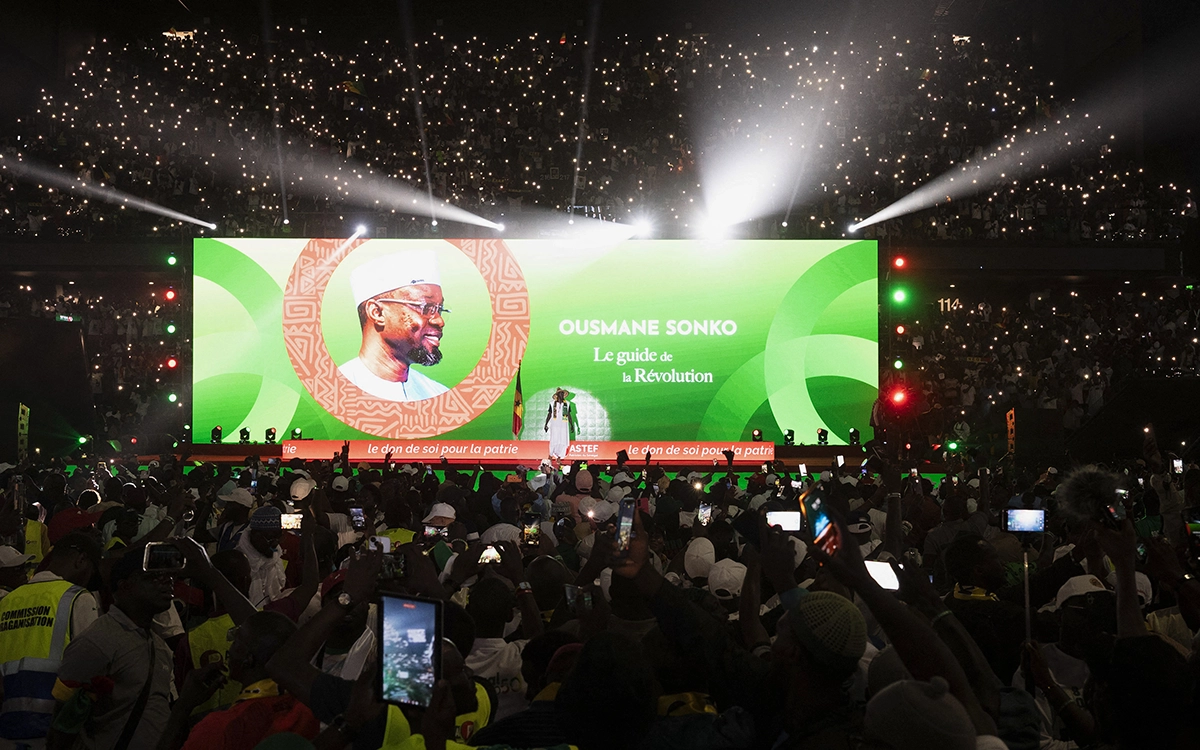
Recent developments make this risk harder to dismiss. On June 1, Sonko said PASTEF would not take part in the new government. That decision signaled a sharper separation between the executive team and the party’s organizational base. Faye named Ahmadou Al Aminou Lo, an economist and former secretary-general of the BCEAO regional central bank, as prime minister, signaling a preference for technocratic stability. Yet technocratic leadership cannot substitute for political alignment. Economic programs still need parliamentary and public support.
There are doubts about whether the party can endure amid the crisis, as ongoing fragmentation continues to weaken state coordination. Senegal can design reforms, negotiate programs, and announce recovery plans. But the harder test is whether its institutions can execute them consistently.
Regional Implications
Senegal matters beyond its borders because it is not a typical West African crisis case. It remains a functioning democracy with a competitive political system, an active parliament, and a history of civilian rule. That makes the current moment strategically important. Unlike Mali, Burkina Faso, or Niger, Senegal is confronting fiscal stress within a constitutional framework rather than through military rule or institutional collapse.
The episode also matters for the West African Economic and Monetary Union (WAEMU). Senegal is one of the bloc’s largest economies and an important regional borrower. Its financing difficulties could influence how investors price other WAEMU members’ debt, especially if political uncertainty raises risk premiums. For policymakers across Africa, Senegal offers a distinct warning. Democratic institutions may survive economic stress, but survival is not enough. They must also deliver coherent policy under pressure.
Strategic Assessment
Senegal’s debt crisis has become a test of governance capacity. The discovery of hidden liabilities damaged fiscal credibility, and the Faye–Sonko split now threatens the political coordination needed to repair it.
Senegal’s experience, therefore, speaks to a wider African question: whether democratic governments can implement difficult fiscal adjustment without losing political cohesion or weakening public legitimacy. The answer matters for other African states facing high debt burdens, subsidy pressures, and difficult IMF negotiations.
Senegal’s recovery will depend less on debt metrics than on political cohesion. If Faye and Sonko can prevent rivalry from obstructing reform, Senegal may reinforce its reputation as one of West Africa‘s most resilient democracies. If they cannot, the fiscal crisis could evolve into a more enduring crisis of governance, with implications extending well beyond Senegal’s borders.
If Faye and Sonko cannot prevent rivalry from obstructing reform, the fiscal crisis could evolve into a more enduring crisis of governance, with implications extending well beyond Senegal’s borders