
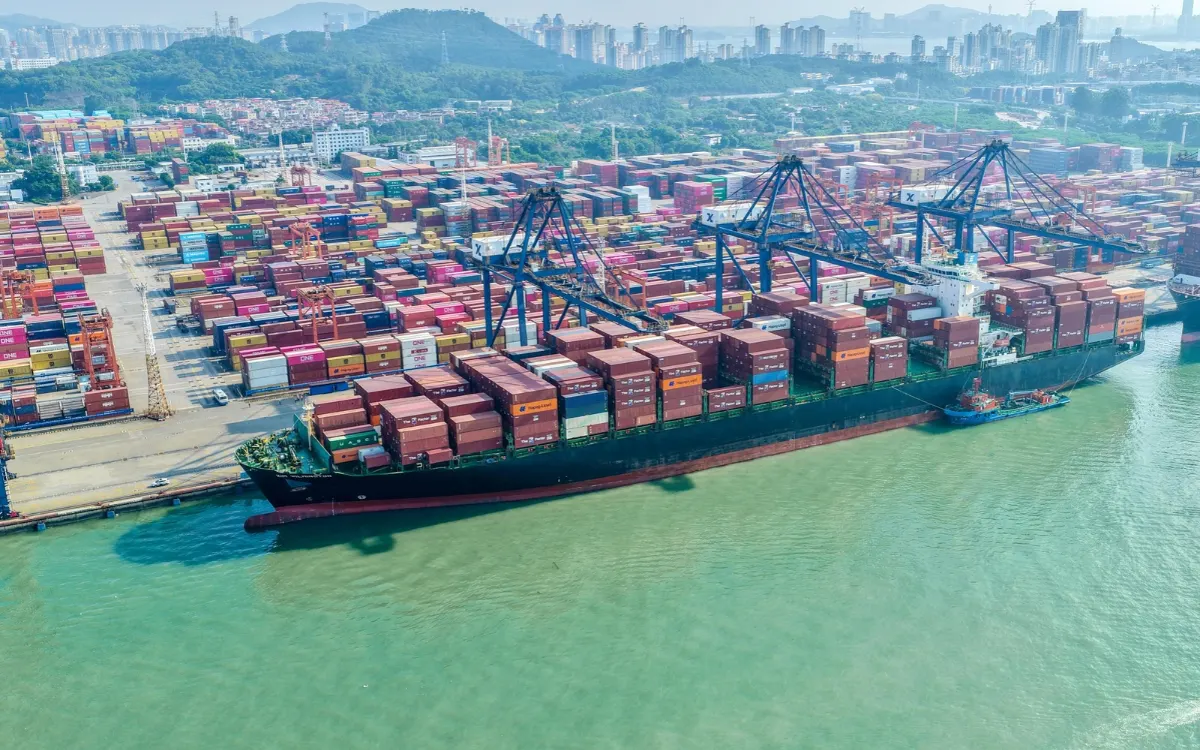
China’s trade surplus surpassed $1 trillion in the first 10 months of 2026, fueled partly by surging demand for AI-related technology exports. The milestone raises a strategic question for Washington: are U.S. semiconductor restrictions slowing China’s technological rise or accelerating its pursuit of domestic alternatives?
Official data released Tuesday showed China’s trade surplus reaching $1.04 trillion through October, with exports jumping 35.2 percent year-on-year to $412.3 billion in October. The figures come ahead of expected talks between Presidents Donald Trump and Xi Jinping at the November 18–19 APEC summit in Shenzhen, where trade tensions are likely to feature prominently.
“Chinese vendors are still using cutting-edge Nvidia chips to train their models” despite U.S. restrictions, Omdia chief analyst Lian Jye Su told French media. Poe Zhao, founder of Hello China Tech, said Nvidia processors remain advantageous but “they are no longer the only path.”
Washington prohibits exports of Nvidia’s most advanced Blackwell and Rubin processors to China, citing national security concerns and AI’s potential military applications. Although restrictions on the less powerful H200 chip have eased, U.S. approval requirements and Beijing’s reported reluctance to purchase it have complicated sales.
Nvidia also faces an independent investigation after CEO Jensen Huang admitted an affair with a Chinese executive whom U.S. officials reportedly suspect of involvement in an intelligence operation; her former company has separately faced allegations of facilitating restricted chip transfers.
Meanwhile, Chinese AI developers can access advanced computing power through overseas data centers, while domestic firms, including Huawei, are developing alternatives to American processors. Huawei’s chips still lag behind Nvidia’s leading technology, but subsidies and lower electricity costs could help Chinese developers offset higher operating expenses. China’s export strength, despite weak domestic consumption and property-sector difficulties, provides an economic foundation for this technological competition.
The emerging risk for Washington is that restrictions intended to preserve its short-term technological advantage could strengthen China’s long-term determination to achieve semiconductor independence. The next indicators will be the outcome of the Trump–Xi talks, decisions on Nvidia’s H200 sales, and Huawei’s planned next-generation AI chip launch in early 2027. (AFP+EIR)