

Germany Bans Chinese Drones Over Military Data Security 

By
Germany Bans Chinese Drones Over Military Data Security 
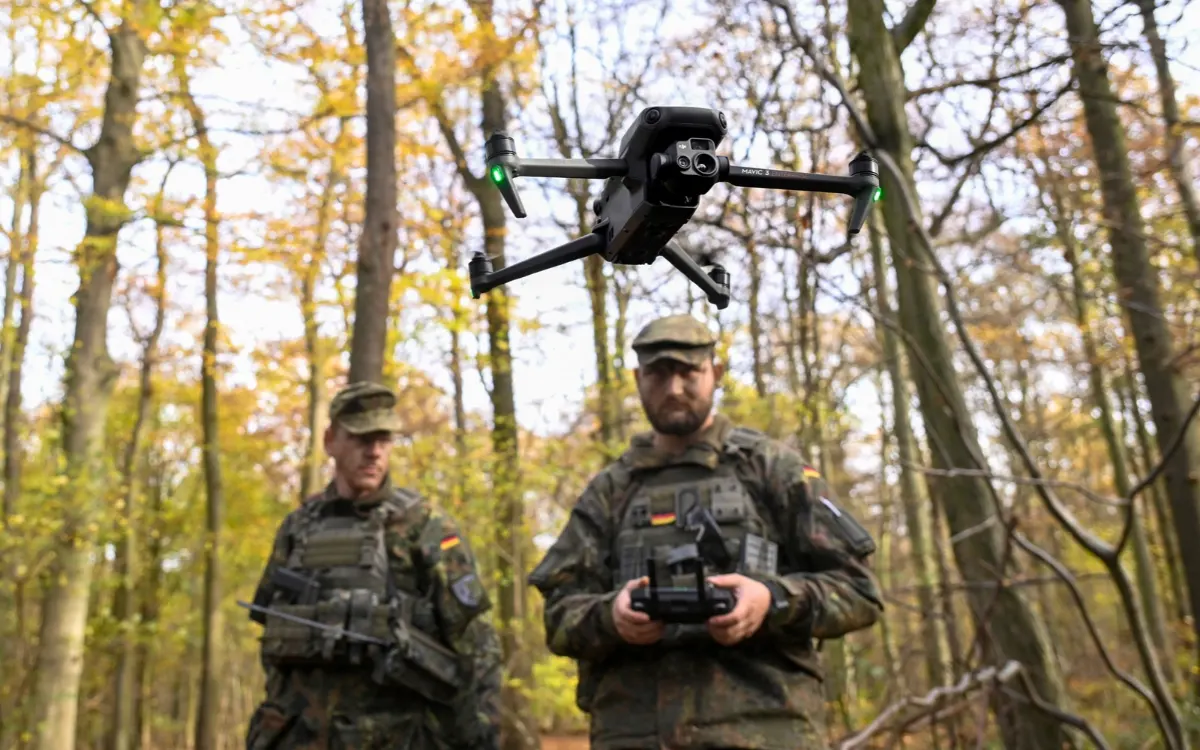
German Bundeswehr recruit operates drone during training. AFP
Share:

Germany’s military has banned Chinese-made drones, including those used for training, citing data security concerns and the need to strengthen technological sovereignty. The Bundeswehr will replace the equipment with German or other European-made alternatives, reflecting a broader strategic effort to reduce reliance on foreign defense technology. 

The German defense ministry announced the decision Wednesday, saying Chinese-made drones would no longer be used for target practice or training exercises. German media first reported the move, citing concerns that the equipment could transmit sensitive information about military exercises, training grounds, or weapons systems to Chinese intelligence services. 

“Chinese-made models will no longer be used … and existing systems will be replaced by products from domestic or, where applicable, European sources,” the ministry said. It added that the decision was intended “to strengthen the Bundeswehr’s self-sufficiency and technological sovereignty.” 

The Bundeswehr had previously purchased inexpensive, commercially available drones for training purposes through relatively simple procurement procedures. The decision highlights the security implications of using foreign-manufactured equipment in military environments, where even routine training activities may involve sensitive operational information. Replacing Chinese-made systems with European alternatives also points toward a greater emphasis on domestic and regional technological capabilities, with equipment sourcing increasingly viewed as a component of defense security. 

The ban illustrates how concerns over potential intelligence exposure can reinforce Europe’s pursuit of greater defense autonomy. Its implementation will offer an indication of Germany’s ability to replace inexpensive imported systems with European technology while maintaining military training capabilities. (AFP+EIR) 

Eagle Intel Report authors
EIR

Eagle Intelligence Reports is a trusted global platform specializing in delivering insightful political and strategic analysis as well as exclusive intelligence to decision-makers, researchers, and audiences engrossed in modern international affairs.

SIGN UP FOR FREE TO EAGLE INTELLIGENCE REPORTS

Exclusive Insights & Reports

Get access to in-depth analysis, exclusive intelligence, and expert reports designed to keep you informed and ahead of the curve on the most important global developments.

By signing up, you agree to our Privacy Policy.

What to read next...
U.S.–Israeli War Damage Threatens Gulf’s Long-Term Economic Stability
By
UK Arrests U.S. Soldier Suspected of Spying for Russia
By
Abu Dhabi Talks Focus on Ukraine and European Security
By
China's Trade Surplus Tests U.S. AI Chip Strategy 
China’s Trade Surplus Tests U.S. AI Chip Strategy 
By
U.S. Expands Iran Pressure as G7 Seeks De-escalation
By
Europe’s Role in Ukraine Peace Talks in Question
By
Israel Holds Firm to Its Iran Goals Amid Expected Political Shifts
Israel Sticks to Its Iran Goals Amid Expected Political Shifts
By
Damascus and Riyadh Face the Yemen Test and Regional Balances
Damascus and Riyadh: Yemen Tests Regional Power Balances
By

SIGN UP FOR FREE TO EAGLE INTELLIGENCE REPORTS

Exclusive Insights & Reports

Get access to in-depth analysis, exclusive intelligence, and expert reports designed to keep you informed and ahead of the curve on the most important global developments.

By signing up, you agree to our Privacy Policy.

Eagle Intelligence Reports
Privacy Overview

This website uses cookies so that we can provide you with the best user experience possible. Cookie information is stored in your browser and performs functions such as recognising you when you return to our website and helping our team to understand which sections of the website you find most interesting and useful.