
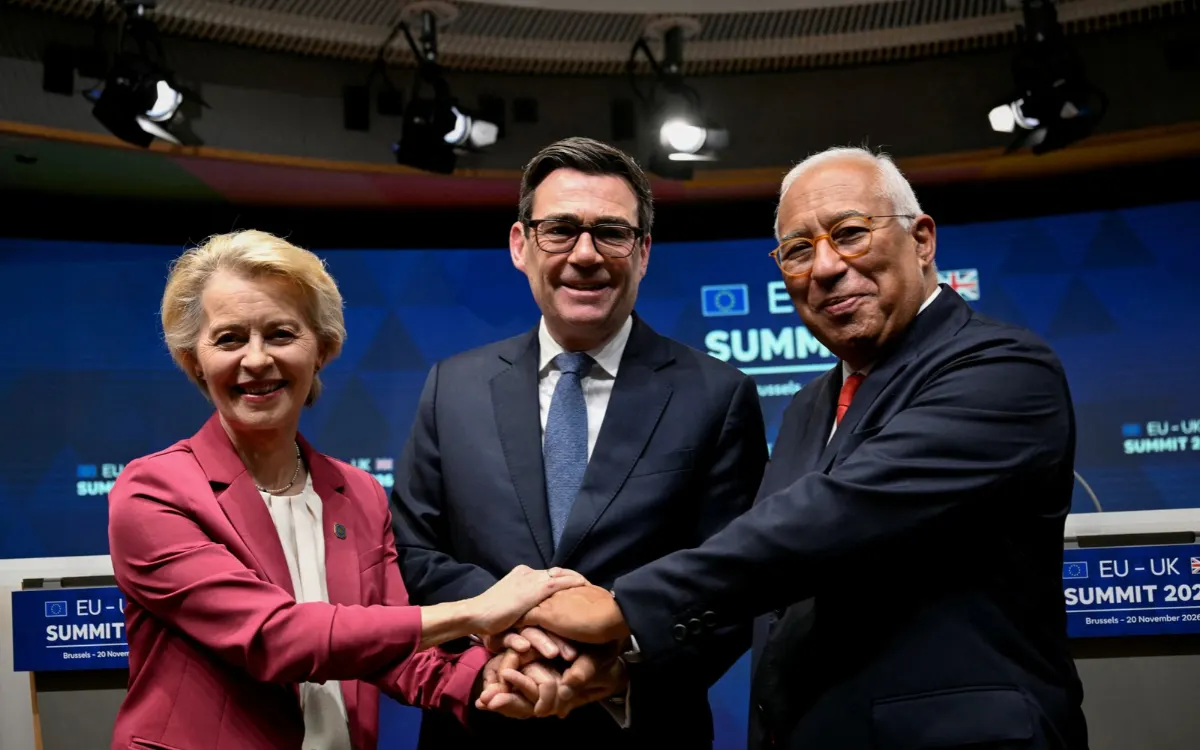
British Prime Minister Andy Burnham is expected to defend a new agreement with the European Union before Parliament on Monday, amid growing opposition from Brexit supporters and former Conservative leaders. The dispute follows a summit in Brussels on Friday, where Britain and the EU agreed measures aimed at reducing trade barriers and strengthening cooperation. The controversy has reopened questions about Britain’s economic relationship with Europe and the political limits of closer integration.
The agreement covers reduced checks on agricultural and food products, cooperation between British and European emissions trading systems, and a youth mobility scheme allowing up to 100,000 young people from each side to live and work in the other’s territory annually. The British government estimates that the measures could eventually generate an additional £17 billion a year for the economy, although their full economic impact remains uncertain. Further negotiations are expected over university tuition fees and British participation in European industrial initiatives.
Burnham has argued that closer cooperation will reduce administrative costs for businesses and ease pressure on household food bills. However, Conservative leader Kemi Badenoch has criticized the government for failing to publish the agreement’s full legal text immediately, raising questions about its implications for British taxpayers and regulatory independence. Conservative politicians have also pledged to reverse the agreement if they return to government, while Reform UK leader Nigel Farage has criticized the concessions made to Brussels.
The disagreement extends beyond the immediate economic measures. Former Conservative prime ministers have warned against reopening the wider Brexit debate, while members of the Labour government have argued that Britain’s relationship with the EU should remain open to reassessment. Burnham has indicated that a broader discussion about the country’s long-term European relationship could follow, although the government has not committed to rejoining the bloc, its customs union, or its single market.
The renewed debate comes amid wider European concerns about economic competitiveness, trade fragmentation, and geopolitical security. For Britain, reducing barriers with its largest neighboring market could offer commercial advantages, but closer regulatory alignment also raises questions about national autonomy and the durability of agreements across changes of government. The parliamentary debate and publication of the agreement’s detailed legal provisions will provide a clearer indication of the political and economic consequences of Britain’s latest post-Brexit reset. (Agencies+EIR)