
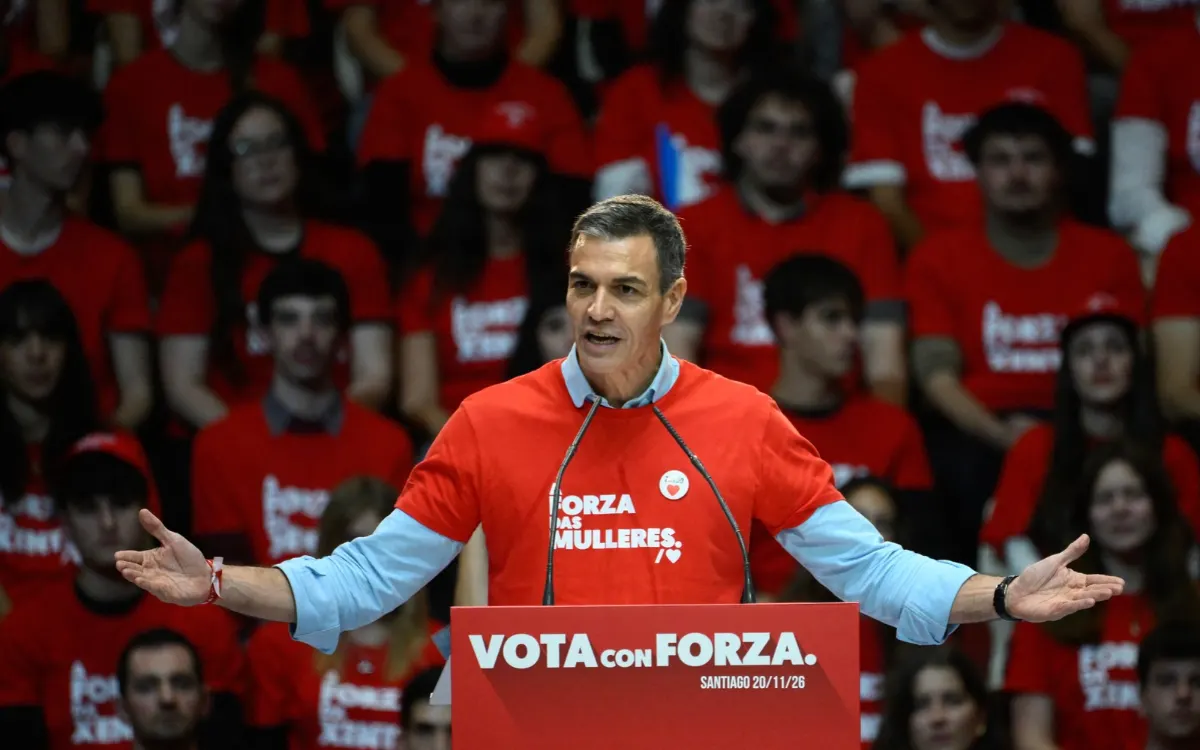
Spanish Prime Minister Pedro Sánchez has proposed a new tax on fortunes exceeding $109 million ahead of Sunday’s general election, placing wealth redistribution at the center of a wider European debate over inequality, living costs, and economic policy. The proposal comes amid public pressure over housing affordability and wages across several European countries, raising questions about how governments can finance social priorities while maintaining investment and competitiveness.
Sánchez said Monday that the proposed levy would help finance childcare, housing, and public services. His Socialist Party is seeking to distinguish itself from the conservative Popular Party (PP), which has promised tax reductions for middle- and lower-income earners, young workers, and incentives for companies investing in technology. Spain already imposes a solidarity tax on net fortunes exceeding approximately $3.3 million, introduced in 2022, but the latest proposal would specifically target wealth above $109 million. Details of the new tax rate have not been announced.
“Although we have reduced income inequality to historic lows, the richest 0.1 percent hold more than 10 percent of the wealth. And their share has kept growing since 2010,” Sánchez wrote on X. He argued that taxing the largest fortunes could help translate accumulated wealth into stronger public services. Business groups, however, have warned that wealth taxes can encourage entrepreneurs and capital to relocate, potentially affecting investment and economic growth.
The proposal follows widespread protests over housing costs and purchasing power. Earlier this month, demonstrators joined a nationwide Spanish strike demanding more affordable housing and relief from rising living costs. France, Portugal, and Belgium, where a national strike against planned austerity measures caused widespread disruption, have also experienced protests over economic and social policies. Across Europe, left-leaning politicians have increasingly advocated higher taxes on large fortunes, while opponents emphasize potential consequences for investment and competitiveness.
Spain’s election could therefore carry implications beyond its domestic fiscal policies. The PP is seeking to replace Sánchez’s Socialists, while the far-right Vox party could play a decisive role in coalition negotiations. More broadly, the debate highlights the challenge of taxing highly mobile wealth within Europe’s integrated economy, where differing national tax policies can influence investment decisions. Whether Spain’s proposal advances will depend on the election and subsequent parliamentary negotiations, while the wider European discussion over wealth taxation and social spending is likely to continue. (AFP+EIR)