
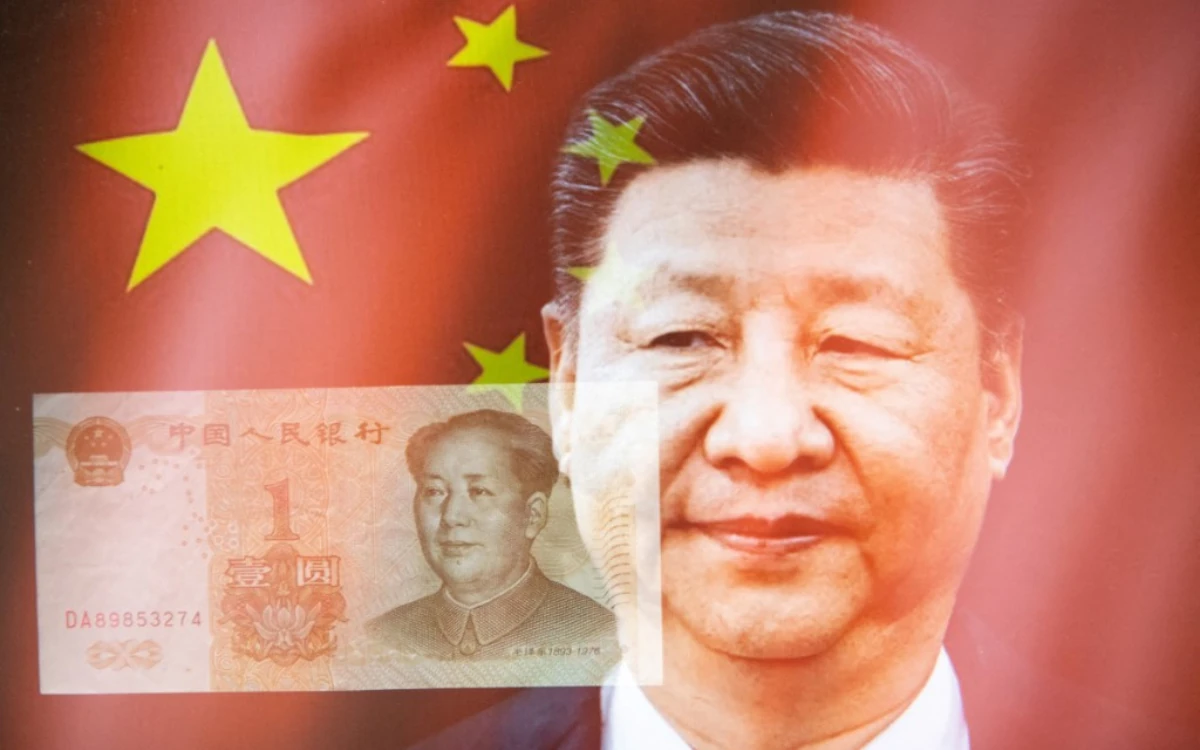
The crisis in the Strait of Hormuz did not create “Fortress China.” It validated it. Western commentary increasingly portrays Beijing’s push for a fortress economy as a reactive response to mounting geopolitical shocks, from the Ukraine war and the ongoing U.S.–China trade confrontation to the crisis in Hormuz. But this framing mistakes context for cause. Despite the strain that higher energy and commodity prices impose, China is not merely reacting to successive crises. It is acting on a strategic worldview more than a decade in the making.
Even before COVID, Ukraine, and now Hormuz, Beijing was explicitly preparing for an international environment defined by persistent disruption, fragmentation, and great-power competition. Within this framework, crises like Hormuz are not shocks requiring strategic adjustment; they are proof of concept. They reinforce China’s long-standing assessment that systemic instability is becoming a baseline condition of international politics. Fortress China is therefore not a retreat from globalization but an attempt to redesign China’s participation in it. Through the Belt and Road Initiative (BRI), it seeks to reduce exposure to external disruption in peacetime by building alternative trade corridors and strategic infrastructure. Yet those same networks create new pathways through which external instability could reverberate back into China’s domestic economy in the event of a generalized conflict. The question, then, is not only whether Fortress China reduces vulnerability, but how and where that vulnerability is redistributed.
China’s rise was built on a very different logic. The formula behind its rapid development and current geoeconomic leverage has been precisely that it remains politically closed but economically open. State-guided industrial policy and state-owned enterprise (SOE) dominance in strategic sectors have been complemented by deep global economic interdependence built on Western demand, foreign direct investment, and technology sharing. Thus, at the center of Beijing’s increasing embrace of Fortress China lies an apparent contradiction. China at once seeks to reduce exposure to external instability while also continuing to predicate growth on external demand, technology, and trade.
At the center of Beijing’s increasing embrace of Fortress China lies an apparent contradiction. China at once seeks to reduce exposure to external instability while also continuing to predicate growth on external demand, technology, and trade
The dilemma is most visible in the BRI, an umbrella for a long list of strategic infrastructure projects stretching from Central Asia to South America. The initiative builds and modernizes land-based and maritime trade corridors that reduce dependence on vulnerable and often Western-controlled chokepoints while preserving access to markets for Chinese commodities. BRI is thus the international expression of Fortress China. But BRI projects are not immune to instability and disruption. On the contrary, U.S. defense planners increasingly assess strategically significant BRI infrastructure for its dual-use military potential, making such assets likely targetable in a future conflict contingency.
China succeeded in adapting to a globalizing world of economic stability through the post-1978 “opening up.” Recently, it has consolidated its position by leveraging interdependence, especially with critical supply chains. Today, it attempts to reimagine openness under conditions of geoeconomic fragmentation and global instability.
How Security Shapes China’s Economic Policy
Fortress China is not a formal doctrine but a broader strategic orientation that integrates Chinese Communist Party (CCP) concepts of development and security into a single governing framework, usually translated as the Overall National Security Concept. This framework extends security beyond the military domain, encompassing finance, energy, food, data, technology, and supply chains. It is the product of a long-term shift toward worst-case planning.
Yet the strategy carries a structural tension: by treating nearly every domain of development as a matter of national security, China may constrain the very global economic conditions that enabled its rise and today sustain it as a world power. The result is a system engineered for resilience during crisis, yet one that risks narrowing the structures on which its long-term growth still depends.
The foundations of Fortress China were laid in the wake of the 2008 crisis, when concerns about demand vulnerability and overexposure to global markets prompted a strategic repositioning. China effectively spent its way out of the 2008 economic crisis. It invested enormously in debt-financed infrastructure and urban development, pouring more concrete in two years than the United States had in the entire 20th century. This helped avert layoffs and the social instability that would likely have accompanied a collapse in external demand. In the process, it redirected significant labor capacity, over-developed state-owned construction enterprises, and drove an enormous expansion of credit through state-owned banks.
The new model generated long-term structural imbalances, as China traded debt financing for the promise of future economic development on a new material basis. It leveraged China’s very high domestic savings rates to finance a massive expansion in infrastructure and industrial capacity. This insulated China from the worst of the recession and saw its high-speed rail network expand from less than 700 to 30,000 kilometers in a decade. The period also saw the consolidation of Xi Jinping’s power and the emergence of the Overall National Security Concept, which increasingly treated economic development and national security as mutually reinforcing.
The U.S.–China trade confrontation, intellectual property disputes, and expanding export controls after Donald Trump’s 2016 election only deepened the CCP’s conviction that globalization was increasingly shaped by national security competition and was therefore conditional rather than neutral. Accordingly, it integrated self-reliant development, sanctions resistance mechanisms, and chokepoint security measures into its regular central planning logic.
Yet the strategic orientation was fully institutionalized only after the COVID shock tested China’s supply chains and exposed the limits of its domestic consumption. In the pandemic’s wake, the fortress strategy has become embedded in macroeconomic planning and security doctrine. Today, amid successive crises in Ukraine and the Middle East, it is operationalized through large-scale budgetary reallocations, state-led industrial policy, and security-driven restructuring of the economy.
The fortress orientation was fully institutionalized only after the COVID shock tested China’s supply chains and exposed the limits of its domestic consumption. In the pandemic’s wake, the fortress strategy has become embedded in macroeconomic planning and security doctrine
Dual Circulation and BRI’s Strategic Logic
“Dual circulation” is China’s answer to the central problem posed by Fortress China: how to remain globally integrated while developing internally to reduce vulnerability. It is a strategy for managing the strategic tensions of the fortress posture. It aims to strengthen domestic production and consumption while selectively preserving the benefits of interdependence in global markets. It seeks to make China’s domestic economy the primary engine of growth, using SOE banks to expand indigenous industries and increase household consumption as a share of GDP. The goal is to develop internal circulation enough to sustain China in the event of a disruption in external circulation amid a generalized conflict.
Externally, the strategy improves export control mechanisms and strengthens security guarantees for BRI projects while not abandoning the open economic structure that has fostered Chinese growth in past decades. It also explicitly calls for improving trade risk prevention by avoiding investment in unstable regions, representing a recalibration of previous risk exposure assessment.
BRI is where the logic of Fortress China becomes concrete, blending security and economic development. Each project is a microcosm of the fortress concept itself. Their contradictions are China’s contradictions. Like China’s wider reliance on overseas markets for industrial output, BRI projects bring continued overseas contracts and financial revenues that boost domestic GDP. They are hedges against instability that generally reduce China’s vulnerability to crises such as that in the Strait of Hormuz.
BRI is where the logic of Fortress China becomes concrete, blending security and economic development. Each project is a microcosm of the fortress concept itself. Their contradictions are China’s contradictions
BRI grew out of China’s domestic industrial development. In this sense, it serves as a pressure-relief valve for excess industrial capacity developed during China’s post-2008 stimulus. It allocates huge amounts of capital and labor to build large-scale overseas infrastructure projects, creating alternative logistics and trade corridors, often with dual-use potential. Yet BRI projects also create new strategic dilemmas. They not only bring increased exposure to overseas security threats to strategic infrastructure; they also expose significant capital, industrial capacity, and labor power to potential instability.
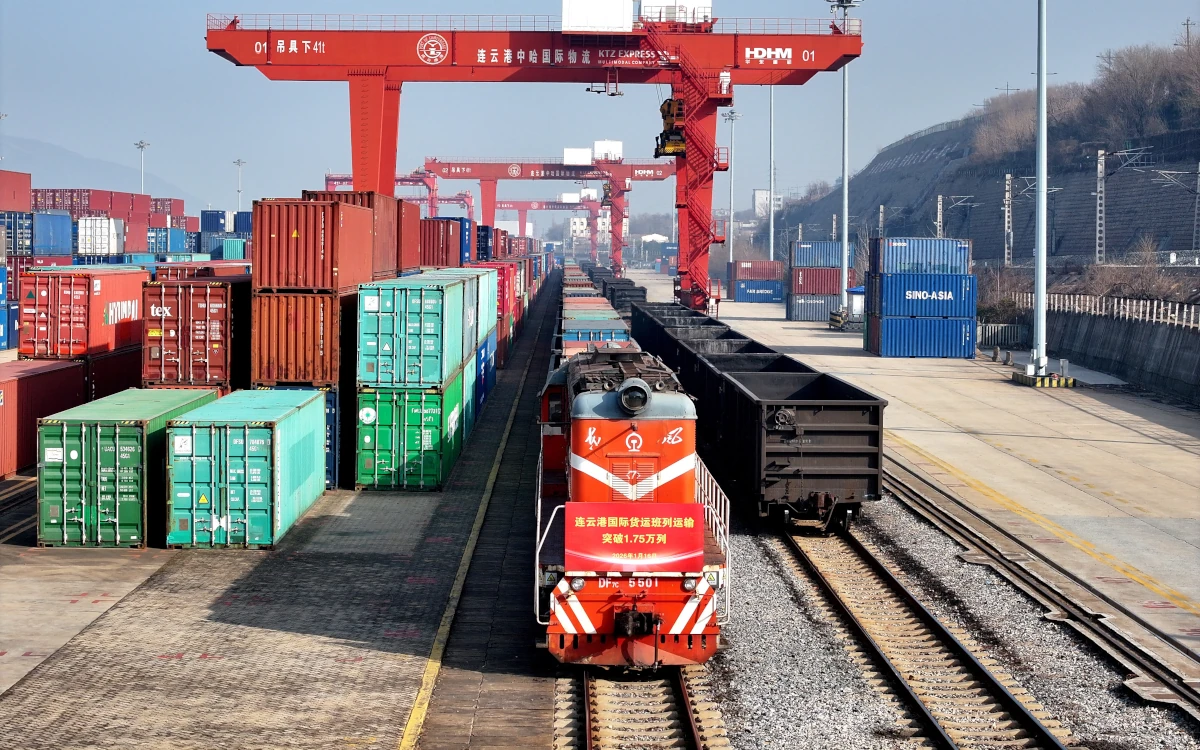
The international ambitions of BRI began in Central Asia with the Silk Road initiative in 2013, Xi’s first major international initiative after becoming CCP General Secretary and PRC President, and a signature policy of his early leadership. Existing underdeveloped infrastructure along the China–Europe route was modernized and rebranded under the China–Europe Railway Express. After 2016, the initiative increasingly shifted from upgrading and integrating pre-existing corridors to building out entirely new projects guided each year more explicitly by a strategic geopolitical framework.
The flagship program quickly expanded elsewhere, including to maritime projects, promising regional economic cooperation through globalized, interconnected supply chains. In addition to fostering political cooperation and dispute-resolution mechanisms among participating states, the initiative also sought to establish common standards for transportation, freight logistics, and regulatory frameworks. In turn, China offered financing, trade expansion, and supply-chain integration, all key to growth in developing economies.
BRI’s Redundancy and Exposure
BRI’s strategic logic is straightforward: reduce China’s dependence on vulnerable trade routes while increasing control over the infrastructure of global commerce. Use SOEs to finance and build alternative routes while acquiring operating rights and creating long-term technical and operational dependence on Beijing. In doing so, Chinese trade would bypass maritime chokepoints vulnerable to Western interdiction where possible. Diversified logistics routes would use modernized ports and freight terminals financed, built, and operated by Beijing’s policy banks and construction firms.
While financing for the initial China–Europe route came largely from central and local government coffers, BRI projects have since overwhelmingly been built using loans to host governments or firms and direct equity investments that permit SOEs to own and operate assets. This financing model has become the norm as the network has expanded globally. In Southeast Asia, the Laos–China Railway project drew $6 billion in support, two-thirds debt financed, and China now owns a 70 percent stake in the Laos–China Railway Company. Projects in Malaysia and Indonesia account for another $13 billion in loans, the vast majority through the SOE China Development Bank.
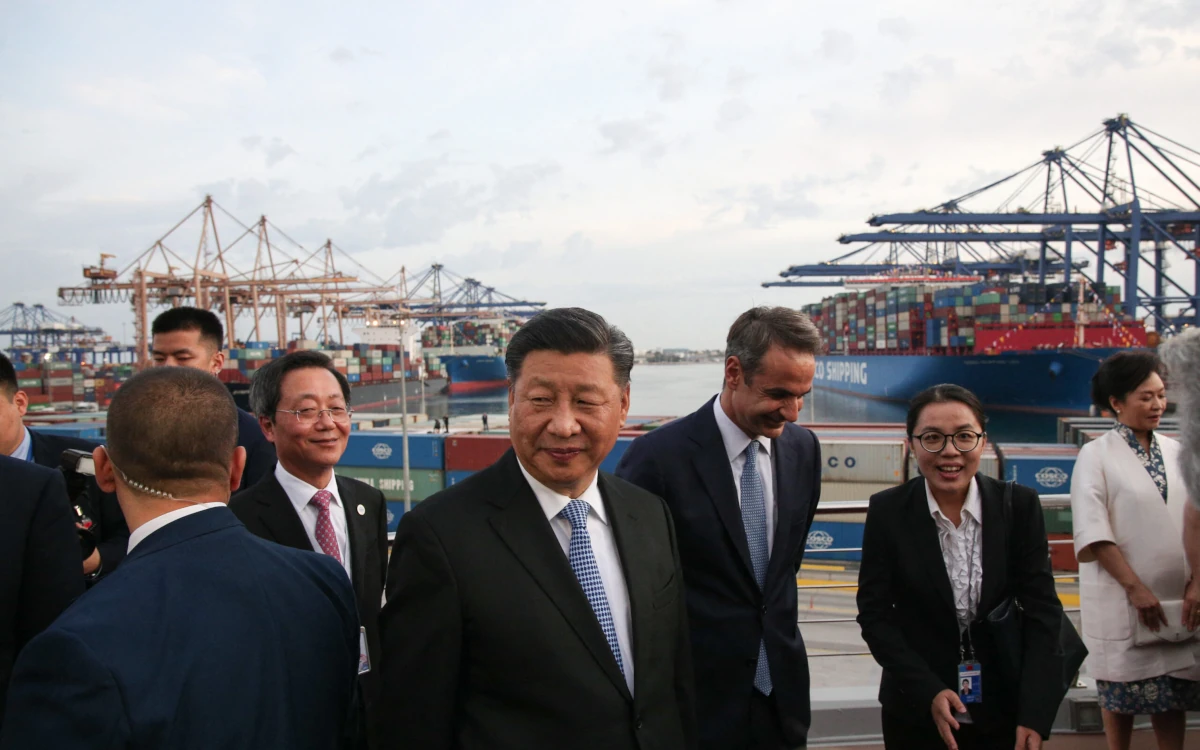
In South Asia, over $50 billion has been committed to the China–Pakistan Corridor, about half of it loans, with the other half direct equity investment. Africa’s Mombasa–Nairobi Railway, the continent’s flagship BRI project, cost over $3.5 billion, 90 percent of it debt financed. Even in Europe, the Greece–Serbia–Hungary Corridor so far has drawn $5 billion in Chinese financing, $3 billion of it loans, and the Chinese SOE giant COSCO now owns a 67 percent controlling equity stake in the Greek Port of Piraeus.
Collectively, BRI projects represent well over $1 trillion in contracted investment across Asia, Europe, Africa, and Latin America. As much as half of that number is reportedly either direct investment in equity and operations or BRI-related loans—either sovereign or corporate. While direct lending from the Chinese government is rare, SOE loans channeled through Special Purpose Vehicles—legally separate companies created solely for specific BRI projects—are controlled and guided strategically by the CCP.
While the China–Pakistan corridor, perhaps the most important project geostrategically, is only around 50 percent complete, projects in Southeast Asia, Africa, and Europe are complete or near complete. However, the debt burden remains. By 2026, the Export-Import Bank of China alone had almost $300 billion in outstanding BRI loans. Significant burdens remain across all these projects, with estimates placing outstanding debts at 75 to 95 percent of principal. The exact amount of total debt held by China’s policy and commercial banks for BRI projects is unknown because balance sheets are not public, but estimates range from $500 billion to over $1.2 trillion.
The massive investment effectively gives Beijing a vast portfolio of overseas strategic infrastructure, equity stakes, and strategic operating rights beyond its borders. But that same model also creates significant financial exposure.
The Open-Fortress Paradox
China’s fortress remains an open one—at least insofar as the broader international system continues to function. The BRI has contracted, ongoing, or completed projects in nearly 150 countries, embedding itself in the global economy it seeks to hedge against. A potential protracted conflict would seriously reduce BRI’s labor and capital absorption capacity, with ripple effects hitting markets in China. Growth would likely slow significantly. Falling demand would expose China’s over-reliance on heavy industrial projects abroad while leaving SOE banks heavily exposed to losses on overseas investments.
But it is not only that a major geopolitical crisis could generate significant stranded debt overnight. Significant capital would likewise be marooned and inaccessible, triggering profound market effects. Hard assets would become unrecoverable the moment a conflict becomes generalized, whether they be rail companies, ports, or freight terminals. Moreover, dual-use BRI projects would not only be potentially targetable in wartime; they could also be repurposed by states adversarial to China through relatively limited modifications to achieve military interoperability.
A war would also trigger cascading secondary effects. Workers would have to be evacuated and networked digital infrastructure would have to be fortified against hybrid attacks. While a conflict would fundamentally alter Chinese commerce, it is unlikely that marketized shipping insurance mechanisms would cease to operate, meaning prices would rise with geopolitical risk. Together with higher oil prices, these costs would erode the commercial advantages BRI was designed to secure.
Ultimately, BRI does not eliminate vulnerability; it redistributes it across a far broader geographic and political landscape. Rather than concentrating Chinese commerce around a handful of historic chokepoints, it disperses it, building in strategic redundancy across 150 countries. But each project carries discrete political, military, financial, and economic risks. And all have the real capacity to rebound onto the Chinese domestic economy.
Ultimately, BRI does not eliminate vulnerability; it redistributes it across a far broader geographic and political landscape. Rather than concentrating Chinese commerce around a handful of historic chokepoints, it disperses it, building in strategic redundancy across 150 countries
The Limits of Dual Circulation
In a generalized conflict scenario, several hundred thousand overseas Chinese workers—both skilled and unskilled—would likely be forced back into the domestic labor market. They would need to reintegrate not only into industries like engineering and construction, but also highly skilled digital infrastructure jobs related to China’s “Digital Silk Road” initiative, the high-tech component of BRI projects abroad. And this would come at a time when China already faces a 5 percent overall unemployment and 17 percent youth unemployment.
Furthermore, the domestic social front is bound to feel the reverberations as well. The new Five-Year Plan (2026–2030) explicitly recognizes the ways that an increasingly unstable international situation “profoundly impacts domestic development.” Whether the Dual Circulation strategy could pair sustained growth with a continuing rise in living standards—the basis of the CCP’s post-1989 political legitimacy—is unclear, especially if conditions abroad worsen.
BRI may provide safe logistical and trade routes in peacetime. But it also changes China’s optimization logic in wartime. Dual Circulation is meant to recalibrate China for a world of chaos and instability by subordinating efficiency-maximization to internal resilience. The CCP leadership calculates that, given its dominance in various industries across the value-added chain, a healthy internal market could be expanded during a protracted war to sufficiently absorb losses brought by falling demand.
Yet important external dependences would remain. China still imports roughly 70 percent of the oil it consumes, along with significant upstream industrial inputs. It remains reliant on foreign suppliers for advanced industrial inputs, especially in semiconductor manufacturing equipment and high-end chip technology. While China’s vast expansion in renewable energy and battery innovation and manufacturing would help absorb the shock from higher oil prices, it would remain dependent on strategic stockpiles and imports to meet the needs of shipping, petrochemicals, and military operations. It would also have to effectively innovate around restricted access to high-tech imports.
Nor is the issue confined to imports. BRI has become an important outlet for Chinese industrial capacity, sustaining sectors that might otherwise face declining profitability at home. It maintains industrial ecosystems no longer necessary to the same degree within China, softening the impact of weak household demand and slowdown in the property sector. A prolonged disruption would thus reach deeply into the structure of the domestic economy itself.
Testing Fortress China
Can China’s domestic economy really substitute for the international system if globalization breaks down? Fortress China cannot truly be battle-tested except under conditions of generalized geopolitical conflict, when overseas BRI networks would shift from assets to liabilities. The strategy may prove resilient only so long as the global networks on which it continues to rely remain broadly intact. Dual Circulation may reduce China’s dependence on foreign markets without actually eliminating its dependence on the international economic system itself. China may find that overseas BRI activity has become a structural component of its domestic economic stability rather than merely a foreign policy instrument.
From Beijing’s perspective, Hormuz validates China’s fortress strategy. Yet validation is not proof. Only a prolonged disruption of the international system would test it. If China’s domestic economic mechanisms cannot absorb the shock, the social instability that Western analysts have routinely predicted for decades may become a genuine possibility. The defining question in U.S.–China competition is therefore no longer simply how dependent China remains on the international system, but where that dependence now resides—and whether Fortress China can survive the very crisis it was built to withstand.
From Beijing’s perspective, Hormuz validates China’s fortress strategy. Yet validation is not proof. Only a prolonged disruption of the international system would test it