
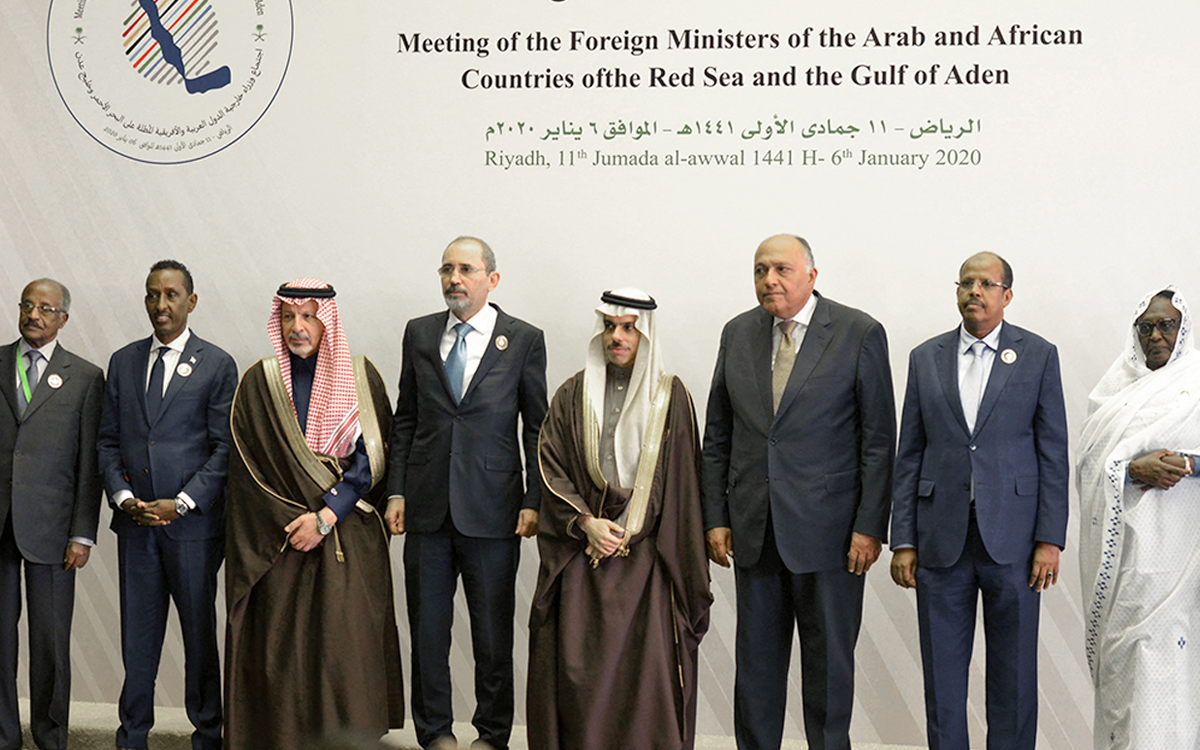
Saudi Arabia has reached out to the member states of the Council of Arab and African Coastal States of the Red Sea and the Gulf of Aden about convening a summit in Riyadh this coming December, according to a well-informed source in one of the council’s eight member states who spoke to Eagle Intelligence Reports.
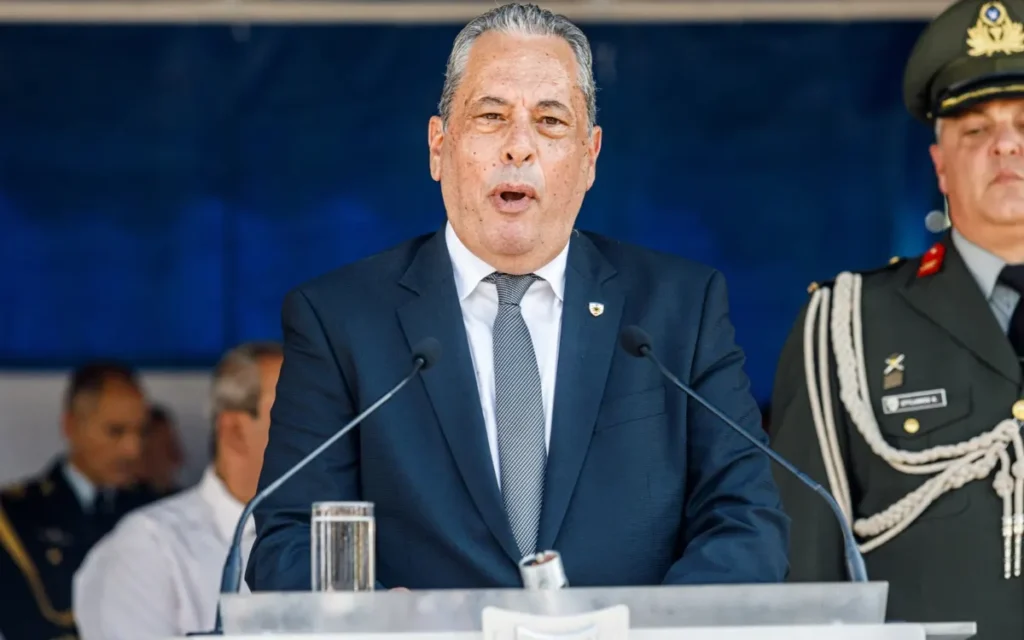
The source said the outreach is part of a renewed effort to strengthen security coordination, protect strategic maritime routes, and address growing regional threats. Awwad bin Saleh Al-Awwad, an adviser at the Saudi Royal Court, is expected to be endorsed as the council’s secretary-general, the source said, with an announcement anticipated during the summit. Riyadh will also serve as the headquarters of the council and its secretariat, according to the source.
Awwad bin Saleh Al-Awwad, an adviser at the Saudi Royal Court, is expected to be endorsed as the council’s secretary-general, the source said, with an announcement anticipated during the summit
The war with Iran has pushed the Red Sea to the center of Saudi security and given the kingdom a reason to revive a council that has existed on paper since 2020. Riyadh’s logic is strategic: the conflict has turned the Red Sea into Saudi Arabia’s main export route and its most exposed front. The pressure is growing. On November 24, Yemen’s army said Houthi forces were about 40 miles from Aden, seat of Yemen’s internationally recognized government.
Security on one shore now depends on the other, so Riyadh wants the coastal states to defend the waterway together. The council stayed dormant because its members had neither a common danger nor an agreed purpose. The Iran war has supplied the first, and Egypt’s backing is beginning to supply the second. Structure alone will not make it an institution: it must also outlast the crisis that is bringing it back.
Since February, disrupted traffic through the Strait of Hormuz has pushed the bulk of Saudi oil exports to the Red Sea port of Yanbu. The shift has moved Saudi vulnerability to a new chokepoint: most of those tankers must then pass the Bab el-Mandeb Strait, where the Houthis control much of the Yemeni coast.
The move to revive the Red Sea Council, as the body is commonly known, reflects a change in the region itself. The Arabian Peninsula and the Horn of Africa were long treated as distinct security arenas. Today, a missile from Yemen, a war in Sudan, or a border clash between Ethiopia and Eritrea affects states on both shores, whose security can no longer be managed separately.
What the Red Sea Council Offers Riyadh
Saudi Arabia’s recent answers to the Houthi threat at sea were military: a multinational maritime defense coalition announced in July and the Mecca Joint Defense Agreement with Turkey and Pakistan. Both include states far from the Red Sea, and neither speaks for the coastal states as a group. The council could fill that gap, and it would serve three Saudi aims.
The first aim is legitimacy. When the coastal states speak together, Saudi Arabia no longer responds alone. Each attack on shipping then challenges eight governments at once and carries a higher political cost.
The second aim is to anchor the African shore. The council would bind Riyadh’s partners there, Sudan, Somalia, Eritrea, and Djibouti, into one framework and give each a stake in the others’ security. For Riyadh, events on the African coast now bear on the same shipping lane that Houthi missiles threaten.
The third aim is to depend less on outside navies, whose commitment has proved limited. The EU says its Red Sea mission needs at least ten warships, yet only three ships are permanently assigned to it.
The expected choice of secretary-general points to a diplomatic role for the council. Al-Awwad is a former minister of culture and information and a former ambassador to Germany. With an admiral commanding the coalition, his endorsement would suggest a division of labor: the coalition for operations at sea, the council for diplomacy among coastal states. Hosting the secretariat would keep the council close to Saudi funding and decision-makers. These steps show a wider change in Saudi strategy: Riyadh still relies on Washington, but it is adding layers of regional arrangements that it leads.
The council’s design also follows a clear strategic logic. Limiting membership to the coastal states defines who has a say over the waterway and leaves outside powers without a formal seat. Leading that body would give Riyadh a strong hand in shaping the regional order of the Red Sea.
These steps show a wider change in Saudi strategy: Riyadh still relies on Washington, but it is adding layers of regional arrangements that it leads
Why the Council Stalled
The council never formally died; it survived on paper because staying in cost its members little. Such organizations start working only when some essential conditions exist: members feel a common threat, agree on their purpose, and have one member willing to pay. In 2020, the only condition met was Saudi Arabia’s readiness to pay.
The first condition was missing because the members did not share the same fears. Riyadh focused on Yemen and Iran, while Cairo looked to Libya, the Mediterranean, and the Israeli-Palestinian conflict. The pandemic, which froze regional diplomacy weeks after the charter was signed in January 2020, removed any pressure to bridge that gap.
The second condition was missing because the members disagreed on design. Egypt favored a loose forum covering issues from pollution to conflict management, while Riyadh wanted a formal organization modeled on the Gulf Cooperation Council. Limited capacity made both worse: only Saudi Arabia and Egypt have sizable navies, and Yemen, Somalia, and later Sudan were consumed by war.
Egypt favored a loose forum covering issues from pollution to conflict management, while Riyadh wanted a formal organization modeled on the Gulf Cooperation Council
Today, the first condition is in place. Houthi attacks on shipping cost Egypt nearly $7 billion in Suez Canal revenue in 2024 and now threaten Saudi exports directly.
The second condition is also beginning to take shape. Egyptian Foreign Minister Badr Abdelatty, who has repeatedly called for activating the council, said on October 14 that Cairo and Riyadh were working together to do so. Cairo’s support eases the 2020 design dispute, and the Hormuz crisis has given Riyadh stronger reasons to pay for the council.
Eight Members with Different Priorities
The members now share one principle: the coastal states should govern the Red Sea. At a summit in New Alamein on October 4, Egypt, Eritrea, Somalia, and Sudan discussed freedom of navigation and declared that governance of the waterway belongs to them alone. At the Aswan Forum on November 21, Abdelatty renewed Egypt’s call for closer cooperation among the coastal states, and Egypt, Sudan, and Eritrea held separate talks on maritime security.
Agreement on this principle hides two agendas. Riyadh’s main concern is the Houthi threat to its export route. Egypt and its Horn of Africa partners also look toward Ethiopia. The New Alamein declaration rejected recognition of Somaliland and defended Egyptian and Sudanese claims to the Nile, both disputes that involve Addis Ababa.
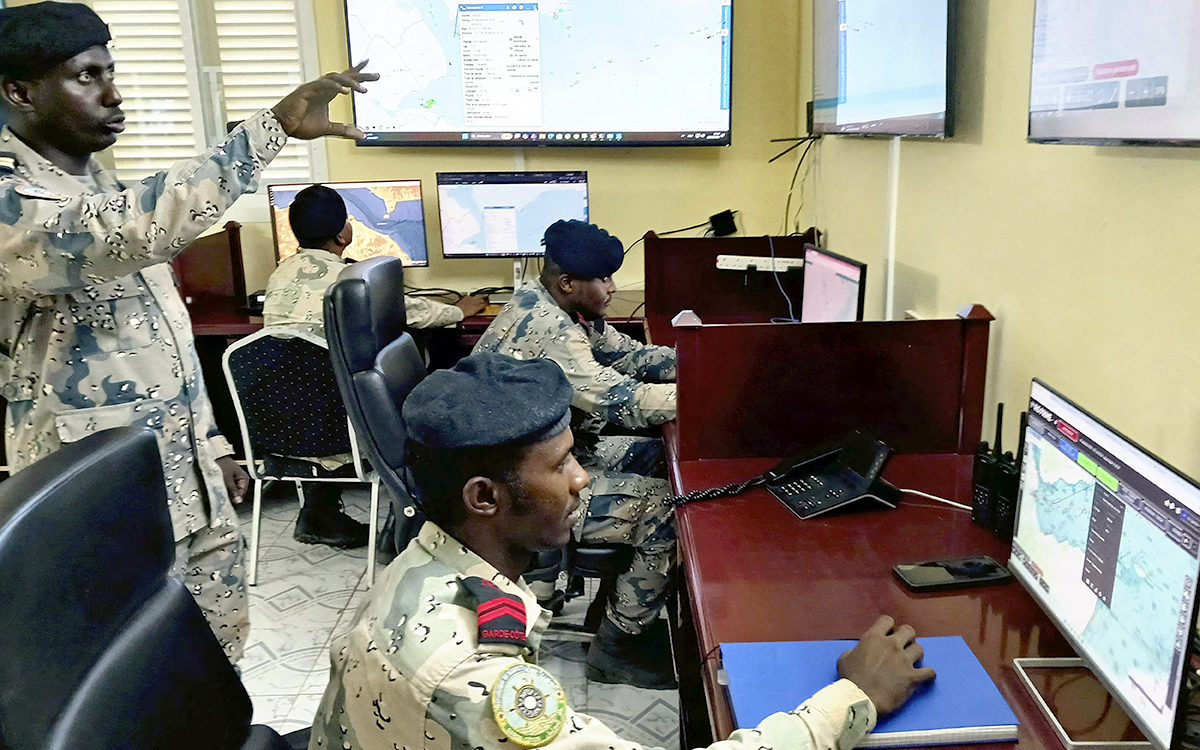
The smaller members want help against specific dangers: Sudan’s army-led government in its war, Somalia for its territorial unity, Eritrea against Ethiopia, and Yemen’s government against the Houthis. Djibouti and Jordan want stable shipping. For all six, Saudi leadership is a bargain: they gain support and a voice in a body that larger powers take seriously. Each need ties a member to Riyadh, but it also brings that member’s conflicts into the council. In a region this interconnected, a dispute between two members quickly becomes a problem for all eight.
Each need ties a member to Riyadh, but it also brings that member’s conflicts into the council. In a region this interconnected, a dispute between two members quickly becomes a problem for all eight
Four Tests for the Riyadh Summit
If the plans hold, the summit would give the Red Sea Council the outline of an institution: the backing of its leaders, a secretary-general, and a permanent headquarters. Four further tests will decide whether December becomes a turning point.
The first is a secretariat with real staff and room to act. The council will need officials who prepare decisions and follow them up between summits, with enough independence for all eight members to trust their work.
The second is a clear division of labor with the maritime coalition. Otherwise, the two would compete for the same staff, money, and political attention.
The third is an agenda that serves both Saudi and Egyptian priorities. If one dominates, the other partner is likely to lose interest.
The fourth is early, practical results for members with smaller navies, such as a shared picture of activity at sea, links between coast guards, and joint action against smuggling.
On present evidence, December is more likely to begin the council’s transformation than to complete it. If the Houthi threat recedes, the body could fade, as other regional coalitions have. An earlier test may come before the summit. The council is named for both the Red Sea and the Gulf of Aden, and the Houthi advance toward Aden now presses on both.
Implications for Red Sea Security
An active Red Sea Council would shift part of the authority over one of the world’s main trade routes from outside powers to the states along its shores. Foreign navies, including those of the EU and the United States, could face pressure to coordinate with it.
An active Red Sea Council would shift part of the authority over one of the world’s main trade routes from outside powers to the states along its shore
It would also tie Gulf security more closely to the Horn of Africa. On both shores, threats to shipping often begin on land: the Houthis’ reach at sea rests on the coast they hold. Naval patrols can protect ships, but only political arrangements among the coastal states can address the wars ashore that put those ships at risk. The open question is whether the council can turn shared alarm over the Red Sea into routine cooperation.