
Exclusive
Egyptian AMOUN air-defense batteries have reportedly been deployed to Saudi Arabia to help secure Red Sea energy routes amid rising regional threats.
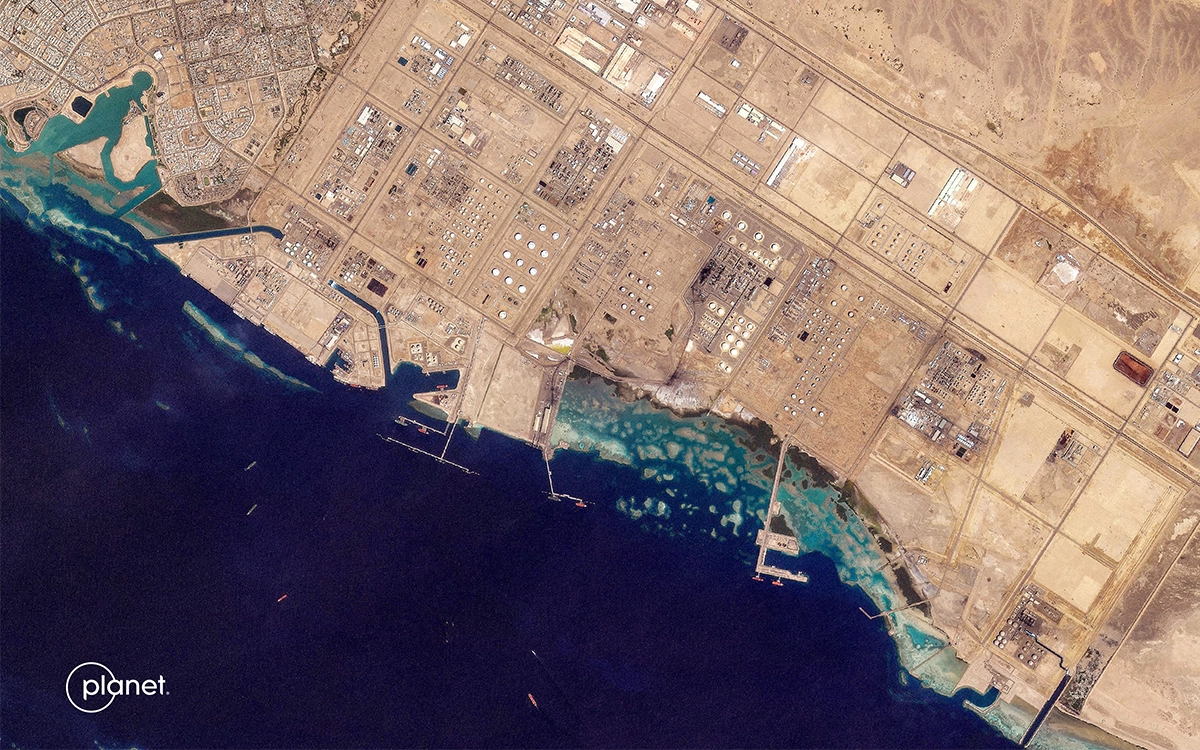
Intelligence and military sources revealed that Egypt has sent AMOUN air-defense batteries to Saudi Arabia as part of security arrangements aimed at strengthening the protection of facilities and routes linked to the export of Saudi oil via the Red Sea. According to what the sources told Eagle Intelligence Reports, the security area extends from Saudi Arabia’s Yanbu region toward the corresponding axis on Egypt’s coast near Qena.
The sources added that the deployment of the Egyptian batteries comes within military coordination between Cairo and Riyadh to secure vital energy corridors, amid rising security risks in and around the Red Sea, and given the area’s strategic importance for the continued flow of Saudi oil exports to foreign markets.
The AMOUN/Skyguard AMOUN system is a short- to medium-range air-defense system used to protect vital targets, combining radar-guided missile and gun capabilities. A typical battery consists of a Skyguard fire-control radar, two Oerlikon GDF twin 35 mm anti-aircraft guns, and two missile launchers—each carrying four Aspide surface-to-air missiles derived from the Sparrow family.
The system is designed to engage low- and medium-altitude aerial threats, including drones, aircraft, and cruise missiles, with a missile engagement range of up to approximately 20 kilometers and a gun range of around 4 kilometers, depending on the version, engagement conditions, and operational configuration.
This information comes amid escalating Gulf concerns over the targeting of energy facilities and vital infrastructure after a series of Iranian missile and drone attacks since February 28, 2026. Attacks have targeted energy, transportation, and civilian infrastructure sites in Gulf states, in parallel with public Iranian threats to strike energy and water systems in the region if U.S. strikes against Iran were to expand.
These developments also coincide with increasing talk about Washington and Tehran being close to reaching a memorandum of understanding, paving the way for a broader negotiation track, despite Iranian and American confirmations that the agreement has not yet been finalized and that disagreements still remain. However, the sources believe that Gulf preparations are not dealing only with a de-escalation scenario. Rather, they are built on the assumption of the “worst-case scenario” if negotiations falter and confrontation escalates in the region.
The talk about sending Egyptian air-defense batteries to Saudi Arabia comes shortly after the disclosure of the presence of an “Egyptian fighter detachment” stationed in the United Arab Emirates, where Rafale fighter jets bearing Egyptian Air Force markings were seen. This is an additional indication of the widening scope of Egyptian military movements outside its borders, between an air deployment in the Gulf and air-defense arrangements linked to the security of the Red Sea and energy corridors.
This development also comes amid increasing defense coordination between Egypt, Saudi Arabia, and other Gulf states around Red Sea security, especially given the connection between coastal corridors linking western Saudi Arabia and Egypt’s opposite shore and the security of energy flows, as well as regional and international trade.