
Exclusive
President Aoun and Lebanon’s army command reject U.S.-backed plan for special brigade to confront Hezbollah arms
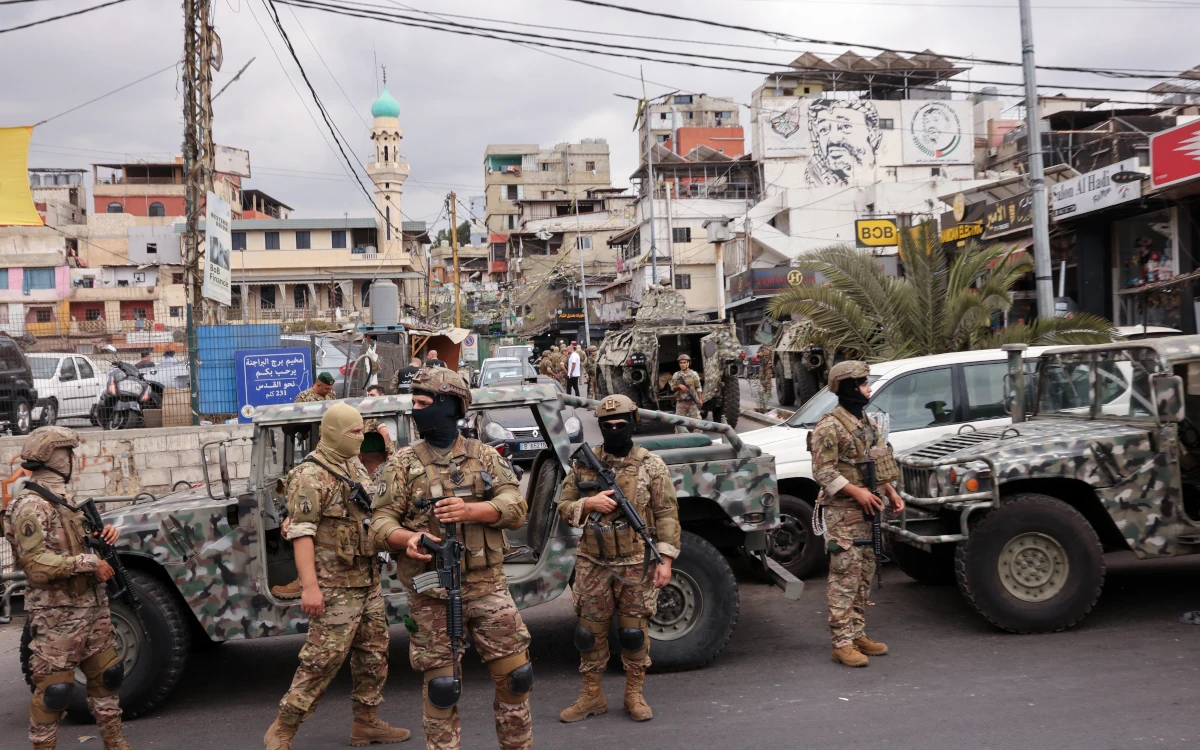
An informed Lebanese source told Eagle Intelligence Reports that Lebanon’s President Joseph Aoun and the army command have agreed to reject a U.S. proposal to establish a special brigade within the Lebanese army, under Washington’s supervision, funding, and training, tasked with disarming Hezbollah.
The decision to reject the U.S. proposal comes amid concerns that implementing it could lead to direct confrontation between the army and Hezbollah members, as well as internal divisions that would be difficult to contain.
The source said discussions within official circles did not focus on supporting the army or strengthening its capabilities, but rather on the domestic cost of the proposed mission. The army command fears the special brigade could turn into a confrontational force against Hezbollah, placing soldiers in direct conflict with the group’s members or support base at a time when Lebanon has little capacity to withstand another internal confrontation.
According to the source, the main concern for the presidency and the army command is that any field operation to disarm Hezbollah, if carried out by a special unit under U.S. supervision, could be exploited by the group to reinforce its narrative as a resistance force and portray the Lebanese state as acting under foreign directive against a Lebanese party. Such a narrative could give Hezbollah greater ability to mobilize politically and publicly against any subsequent security track.
The source added that the army command is approaching the issue primarily through the lens of preserving military cohesion. The Lebanese army rests on a delicate national composition, and any direct assignment to confront Hezbollah through a special brigade could expose it to unprecedented internal pressures, both within its ranks and in its relationship with Lebanon’s various communities. For this reason, the army command sees preserving the army’s unity as a fundamental condition for any plan related to Hezbollah’s weapons file.
According to the source, the presidency does not oppose strengthening the army or increasing U.S. support for it, but rejects turning that support into an external mandate to create a special force tasked with a potentially explosive domestic mission. It fears the problem lies not only in training or funding, but in the nature of the mission itself, and in the confrontation it could trigger with a party that has significant military capabilities and a broad political and popular base in Lebanon.
The army command believes that any approach to Hezbollah’s weapons must remain within a unified national decision, not through a separate brigade or exceptional formation. The Lebanese army understands that it can expand its deployment, control the ground, and prevent disorder within its mandate, but cannot enter an open battle to disarm Hezbollah without an internal political understanding. Moreover, any approach amid Israeli strikes raises tensions and pushes the group toward a more hardline position.
These developments come amid renewed Israeli escalation in rhetoric and on the ground, with Israeli Prime Minister Benjamin Netanyahu writing on X: “In response to the repeated and ongoing violations of the ceasefire in Lebanon by the Hezbollah terrorist organization and the attacks against our cities and citizens, I have instructed the IDF, in coordination with Defense Minister Israel Katz, to strike terrorist targets in the Dahiyeh area of Beirut.”
The source believes Netanyahu’s statement adds to the pressure on Beirut, as it places the state between U.S. and Israeli demands to accelerate steps toward disarmament, and domestic fears that any miscalculated military push could trigger an internal explosion. Israel treats Hezbollah’s arsenal as an urgent security file, while the presidency and the army command regard it as a highly sensitive Lebanese issue that requires broad political support and a gradual, phased track.
According to the source, Aoun and the army command are seeking an alternative formula to ensure that the disarmament mission does not turn into an internal conflict or drag Lebanon back into the devastating years of civil war. Lebanon therefore favors a gradual implementation of weapons control instead of a confrontational mission, while linking any field steps to a halt in Israeli attacks, progress on Israeli withdrawal from occupied territories, and the resolution of outstanding border issues.
The source added that the essence of Lebanon’s rejection of the U.S. proposal does not lie in opposing the principle of state authority, but in fears that the proposed tool could prove more dangerous than the problem itself. The army does not want to become a direct adversary of Hezbollah, and the presidency does not want the process of bringing weapons under state control to begin with a split inside the military institution or an explosion in the street. This is why Aoun and the army command agreed to reject the special brigade in its current form, the source clarified.
The latest U.S. proposal had linked the consolidation of the ceasefire to practical steps by the Lebanese state, including strengthening army deployment, controlling border areas, preventing Hezbollah from repositioning, and later moving toward dismantling its military capabilities. However, the idea of creating a special brigade under U.S. supervision was the most alarming element in Beirut, because it would place part of the army in a position of direct confrontation with the group.
Washington is pressing for a measurable approach and believes the Lebanese state will not regain its security decision-making unless it moves from general commitments to executive steps. Israel, meanwhile, is signaling that strikes will continue if Beirut does not provide guarantees that prevent Hezbollah from rebuilding its capabilities or returning to the lines of contact. The Lebanese presidency is therefore facing a difficult equation: how to reassure the outside without igniting domestic unrest.