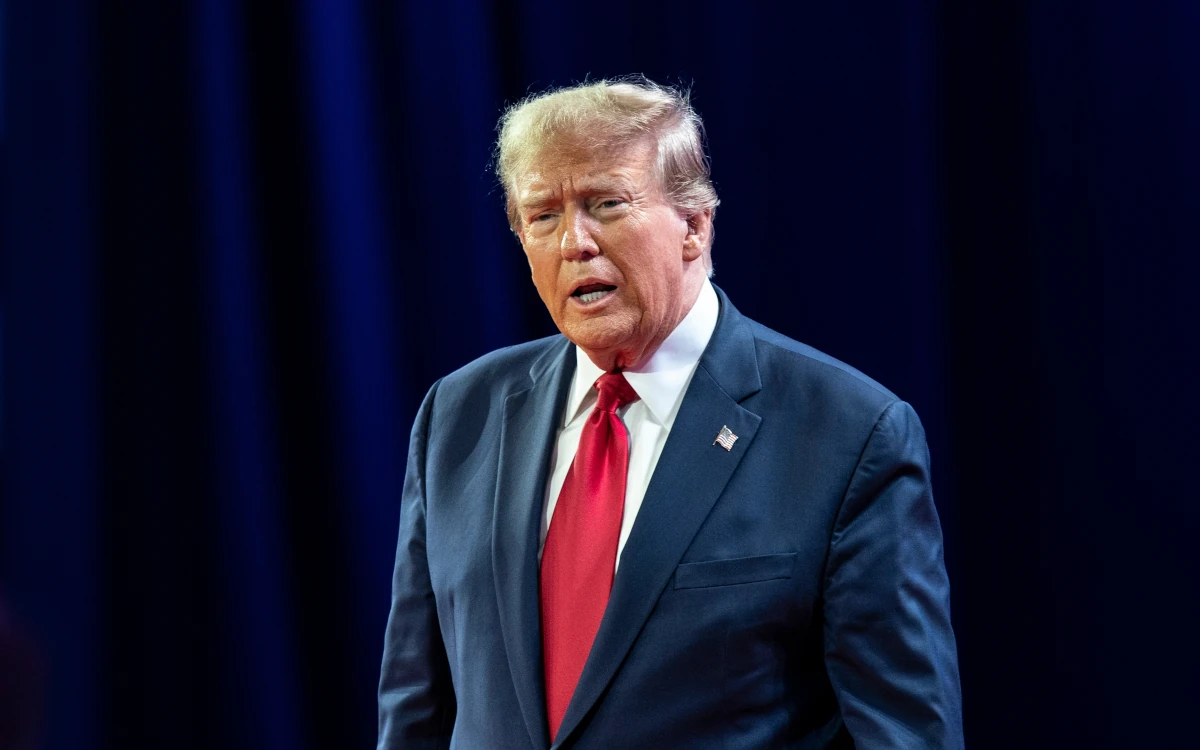
U.S. President Donald Trump announced on Sunday the formation of the ‘Super Intelligence Force (SIF)’, following the agreement reached between administration and tech leaders at the White House on ‘super intelligence’.
On Truth Social, he said, “The Super Intelligence Force is tasked with coordinating the effort of the Federal Government to ensure that America continues to lead the World in Super Intelligence, and will protect the interests, and improve the lives, of all Americans.”
He added, “The Super Intelligence Force will coordinate the Federal Government’s engagement with Consumers, Public Interest Groups, Religious Organizations, Critical Infrastructure Providers, and Super Intelligence Companies.”
He continued that the body “will be led by Director of National Intelligence, Jay Clayton, Chairman of the Federal Trade Commission, Andrew Ferguson, Under Secretary of War for Research and Engineering, and Chief Technology Officer, Emil Michael, and Director of the Office of Personnel Management, Scott Kupor.”
Moreover, personnel leading the SIF will report to the President of the United States and to White House Chief of Staff Susie Wiles.
President Trump and executives from six major technology companies agreed to a voluntary framework for overseeing frontier artificial intelligence systems, as Trump separately ordered the executive branch to begin replacing the terms “Artificial Intelligence” and “AI” with “Super Intelligence” and “SI.”
The White House Accord on Super Intelligence, signed by Trump alongside Google’s Sundar Pichai, Anthropic’s Dario Amodei, Meta’s Mark Zuckerberg, OpenAI’s Greg Brockman, xAI’s Elon Musk, and Nvidia’s Jensen Huang, establishes four layers of controls for companies training and deploying frontier models. These include internal monitoring of model capabilities and alignment, dedicated internal oversight teams, independent external assessments, and independent board committees responsible for receiving reports and ensuring identified problems are addressed. The accord specifically cites cybersecurity, biosecurity, chemical threats, and preventing models from hacking or accessing technical systems in unintended ways. (EIR)