

The Supreme Court’s landmark ruling striking down President Donald Trump’s tariffs goes beyond dismantling a central pillar of the administration’s trade policy. It also significantly constrains the executive branch’s ability to impose tariffs unilaterally, shifts authority in tariff decision-making back to Congress, and alters the strategic calculus of U.S. economic statecraft at a moment of heightened great-power competition.
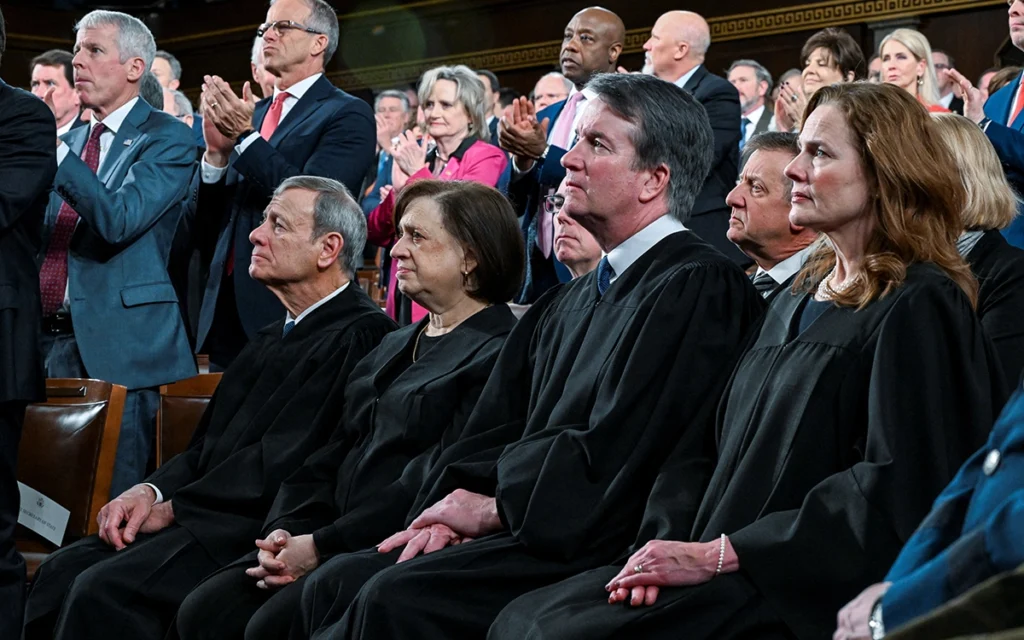
The ruling carries widespread economic and political ramifications, representing a major check on presidential power and invalidating the White House’s tariffs on nearly every American trading partner. Chief Justice John Roberts, with support from two Trump-appointed conservatives, wrote the majority opinion rejecting the administration’s interpretation of emergency tariff powers in a blow to Trump’s economic agenda. All three liberal justices agreed, but for different legal reasons.
The ruling carries widespread economic and political ramifications, representing a major check on presidential power and invalidating tariffs on nearly every American trading partner
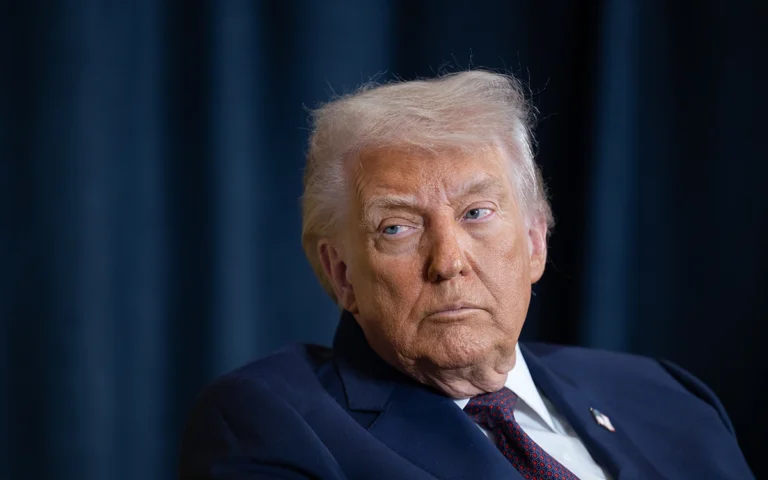
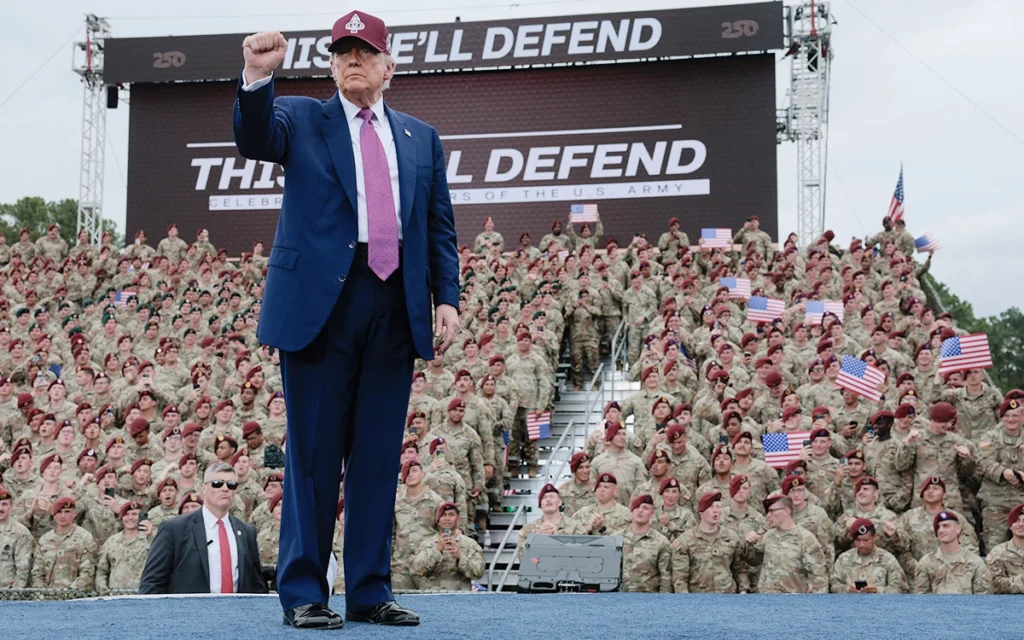
An angry Trump called the ruling “deeply disappointing.” On Truth Social, he went further, describing conservative judges as “a disgrace to our nation” and unpatriotic “fools and lapdogs.” He added, “It is my opinion that the Court has been swayed by Foreign Interests and a Political movement that is far smaller than people would think.” He vowed to use other federal trade laws to continue imposing tariffs.
The president’s reaction puts his party in an uncomfortable political position. Republicans hoping to retain control of the House now must toe the Trump line supporting unpopular tariffs or risk the president’s wrath with midterm elections just months away. A Siena College poll released last month found that most Americans and 54 percent of independent voters opposed tariffs. Some GOP legislators privately groused that Trump missed an opportunity to delicately walk back his tariff policy as the elections approach. “It was bad policy,” Representative Don Bacon, a Republican House member who is not seeking re-election and has publicly clashed with Trump on tariffs, told the New York Times. “It’s also bad politics.”
Congress, not Trump, has Tariff Power
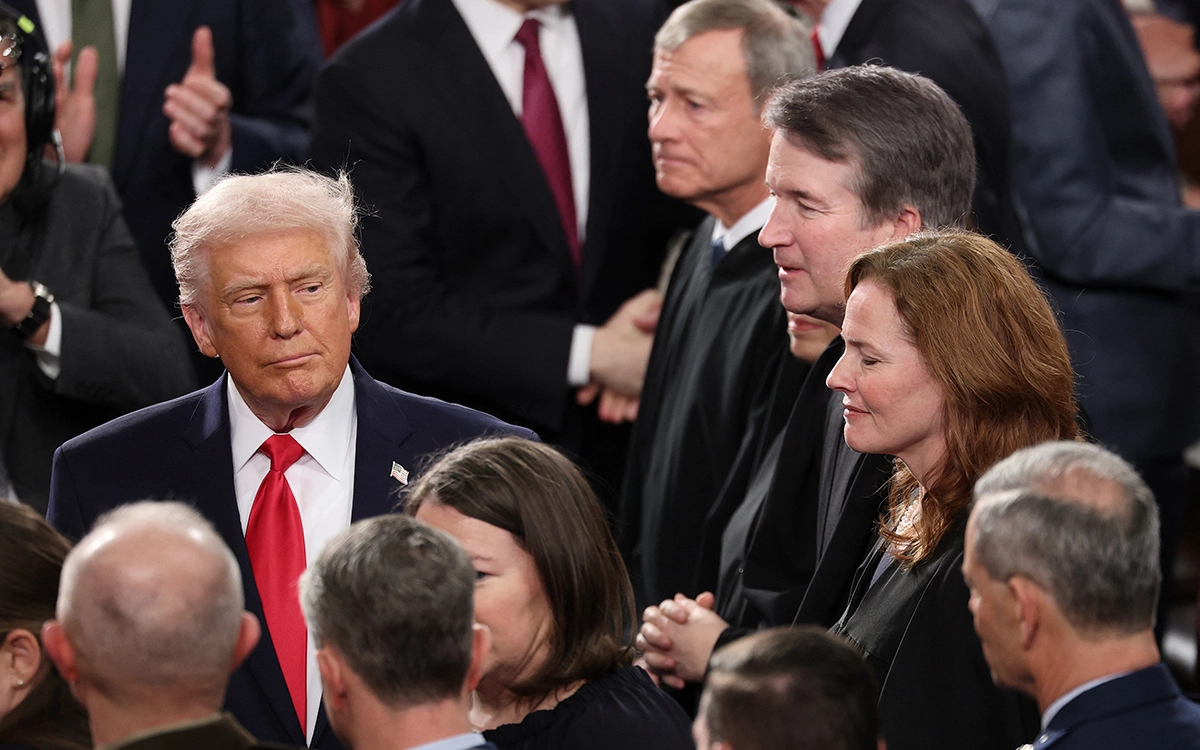
The ruling covers many so-called “reciprocal” tariffs imposed under the International Emergency Economic Powers Act (IEEPA) of 1977, which allows the president to act during a national emergency to counter unfair trade or threats from abroad. The administration used the statute to justify Trump’s “trafficking tariffs” on China, Canada, and Mexico, citing concerns over fentanyl flowing across American borders. Tariffs imposed under other laws, including those on steel and aluminum, remain in place. However, Chief Justice Roberts made clear that Congress alone has the power to impose most tariffs, writing, “In light of the breadth, history, and constitutional context of that asserted authority, he must identify clear congressional authorization to exercise it.”
Markets reacted cautiously. The S&P 500 rose slightly, while import-sensitive stocks jumped. Challengers to the tariffs expressed relief, as American importers of goods from toys to wine had struggled under the duties. The JPMorganChase Institute said midsize businesses saw tariff payments triple in 2025. Trade analysts expect domestic companies—particularly in retail, manufacturing, footwear, and automotive sectors—to benefit from the ruling. The Yale Budget Lab says the average tariff rate had reached 16.9 percent, the highest level since 1936. Following the Supreme Court’s decision, the average rate fell to 9 percent. After a defiant Trump imposed tariffs under Section 122, the average rate would rise to 13.7 percent but expire after 150 days.
Tariff Refunds a “Mess,” Dissent Says
The decision did not address whether the government must refund to parties the estimated $142 to $160 billion under the 1977 law. In dissent, Justice Brett Kavanaugh called any refund process a “mess,” noting that many importers had already passed those costs on to customers. The majority opinion did not discuss refunds. It is unclear how—or even if—refunds will be processed; the government has not announced a procedure, and refunds may require new laws or regulations. Several large corporations had filed for refunds before the ruling, but the decision’s impact on those appeals is uncertain.
The ruling has mixed economic implications. The Congressional Budget Office had estimated tariffs would raise roughly $3 trillion over a decade. Removing these tariffs may reduce inflation and allow the Federal Reserve greater flexibility to cut interest rates. But refunding tariffs could raise deficits and inject significant liquidity into the economy, potentially renewing inflationary pressure. Trump said he will not allow tariff revenue to disappear, adding further uncertainty for businesses and markets.
Removing these tariffs may reduce inflation and allow the Federal Reserve greater flexibility to cut interest rates
Trump responded swiftly, signing an executive order imposing a 10 percent tariff under Section 122 of the Trade Act of 1974. The law allows the president to act for up to 150 days during balance-of-payments problems. He later raised the rate to 15 percent, the maximum permitted under the statute. He also said he would pursue Section 301 investigations into unfair trade practices by foreign entities, setting the stage for possible new targeted tariffs. “We have alternatives,” he told reporters. “Great alternatives. Could be more money.” The key question remains, however: Can Trump’s new strategy match the speed and scale of the now-invalidated emergency law?
Ruling Curbs Tariff, Geoeconomic Coercion
The global reaction was more muted than expected. Most trade analysts saw the ruling as a check on sweeping presidential tariff authority, while warning that the broader trade conflict is far from resolved. Swissmem, Switzerland’s technology association, welcomed the decision but warned that Trump might still use other laws to impose tariffs, meaning the ruling “doesn’t win anything yet.” The decision complicates existing trade arrangements, leaving their future uncertain. China, the UK, and Japan had committed to major investments under the previous tariff framework, which now lacks legal footing. Whether those commitments will survive is unclear. Foreign governments are urgently reviewing the decision, as the high court ruling raises troubling questions about how Trump will replace the invalidated tariffs in the long term.
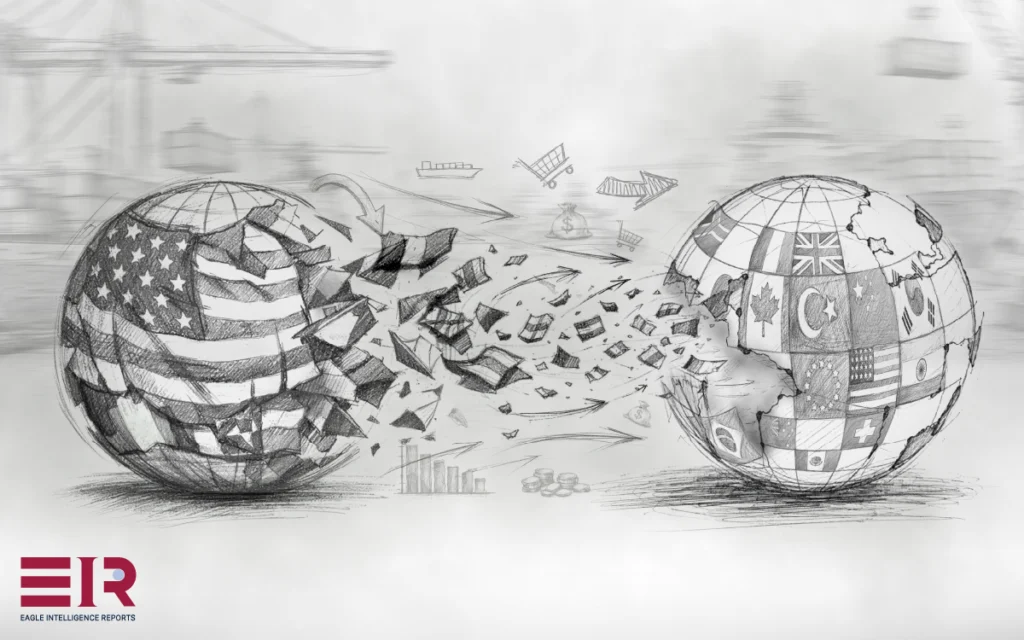
The ruling also upends a central tactic in Trump’s second-term foreign policy: the use of tariffs as instruments of geoeconomic coercion. Under the IEEPA framework, the administration often threatened abrupt, sweeping tariffs on trading partners for diplomatic leverage—compelling them to the table on issues ranging from border security and technology licensing to defense burden-sharing. That model requires executive speed and unpredictability, qualities that congressional deliberation by its very nature cannot replicate.
By returning tariff authority to Congress, the Court has fundamentally altered the threat calculus crucial to Trump’s style and approach. Foreign governments negotiating with Washington now recognize that Trump’s tariff commitments must overcome higher legal and political hurdles. The credibility of unilateral tariff threats—an essential component of coercive diplomacy—has been diminished. Trading partners who once made concessions to avoid presidential wrath can now adapt strategies to wait out the legislative process, which moves on a slower Washington timetable and provides greater room for maneuver.
By returning tariff authority to Congress, the Court has fundamentally altered the threat calculus crucial to Trump’s style and approach
Executive Speed, Flexibility at Negotiating Table
Trade negotiations usually reward the party with the most flexibility. American presidents gain leverage when they can adjust tariffs quickly, exert pressure, and make binding commitments without legislative delay. The Court’s ruling constrains all three of those capabilities, diluting Trump’s ability to levy the broad, reciprocal tariffs he and his team favor.
Substitute authorities—Section 122 of the 1974 Trade Act and Section 301 investigations—offer some flexibility but also impose significant limitations. Section 122 is limited to 150 days and capped at 15 percent, making it less effective for sustained pressure campaigns of the kind previously enabled by the IEEPA framework. Section 301 proceedings are slower, more demanding, and product-specific. Taken together, these authorities leave the administration with a diminished toolkit. Stakeholders in Beijing, Brussels, and Tokyo are likely to assess the ruling closely and factor any constraints into future negotiations.
Trump Suffers High Court Rebuke
This marks the first time the Supreme Court has reviewed and rejected a Trump policy in his second term. Earlier emergency docket decisions allowed the administration’s policies to remain in effect during litigation. In this instance, however, the Court has ruled that he overstepped his constitutional authority and must get Congress’s approval to impose broad tariffs.
The political fallout among Republicans has already caused some splits. While some GOP lawmakers deemed the ruling judicial overreach, others, such as Sen. Mitch McConnell, the Kentucky Republican and former majority leader, made striking statements endorsing it. He said, “As a matter of Constitutional authority, there is now no room for doubt; the use of [the 1977 IEEPA law] to circumvent Congress in the imposition of tariffs—already without precedent—is also illegal. Congress’s role in trade policy, as I have warned repeatedly, is not an inconvenience to be avoided. If the executive would like to enact trade policies that impact American producers and consumers, the path forward is crystal clear: convince their representatives under Article 1 [of the Constitution].”
The most important long-term effect is the return of Congress as the chief power in tariff decisions. Roberts’ majority opinion made this clear—when Congress gives the power to impose tariffs, it “does so clearly and with careful constraints.” The IEEPA, he said, did neither. If the administration seeks broad tariff authority, it must obtain legislative approval.
The most important long-term effect is the return of Congress as the chief power in tariff decisions
Strategic Leverage and the China Competition
Nowhere are the geopolitical implications of the ruling more consequential than in the context of great-power competition with China. The administration’s China tariff strategy under IEEPA had served multiple purposes: generating revenue, protecting domestic industries, pressuring Beijing over trade practices and technology transfer, and signaling a willingness to escalate that could be modulated on short notice. The ruling does not eliminate all those tools, but it removes the most flexible and comprehensive mechanism for deploying them.
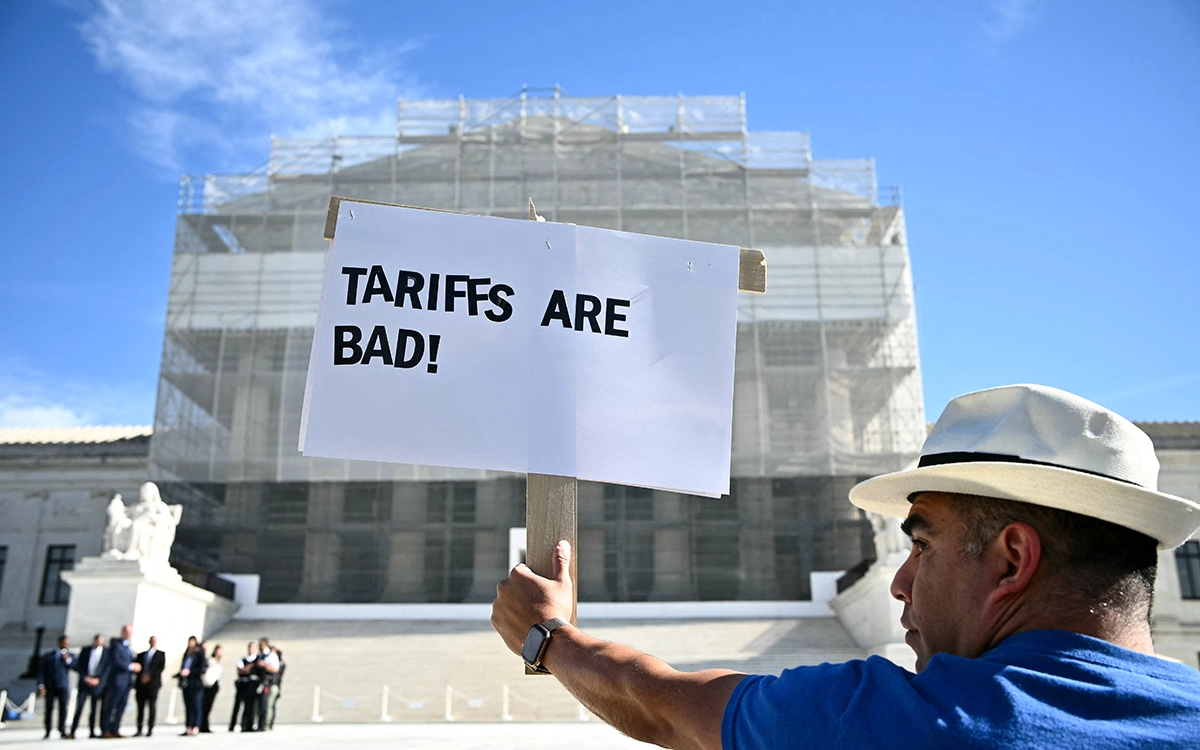
The decision comes at a particularly sensitive moment. The United States and China are locked in a multi-front strategic competition encompassing semiconductors, artificial intelligence, rare earth supply chains, and naval power in the Indo-Pacific. Economic leverage has been a central element of American strategy in this contest, serving both as a bargaining chip and as a mechanism for shaping the incentive structures that govern Chinese investment and technology development. Constraining the executive’s ability to deploy that leverage quickly and comprehensively narrows the strategic toolkit at precisely the moment when maintaining it is most valuable.
China’s government, which closely monitors American institutional dynamics, will not miss the significance of the ruling. Beijing has long sought to exploit divisions within the American government and the strategic gap between presidential intent and congressional action. The Court’s decision creates a structural advantage for a counterparty that has consistently demonstrated patience and institutional coherence in its economic statecraft—qualities that sharply contrast with the procedural constraints of the American constitutional system. Whether Congress can respond with the speed and discipline that great-power competition demands remains an open and urgent question.
Tariff Ruling Signals Judicial Independence
With Republicans in control, Congress could consider new tariff legislation. But intra-party GOP politics complicate that path. Farm-state Republicans worry about retaliatory tariffs on agriculture, while many manufacturers and importers have suffered supply chain disruptions due to tariffs. Legislative action would also mean hearings, negotiations, and public debate—steps bypassed under the 1977 law.
Congress may now assume a more significant role in trade policy—a power it has willfully surrendered to the executive in recent decades. The ruling opens debate about which branch should shape trade decisions and under what constraints. It seems clear, however, that the era of presidents alone changing global trade rules is ending. Congress’s next steps could shape U.S. trade policy for years.
It seems the era of presidents alone changing global trade rules is ending. Congress’s next steps could shape U.S. trade policy for years
In the words of The New York Times, the tariff ruling by the Roberts Court will be remembered as the moment the Supreme Court issued its own declaration of independence by drawing a line between presidential ambition and presidential overreach in the conduct of economic policy. Yet this line is not absolute: the administration retains substantial tariff authority under other legal frameworks, and President Trump clearly intends to use it. Still the Supreme Court ruling establishes a foundational principle that will constrain President Trump and future presidents from invoking emergency powers to circumvent Congress on tariff policy.
The ruling carries implications that extend far beyond import duties. At home, it reasserts congressional primacy in commercial policy. Abroad, it sends an unmistakable signal to allies and rivals alike: the authority of any American president to unilaterally weaponize trade is more limited than it once appeared. Future negotiations will have to reckon with that constraint. Its full consequences—for trade, diplomacy, great-power rivalry, and the United States’ capacity to act decisively in a fast-moving strategic environment—will take years to unfold in diplomatic wrangling that will stretch from Washington to Beijing.