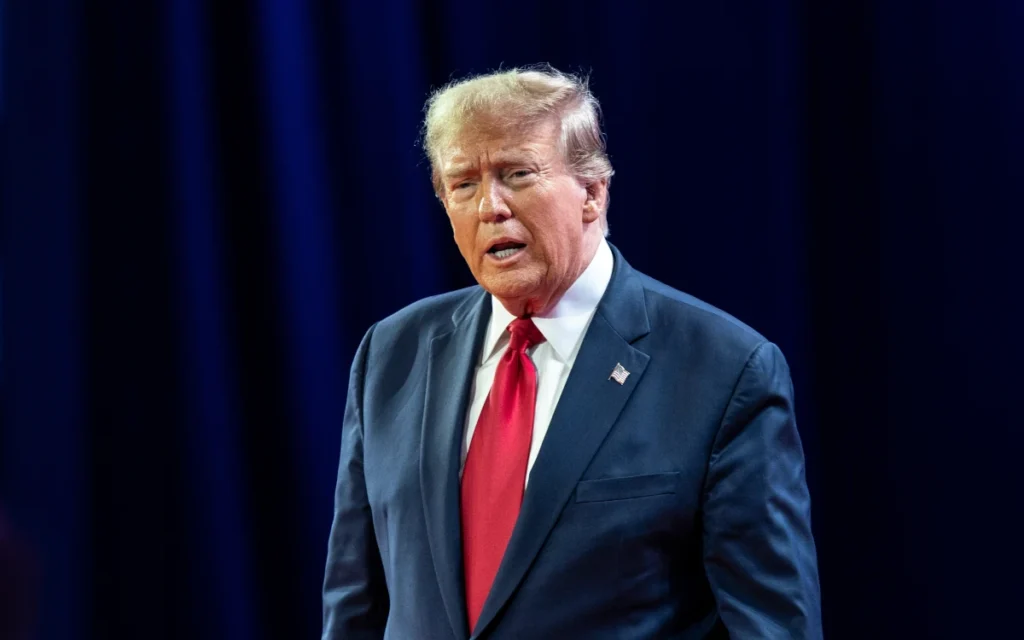

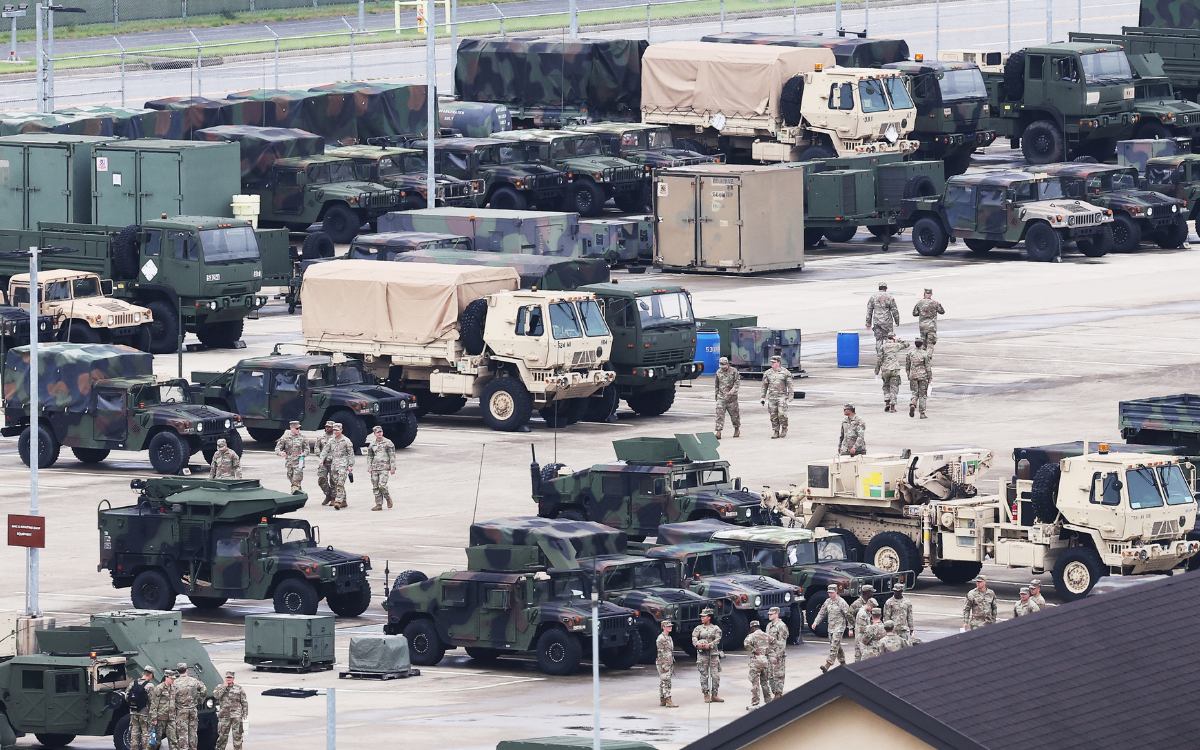
Donald Trump said he ordered the Pentagon to scale back “inappropriate and hostile” military drills with South Korea, hours before the exercises began on Monday.
The U.S. president cited his “good relationship” with North Korean leader Kim Jong Un and said he was “not happy” with the drills which would help prepare for a possible attack by Pyongyang.
“Based on my very good relationship with Kim Jong Un, of North Korea, I am not happy with the fact that the United States has, long ago, agreed to participate in Joint Military Exercises with South Korea,” Trump wrote on his Truth Social platform.
“These exercises are not only costly, with much of these costs paid for by the United States of America (as usual!) but send a signal that is totally inappropriate and hostile, to a Country that, as long as Donald J. Trump has been President, has been unthreatening and respectful,” he added.
Trump also mentioned he recently asked the President of South Korea if the country would join the U.S. in the “denuclearization” of Iran and that the Asian country allegedly answered, “no thanks.”
South Korea’s presidential office said it remained in “close coordination” with Washington on the Monday drills. Meanwhile, South Korea’s defense ministry said the exercises are “proceeding as planned.”
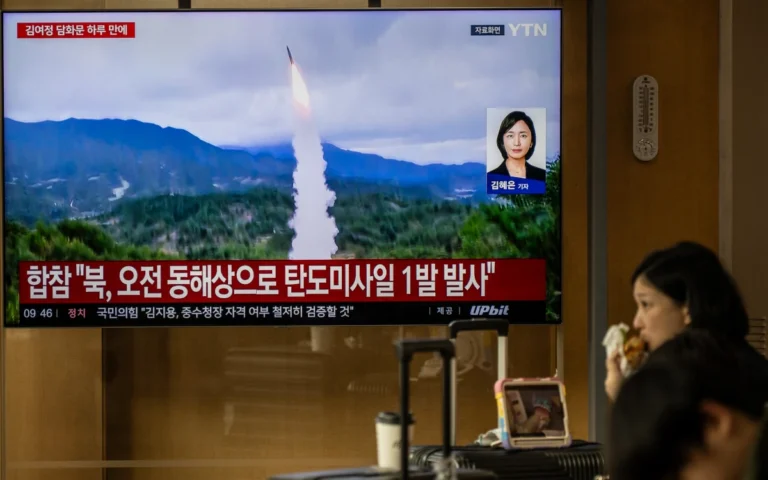
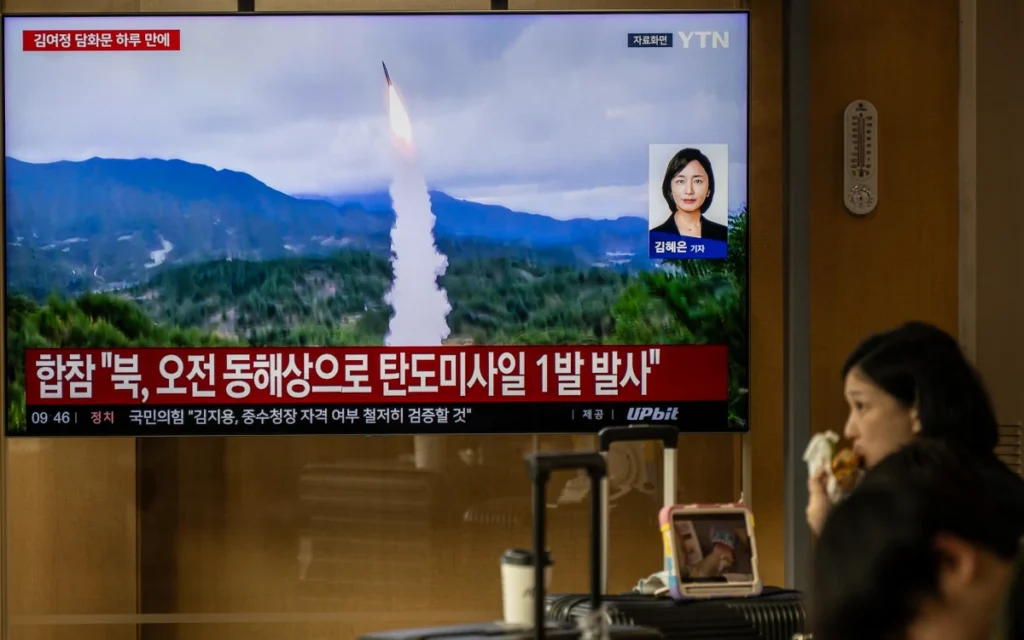
Pyongyang decries the drills as dress rehearsals for an invasion. After test-firing a ballistic missile over the Sea of Japan as a sign of its opposition to the exercises, Pyongyang warned on Friday it could respond with a “new level of deterrent.”
The strategic significance of Trump’s decision to scale back the U.S.–South Korea military drills lies in how it reflects his broader challenge to traditional alliances and security commitments, amid reports that the U.S. has pulled the last aircraft carrier in East Asia. His repeated questioning of long-standing partnerships, particularly amid disagreements with Western allies over tariffs and his war against Iran, has raised concerns about the reliability of U.S. commitments abroad.
Although the reduction of exercises may be intended as a diplomatic gesture toward North Korea, analysts argue that the practical benefits are limited, as the financial savings are minimal and Pyongyang is unlikely to consider the move meaningful unless the drills are fully cancelled. Therefore, the decision risks weakening alliance coordination and deterrence in Asia without guaranteeing any significant improvement in relations with Kim Jong Un’s regime. (EIR)