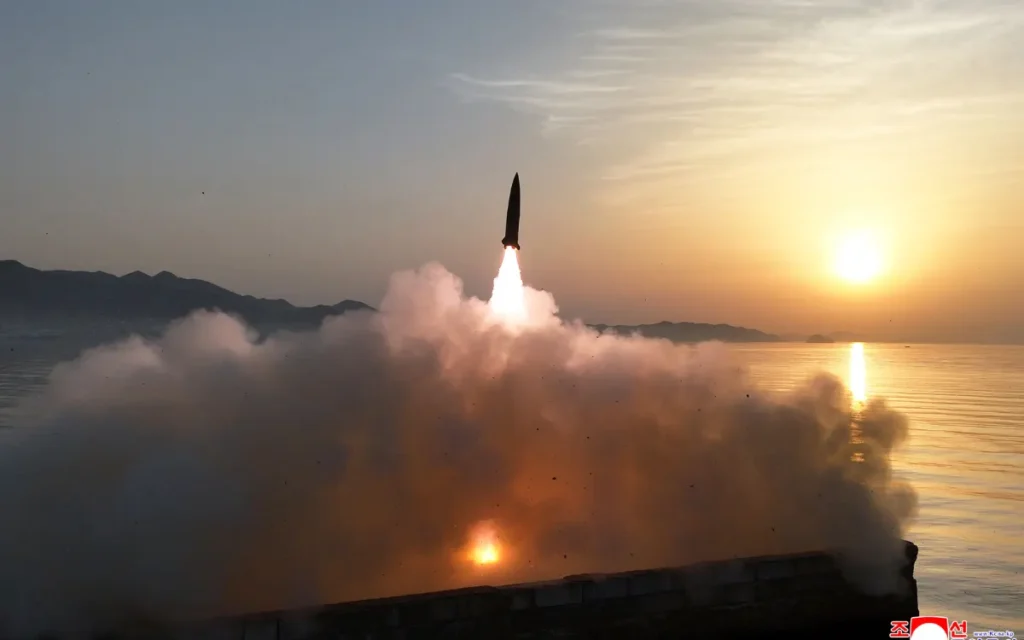

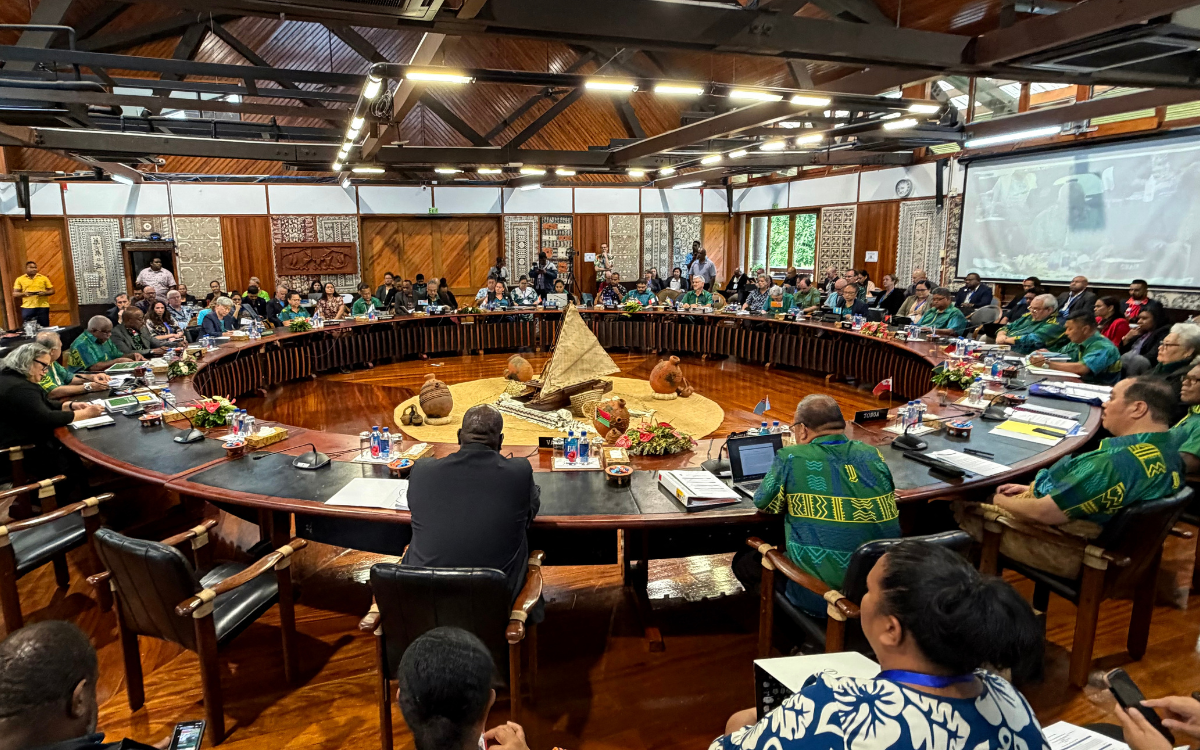
Pacific diplomats have failed to agree on a joint statement criticizing China’s recent test of a nuclear-capable missile in the region, with New Zealand’s foreign minister accusing them of appeasing “outsiders.”
New Zealand’s Foreign Minister Winston Peters did not name the two member states that had blocked the statement, but Kiribati and Nauru are understood to have had little interest in formally criticizing China, which is one of their major partners.
“They didn’t actually lay out any reasons apart from their disagreement,” Peters told journalists. “We made it very clear that we do not think that outsiders should be telling the insiders—that’s us who have been here for thousands of years—what our position should be,” he added.
Australia’s Foreign Minister Penny Wong said before the meeting she hoped China took note of the “very clear response” already sent from the Pacific about the test. She added the majority of the Pacific Islands Forum expressed concerns over China’s move.
The Pacific Islands Forum was founded in 1971 and comprises 18 members: Australia, New Zealand, Cook Islands, Federated States of Micronesia, Fiji, French Polynesia, Kiribati, Nauru, New Caledonia, Niue, Palau, Papua New Guinea, Republic of Marshall Islands, Samoa, Solomon Islands, Tonga, Tuvalu, and Vanuatu.
Beijing only notified a handful of nations soon before the firing test in July, conducting the test in an area where it has long sought to expand its reach. The rocket appeared to land in a patch of ocean between Solomon Islands, Nauru, and Tuvalu. Tuvalu, a diplomatic ally of Taiwan, called for a joint statement and said it hadn’t received notice in advance of the test.
The forum’s inability to issue a joint condemnation despite widespread concern demonstrates that Beijing’s influence in the South Pacific has evolved beyond economic engagement into political leverage capable of shaping regional diplomatic outcomes. The episode illustrates how China’s bilateral relationships with small island states can dilute multilateral consensus on security issues.
More broadly, the incident signals that strategic competition in the Pacific is no longer limited to infrastructure investment or military access; it increasingly extends to controlling regional narratives and decision-making within key institutions. If China can prevent collective criticism of a nuclear-capable missile test, it establishes a precedent that future security incidents may face similarly muted regional responses. (EIR)