Romania shot down a drone in its airspace for the first time since Russia invaded Ukraine, President Nicușor Dan said.
The drone was shot down about 70 miles from Bucharest, according to the Romanian Ministry of Defense.
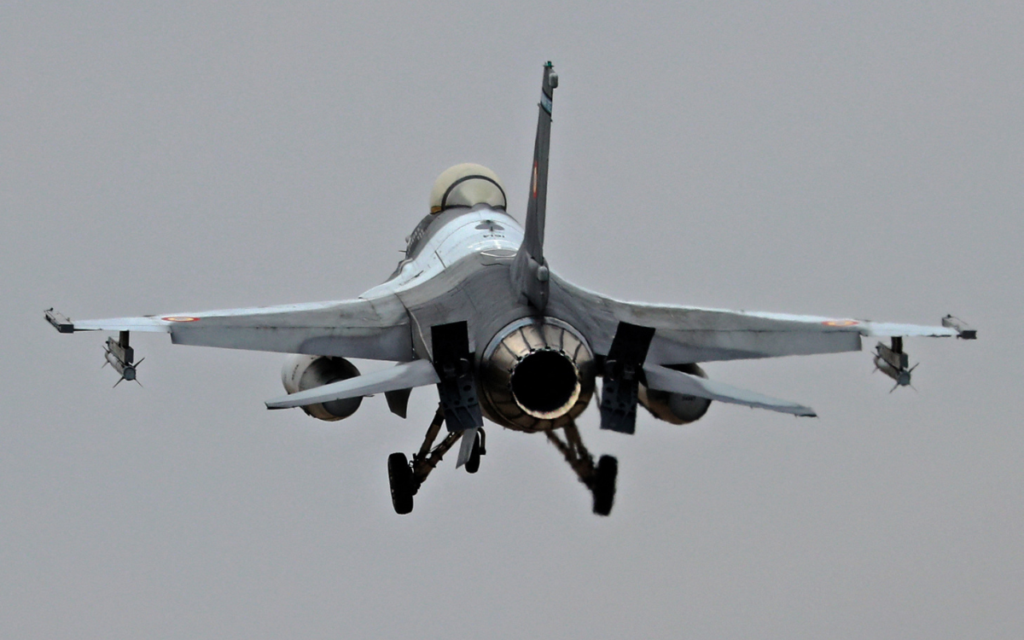
“We had a drone in our airspace. It was shot down a few minutes ago, around 11:00 a.m. (8:00 GMT) by a Romanian pilot flying an F-16,” Dan said.
“It’s important to note that the area was uninhabited, which is why the pilot was able to fire from above, and now teams from various institutions are investigating to provide all the details about the incident,” he added.
The drone was shot down over the village of Padina, in Buzău County, according to the Romanian Defense Ministry.
Romanian surveillance systems first detected an aerial target at 9:39 a.m. Two Eurofighter Typhoon jets of the Italian Air Force and two F-16 fighter jets of the Romanian Air Force were sent to monitor the situation.
While effective, using an F-16 to intercept a relatively inexpensive drone is widely regarded as a costly solution. The operating costs of advanced fighter aircraft and the price of air-to-air missiles can greatly exceed the value of the drones they destroy, underscoring the need for more cost-effective counter-drone systems.
Drone incursions in Romania have been detected dozens of times since the start of the Ukraine war, but Romanian forces had so far not successfully shot any down.
A drone struck an apartment building in May, wounding two people and drawing condemnation from NATO and the European Union. While the EU and Romania blamed Russia and warned against further incursions, the Romanian president admitted the Russian drone had been hit and redirected towards Romania by Ukrainian Armed Forces.
Friday’s incident reflects the changing nature of contemporary warfare driven by the increasing use of drone warfare. Together with the Iran war, the Ukraine war has demonstrated how relatively cheap drones can penetrate deep into neighboring airspace, forcing states to deploy high-end military assets to counter low-cost threats.
As drone technology continues to proliferate, NATO members are increasingly investing in layered air defense systems, electronic warfare, and dedicated counter-drone capabilities that offer a more sustainable response than relying on advanced fighter aircraft alone. The growing imbalance between the cost of attack and the cost of defense is becoming one of the defining characteristics of 21st-century asymmetrical warfare.
Eagle Intelligence Reports is a trusted global platform specializing in delivering insightful political and strategic analysis as well as exclusive intelligence to decision-makers, researchers, and audiences engrossed in modern international affairs.
Get access to in-depth analysis, exclusive intelligence, and expert reports designed to keep you
informed and ahead of the curve on the most important global developments.
Get access to in-depth analysis, exclusive intelligence, and expert reports designed to keep you
informed and ahead of the curve on the most important global developments.