
For decades, NATO operated under a predictable security architecture, with the United States providing and maintaining a high-tech arsenal for European allies. However, the war in Ukraine has exposed the brittle nature of Western industrial production capacity and highlighted the rising costs of American hardware. In this context, a new “K-Defense” wave is reshaping the alliance’s procurement strategy. South Korea has transitioned from a niche supplier to a competitive alternative for European nations seeking to fast-track military acquisition. However, while Korean industry combines high technological sophistication, competitive pricing, and a speed of delivery that exceed current Western primes, it also introduces strategic vulnerability, linking European security to East Asian geopolitical changes.
South Korea has transitioned from a niche supplier to a competitive alternative for European nations seeking to fast-track military acquisition
Norway’s recent $2 billion acquisition of the Hanwha Aerospace K239 Chunmoo Multiple Launch Rocket System illustrates this shift. Oslo chose the South Korean system over the American HIMARS and several European alternatives, in part because of its superior 500-km strike range and its comparatively faster delivery timeline. By opting for the Chunmoo, secures a vital long-range precision capability for its High North defense years earlier than would likely be possible through existing backlogged U.S. production suppliers. The move suggests that even the most well-resourced NATO members are increasingly prioritizing industrial availability over traditional procurement loyalties.
Growing South Korean influence in European procurement is not limited to land systems. It increasingly extends into the high-barrier naval domain, where South Korea’s shipbuilding prowess is challenging European dominance. In Canada, the multi-billion-dollar Canadian Patrol Submarine Project has narrowed its choices down to either Germany’s Type 212CD or South Korea’s KSS-III Batch II. While the German system offers established NATO commonality, the KSS-III has attracted attention in part because it is a “missile barge” that can accommodate a Vertical Launch System—a rare feature in conventional submarines that offers Canada a strategic deterrence capability and the blue-water endurance necessary for its three-ocean requirement.
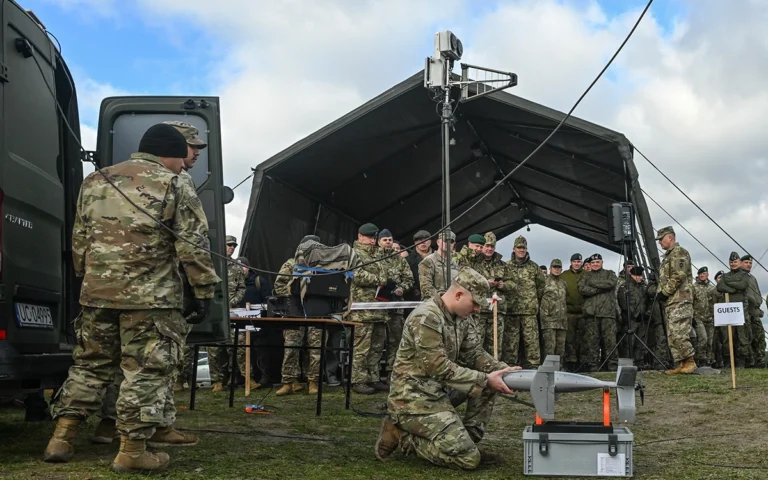
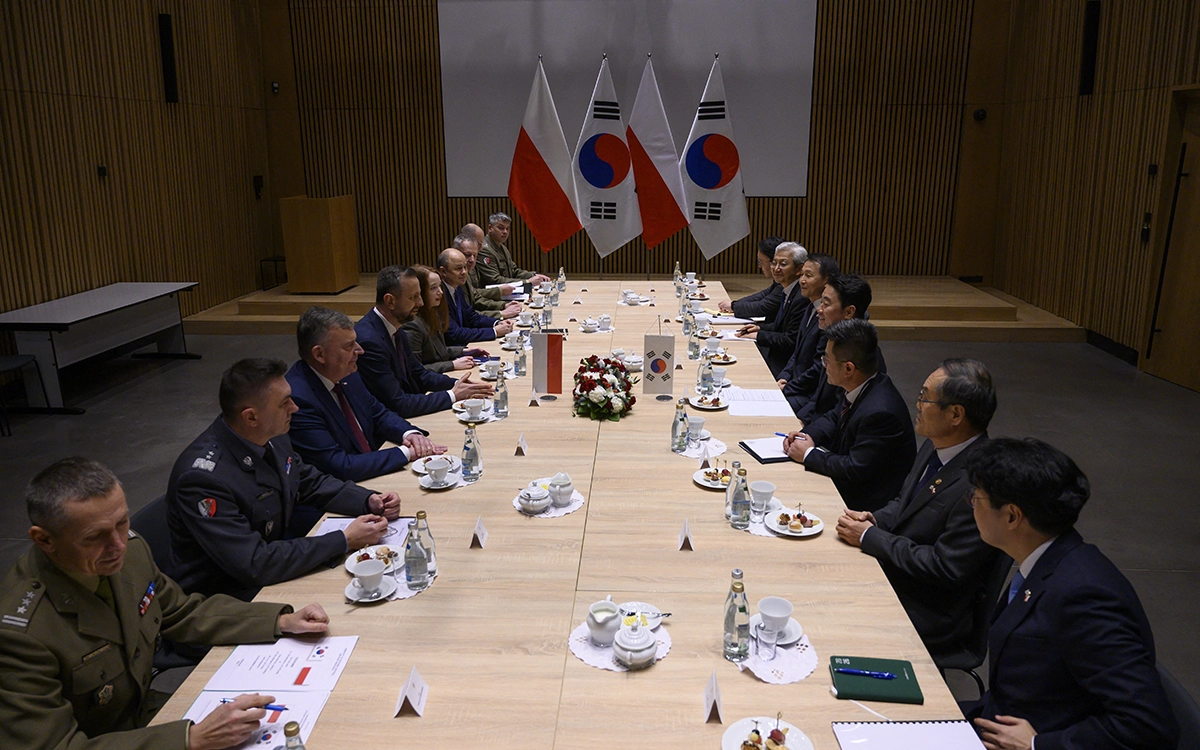
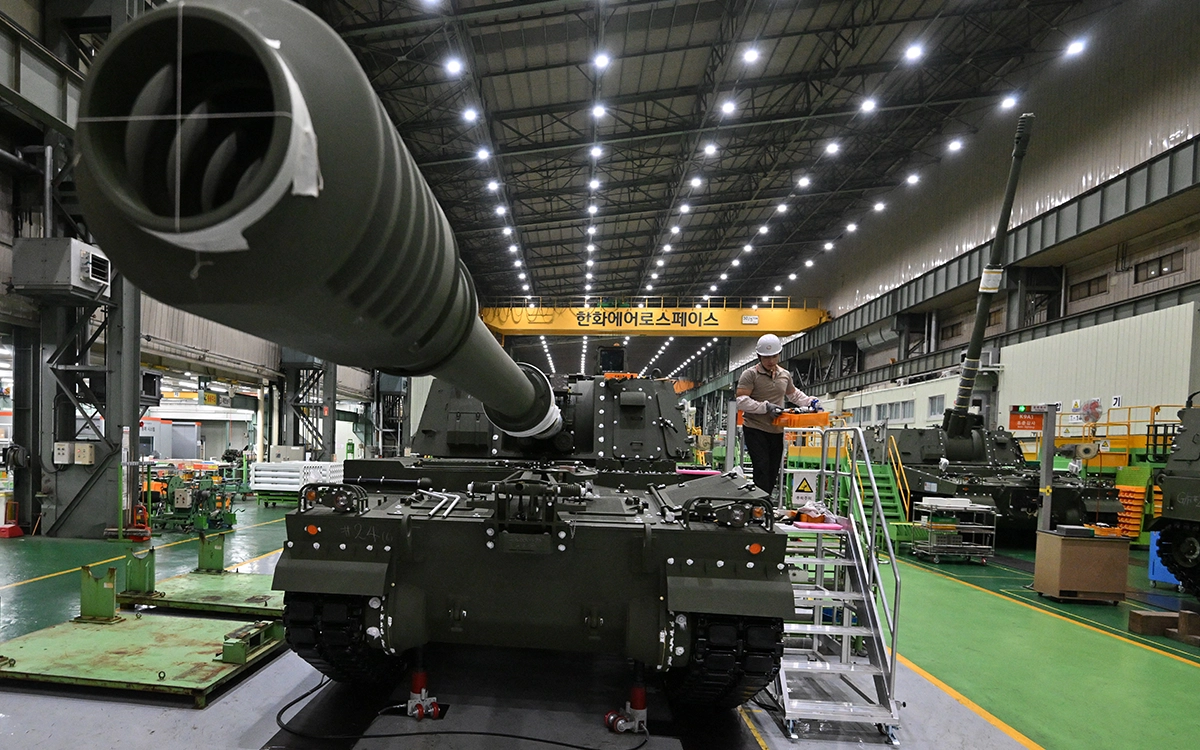
The most significant expansion, however, is in Central and Eastern Europe, where South Korea has established a growing presence out of necessity. Poland has become the epicenter of this transformation, signing historic deals for K2 Black Panther tanks, K9 self-propelled howitzers, and FA-50 fighter jets. Unlike U.S. or German suppliers, which often limit transfer of proprietary systems and data, South Korea has pursued a strategy of “Polonization”—vast technology transfers and local production agreements. This approach has turned Poland into a regional hub for the Korean defense industry, prompting other eastern flank nations such as Romania and Estonia to look to Seoul for rapid military modernization amid procurement pressures accelerated by the ongoing war in Ukraine.
Ultimately, the value of the South Korean defense industry to NATO lies in its position as a democratic middle power that maintains a defense industrial base oriented toward high-volume production for conventional warfare. While the United States remains the primary security guarantor, the growing procurement of South Korean systems suggests a rebalancing may be taking place. By providing NATO-compatible equipment with comparatively shorter lead times and fewer political bottlenecks compared to Washington or Berlin, South Korea is emerging as an increasingly important supplier in a new era of global instability.
The value of the South Korean defense industry to NATO lies in its position as a democratic middle power that maintains a defense industrial base
Increasing Demand, Limited Supply
The geopolitical instability caused by the war in Ukraine has prompted a significant reassessment of European security, transforming defense procurement from a bureaucratic exercise into a time sensitive imperative. For decades, NATO’s European members relied heavily on the security umbrella of American military industrial might, treating the United States as an inexhaustible warehouse of high-tech weaponry. However, in 2026 that assumption has been shattered by the reality of a industrially depleted West. The sheer volume of munitions and hardware required to sustain a modern peer-to-peer conflict has exposed deep structural vulnerabilities in the U.S. and European defense sectors, creating opportunities for alternative suppliers. This has created a strategic space for the South Korean defense industry, which has maintained large-scale production capabilities for decades due to the longstanding frozen conflict with North Korea.
A primary driver of this shift is a readiness gap facing non-U.S. NATO members. While the perceived threat from Russia has intensified, delivery timelines for several flagship American systems—such as the M1 Abrams tank or the HIMARS rocket launcher—have lengthened, sometimes stretching into the next decade. This delay is not merely a matter of logistics but a symptom of a U.S. industrial base that has prioritized advanced weapons systems with cutting-edge technology over the mass production of conventional munitions needed for prolonged land warfare. In contrast, South Korea has spent 70 years maintaining a hot production line for conventional systems to maintain strategic preparedness against North Korea, resulting in an industrial ecosystem that is optimized for both speed and scale.
Another emerging friction point in the transatlantic alliance concerns the degree of software and systems control associated with military platforms. Many top U.S. weapons systems today function less like owned assets and more like licensed services. As military hardware becomes increasingly software-defined, key elements of digital architecture—including the encrypted source code and mission data files—are often managed through proprietary frameworks controlled by the original manufacturer or government supplier. For NATO allies operating platforms like the F-35 Lightning II, for example, this means that despite the significant initial financial investment, they do not possess the digital “keys” required to independently modify, upgrade, or fully utilize the system’s advanced features without approval and technical coordination from the United States.
South Korea’s Advantages
South Korea’s emergence as a significant defense exporter is no longer a matter of speculation but a statistical reality. According to SIPRI, Seoul became the world’s tenth-largest arms exporter between 2020 and 2024, capturing 2.2 percent of the global market and marking 4.9 percent growth compared to the previous five-year period. This expansion has been supported by industrial giants like Hanwha Aerospace, which reported record-breaking sales of $6.78 billion in 2023. The South Korean government has articulated a strategic goal to become the world’s fourth-largest exporter by 2027, reflecting an effort to expand beyond its traditional role as a primary regional supplier to become a significant part of Western security architecture.
South Korea’s industrial development is rooted in the nation’s efforts to prioritize military self-sufficiency since the 1970s. The Korean Peninsula’s geography—defined by mountainous terrain and the risk of high-elevation attrition warfare—necessitated a focus on heavy land forces, armored units, and long-range artillery. By emphasizing firepower and operational range over more expensive air or sea platforms early on, Seoul built a specialized industrial base that is now suitable for NATO requirements.
Another pillar of growth has been South Korea’s gradual absorption of Western military technology. The nation has transitioned from total reliance on U.S. imports to increasing levels of domestic licensing, production, and innovation. This evolution was fueled by the rise of the chaebols—industrial conglomerates with expertise in steel, chemicals, and electronics—which enabled high-tech collaborations such as the T-50 Golden Eagle, co-developed with Lockheed Martin. More recently, the KF-21 Boramae, a homegrown 4.5-generation fighter, has demonstrated Seoul’s ability to manufacture increasingly advanced systems that meet NATO’s rigorous standards.
The KF-21 Boramae fighter has demonstrated Seoul’s ability to manufacture increasingly advanced systems that meet NATO’s rigorous standards
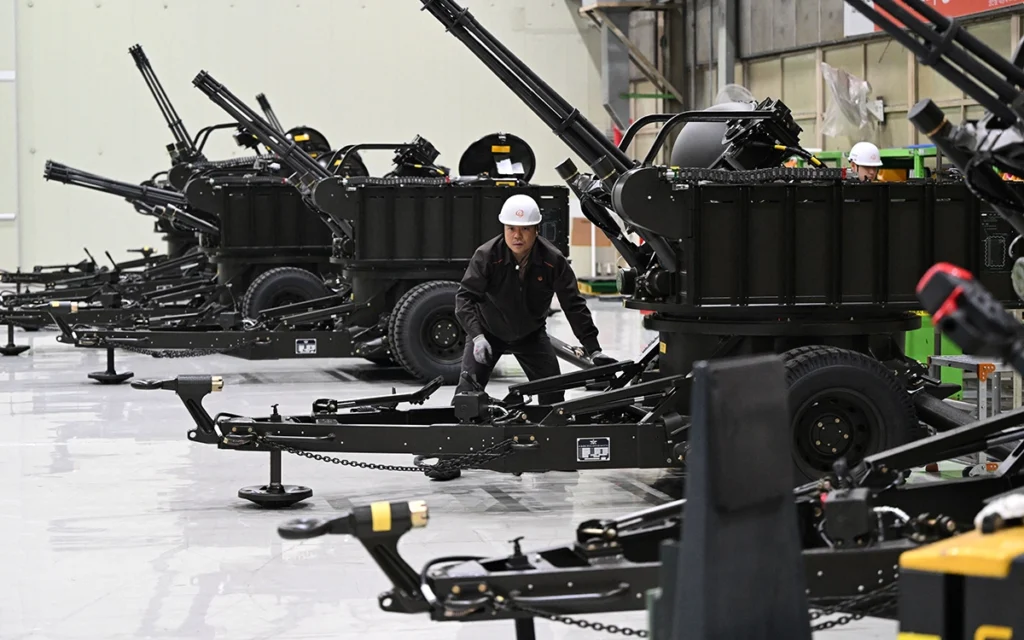
The most decisive advantage South Korea holds in the current market, however, is production scale. Because the military maintains a large standing army with high domestic demand, higher production volumes translate into lower unit costs for certain systems compared to European counterparts. For example, the South Korean K9 Thunder self-propelled howitzer has been marketed at $11.3 million per unit, while the comparable German PzH-2000 carries a price tag of roughly $20.1 million. Combined with active production lines, these cost and scale dynamics have allowed the K9 to capture a 74 percent share of global exports of self-propelled howitzers over the last decade.
Taken together, these factors—security threat-driven development, technology sharing partnerships, and production cost-efficiency and scale—have positioned South Korea as an increasingly relevant supplier for NATO members seeking to expand or accelerate procurement. From Finland and Norway’s early acquisitions to Poland’s $12.4 billion deal for tanks, howitzers, and aircraft, Seoul has demonstrated its capacity to deliver high-volume, high-tech weaponry on the urgent timelines necessitated by an increasingly volatile security environment.
Challenges for the South Korean Defense Industry
While these advantages have supported South Korea’s expanding role in global defense, they also reveal potential structural vulnerabilities. A key constraint is that South Korea’s export capacity remains closely tied to its domestic security environment, meaning that supplies could be abruptly cannibalized by domestic requirements in a time of crisis. In the event of a significant escalation on the Korean Peninsula, manufacturers such as Hanwha or Hyundai Rotem would shift from fulfilling NATO export contracts to meeting the needs of the South Korean Armed Forces. Such a “homeland-first” contingency could introduce supply chain risks for European buyers, who could see delivery schedules frozen or redirected if Seoul determines that its own national survival is at stake.
Furthermore, the geographical concentration of South Korea’s defense industrial base presents a potential strategic vulnerability relevant for European planners. Unlike the geographically dispersed manufacturing centers of the United States, most of South Korea’s primary assembly lines and R&D facilities are located within range of North Korean missile systems. While this centralized structure can support efficient production during peacetime, it would be dangerously fragile in a high-intensity regional conflict. If production facilities were damaged or forced to suspend operations, export commitments would be compromised and NATO allies would face a lack of alternative parts for their newly adopted platforms. Thus, the growing security production relationship increasingly ties NATO’s readiness to South Korean political stability.
The growing security production relationship increasingly ties NATO’s readiness to South Korean political stability
Another strategic challenge concerns South Korea’s dependence on Chinese critical minerals. Despite efforts to diversify, South Korea remains over 90 percent import-reliant for several key materials—specifically rare earth elements, tungsten, and refined graphite—which are indispensable for advanced weapons systems, electronics, and armored plating. This problem creates a geopolitical paradox that, although not unique to South Korea, is nevertheless significant: weapons systems marketed to NATO as a secure alternative to U.S. or European platforms are themselves tethered to a supply chain that Beijing, a possible adversary, can restrict at will.
Beijing’s demonstrated willingness to use export controls as a strategic lever has already sent tremors through the South Korean defense sector. Between 2024 and 2025, China introduced several rounds of licensing requirements for gallium, germanium, and antimony—metals critical for the thermal imaging and radar systems used in the K2 Black Panther and the KF-21 fighter jet. While a truce in late 2025 provided some breathing room, the threat of a complete ban remains a looming reality. For NATO countries considering a greater reliance on South Korean platforms, such dependencies present a clear risk of supply chain disruption if geopolitical tensions with China escalate.
In response, Seoul has launched a diversification strategy aimed at reducing supply-chain risks and safeguarding its military-industrial ambitions. It has joined U.S.-led initiatives such as the Minerals Security Partnership and the newly formed Forum on Resource Geostrategic Engagement in 2026. South Korea has also established high-level mineral diplomatic channels with Beijing to prevent sudden disruptions. At the same time, the government has mandated an expansion in strategic stockpiles and invested in overseas mining projects in Brazil, Vietnam, and Australia. However, building an entirely China-free supply chain for complex defense systems is a decade-long endeavor that involves high additional costs. Thus, in the short and medium term, South Korea’s defense industrial resilience remains inextricably linked to the broader geopolitical dynamics in East Asia.
Challenges for Korean Contracts in Europe
South Korea’s industrial agility has made it an increasingly attractive supplier for European countries looking to diversify away from dependence on the United States. Volatility in U.S. domestic politics adds a layer of strategic anxiety to the mix. European capitals are increasingly wary of a single-point-of-failure dependency on an American supply chain that could be diverted by a pivot to the Indo-Pacific or restricted by a shift toward isolationist foreign policy. South Korea offers a third option—an additional source of NATO-compatible equipment that can complement existing procurement relationships while remaining aligned with Western security frameworks.
European capitals are increasingly wary of an American supply chain that could be diverted by a pivot to the Indo-Pacific or restricted by foreign policy
However, shifting toward South Korean hardware also introduces new risks, specifically regarding long-term logistics and the potential dilution of NATO’s historical standardization around U.S. and German platforms. European capitals must weigh the benefit of rapid delivery against the potential for increased maintenance complexity across a multi-polar supply chain. For Central and Eastern European countries, there is also skepticism about whether a Polish industry built on South Korean blueprints can sustain itself if geopolitical priorities shift or if the technical integration with existing NATO battle management systems proves more cumbersome than anticipated. The long-term viability of these regional “K-Defense” hubs depend particularly on whether the conflict in Ukraine remains hot or reaches a strategic stalemate. On the other hand, the conflict’s effect of straining global supply chains has benefitted the South Korean defense industry in the form of an increased international demand for conventional military equipment.
Nevertheless, South Korea faces the challenge of proving its staying power. While it maintains robust conventional production lines, its industry is optimized for conventional, attrition-style land warfare. Should NATO’s strategic focus shift back toward low-intensity operations or purely cyber and space domains, the heavy-metal advantages of South Korean tanks and artillery may lose their relative strategic importance. In addition, European giants like Rheinmetall and KNDS are increasing their own production capacities, which may narrow South Korea’s current advantage in superior delivery times.
Ultimately, the growing presence of South Korean systems in European arsenals reflects a broader effort by NATO members to diversify procurement and shore up supply chain resilience. While transitioning from a single, overburdened American provider to a multi-polar procurement structure offers a hedge against U.S. political volatility, it also requires NATO to manage an increasingly diverse set of technical systems. But such measures help to ensure that NATO states are prepared to address immediate threats amid a more competitive global arms market.
Scenario I: Deeper South Korean Integration in Europe
In this scenario, the continued “Polonization” of South Korean defense technology contributes to Poland’s emergence as an important production and maintenance hub for NATO’s defense industrial engine. Europeanized K-systems increasingly feature open-architecture software, placing competitive pressure on established French and German producers to reform their defense export policies and industrial cooperation frameworks.
Europeanized K-systems increasingly feature open-architecture software, placing competitive pressure on established French and German producers to reform their defense export policies
Cooperation between South Korean firms and NATO countries expands research and development collaboration. The KSS-III submarine program in Canada integrates South Korean naval hulls with NATO-standard autonomous drones. Seoul joins NATO’s Science and Technology Organization, co-developing hypersonic missiles and AI swarm drones for deployments in the High North and the Indo-Pacific. South Korean technology becomes a significant factor in NATO power projection, while European advanced sensors enhance South Korean military platforms. The result is a specialized, high-tech military production collaboration.
Scenario II: The Korean Mineral Bottleneck
In this scenario, South Korean defense exports to NATO are constrained by China’s dominance in high-end rare earth processing. An escalation in U.S.–China trade tensions—potentially over a Taiwan contingency—leads Beijing to impose a strategic export moratorium on processed minerals that targets the United States and its allies, including South Korea. Production slowdowns delay delivery timelines for European partners, seriously diminishing the competitiveness of South Korea’s defense industry in export markets.
Depending on the scope of the crisis, such a scenario might include border skirmishes on the Korean Peninsula, triggering Seoul’s “homeland-first” priority. It seizes all defense exports destined for Europe and diverts them to the DMZ, leaving NATO’s eastern flank strategically vulnerable and contributing to a NATO confidence crisis. As NATO increasingly hedges against volatility in East Asia, production in Polish installations begins to replace that of South Korean facilities.