
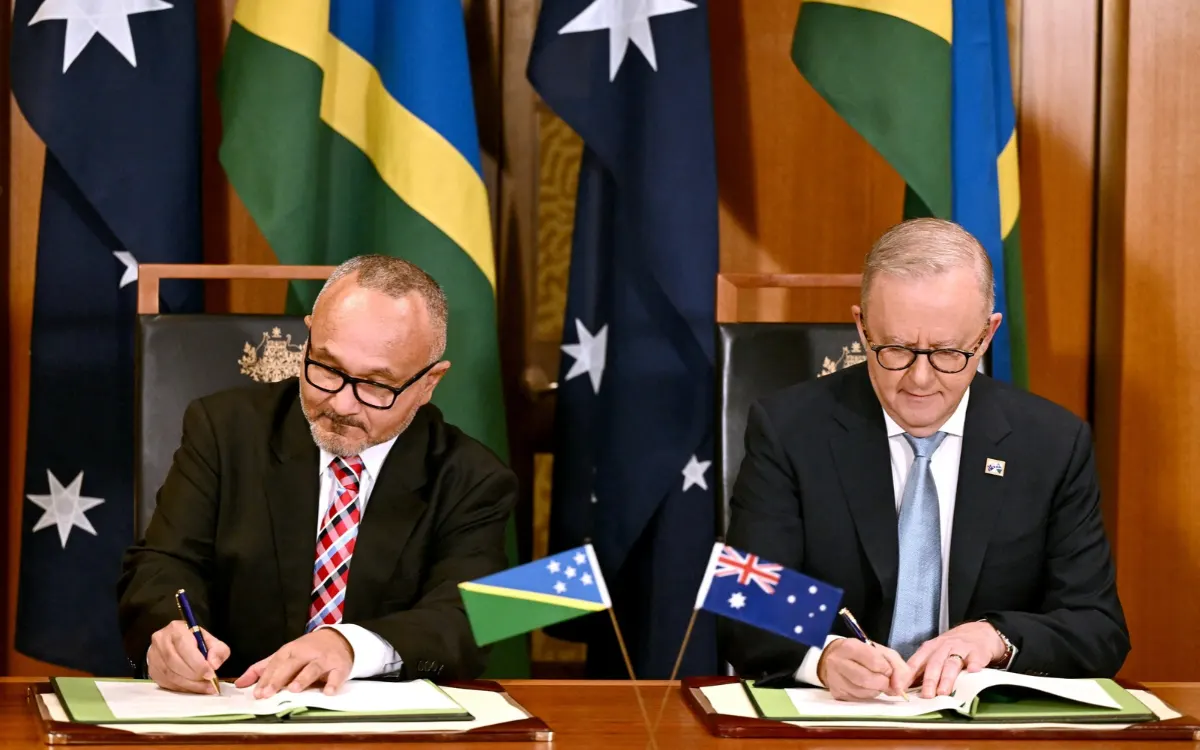
Australia and the Solomon Islands signed a sweeping security treaty on Wednesday, November 25, strengthening Canberra’s strategic position in the Pacific and potentially constraining China’s regional military ambitions. The agreement marks a diplomatic shift as Pacific Island nations navigate intensifying competition between Beijing and Western partners.
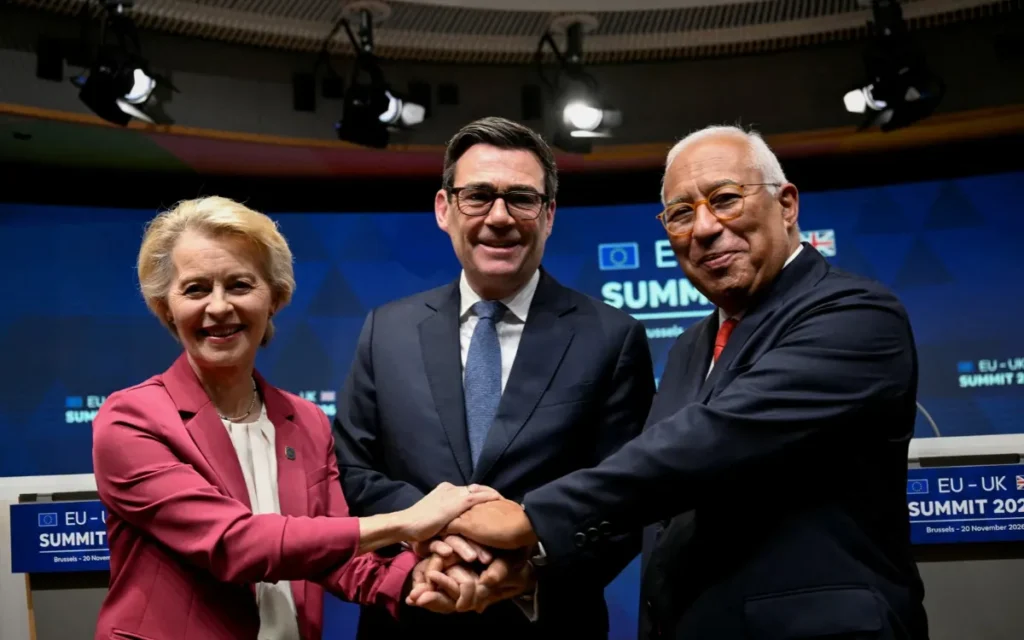
Australian Prime Minister Anthony Albanese and Solomon Islands Prime Minister Matthew Wale signed the treaty in Canberra. It makes Australia the island nation’s primary security partner and rules out foreign military or security bases. Honiara must also consult Canberra before concluding security or critical infrastructure deals with countries outside the Pacific Islands Forum, the region’s main political grouping. Australia, in turn, commits AU$740 million, about $490 million, over a decade to education, health, policing, and climate resilience.
Albanese called the treaty “a new chapter in our partnership to strengthen our shared prosperity and our security.” Wale said his country had for years been “a source of uncertainty and doubt in the region,” adding: “Those days are gone.” Chinese foreign ministry spokesman Guo Jiakun said cooperation between Australia and the Solomon Islands “should not target any third party.”
The agreement follows a 2022 security pact between the Solomon Islands and China that raised Australian concerns about a potential Chinese naval presence about 1,600 kilometers off the Australian coast. Under former Prime Minister Manasseh Sogavare, Honiara built close ties with Beijing and hosted Chinese police. Since taking office in May, Wale has sought closer relations with Australia and the United States. His government has reportedly told Beijing it will let the 2022 pact lapse when it expires in April 2027, but Wale declined to confirm this, citing a non-disclosure clause. The treaty also shields airports, ports, energy, and telecommunications from militarization and foreign interference, the assets at the center of competition in the region.
The treaty closes the door to a Chinese military base in the Solomon Islands while it holds, and the consultation clause gives Canberra a say over future deals with Beijing. Its durability is less certain. Wale has already faced a no-confidence attempt, and opposition leader Sogavare has criticized the “fast-tracking” of the treaty. Australia is also competing on China’s own ground, funding roads and bridges where Beijing’s Belt and Road Initiative, its global infrastructure program, has dominated. (AFP+EIR)