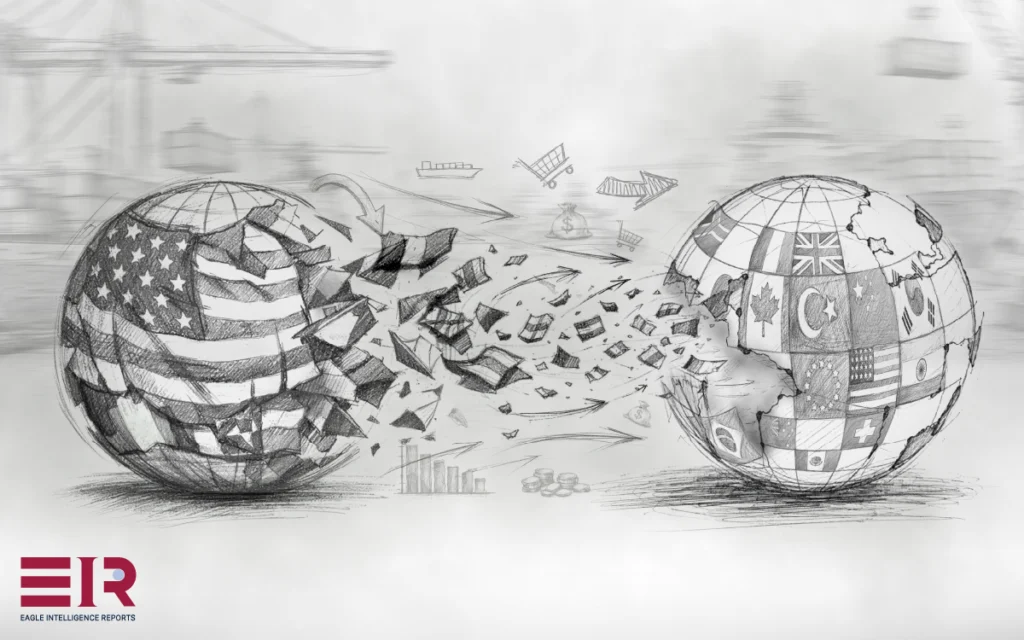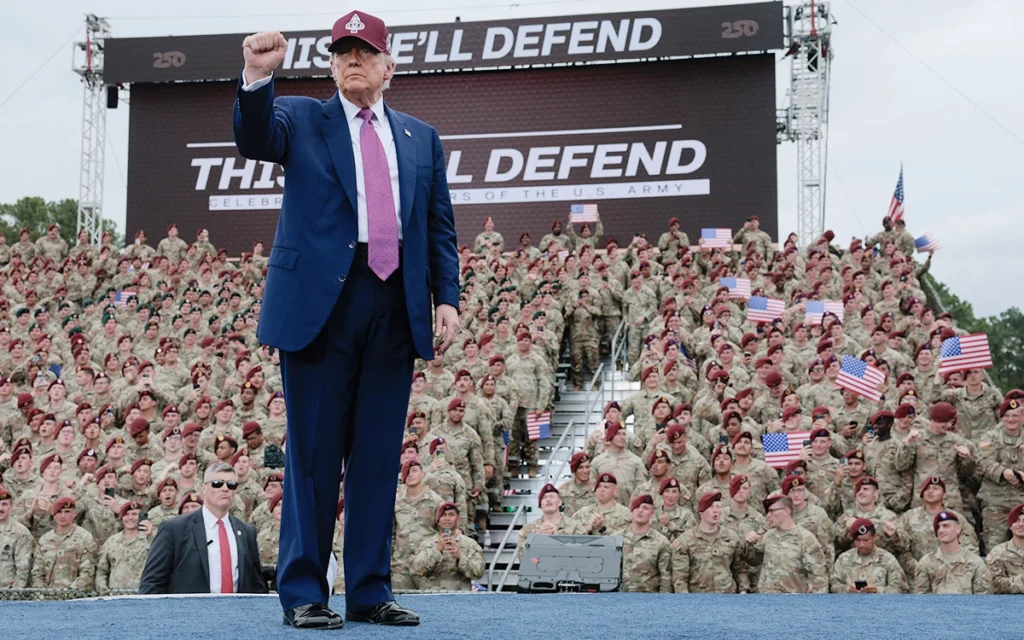


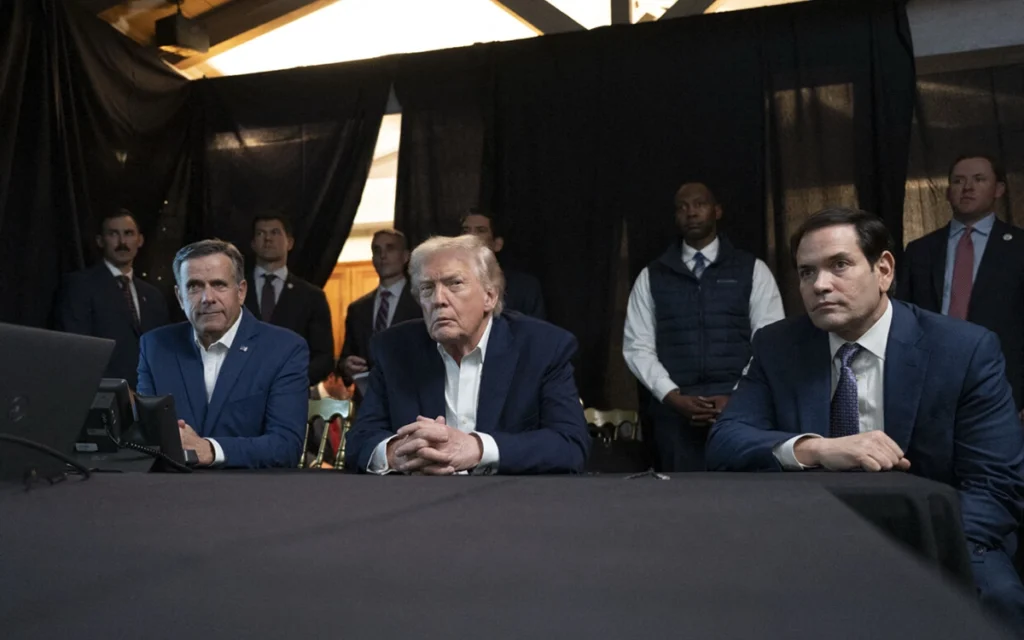
The new United States National Security Strategy (NSS) of 2025 codifies a strategic turn away from the ambition of global guardianship towards a hierarchical ordering of interests, in which allies are explicitly ranked and held to account. Europe and other partners are no longer treated as pillars of a liberal order, but as subordinate actors expected to shoulder greater burdens while aligning more tightly with Washington’s priorities.
At the conceptual core of the NSS lies a hardened version of “America First”, no longer a campaign slogan but an operational doctrine shaping how power, legitimacy, and alliance value are defined. Sovereignty, national identity, the primacy of domestic workers, and the rejection of universalist projects are no longer rhetorical flourishes. They become the organizing principles of how the United States defines security, legitimacy, and its role in the international system. Issues that previous administrations framed as a defense of a rules-based order are now recast as straightforward protection of narrowly defined national interests. National security is framed in terms of borders, migration control, social cohesion, and the deliberate “engineering” of internal order, alongside geopolitical interests and participation in international institutions and alliances.
For Europe, this is both a relief and a warning. Relief, because Washington signals that it no longer seeks to micromanage every regional crisis or export democracy as a matter of doctrine. Warning, since the same document portrays Europe as economically weakened, demographically fragile, and politically disoriented, it openly questions whether all European allies will remain strategically relevant over the next two decades.
In aggregate, the 2025 NSS redefines US national security as the protection of a territorially bounded, economically sovereign, and culturally coherent nation-state. The role of the United States in the international system shifts from that of a security provider to that of a systems manager, who calibrates balances of power, capital, and technology flows, primarily through the lens of domestic resilience. Security is no longer about sustaining global commons; it is about ensuring that the United States itself remains structurally superior in a more openly competitive environment.
In the 2025 NSS, the role of the US in the international system shifts from that of a security provider to that of a systems manager
Ten Principles for a Narrower National Interest
The NSS is structured around ten strategic principles that together constitute a doctrine of constrained ambition. The point of departure is a “Focused Definition of the National Interest”. The text repudiates the post-Cold War attempt to sustain “permanent American domination of the entire world” as both illusory and self-defeating. Foreign and security policy are defined as instruments that must serve a clear hierarchy of core interests. Everything that cannot be directly linked to the protection of those interests is downgraded.
“Peace through Strength” is elevated from a slogan to a central organizing principle. Economic, technological, and military superiority are framed as the decisive preconditions for deterring adversaries and for shaping any eventual conflict resolution. The strategy explicitly ties this to hard-power foundations: modernizing the nuclear triad, investing in next-generation missile defense, including a continental “Golden Dome” concept, and elevating the defense industrial base to a core pillar of national power alongside the armed forces themselves.
A “Predisposition to Non-Interventionism” introduces high political and legal thresholds for large-scale military deployments abroad. At the same time, the strategy anchors “Flexible Realism”. Cooperation with non-democratic regimes is explicitly accepted as long as they do not obstruct American interests. There is no obligation to align foreign policy with a global democracy agenda.
With “Primacy of Nations” and “Sovereignty and Respect”, the document elevates the nation-state above multilateral institutions. The United States reserves the right to shield its sovereignty from what it views as intrusive international mechanisms, including judicial ones. The message is that international law and organizations are useful where they support American priorities, and dispensable where they do not.
Economic and social principles are integrated directly into this security framework. “Pro-American Worker”, “Fairness”, and “Competence and Merit” link trade policy, alliance management, and institutional commitments to tangible benefits for American workers and firms. Partnerships are to be judged by reciprocity and symmetry of effort, not by historical rhetoric. Free-riding and perceived exploitation are explicitly named as reasons to scale back commitments. The competitiveness of American industry and the earning power of American workers become foreign policy objectives in their own right.
In the priorities section, the document adds a further layer, declaring “the era of mass migration is over” and elevating border security to a first-order national security task. Controlling cross-border flows, dismantling transnational smuggling and cartel structures, and tightening the asylum and visa regime are presented as central to safeguarding US sovereignty and social stability. In the NSS logic, identity, borders, and internal order are firmly folded into the national security concept.
In the NSS logic, identity, borders, and internal order are firmly folded into the national security concept
What Is New Compared with Earlier Strategies
Compared with previous National Security Strategies, the 2025 document does not simply adjust priorities at the margins. It abandons the central framing that defined the post-Cold War era: the defense and expansion of a liberal, rules-based international order. Earlier strategies, whether under Democratic or Republican administrations, still justified intervention, alliance management, and institution-building with reference to a wider public good.
The Bush and Obama strategies framed the projection of power in Afghanistan, Iraq, or Libya as a contribution to a more open and rules-based international order. Even when those interventions failed, the underlying assumption was that US security and global liberal reform could be pursued in tandem. The 2025 NSS abandons that premise. It treats most regimes as fixed facts and focuses instead on limiting their ability to threaten US territory, supply chains, and technological superiority. The new text removes this layer almost entirely and instead speaks in terms of hierarchy, bargaining, and narrow advantage.
Even the first Trump-era strategy of 2017, which already introduced a more transactional language, still described America as the “leader of the free world” and affirmed a responsibility to sustain an open international order. The new document is more radical in decoupling US security from the internal political trajectory of other states. It no longer pretends that the character of foreign regimes is a central variable of American safety; what matters is whether they can be controlled, contained, or leveraged for US interests.
There is also a structural break in how allies are conceptualized. Earlier documents, including those of the 2000s and 2010s, described alliances as “force multipliers” and as a comparative advantage in systemic competition. This strategy describes them first and foremost as liabilities if they fail to pull their weight. Their legitimacy depends less on shared values and more on quantifiable contributions, especially in defense and trade. Symbolic solidarity counts for very little if spending, capabilities, and policy alignment do not back it.
Finally, the geography of concern has narrowed. Terrorism, fragile states, and broad global-governance agendas move to the margins, while Great Power Competition with China and the management of strategic stability with Russia, alongside mass migration and border security, anchor the threat perception. Multilateral institutions and global initiatives are no longer treated as ends in themselves, but as tools to be reshaped and used where they demonstrably serve US sovereignty, economic resilience, and the wider balance of power, and largely ignored where they do not.
Leading Without Governing
Globally, the strategy rejects any notion resembling the United States as a world government, although it does not renounce American primacy. Instead, Washington offers a different formula. The United States intends to lead, set rules, and arbitrate balances of power, without assuming responsibility for governing every crisis or underwriting every institution.
The US intends to lead, set rules, and arbitrate balances of power, without assuming responsibility for governing every crisis or underwriting every institution
The Indo-Pacific is declared the central theater of strategic competition in the twenty-first century. Here, the United States positions itself as the indispensable counterweight to China. Economic decoupling, technological control, and classic naval power along the first island chain, including Taiwan, form a coherent confrontational approach. Dollar dominance, control over capital markets, and leadership in critical technologies are explicitly listed as levers to discipline both competitors and hesitant partners.
The NSS makes the linkage between economy and deterrence in Asia explicit: reshoring and “friend-shoring” of supply chains, export controls on advanced semiconductors, and outbound investment screening are framed as necessary conditions for credible military deterrence against Beijing and for sustaining US naval and air power in the region over time.
In the Western Hemisphere, the document formulates what it itself calls a “Trump Corollary to the Monroe Doctrine”. External powers that do not belong to the region are to be pushed out of strategic sectors and infrastructures. The message to China and, to a lesser extent, Russia is clear. Latin America is once again defined as a privileged sphere of influence that should be brought back under firm American control. The implementation agenda goes beyond rhetoric. It prioritizes the fight against cartels and transnational criminal organizations as security actors in their own right, seeks expanded access to ports, airfields, and critical infrastructure, and pairs this with more coercive trade tools and tougher “America first” commercial diplomacy in dealing with regional governments.
In the Middle East, Washington announces a move away from permanent troop deployments towards “realignment through peace”. The emphasis lies on diplomatically brokered arrangements that combine energy, technology, and defense cooperation. The underlying assumption is that stability can be engineered by linking regimes into networks of material interdependence, even when political systems are deeply illiberal.
At the same time, the NSS carefully “de-centers” the region. It sets clear red lines, such as preventing any hostile regional hegemony or disruption of energy flows, keeping the Strait of Hormuz and the Red Sea open to navigation, preventing the export of terrorism, protecting Israel’s security, and advancing normalization via the Abraham Accords. The burden is meant to shift towards regional partners, with the United States as broker and backstop but no longer a primary security provider.
Africa is redefined from a recipient of aid to a partner in investment. The focus is squarely on energy, critical raw materials, and infrastructure, always with the strategic competition with China in mind. The language is more transactional. The aim is less to transform African states and more to secure access and influence in key sectors. Across all regions, the toolbox is dominated by economic and technological instruments. Sanctions, export controls, market access, and financial regulation are treated as primary tools of power.
For great-power competition, this means that the center of gravity of US strategy is shifting decisively towards Asia, while Europe and the Middle East are managed with fewer resources and higher expectations of self-help. Alliances are no longer treated as ends in themselves, but as instruments whose value is measured by their contribution to deterring China and containing Russia. In practice, this favors flexible formats such as AUKUS and the Quad over large, consensus-driven institutions, and pushes traditional alliances like NATO towards a harder division of labor in which the United States provides the nuclear and technological backbone while expecting regional actors to supply most of the conventional mass.
The center of gravity of US strategy is shifting decisively towards Asia, while Europe and the Middle East are managed with fewer resources and higher expectations of self-help
America’s Available Means and Its Limits
The NSS devotes a separate chapter to “America’s available means”, offering an unusually candid inventory of instruments Washington sees at its disposal: the dollar and US-centered financial networks, access to American markets, technological leadership in fields such as AI, biotech, and quantum computing, the defense industrial base, intelligence capabilities and, ultimately, military power including nuclear forces. This explicit end-means logic is important. It creates the basis on which the document then elevates economic and technological instruments to the forefront of statecraft.
By placing these instruments at the center of its strategy, Washington is doubling down on the advantages of scale and structural power that the United States still enjoys. Control over dollar funding, payment systems, capital markets, and key technology nodes allows it to shape the choices of allies and adversaries alike. The 2025 strategy makes clear that access to these networks is not a neutral commercial matter, but a privilege that can be tightened or withdrawn in line with political objectives.
Beyond sanctions and controls, the NSS puts particular emphasis on technology standards. It declares that US technology and US standards, particularly in artificial intelligence, biotech, and quantum computing, should “drive the world forward”. This shifts the contest from simple denial of technology to a long-term standards competition in which whoever writes the rules for safety, interoperability, and ethics will shape global markets and lock in advantages for its own firms and security services.
Yet the document says very little about the long-term limits of this approach. Each new sanctions package, export control regime, or investment screening mechanism adds an incentive for others to reduce their exposure to the American-centered system. China, Russia, as well as a growing number of middle powers, are already experimenting with alternative payment channels, currency arrangements, and technology ecosystems. If economic coercion becomes the default response to disagreement, the result may be a faster fragmentation of the very networks that underpin American leverage.
There are also internal contradictions. A strategy that promises to protect American workers and firms from unfair competition, stabilize supply chains, and sustain technological leadership cannot indefinitely expand the range of restrictions without costs. Some of the measures needed to constrain China or punish Russia will raise input prices, increase regulatory uncertainty, and complicate market access for American companies. The more far-reaching the economic statecraft, the higher the risk that domestic constituencies start to question whether foreign policy gains justify the economic price.
The new strategy implicitly assumes that partners will acquiesce in this intensified use of economic leverage because they need American markets, capital, and technology more than the United States needs theirs. That may be true for now, but it is not guaranteed over a twenty-year horizon. The more allies feel they are targets rather than participants in American economic statecraft, the greater the incentive to hedge, diversify, and seek partial autonomy in critical sectors. The strategy identifies the instruments of power, but it largely brackets the feedback loops and adaptation dynamics they will trigger.
Over the next decade, this dynamic is likely to produce a more fragmented geo-economic landscape with overlapping financial, technological, and regulatory blocs. The United States will still sit at the center of the largest of these blocs, but its ability to unilaterally dictate terms will erode as others invest in alternative infrastructures. The 2025 NSS recognizes the power of economic statecraft, but it underestimates how quickly repeated shocks can incentivize partners and rivals to reduce their dependency on US-controlled systems.
There is also a gap between the breadth of what the strategy claims economic and technological instruments can achieve and the political and institutional capacity of the United States to wield them coherently. Sustaining simultaneous contests with China, Russia, and a growing group of middle powers will require bipartisan support in Congress, predictable budgetary commitments, and close coordination with allies whose own tolerance for economic pain is limited.
The 2025 NSS is clear about what Washington wants to deter and constrain, but much less clear about how often domestic politics, fiscal constraints, and bureaucratic fragmentation will force the United States to compromise, delay, or dilute its ambitions. That implementation gap is itself a source of strategic risk, because adversaries and allies may misread the difference between declaratory policy and actual willingness to bear costs.
The document’s focus on these instruments also comes with blind spots. Cyber operations, space security, terrorism, and pandemics are all mentioned, but they are treated as secondary or derivative challenges rather than as structural stress tests of the system. The NSS offers far less detail on how Washington intends to manage escalation in cyberspace, protect critical space-based infrastructure, or strengthen global health resilience than on how it will weaponize finance and technology. That imbalance is part of the strategy’s power and one of its central limits.
Europe Between Erosion and Indispensability
Nowhere is the tone as harsh as in the chapter on Europe. The strategy describes the continent as caught in economic decline, an ageing demographic, and a migration-driven identity crisis. It warns of a “prospect of civilizational erasure” and presents the European Union as a driver of “regulatory suffocation”. According to this reading, over-regulation produces discontent, erodes freedom of expression and political opposition, depresses birth rates, and undermines national identities and self-confidence.
The diagnosis goes further. It is described as “far from obvious” that certain European countries will still possess sufficiently strong economies and armed forces in twenty years or even less to qualify as reliable allies. This is an unusually blunt statement for an official US strategy document. It is not only an analytical judgement. It doubles as a political intervention in Europe’s internal debates about economic governance, migration, and identity.
Yet Europe remains strategically indispensable. Transatlantic trade, technological capacity, and cultural proximity make the continent a central pillar of what Washington still considers the “West”. The declared American objective for Europe is to remain European, to restore its “civilizational self-confidence and Western identity” and to enable it to act as aligned, sovereign nations capable of providing for their own security. The United States does clearly prefer a looser union of strong nation-states over a more integrated European Union with an autonomous strategic agenda.
The US does clearly prefer a looser union of strong nation-states over a more integrated European Union with an autonomous strategic agenda
Ukraine as Test Case and Bargaining Chip
The war in Ukraine is presented as the immediate test case for this new doctrine. The strategy calls for “an expeditious cessation of hostilities” to restore economic stability, reduce escalation risks, and establish a new strategic equilibrium with Russia. The United States explicitly casts itself as a third party that seeks to stabilize relations between Russia and Europe and prevent a general war on the continent.
This framing is significant. It implicitly decouples American interests from those of Ukraine and from the threat perceptions of frontline states in Eastern Europe. The United States positions itself above the conflict as an arbiter that weighs costs and risks, rather than a co-belligerent whose security is directly bound to the outcome.
For Europe, this has uncomfortable implications. The strategy clearly signals that long-term American military guarantees can no longer be taken for granted. The expectation is that European states, individually and collectively, will develop their own deterrence and defense capabilities, particularly vis-à-vis Russia. Washington reserves the right to decide when and how it supports Ukraine and how much risk it is prepared to accept in a confrontation with Moscow.
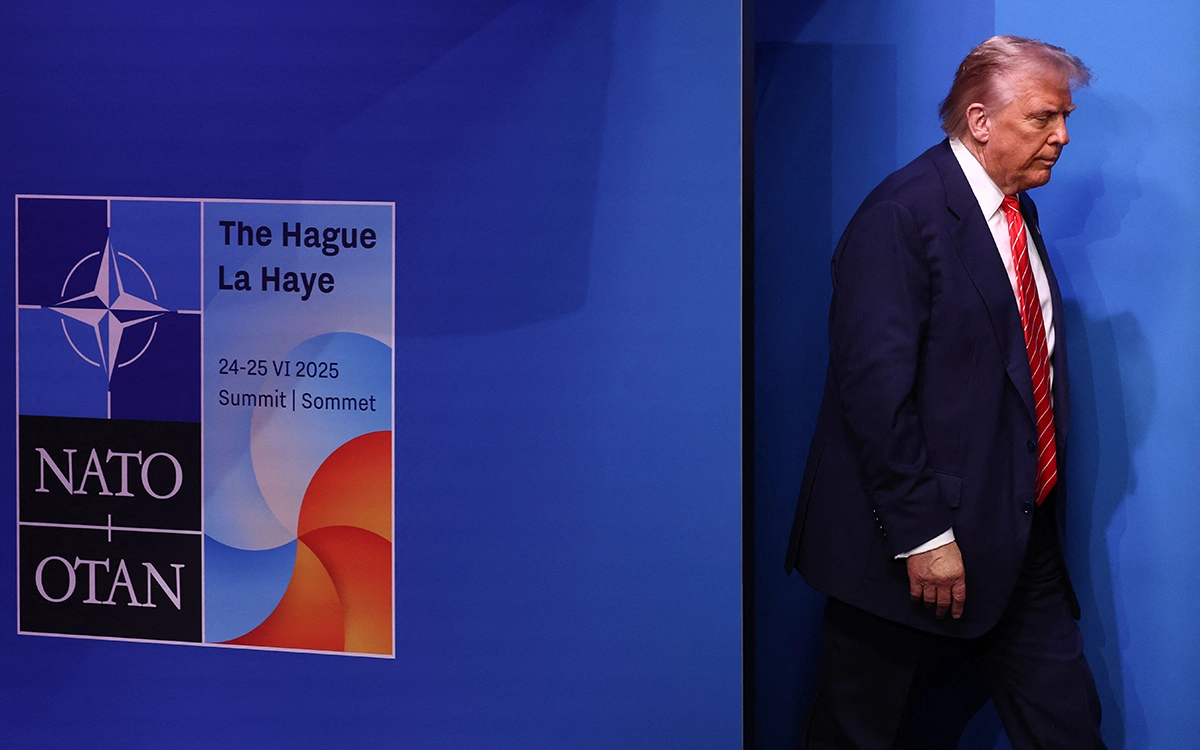
The future of NATO is deliberately left ambiguous. The document raises the question of whether an alliance can remain coherent if, within a few decades, some members are “majority non-European” in terms of origin and cultural identification and may therefore pursue different priorities. In parallel, it highlights what it calls the “healthy nations of Central, Eastern, and Southern Europe” as preferred partners. The implication is that the United States is prepared to work more selectively inside the Alliance and within Europe, rewarding those who align most closely with its own narrative of sovereignty and identity.
Crisis Management and Escalation
The principles set out in the strategy have direct consequences for crisis management and escalation dynamics in contested environments. A doctrine that combines a predisposition against intervention with a strong emphasis on deterrence through superiority risks stretching the interval between the onset of a crisis and meaningful American engagement. Adversaries may come to doubt that Washington will act early, especially if their moves remain below the threshold of open war. That creates space for incremental faits accomplis and grey-zone tactics, particularly around Taiwan and along NATO’s eastern flank.
At the same time, when the United States does decide to act, the toolkit it envisages is heavy. Economic warfare, maximalist sanctions, technology cut-offs, and rapid forward deployments are, by nature, escalatory. The strategy offers little detail on intermediate steps, de-escalation mechanisms, or crisis communication architectures. The gap between rhetorical resolve and the political appetite for sustained military engagement could produce dangerous ambiguity. Partners might overestimate the firmness of American guarantees, while adversaries might underestimate the threshold at which Washington is prepared to move from economic to military instruments.
The Ukraine war illustrates this tension in compressed form. A push for a rapid end to hostilities, driven by concerns about economic costs and escalation risks, may collide with the security perceptions of Ukrainians and Europeans who fear that a premature settlement would only postpone a larger conflict. In the Indo-Pacific, a similar pattern is conceivable. The United States signals both a willingness to defend the existing order and a reluctance to engage in long, costly wars. If this dual message is not managed carefully, it could invite tests of resolve at precisely the points where miscalculation would be most catastrophic.
Over the coming decade, this combination of delayed engagement, heavy instruments, and ambiguous guarantees will shape crisis dynamics in the Black Sea, the South China Sea, and the Gulf alike. Local actors will be tempted to test thresholds, knowing that Washington is reluctant to intervene early but likely to react forcefully once its red lines are clearly crossed. That is a recipe for crises that appear manageable until they are not, and for escalation pathways in which misperception rather than deliberate intent becomes the dominant driver.

A Demanding, Asymmetric Partnership with Europe
For European debates about strategic autonomy, the message is paradoxical. On the one hand, Washington insists that Europe must stand on its own feet, finance and organize its defense largely by itself, and address its structural economic weaknesses. On the other, any notion of an independent European strategic line that might diverge from American priorities is implicitly rejected. Therefore, autonomy is welcome as long as it translates into greater capacity in support of an American-led balance of power system.
The partnership that emerges from the NSS is far from equal. Europe is expected to invest more, act faster, and assume greater responsibility in its neighborhood. At the same time, strategic decision-making authority remains with Washington. The United States decides where the main theaters of competition lie, how escalation should be managed, and which risks are acceptable. Thereby, the most far-reaching challenge is not financial or military, but political and cultural. The strategy suggests that Europe’s core problem is not only insufficient defense spending, but a deeper lack of confidence, identity, and the will to defend its own civilization. By adopting this language, Washington aligns itself, consciously or otherwise, with political forces inside Europe that argue for renationalization and a rollback of supranational regulation. The National Security Strategy thus becomes part of Europe’s internal cultural and political conflict.
For allies in the Pacific, from Japan to Australia, the message is similar: greater military and industrial effort will buy continued US backing, but not a veto over American risk calculations. For adversaries such as China and Russia, the strategy signals a long-term confrontation in which Washington intends to constrain their room for maneuver without assuming responsibility for managing regional orders on their behalf. The likely result is a more fluid and brittle form of international stability: fewer formal guarantees, more reliance on ad hoc coalitions and coercive measures, and a higher premium on state resilience. The 2025 NSS does not foresee a return to bipolar clarity or to liberal convergence; it anticipates a multipolar environment in which stability, when it exists, will be contingent and reversible.
The 2025 NSS does not foresee a return to bipolar clarity or to liberal convergence; it anticipates a multipolar environment in which stability, when it exists, will be contingent and reversible
What Europe Needs to Do Next
For Europe, the new US strategy is both a diagnosis and a provocation. It reflects a long-term structural shift in American foreign policy that preceded Donald Trump and will outlast him. The United States will remain the strongest Western power, but Washington no longer intends to carry the institutional and financial burdens of an expansive liberal order. Instead, it seeks to manage a competitive international system with a narrower set of tools and a sharper focus on domestic benefits.
The first imperative for European governments is to take the document at its word. Complaints about tone and ideological bias may be justified, but they do not change the underlying reality. American patience with European free-riding is exhausted. Defense capabilities, industrial resilience, energy security, and control over critical technologies are now decisive criteria for political relevance in Washington.
Secondly, Europe must respond with a strategy of its own that requires more than marginal increases in defense budgets or new declarations of intent. It demands a coherent view of Russia that is not outsourced to the United States, a realistic approach to China that balances economic exposure with security concerns, and a clear internal settlement on migration and identity that is not left to be defined by external partners.
Thirdly, Europeans need to protect what is worth preserving in their regulatory and legal model, while correcting what is clearly dysfunctional. The American critique of “regulatory suffocation” is politically loaded, but it points to real tensions between ambition and competitiveness. If Europe wants to remain a serious partner in shaping standards and norms, it must demonstrate that its own model can deliver prosperity, innovation, and social cohesion.
Finally, the 2025 National Security Strategy should be read as more than a set of policy preferences. It codifies a strategic approach to an international environment in which power is exercised primarily through leverage rather than presence, alliances are effectively conditional, and economic and technological interdependence are treated as instruments of strategic competition. In such a setting, stability is contingent, alignment increasingly transactional, and strategic relevance continuously tested across regions and actors alike.