The United Arab Emirates is seeking to turn its oil wealth into a new source of technological and geopolitical influence, unveiling four agreements with OpenAI that extend artificial intelligence across energy, government, and investment while highlighting the importance of its partnerships with U.S. technology providers.
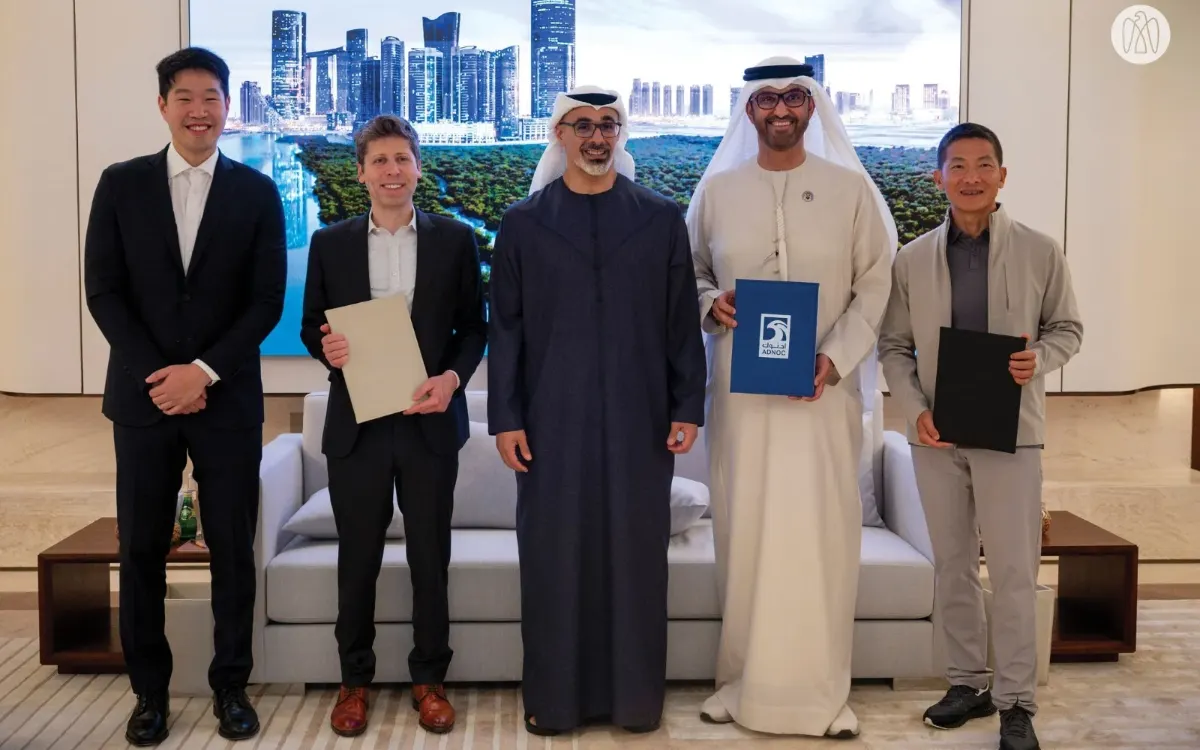
The agreements, announced Monday during OpenAI CEO Sam Altman’s visit to Abu Dhabi, include a partnership with state oil giant ADNOC and Emirati technology group G42 to deploy OpenAI Frontier across the energy company’s operations. According to ADNOC, the technology will integrate data from thousands of wells with production, refining, logistics, and trading decisions, allowing the company to assess the commercial value of oil before extraction. The Abu Dhabi Media Office confirmed three additional agreements covering AI-assisted government regulation, investment analysis through sovereign wealth fund Mubadala, and a five-year initiative to expand AI adoption across government, businesses, and education.
The ambition extends beyond improving industrial efficiency. In ADNOC’s official announcement, G42 International CEO Mansoor Al Mansoori described the UAE as building an AI-driven nation with a global mission to “export intelligence responsibly as we have long exported energy.” The comparison captures Abu Dhabi’s emerging strategy: translating its established strengths in hydrocarbons, infrastructure, and sovereign capital into influence over advanced technology and its international deployment.
The agreements reflect the UAE’s efforts to accelerate its transition toward a knowledge-based economy driven by advanced technologies, leveraging international partnerships to develop practical AI applications across strategic sectors. ADNOC’s plans to operate its new AI systems on UAE-based computing infrastructure also represent an important step toward expanding domestic technological capabilities, improving operational efficiency, and strengthening data-driven economic decision-making.
The impact of these partnerships extends beyond the energy sector to include the modernization of government services and the enhancement of investment analysis capabilities, opening new opportunities to improve institutional performance and optimize resource management. The involvement of major Emirati institutions, including ADNOC, Mubadala, and G42, underscores the growing role of national companies in advancing technological transformation and developing an integrated AI ecosystem.
The five-year initiative holds particular significance in this context, aiming to expand AI adoption across government, business, and education while supporting skills development, talent cultivation, and innovation. These efforts reflect Abu Dhabi’s ambition to consolidate its position as a regional and international hub for advanced technologies, making artificial intelligence an increasingly important pillar of economic diversification and sustainable growth.
The timing adds another dimension. Disruptions in the Strait of Hormuz have highlighted the challenges facing Gulf energy exports, with ADNOC CEO Sultan Al Jaber warning Monday that shipping and logistics costs had risen from less than 5 percent to more than 30 percent of the cost of a barrel. Against that backdrop, AI offers the UAE potential advantages in forecasting, operational resilience, and capital allocation.
The broader geopolitical question is how Abu Dhabi can translate those capabilities into a more sustained international role, making advanced intelligence, alongside oil, gas, and investment capital, another pillar of Gulf economic power. (AFP+EIR)