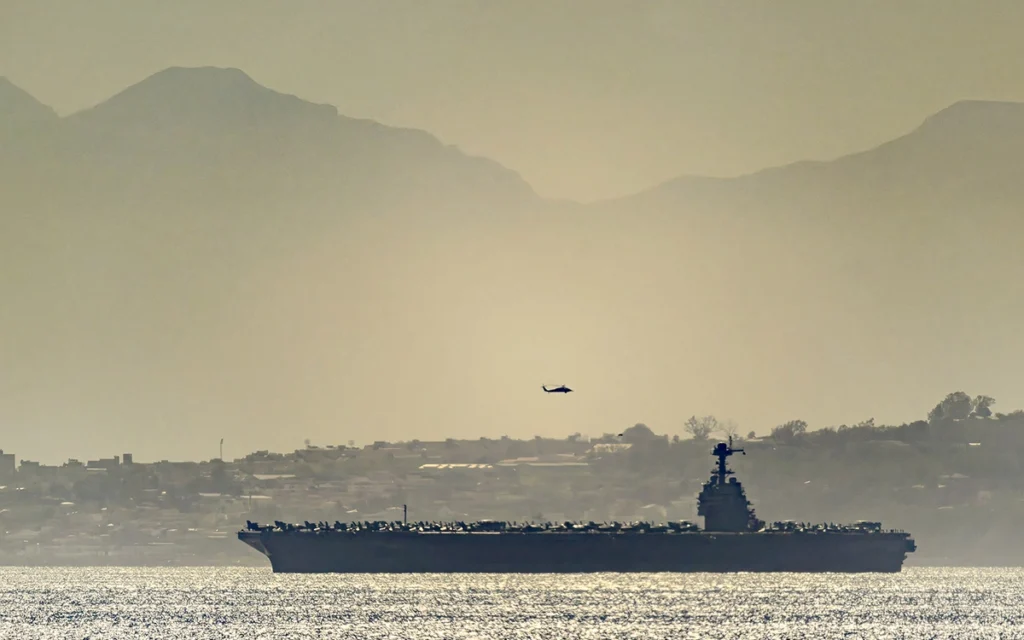


President Trump’s military raid that removed Venezuelan leader Nicolás Maduro may have been tactically impressive. Yet his promise that the United States will reap billions from a Venezuelan oil bonanza runs up against harsh economic realities. Despite sitting atop the world’s largest proven reserves, Venezuela’s oil industry has collapsed from roughly 3.5 million barrels per day to about 1 million after decades of mismanagement. Its infrastructure has not been meaningfully updated in half a century, and much of its output consists of technically challenging, tar-like heavy crude that is costly to extract and refine. Major oil companies have shown little enthusiasm for returning to a country that still owes them billions from past nationalizations and offers less attractive opportunities than nearby producers such as Guyana.
The potential political chaos that follows the raid compounds the economic obstacles. While Maduro’s inner circle still effectively governs the country and regional allies have condemned the operation, Trump continues to make ambiguous statements about the United States “running” Venezuela. Low oil prices—currently below $60 per barrel—driven by a global oil glut further complicate the picture. Venezuelan crude will require significantly higher prices to break even. Taken together, these factors suggest that reviving Venezuela’s oil sector would require more than $100 billion in investment and at least a decade of work, assuming a level of political stability that does not currently exist and a degree of corporate confidence that two rounds of nationalizations have thoroughly destroyed.
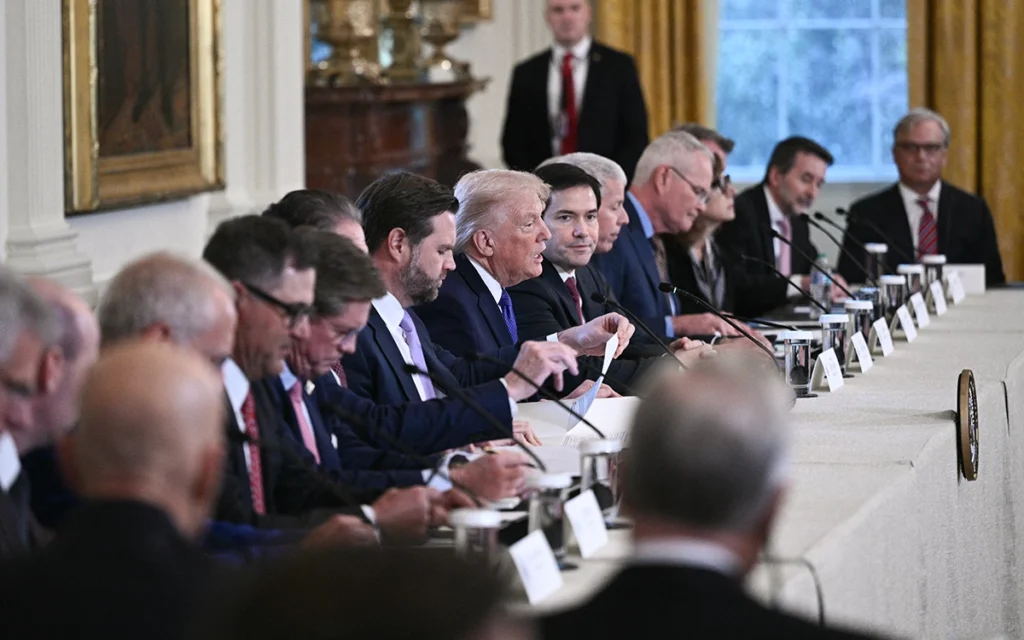
Trump summoned executives from major oil companies to the White House on Friday to gauge their appetite for expanding Venezuelan production. In that context, the prospect of U.S. taxpayer guarantees has been raised—an idea likely to prove unpopular with voters. Trump’s broader vow that both the United States and Venezuela stand to gain billions in oil revenues sparked by his daring raid on the oil-rich nation now faces a far more challenging test: economic reality.
Trump’s broader vow that both the US and Venezuela stand to gain billions in oil revenues now faces a challenging test: economic reality
ExxonMobil CEO: Venezuelan Oil “Uninvestable”
Though Venezuela sits atop the largest proven oil reserve in the world, a critical distinction remains between possessing oil and being able to extract and profit from it. Bringing Venezuelan oil out of the ground and into global markets would require sustained investment and time, which is likely to test the patience of an American public skeptical of long-term foreign entanglements.
There is no question that America pulled off a spectacular raid when U.S. forces entered Venezuela and detained Maduro and his wife, Cilla Flores, transferring them to a New York jail cell. President Trump is entitled to brag about the operation, highlighting the skill and execution demonstrated by the U.S. forces involved in the raid. But his statements that America’s major oil companies are “ready to go” and prepared to invest the vast resources needed to revive an industry hollowed out by decades of neglect and mismanagement appear premature at best.
Oil executives have been noticeably restrained in their reactions to Trump’s call to action. ConocoPhillips told a Florida broadcast outlet that it is “monitoring developments,” adding that it is “premature to speculate on any future business activities or investments.” ExxonMobil’s CEO Darren Woods bluntly described Venezuela as “uninvestable” after meeting with Trump. Woods added that ExxonMobil would be willing “to put a team on the ground” to assess the condition of Venezuela’s oil sector, provided it received security guarantees and a formal invitation from the Venezuelan government. Yet he made no actual commitment to invest capital.
Political Chaos a Major Concern
Chevron, the only U.S. oil company operating in Venezuela, issued a carefully worded statement saying it “remains focused on the safety and well-being of our employees as well as the integrity of our assets.” It would continue “to operate in full compliance with all relevant laws and regulations.” While the company indicated it could increase production by as much as 50 percent over two years, neither Chevron nor any other major firm committed to new investment. Some smaller companies signaled interest in Venezuelan oil concessions. But the American Petroleum Institute, the industry’s main trade association, issued a similarly noncommittal response, noting that investment decisions hinge on political stability, the rule of law, and market conditions.
The tepid corporate response reflects a sobering calculation: rejuvenating Venezuela’s oil industry ranks among the most challenging investment prospects in the global energy sector. Technical complexity, political uncertainty, fragile market conditions, ambiguous timelines, and unresolved historical grievances all complicate efforts to commit the scale of capital required to reverse decades of decline.
The tepid corporate response reflects a sobering calculation: rejuvenating Venezuela’s oil industry ranks among the most challenging energy investment prospects
Indeed, even after President Trump announced that Venezuelan authorities would deliver between 30 and 50 million barrels of oil to the United States under highly favorable terms, industry sources told CNN that major companies remain reluctant to reenter Venezuela’s already fragile market. Such purchases would offer short-term relief to PDVSA, the Venezuelan state oil company, whose storage capacity is reportedly nearing its limits. Still, some traders have questioned what conditions Washington might attach to the transactions announced by Trump. As one source told CNN, “Just because there are oil reserves—even the largest in the world—doesn’t necessarily mean you’re going to produce there. This isn’t like standing up a food truck operation.”
Trump: United States to “Run” Venezuela
Francisco Monaldi, director of the Latin America Energy Program at Rice University and a leading expert on Venezuelan oil, told the PBS NewsHour that the obstacles extend well beyond infrastructure decay. “How do you get foreign companies,” he asked, “to start pouring money in before they have a clear perspective on the political stability, the contract situation, and the like?” Monaldi estimates that restoring Venezuela’s production potential would require more than $100 billion in investment and at least a decade of sustained work.
Yet the central concern for investors and policymakers alike, even amid persistent political instability, is Trump’s ambiguous claim that the United States will “run” Venezuela. As expected, China and Russia condemned the operation, as did UN Secretary-General António Guterres. Several Latin American governments—including Colombia, Brazil, Mexico, and Chile—argued that the raid violated international law, while right-leaning governments such as Argentina and El Salvador welcomed the action.
Moreover, in the wake of the raid, Trump has fanned the flames, suggesting that the United States may pursue additional territorial acquisitions, including the seizure of Greenland, the massive but thinly populated island northeast of Canada. Officials in Greenland, which is an autonomous territory within the NATO member state of Denmark, emphatically reject Trump’s goals.
Venezuela is the tip of the spear in the Trump administration’s goal of reasserting dominance in the Western Hemisphere, part of a broader recalibration of American foreign policy driven by concerns about the growing presence of adversaries such as China and Russia in America’s backyard. In a wide-ranging interview with The New York Times, the president acknowledged that stabilizing and rebuilding Venezuela would take years. Yet his stunning declarations raise more questions than they answer: they do little to clarify how the administration intends to translate military action into durable strategic outcomes.
Maduro’s Inner Circle Still in Control
What, then, did the American operation actually change inside Venezuela? At this juncture, Trump has left intact the entrenched leadership network that enabled Maduro’s corrupt regime to thrive after he took power in 2013. For now, Maduro’s vice president, Delcy Rodríguez, is serving as acting president. A longtime Maduro ally, Rodríguez has been recognized by the Venezuelan military, which has emerged as the central arbiter of political continuity and has called for a return to normalcy. Various reports suggest the armed forces have increased patrols in Caracas, echoing patterns seen during Maduro’s tenure. How long Rodríguez can retain authority, however, remains uncertain.
Trump met on Thursday with María Corina Machado, the Venezuelan opposition leader who was awarded the 2025 Nobel Peace Prize, an award that Trump covets. Yet the shape of Venezuela’s next government remains unclear even over the coming weeks or days—an instability that weighs heavily on energy companies accustomed to planning investments over decades.
The shape of Venezuela’s next government remains unclear—an instability that weighs heavily on energy companies accustomed to planning investments over decades
“Donroe Doctrine:” Don’t Mess with U.S.
For President Trump and his Secretary of State, Marco Rubio, Venezuela has become emblematic of a broader regional posture in Latin America that the administration has dubbed the “Donroe Doctrine.” The phrase is a play on James Monroe’s 1823 doctrine warning external powers against interference in the Americas. Trump and Rubio have framed it as a signal to U.S. adversaries such as Russia, China, and Iran, all of which have some form of military presence in the region. Rubio, whose family left Cuba before the revolution, has taken a particularly hard line against the island nation, while Trump has suggested that it may be the next target for U.S. pressure. Such rhetoric implies yet more political instability and uncertainty.
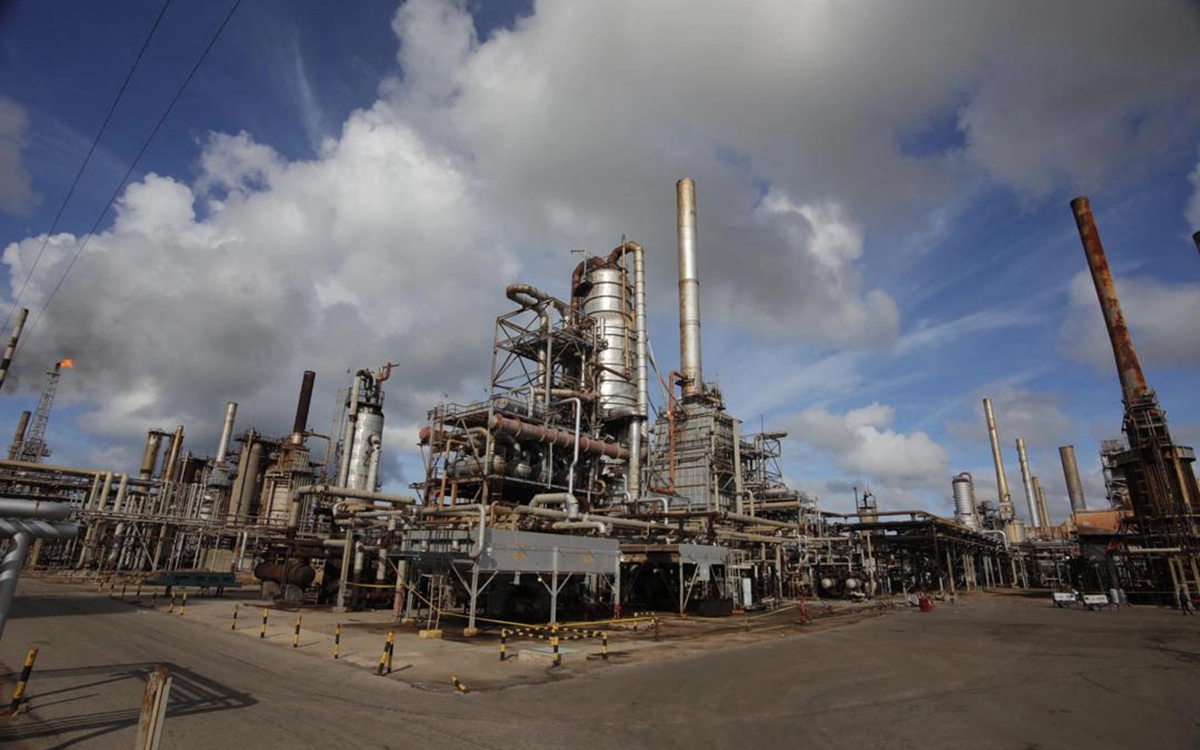
Yet the ambiguity and confusion that plague the administration’s political policies pale in comparison to the structural obstacles confronting Trump’s stated goal: reviving Venezuela’s oil industry and translating production into sustained revenue. The collapse in output stems from operational failure, not geological constraints. Estimates from Venezuela’s state oil company reveal the extent of the problem. Much of the country’s pipeline network has not been updated in 50 years, and nearly all refining facilities are in disrepair, with some operating at just 20-30 percent of capacity. Fires and accidents have crippled facilities that PDVSA lacks the capital to repair.
A country that once supplied over 10 percent of U.S. crude imports, largely through its CITGO subsidiary, now imports refined petroleum products because its domestic refining system cannot meet demand—in part because of crippling U.S. sanctions.
Venezuelan Extra-Heavy Crude
Making matters worse is the nature of Venezuela’s oil itself. The country’s reserves are dominated by extra-heavy crude from the Orinoco Belt, a tar-like resource that is technically complex and costly to extract, process, and refine. Developing it at scale requires specialized expertise that Venezuela lost after Chávez fired roughly 19,000 PDVSA employees during the 2002–2003 strikes. PDVSA’s research arm, Intevep, lost 80 percent of its workforce, hollowing out the company’s capacity for innovation. Political calculation and regime security eclipsed commercial logic, as Chávez replaced experienced technical staff with loyalists, swelling payrolls even as output declined.
The reluctance of major oil companies to make firm commitments is understandable given their history with the Venezuelan state. Venezuela first nationalized its oil industry in 1976, when U.S. companies controlled more than 70 percent of crude production under concession agreements set to expire in 1983. Those firms lost billions of dollars in assets and received only limited compensation.
Three decades later, Hugo Chávez engineered a “renationalization,” forcing foreign operators into joint ventures with PDVSA and requiring them to surrender majority stakes in projects they had developed. ExxonMobil and ConocoPhillips refused those terms and exited the country, triggering years of international arbitration. Courts ultimately ordered Venezuela to pay ConocoPhillips more than $10 billion and ExxonMobil $1 billion in damages—judgments that Caracas has only partially honored.
Trump’s push to revive Venezuela’s oil industry confronts companies with a stark choice: reenter a market that still owes them billions in unresolved claims, or allocate capital in jurisdictions that offer greater legal certainty and lower political risk.
Oil Glut Drives Price Down
ExxonMobil already has a major and highly profitable investment in neighboring Guyana, where roughly 10 billion barrels of lighter crude oil have been discovered in a country without a state-owned oil company and with a more favorable tax regime. Monaldi has described Guyana as “one of the most attractive oil places in the world.”
Even absent Venezuela’s political and technical problems, current global oil market conditions make additional large-scale investment impractical. A persistent supply surplus has pushed prices below $60 per barrel, reflecting a roughly 20 percent decline in 2025 alone. OPEC+ has boosted production after years of restraint, while inflation and broader economic uncertainty have reduced demand. In this environment, heavy crude extraction is particularly unattractive as it requires specialized refining capacity, carries higher costs, and generates greater emissions than lighter alternatives.
Under current conditions, expected returns make investment in Venezuelan oil a bad bet. Restoring production to commercially meaningful levels would require between $20 billion and $60 billion in capital over a decade, according to TD Securities, a consulting firm. Analysts estimate that the breakeven point for Venezuelan crude is between $60 and $80 per barrel, depending on cost assumptions, while benchmark oil prices currently hover around $59.50.
Under current conditions, expected returns make investment in Venezuelan oil a bad bet
Returns would also materialize only well after any initial investment, weakening the capital case further—especially when major oil producers have access to far better alternatives. In Guyana, breakeven prices are estimated at roughly $35 per barrel, while projects in the Permian Basin can be viable at $48. Factoring in Venezuela’s heavy, difficult-to-process crude and persistent political uncertainty, investment would likely require substantial subsidies or guarantees from Washington or Caracas to offset risk and improve returns.
Kleptocracy and Isolation as Destructive as War
There is also a fundamental problem with Trump’s implied timeline: it is unrealistic. The president’s rhetoric suggests that American oil companies could move quickly into Venezuela to fix a badly broken system. Yet U.S. experience with revitalizing oil industries disrupted by war—such as in Iraq and Libya—suggests a long slog. With extensive involvement from American oil firms, Iraq required nearly two decades to restore oil production capacity following the 2003 invasion. Libya, meanwhile, has yet to achieve a complete, stable recovery to the output levels that existed prior to the overthrow of its dictator, Muammar Gaddafi.
In both cases, rebuilding the oil sector involved comparatively fewer challenges. Iraq and Libya suffered extensive physical destruction from war, but retained elements of human capital and were able to attract reconstruction investment. Venezuela’s challenge is more complex. Even if U.S. sanctions on Venezuelan oil were lifted, recovery would require more than capital and security alone. The country would need to rebuild critical assets such as institutional knowledge and supply-chain management capacity. Venezuela illustrates how kleptocracy, economic isolation, and long-term institutional mismanagement can devastate energy production as thoroughly as war.
The sobering reality is that any revival of Venezuela’s oil industry, if it occurs at all, will take decades rather than years. It will require enormous investment, sustained political stability that currently does not exist, new legal and contractual frameworks, and market conditions that may never materialize. It would also require a reversal of corporate risk aversion shaped by recent experience. Absent these conditions, it is hard to see how oil companies would commit capital in Venezuela without some form of government guarantee—an arrangement that would ultimately shift significant risk onto American taxpayers.
Venezuela and the Limits of American Power
President Trump is correct in noting that Venezuela possesses extraordinary oil wealth. But the gap between his triumphant declarations and the sober assessments of energy experts reveals a fundamental truth about modern geopolitics: military success does not automatically translate into economic outcomes. The United States demonstrated its capacity to execute a daring raid and remove a corrupt leader. What remains unclear is whether it possesses the patience, diplomatic skill, and financial commitment required to convert that tactical achievement into the long-term strategic prize Trump has promised.
The gap between triumphant declarations and the assessments of energy experts reveals a fundamental truth: military success does not automatically translate into economic outcomes
Trump’s Venezuela strategy has become a test case for his broader vision of American dominance in the Western Hemisphere. Yet power achieved through force has historically proven brittle and expensive to maintain. The central challenge facing the administration is not whether American troops can execute complex operations—they clearly can. The question is whether a recalibrated American foreign policy can build durable coalitions, establish trust, and demonstrate the staying power that Trump currently seems to be backing away from in Europe.
For now, Venezuela’s oil remains what it has been for decades: vast potential locked underground. If Trump’s vision were to materialize and he could persuade oil companies to overcome their skepticism, more oil may flow. The primary benefit, however, won’t be the oil itself. The more consequential payoff for the United States would lie in addressing the structural drivers of migration that have destabilized the hemisphere and forced millions of Venezuelans to flee the country they call home.
An optimistic scenario would require near-perfect political alignment, as well as a credible plan for dealing with Venezuela’s $170 billion in external debt. A more likely trajectory points to years of managed instability, with competing factions vying for power and access to an uncertain oil revenue stream. The United States risks being drawn into a trap of an open-ended commitment marked by repeated interventions, blowback from regional Latin American allies, and continued migration pressures. While global oil markets could absorb a complete collapse of Venezuelan production given the current glut, they cannot readily price political chaos.
How significantly Trump’s raid actually changed Venezuela’s political leadership remains uncertain. Whether it ultimately alters Venezuela’s trajectory—and that of the Western Hemisphere—also remains an open question, one that only time, and likely decades of it, will answer.