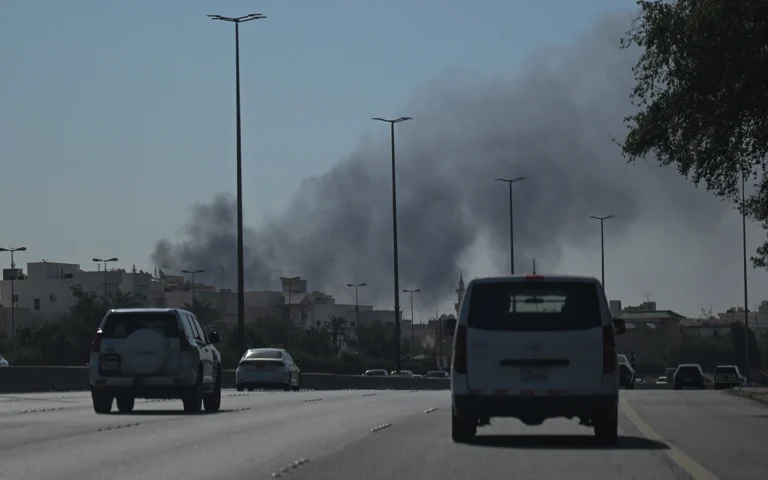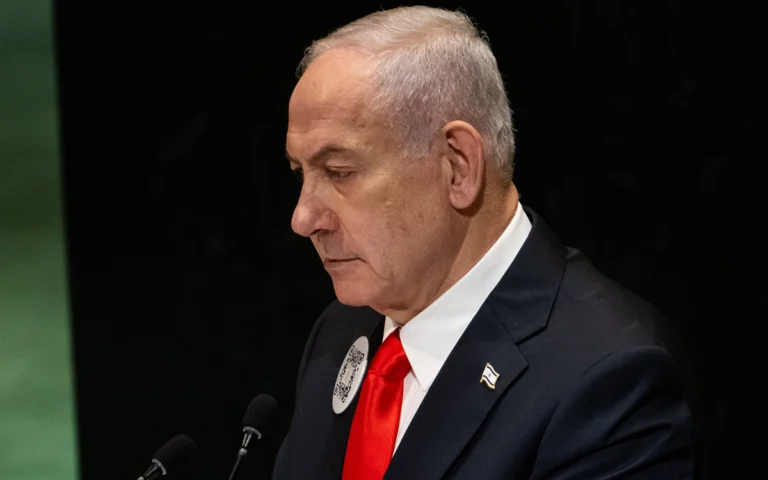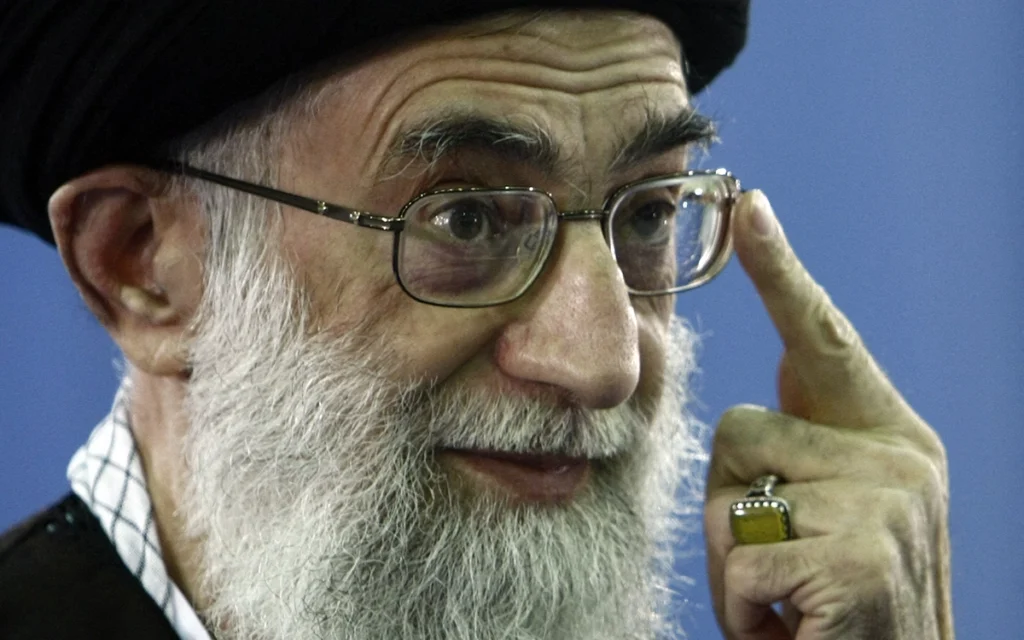


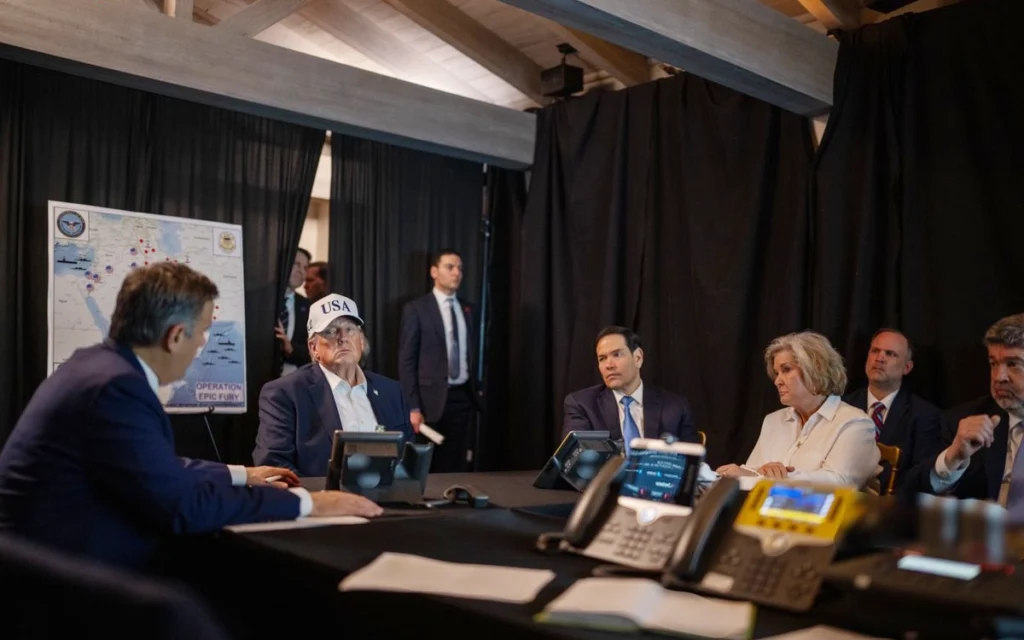
On the morning of February 28, 2026, America went to war. Not in the way it has gone to war in the modern era—with congressional authorization, lengthy intelligence briefings, and months of public debate—but with an eight-minute video posted on Truth Social. Bombs fell on Iran before most Americans had finished their morning coffee. President Trump announced “major combat operations” in Iran, warned that American lives “may be lost,” and later told the world that the U.S.–Israeli air strikes had killed Iran’s leader, Ayatollah Ali Khamenei. Trump also addressed the Iranian people, urging them to overthrow their government.
If a legal framework existed for such an audacious attack, the White House did not bother to present it to Congress. Eight days earlier, the Supreme Court, in a ruling joined by six of nine justices, had bluntly told the President that he could not unilaterally reshape the global economy through self-declared emergency powers without congressional authorization. Though the ruling concerned tariffs rather than war powers, the principle was clear. Apparently, the lesson was not.
What is unfolding in Washington is not merely a foreign policy crisis. It is a constitutional one—and the two are intertwined in ways that should concern those who care about the durability of American democratic governance. On this question, where one stands on Iran’s nuclear program is beside the point.
What is unfolding in Washington is not merely a foreign policy crisis. It is a constitutional one—and the two are intertwined in ways that should concern those who care about the durability of American democratic governance
Iran’s Nuclear Program “Obliterated”
The Trump administration did not arrive at this moment by accident. It engineered it deliberately. From the signing of the National Security Presidential Memorandum in February 2025 restoring tough sanctions on Iran, its intended path has been clear. Trump declared the June 2025 “Twelve-Day War” a decisive victory after U.S. and Israeli airstrikes targeted Iran’s nuclear sites, missile infrastructure, and military leadership. The President declared Iran’s nuclear program “obliterated.” Many intelligence analysts and outside experts disagreed, assessing that the strikes had set Iran back months, not years. Tehran’s response appeared to prove them right: enrichment activities resumed quickly, neutral international monitors were excluded from damaged facilities, and efforts began to restore ballistic missile capabilities.
The administration’s strategic rationale, judging from public statements and military deployment patterns, rests on three pillars. First, it argues that Iran’s nuclear ambitions represent an existential threat to Israel and a threat to American interests across the region and beyond. Second, diplomacy has been exhausted. Despite numerous rounds of talks over the years, Tehran has failed to cede to U.S. demands to end uranium enrichment. Third, the timing was viewed as favorable. The Iranian protest movement, reignited in late 2025 by a currency collapse and years of economic hardship under sanctions, created a window for regime change that may not reopen. Senate Majority Leader John Thune, a Republican from South Dakota, captured the logic concisely on Thursday when he warned that anyone contemplating doing something in Iran should “better well make it about getting new leadership.” Trump made that objective official hours later.
The administration’s framing of its position has some internal coherence. For decades, Iran has been one of the most disruptive actors in the Middle East. Few tears were shed outside of Iran for Khamenei, who has helped nurture Hezbollah, the Lebanese terrorist group, Hamas in Palestine, and the Houthis in Yemen, in addition to Shia militias across Iraq and Syria. In many capitals, the prospect of an Iran free of Islamic Republic mandates and the Revolutionary Guard’s grip on the economy and foreign policy is considered welcome and overdue.
The administration’s framing of its position has some internal coherence. For decades, Iran has been one of the most disruptive actors in the Middle East
However, strategic desire does not substitute for operational planning and implementation. The American apparatus that would normally be responsible for day-after planning—the State Department and USAID—has been gutted by personnel cuts engineered by Elon Musk and the Department of Government Efficiency (DOGE). The intelligence agencies have also been cut and weakened. The United States has now embarked on its most ambitious attempt at forced political transition since Iraq in 2003, but with a fraction of the institutional soft power capacity that prevailed when President George W. Bush ordered an attack on Saddam Hussein. And we know how that ended.
Supreme Court Ruling Ignored
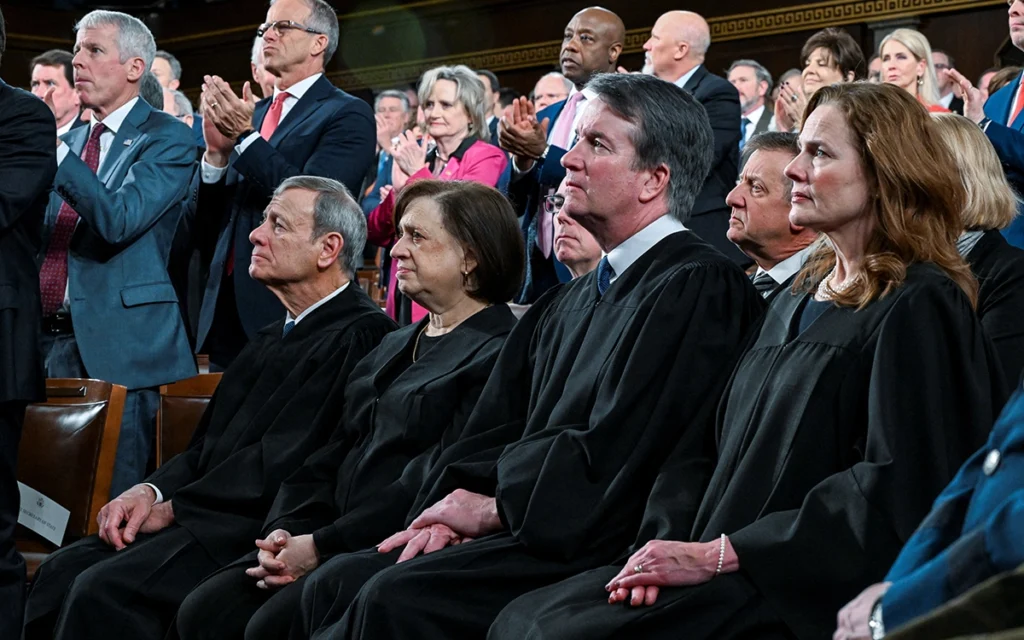
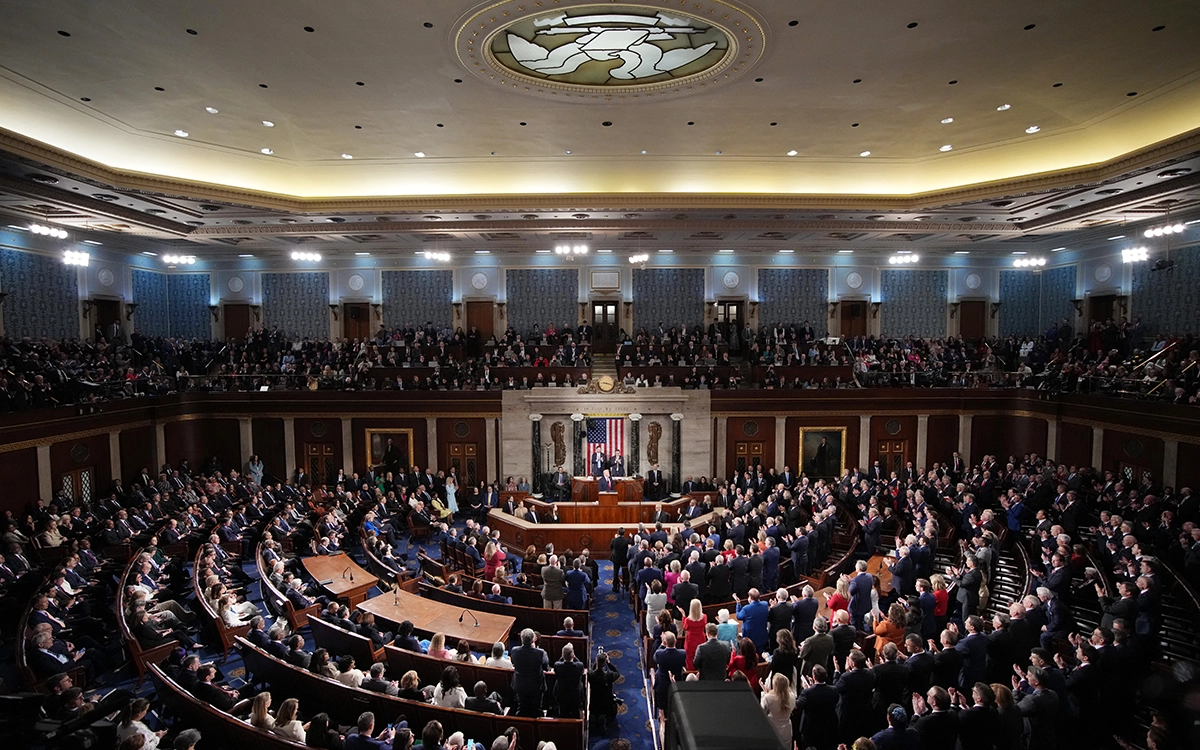
Eight days before the bombs fell on Tehran, the Supreme Court handed down one of the most significant separation-of-powers rulings in a generation. In Learning Resources, Inc. v. Trump, a 6-3 majority—including three of Trump’s own appointees—struck down the administration’s emergency tariffs. Chief Justice Roberts, writing for the majority, stated unambiguously that the power to impose taxes and tariffs belongs to Congress under Article I of the Constitution, and “when Congress grants the power to impose tariffs, it does so clearly and with careful constraints.” The Court applied the major questions doctrine, which holds that decisions of vast economic or political significance require explicit congressional authorization rather than inference from ambiguous statutory language.
Trump’s response to that high court ruling is revealing. He called the justices a “disgrace,” suggested foreign interests had corrupted the Court, and quickly pivoted to a different legal authority to reimpose tariffs at a lower rate. Rather than signaling deference to constitutional limits, he immediately sought a procedural workaround. Such a pattern is now playing out at a scale that makes tariff policy look like a rounding error. The power to declare war is not lurking in the ambiguous language of a 1977 emergency statute. It is written plainly in Article I, Section 8 of the Constitution. No President, Democrat or Republican, has ever successfully argued that he alone has the executive authority to authorize large-scale offensive military operations against a sovereign nation without congressional consideration. What distinguishes the current situation is not just the lack of congressional authorization—presidents have stretched the War Powers Act before—but President Trump’s explicitly stated goal of regime change, and his acknowledgment that Americans will die. That suggests that the plan is not a targeted strike or a brief campaign, but rather an all-out war.
The analogy to the tariff case is more than rhetorical. In both instances, the administration has argued that emergency powers and foreign policy authority permit the President unilateral power to take expansive action. The Court rejected the reasoning on tariffs, and it cannot easily adjudicate a legal challenge during an active military campaign. Nevertheless, the constitutional principle that Chief Justice Roberts clearly articulated in his majority ruling—that Congress must explicitly authorize decisions of major consequence—would seem to apply to Iran with even greater force. A tariff is an economic instrument; war carries consequences of an entirely different magnitude.
The analogy to the tariff case is more than rhetorical. In both instances, the administration has argued that emergency powers and foreign policy authority permit the President unilateral power to take expansive action
Congress Grapples with Proper Role
The congressional reaction to the Iran strikes has been generally predictable yet revealing. Most Republicans praised the president. Senate Majority Leader Thune applauded the bravery of American forces. Armed Services hawks like Sen. Lindsey Graham called the operation “necessary and long justified” and addressed the prospect of American casualties stoically: “If you are injured or fall,” he said, “I believe with all my heart that your sacrifice makes your country and the world a better and safer place.” House Speaker Mike Johnson voiced support for the attack as well.
Democrats were nearly unified in outrage, though the nature of their objections varied. Senate Intelligence Committee ranking member Mark Warner invoked Iraq directly, warning of familiar “claims of urgency, misrepresented intelligence, and military action that pulls the United States into regime change and prolonged, costly nation-building.” Democratic Senator Tim Kaine of Virginia, a lead sponsor of a War Powers Resolution, drew the sharpest historical line: in 2018, Trump withdrew the U.S. from the diplomatic agreement that contained in whole or in part Iran’s nuclear program. In his view, the current crisis follows from that decision. Sen. Edward Markey, a Democrat from Massachusetts, described the strikes bluntly as “illegal and unconstitutional.” Rep. Hakeem Jeffries, the Democratic House minority leader, questioned the timing, given Trump’s earlier claim that Iran’s nuclear program had been “obliterated” in the June 2025 Twelve-Day War.
The Democratic caucus, however, is not monolithic. Pennsylvania Senator John Fetterman, who is one of the party’s outliers, praised the operation. Rep. Josh Gottheimer, a New Jersey Democrat, joined Rep. Mike Lawler, a New York Republican, in statements that said initiating a War Powers Resolution now would signal weakness “at a dangerous moment.” On the Republican side, Rep. Thomas Massie of Kentucky, who is cosponsoring a War Powers vote with Democrat Rep. Ro Khanna of California, called the strikes “acts of war unauthorized by Congress.” This bipartisan effort represents one of Congress’s most serious constitutional challenges to executive overreach, although its prospects remain uncertain.
War Powers Resolutions carry privileged legislative status, and therefore guarantee a floor vote. Sen. Kaine has already called for an immediate return to Washington. The outcome of such a vote, however, remains unclear. A similar resolution concerning Venezuela earlier this year gained enough Republican support to advance to the Senate, but it failed. The stakes in Iran are considerably higher, yet the political dynamics are complex. Republicans who traditionally defer to presidential authority face pressure to repeat the performance. Democrats risk appearing to “tie the hands” of the President during a military operation—a line of attack the White House is likely to pursue. Historical precedent suggests the resolution faces long odds.
Democrats risk appearing to “tie the hands” of the President during a military operation—a line of attack the White House is likely to pursue. Historical precedent suggests the resolution faces long odds
Three Scenarios for What Comes Next
As Democrats and their allies took to the talk show circuit Sunday morning, the major questions that surfaced were “Why now?” and “What’s next?” Washington now faces at least three plausible scenarios.
The first is the administration’s preferred outcome. The strikes accelerate the collapse of a regime already wavering under pressure from its own population. The protest movement provides a foundation for a post-Islamic Republic government. The removal of what Washington considers the world’s major state sponsor of terrorism tilts the regional balance in ways favorable to American and Israeli interests. This scenario is not impossible. The Iranian regime is weaker than at any point in decades. Its regional proxies—Hezbollah, Hamas, the Houthis—have been severely degraded. Iran’s economy is in freefall, and evidence that the clerical rule has exhausted its population is abundant.
Another plausible scenario familiar to anyone schooled in the history of American military interventionism is that the strikes unify Iranian nationalist sentiment behind a damaged but resilient regime. Retaliatory actions against U.S. forces in Iraq, Syria, and the Gulf could escalate the conflict in unpredictable ways, leaving Washington, reluctantly or otherwise, committed to a Middle East dilemma without a clear exit strategy.
The warnings from Democratic lawmakers are more than partisan noise; they reflect a genuine historical pattern. The administration has, over the past year, deliberately dismantled Washington’s capacity for stabilization, reconstruction, and governance. You cannot do regime change on the cheap. Moreover, the United States is very different today than it was in 2003, either in its institutional resilience or its public appetite for long, faraway wars.
Congress will attempt to pursue a third scenario. The legislative branch reasserts itself and compels the administration to justify the operation’s legality. Such a process would impose meaningful oversight over what the President himself has called a war. This scenario, rooted in the Constitution, has precedent but is also the least likely to succeed. Yet the vote is significant even if the resolution fails; it forces lawmakers to go on the public record about questions of war and peace. The very act of staging a vote would sustain the constitutional principle that the power to make war belongs to the people’s representatives, not to any one man.
Iranian Regime Won’t Fall on Trump’s Schedule
Even as the assault, dubbed “Operation Epic Fury,” entered its second day, the administration’s confident narrative seems to be losing some steam, not from Democratic opposition but from the White House itself.
In a phone interview with The Atlantic Sunday morning, Trump disclosed that Iran’s new leadership had reached out for talks. He told CBS News, “They want to talk, and I have agreed to talk, so I will be talking to them. They should have done it sooner. They waited too long.” A senior White House official later confirmed that Iran’s “new potential leadership” had indicated it was open to negotiations. A state capable of organizing a succession council and initiating dialogue does not resemble a failed state. Iran may be damaged, but crucially it continues to function.
A state capable of organizing a succession council and initiating dialogue does not resemble a failed state. Iran may be damaged, but crucially it continues to function
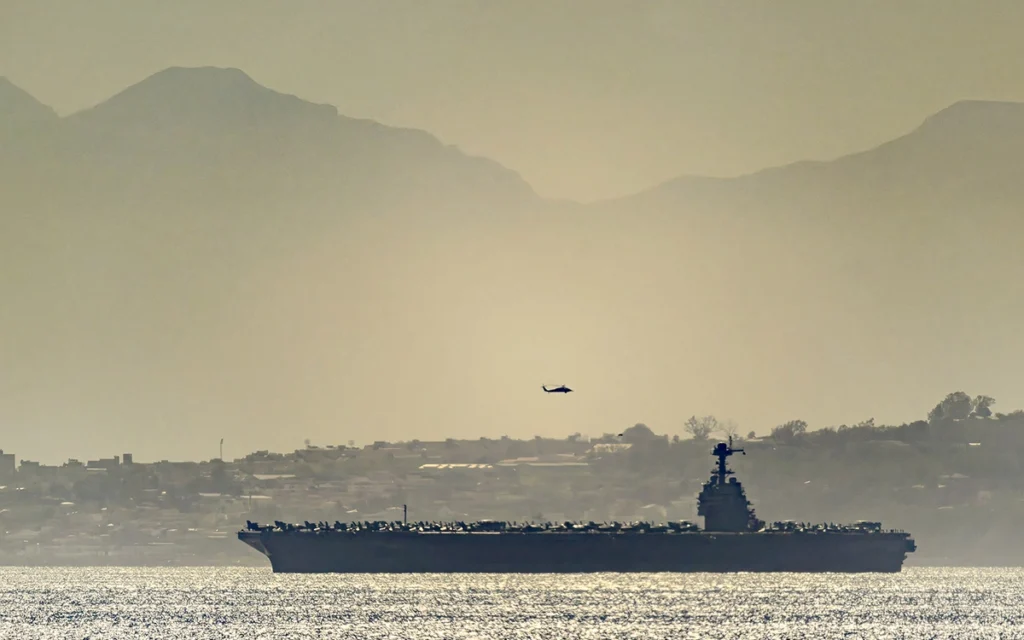
Additional context is instructive. Days before the bombs started falling, Steve Witkoff, Trump’s Special Envoy to the Middle East, gave a candid hint about the President’s thinking. Trump was not frustrated so much by Iran’s refusal to cave in to his threats, Witkoff told Fox News. “He’s curious as to why they haven’t capitulated—under this sort of pressure, with the amount of sea power, naval power, that we have over there.” Indeed, a president who cannot understand why an overpowered adversary has not already sought terms of surrender is a president who may have misjudged the enemy he set out to destroy.
Iranian Foreign Minister Abbas Araghchi gave the administration a defiant answer to the mystery: “Curious to know why we do not capitulate? Because we are IRANIAN.” Whether rhetorical or strategic, the audacious statement might just work. It underscores the regime’s effort to frame endurance itself as a form of resistance.
The implications of what may be Trump’s strategic stumble extend beyond Iran’s borders. Authoritarian governments from China to North Korea are watching and waiting to see whether sustained American air power, absent ground forces and without a robust State Department, can really force regime change. If the Iranian government survives in any recognizable form, governments that face similar American pressure may draw the same lesson: strategic endurance works. Washington can always bomb, but it cannot always break the will of a determined foe.
Trump’s willingness to enter dialogue with Tehran while the bombing continues suggests the President already senses that a swift Iranian collapse is not in the cards. Puzzled by Iran’s staying power, he may begin to consider a harder question: what happens if the Middle East nation cannot be compelled to concede?
The Precedent, Not the Crisis
The range of potential outcomes in Iran is wide, but the constitutional precedent set in Washington will prove more enduring than the crisis itself. A President who unilaterally imposes sweeping tariffs by emergency decree, fires or attempts to fire independent agency heads at will, dismantles congressionally mandated programs, and now launches a war against another sovereign nation aimed at regime change without a single congressional vote tests the boundaries of the Constitution’s separation of powers.
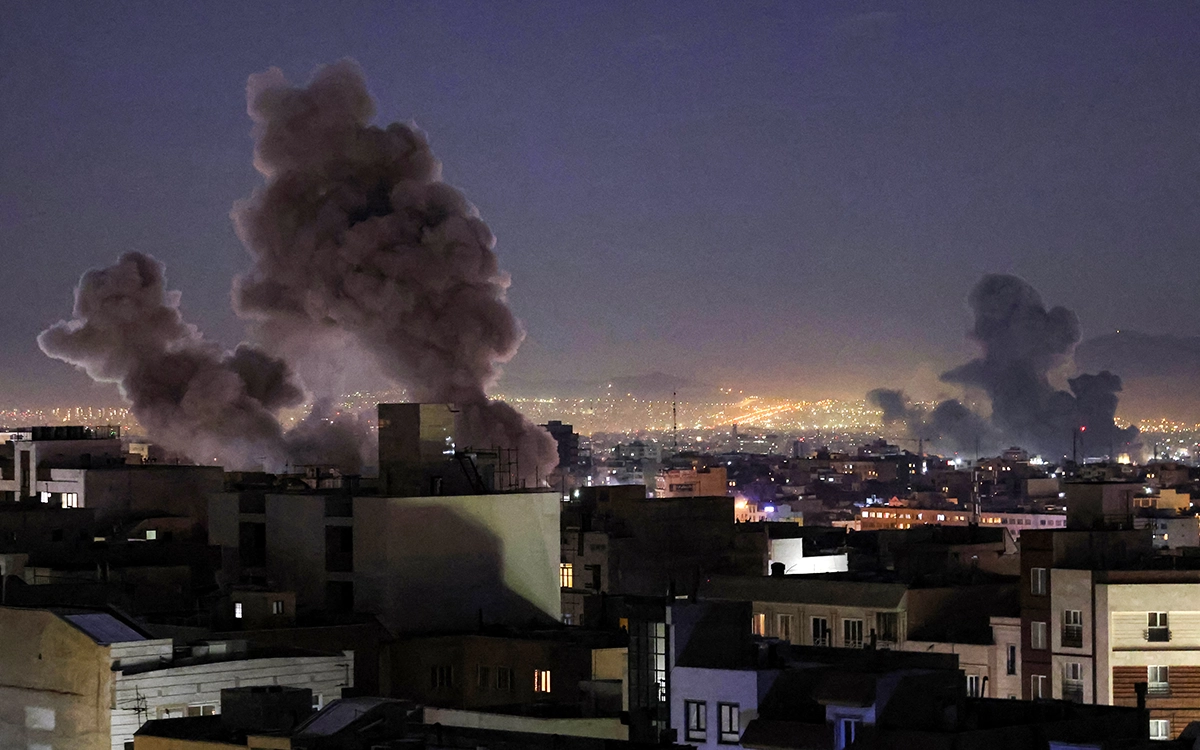
The central issue, therefore, is not solely Iran. It is whether the American constitutional system—designed by the founding fathers to distribute power across coequal branches with checks and balances—can resist the slide toward unchecked individual executive power. The Supreme Court clearly and emphatically affirmed that institutional limits remain functional in the economic sphere, at least where tariffs are concerned. Whether that principle holds when the stakes go beyond economic policy and into the lives of American soldiers and the fates of nations is an open question. Its answer will define not just this administration, but the kind of republic the United States will be in the future. The Senate returns Monday; the House on Wednesday. The world is watching. Americans are anxious. Tehran is burning.
The central issue, therefore, is not solely Iran. It is whether the American constitutional system can resist the slide toward unchecked individual executive power