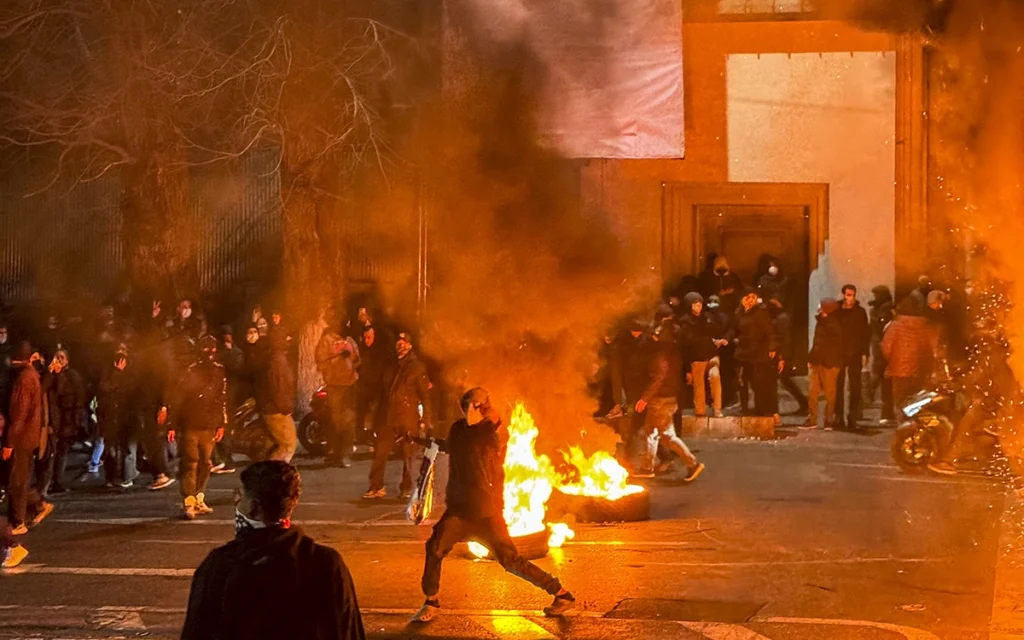
Iran has entered its fifth day of an effective nationwide internet blackout as anti-government protests, born of deep economic grievances, spread across several cities. While independent verification of casualties and overall scale remains constrained by the telecommunications lockdown, activists and monitoring groups using Starlink and shortwave radio report significant violence and mass arrests.
The Islamic Republic has been racked by a deepening economic crisis marked by hyperinflation of the rial, food and fuel shortages, and declining living standards. Years of sanctions have exacerbated conditions, particularly among working- and middle-class families squeezed by unemployment and rising costs. Upon retaking the White House in January 2025, Trump reimposed a “maximum pressure” sanctions regime, restricting oil exports and leveraging dollar power against Tehran.
Against this backdrop, ongoing mass protests threaten to challenge the legitimacy of Iran’s theocratic leadership, even as Iranian authorities said on Monday that the protests were under control. Yet Iran’s crisis has quickly transcended domestic politics, emerging as a potential flashpoint of strategic escalation among regional and global powers. Its implications now extend well beyond Tehran, underscoring an increasingly complex and volatile security environment.
Diplomatic and Economic Repercussions
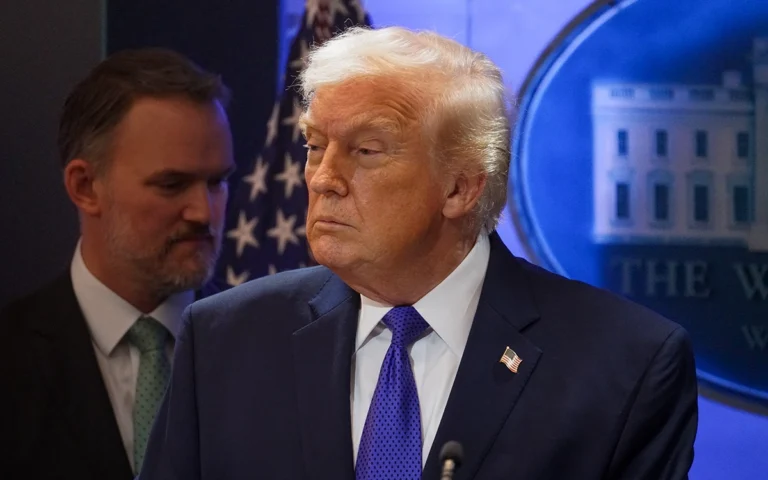
Monday night, Trump declared on Truth Social that any country doing business with Iran will pay a 25% tariff, while his press office said that U.S. air strikes against Iran “were one of the many, many options that are on the table.” Brussels said Monday that the EU is looking into imposing additional sanctions on Iran, while the European parliament has banned all Iranian diplomats. As pressure grows on Tehran, the German Chancellor Friedrich Merz said Tuesday morning that “we are now witnessing the last days and weeks of this regime.”
Iranian authorities in Tehran attribute the unrest to foreign instigation and warn that Iran is prepared to carry out pre-emptive strikes in the region if it detects signs of an impending attack. Iran’s supreme leader, Ayatollah Khamenei, has issued a warning to American politicians “to stop their deceit and not rely on treacherous mercenaries.” Echoing Tehran, Russian security Council Secretary Sergei Shoigu strongly condemned what he called “yet another attempt by foreign powers to interfere in Iran’s internal affairs.” Meanwhile, Beijing has reiterated its position against tariff wars and asserted its right to protect its interests.
U.S. Power and Strategic Ambiguity
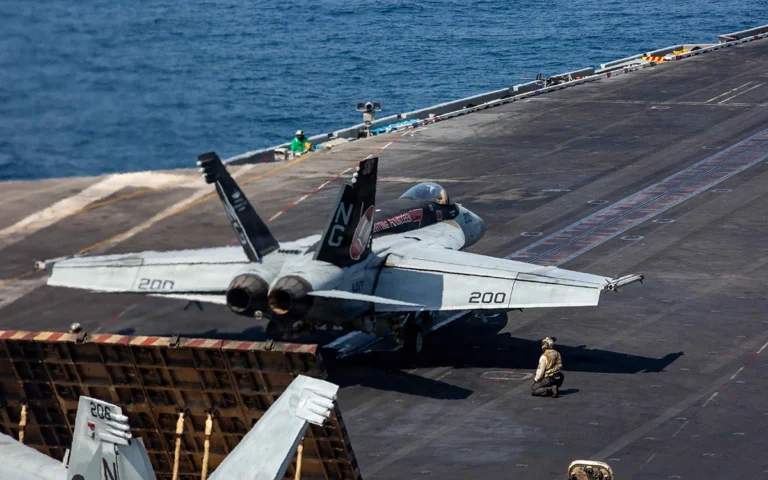
Trump’s threat of military action against Iran carries added weight, given how diplomatic engagement was paired with a sudden, surgical military strike last week in Venezuela. Trump said that Tehran had reached out to set up negotiations aimed at resolving the crisis. Yet, speaking aboard Air Force One, he said that “we might have to act before a meeting,” adding that “the military is looking at it very seriously.”
The dual signaling—openness to mediation alongside talk of military strikes—complicates Tehran’s strategic calculus. It blurs the line between negotiation and deterrence. Engagement is presented as a possibility explicitly bounded by the risk of sudden U.S. escalation, heightening uncertainty not only in Iran but across states adversarial to Washington. But Trump’s posture of strategic ambiguity is more than a messaging tactic. It signals a shift towards an openly coercive diplomacy in which the threat of force is foregrounded over the normative frameworks that have underpinned U.S. foreign policy in recent decades.
Washington’s strategically ambiguous messaging and planned unpredictability only increase escalation potential at a moment Tehran is already managing internal unrest.
China and Strategic Sovereignty
China’s foreign ministry spokeswoman Mao Ning has urged calm, saying that Beijing opposes any foreign interference in other countries’ internal affairs. Framing the issue in regional terms, she said that “the sovereignty and security of all nations should be fully protected by international law.” The call follows a long-standing pattern that emphasizes sovereignty and national stability while expressing opposition to the use or threat of force in international relations, ultimately seeking to draw red lines around regime change actions in China’s vicinity.
For Beijing, the specter of an Iranian crisis threatens to destabilize a major regional partner. China absorbs the vast majority of Iran’s oil exports, giving it a material stake in stability even as it avoids political alignment. At the same time, China’s rhetoric is directed as much at Washington as it is at Tehran. Its emphasis on sovereignty and rejection of external interference reflects a broader foreign policy posture shaped by concerns over precedent, particularly amid heightened tensions surrounding Taiwan. In practice, this translates into public appeals for strategic restraint and a preference for diplomatic solutions over coercive intervention.
NATO Fragility and European Strategic Drift
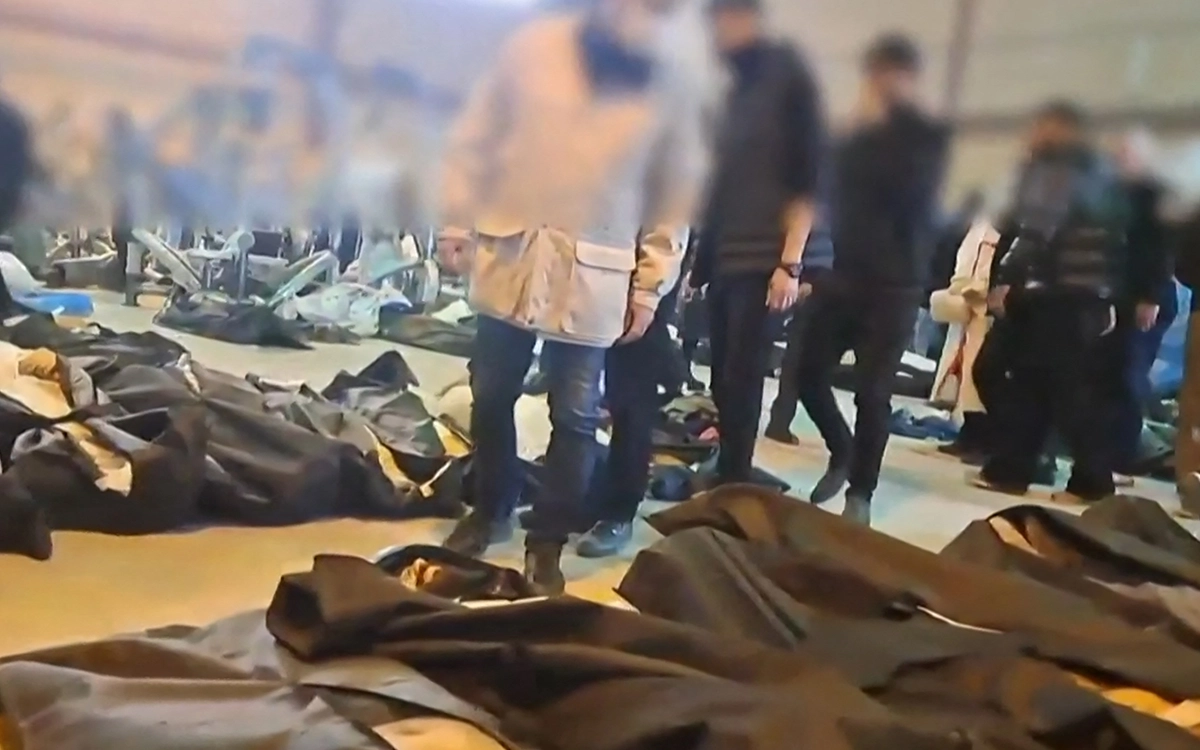
On Monday, Chancellor Merz condemned Iran’s use of “disproportionate and brutal violence” against protesters, calling it “a sign of weakness rather than strength.” Berlin’s response to the crisis underscores Europe’s unease with Tehran’s handling of dissent, but it also reveals fault lines. Berlin is cautious not to escalate rhetoric to the extent that it could enable military confrontation, particularly as Trump has said that the U.S. military is “looking at some very strong options.”
European caution is also sharpened by growing uncertainty within the Atlantic alliance itself. Trump has refused to rule out the use of military force to secure U.S. interests in Greenland, a prospect that risks a grave crisis within NATO. Against the backdrop of a more aggressive and unilateral U.S. foreign policy, European capitals face increasing strategic incoherence. Europe’s traditional ideological commitments to Western-style human rights advocacy, state restraint, and diplomacy appear to now yield diminishing leverage in crisis management.
Iranian Flashpoint
As Washington weighs the possibility of intervention, Iranian Foreign Minister Abbas Araghchi told foreign ambassadors that “Iran is not seeking war but is fully prepared for war.” Negotiations, he said, “should be fair, with equal rights, and based on mutual respect.” Despite such rhetoric, the prospect of rapid de-escalation appears limited. Israeli and U.S. strikes on Iran last June demonstrate a high escalation tolerance, particularly in the context of Israel’s long-standing view that the current Iranian leadership poses an existential threat. Such dynamics have not produced a stable deterrent framework, and Tehran has repeatedly demonstrated the capacity and willingness to project force beyond its borders, including with strikes on Israel.
Yet this also raises the danger of miscalculation. If Tehran interprets Trump’s strategic ambiguity as an existential threat rather than a pressure tactic, a misstep could rapidly escalate the crisis. Moreover, the information vacuum created by the blackout strategy on the ground complicates the ability of external actors to assess real conditions and respond appropriately.
The Trump Catalyst
At this complex juncture, the Trump doctrine has the potential to transform the Iranian crisis into a multi-vector geopolitical challenge. While Tehran oscillates between repression and guarded openness to talks, Washington advances a new form of coercive diplomacy in which the threat of force takes priority over the traditional ideological appeals of U.S. foreign policy. European actors, meanwhile, are left to grapple with the implications of this shift, as longstanding assumptions about alliance management and restraint come under increasing strain.
As attention refocuses on the Middle East, the risk of escalation remains acute while the mechanisms for crisis mitigation appear limited.