

German Chancellor Friedrich Merz said that the perpetrators of hybrid attacks on his country, including incidents involving explosive-laden drones, “will pay.”
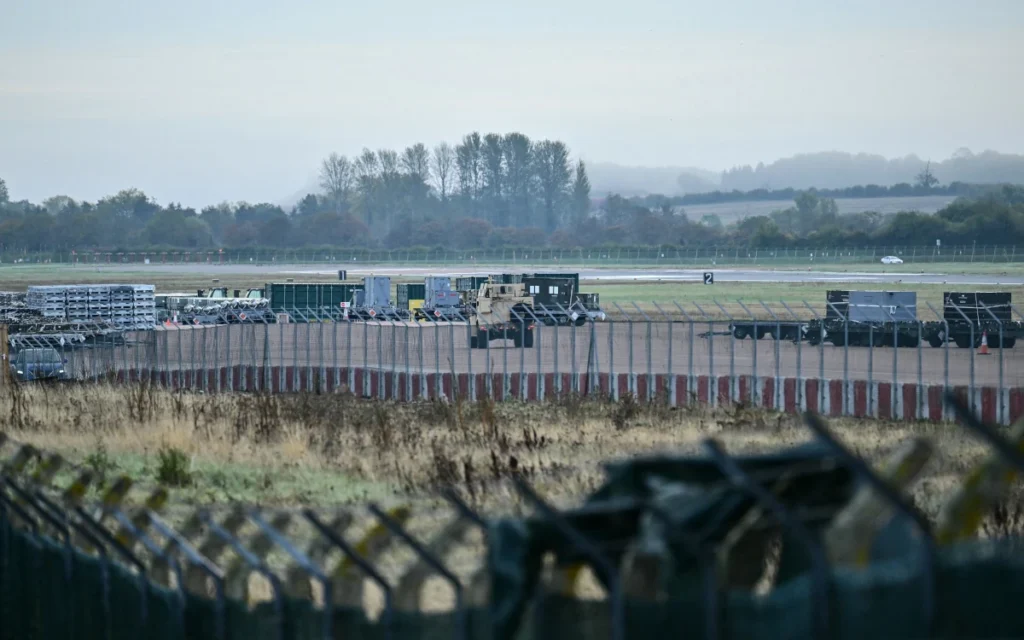
His warning comes after a third drone loaded with explosives was discovered in Germany on Tuesday, according to media reports that have not been officially confirmed. Earlier this month, police found an explosive-laden drone near a Ukrainian cargo plane at Leipzig Airport. In a separate incident, a drone collided with a DHL aircraft.
“The government is imposing a cost on the perpetrators of hybrid attacks. They will pay for them,” Merz said. Perpetrators are “increasingly acting without scruples,” and are willing to cause or accept the risk of “severe property damage, injuries, and fatalities,” the chancellor said. He added that the government was working with security services “on attributing the Leipzig attack” and that Berlin hoped “to present details and comment on the matter shortly.”
Although Merz did not name a target when threatening retaliation, Germany has long accused Moscow of targeting it with hybrid attacks, espionage, and sabotage. The NATO country’s chancellor said the government will take several defense and security measures “to protect” Germany against hybrid attacks. He also vowed to “stay the course” on remaining one of Ukraine’s main supporters in its war with Russia.
Merz’s warning signals a potentially tougher German approach to hybrid threats, with Berlin increasingly framing sabotage, espionage, and attacks on critical infrastructure as security challenges requiring an active response rather than defensive measures alone. Attribution will be the critical next indicator: if German authorities formally link the Leipzig incident or other explosive-laden drones to Russia or Russian proxies, Berlin could face pressure to respond through sanctions, covert or cyber measures, or coordinated NATO action. Any evidence of state involvement would also raise the risk of escalation between Russia and NATO while testing how the alliance responds to hostile activity deliberately calibrated to remain below the threshold of conventional military conflict. (AFP)