

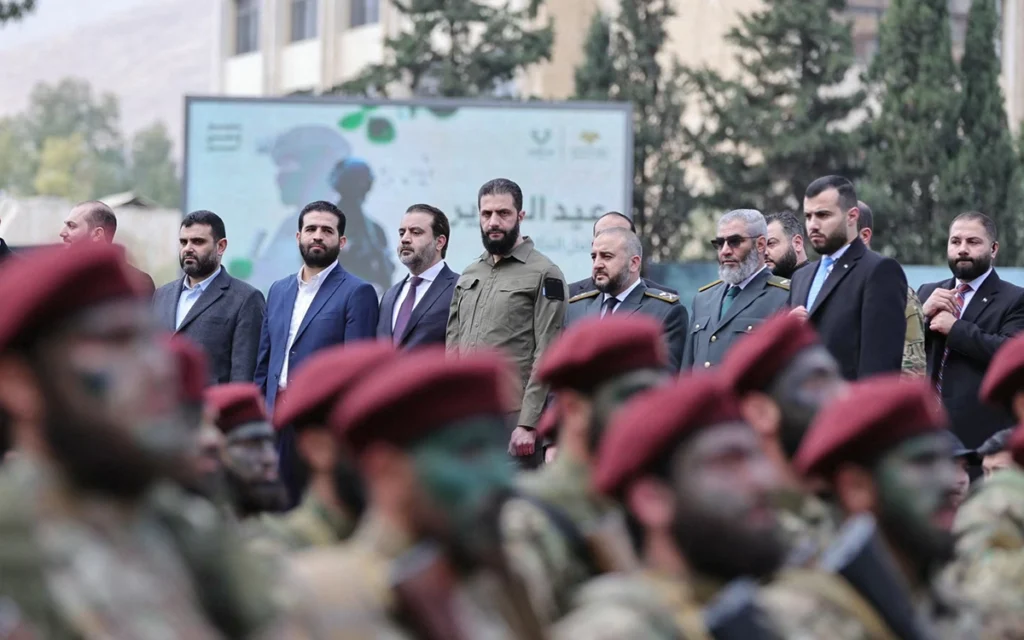
Assad’s departure has altered Syria’s leadership landscape, but it has not translated into stabilization or coherent state reconstitution. Political fragmentation has become structurally embedded in the post-Assad political order. Syria is not undergoing a conventional political transition triggered by leadership failure or external overthrow. Rather, it is consolidating into a post-regime, pre-state environment defined by contested authority, uneven governance arrangements, economic fragility, and layered external influence. Expectations that regime collapse might generate either rapid democratization or renewed centralized authoritarianism have not materialized. Instead, the country is evolving toward a more complex equilibrium characterized by dispersed authority and negotiated instability.
This environment reflects not simply the absence of centralized leadership but a redistribution of authority across territorial zones controlled by militias, local administrations, economic networks, and foreign-backed actors. Authority is increasingly dispersed and contingent on local security control, while stability tends to be localized and tactical rather than systemic. Governance persists in several areas without full sovereignty; security exists without unified command, while political legitimacy remains fragmented across competing structures.
Authority in Syria is increasingly dispersed and contingent on local security control, while stability tends to be localized and tactical rather than systemic
This structural reordering is most visible in the evolving patterns of authority inside Syria itself, where governance fragmentation has become the defining feature of the post-Assad landscape. In this context, the key analytical question is therefore not whether Syria will rapidly reconstruct centralized authority, but how long fragmented governance can persist as a functional political order, how external actors calibrate influence without assuming responsibility for stabilization, and under what conditions localized instability might escalate into wider regional confrontation.
Understanding Syria’s trajectory requires examining how governance constraints, economic pressures, militia autonomy, and geopolitical competition interact over time. Rather than driving a clear political transition, these dynamics increasingly sustain a system characterized by endurance, adaptation, and negotiated instability.
Fragmented Authority and Hybrid Governance Structures
Post-Assad governance arrangements therefore remain provisional, territorially uneven, and politically contested. More specifically, authority is exercised through a patchwork of actors, including transitional administrative bodies in Damascus, Kurdish-led structures associated with the Syrian Democratic Forces in the northeast, Turkish-backed opposition authorities in parts of northern Syria, and a range of locally entrenched militias.
In practical territorial terms, authority manifests through identifiable governance zones rather than a unified national framework. These include structures associated with the Autonomous Administration of North and East Syria (AANES) and the Syrian Democratic Forces across areas such as Al-Hasakah and parts of Raqqa and Deir ez-Zor; Turkish-backed Syrian National Army–aligned administrations in northern zones including Afrin and Jarabulus; and locally negotiated authority arrangements in southern regions such as Daraa, where tribal networks, former opposition factions, and residual state-linked actors sustain hybrid governance configurations. Together, these actors illustrate the emergence of differentiated authority systems shaped less by centralized state control than by security provision, external sponsorship, and localized economic resilience.
While they maintain varying degrees of administrative control, their legitimacy often derives less from institutional authority than from security guarantees, economic survival mechanisms, or external sponsorship from actors such as Turkey, Iran, Russia, and the United States. While governance continues to function at a basic operational level, providing localized administration and security in several regions, these arrangements have not translated into durable political consolidation or coherent national authority.
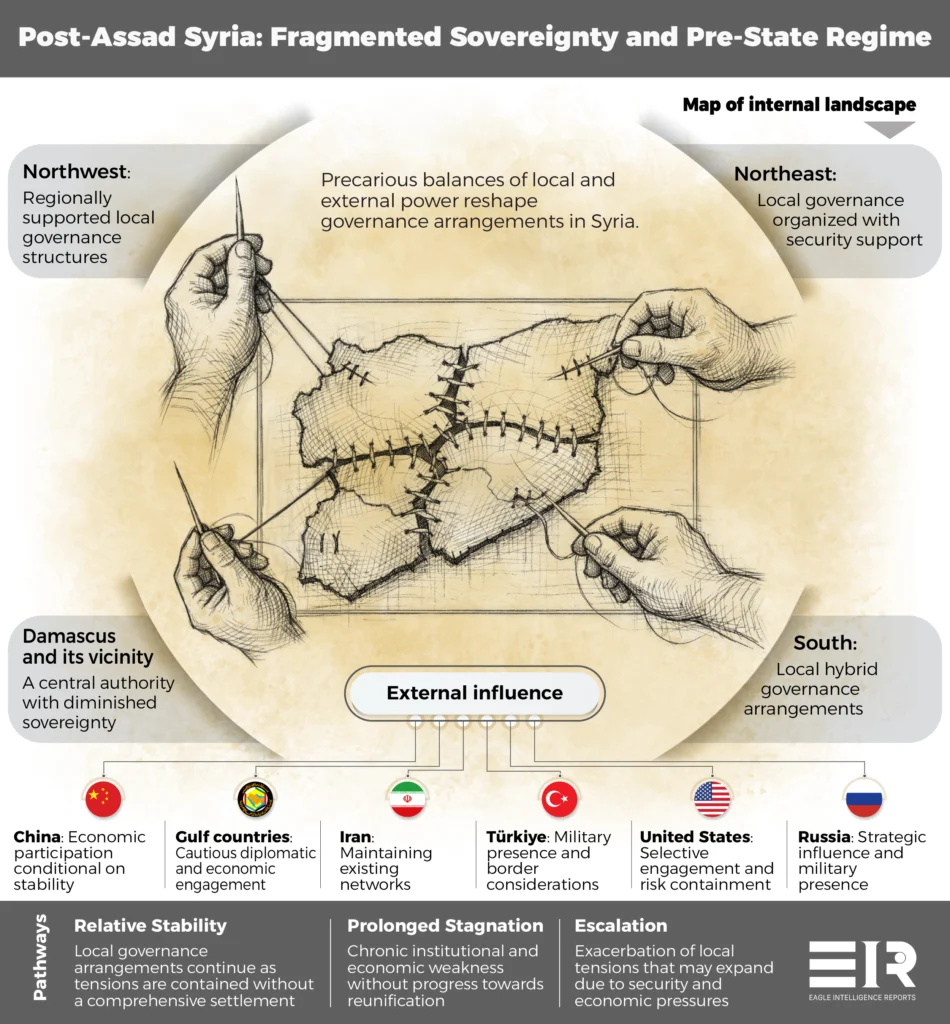
Rather than a simple vacuum, Syria increasingly resembles a layered system of governance in which local councils operate alongside militia networks, tribal intermediaries, business actors, and foreign-sponsored security actors. The diffusion of authority complicates political consolidation while simultaneously sustaining localized stability despite the absence of centralized authority.
Kurdish-administered regions, particularly areas of northeastern Syria such as Al-Hasakah, Raqqa, and parts of Deir ez-Zor, illustrate this structural complexity. Their relatively stronger institutional capacity and organized security structures, largely associated with the Syrian Democratic Forces and affiliated civilian administrations, provide leverage in negotiations over Syria’s future political configuration.
Yet unresolved questions regarding autonomy, integration with central governance structures, and broader regional geopolitical sensitivities prevent definitive settlement. This is explained by the fact that ambiguity stabilizes the short term by postponing confrontation. Yet over time, it risks normalizing fragmentation as a durable political condition rather than a transitional phase.
Fragmented governance also shapes how political legitimacy is formed inside Syria. With multiple authorities providing security, services, and economic support across different regions, populations increasingly develop localized political loyalties rather than a shared national political identity. Competing administrations, militias, and externally backed structures generate overlapping claims to representation and governance, often prioritizing stability and immediate service provision over institutional coherence.
With multiple authorities in Syria providing security, services, and support across different regions, populations increasingly develop localized political loyalties rather than a shared national political identity
Over time, this dynamic may shift public expectations away from centralized state authority toward more localized governance arrangements, potentially complicating future efforts to rebuild unified national institutions and consolidate state authority.
The durability of these hybrid governance arrangements remains closely tied to economic conditions, which both sustain local autonomy and constrain prospects for political consolidation.
Economic Collapse as a Structural Constraint
Economic fragility remains central to Syria’s political trajectory. Syria’s economy has contracted sharply since the onset of the conflict, with estimates suggesting that GDP has declined by roughly half compared with pre-war levels, while reconstruction needs are widely assessed in the hundreds of billions of dollars. These structural pressures, compounded by infrastructure degradation, currency instability, disrupted trade networks, limited reconstruction financing, and sanctions-related constraints, continue to undermine prospects for institutional recovery. This shapes not only living standards but also political authority, security dynamics, and broader regional stability.
Economic hardship simultaneously entrenches local authority structures while increasing long-term instability risks. Armed groups frequently control economic assets, border crossings, smuggling networks, and local revenue streams, creating parallel economic systems that reduce incentives for reintegration into centralized governance. These arrangements provide short-term resilience but reinforce political fragmentation.
Material decline also shapes legitimacy perceptions. Persistent hardship undermines confidence in governance arrangements and may fuel localized unrest even where security conditions remain relatively stable. Economic insecurity therefore becomes both a stabilizing factor for local power brokers and a destabilizing factor for broader political cohesion. These internal pressures, in turn, increasingly shape external approaches to reconstruction and stabilization.
For outside stakeholders, this creates a persistent dilemma. Reconstruction financing could support stability but risks legitimizing incomplete political arrangements and redistributing influence among competing actors. Conversely, withholding reconstruction perpetuates economic distress that fuels instability, migration pressures, and illicit economic activity with regional spillover effects.
As a result, Syria’s economic recovery remains closely tied to broader geopolitical calculations. Selective engagement by external powers simultaneously constrains reconstruction while preventing full economic collapse, reinforcing a pattern of partial stabilization without comprehensive political consolidation. This dynamic extends beyond the economic sphere and reflects a broader pattern of external influence across Syria’s political and security landscape.
Syria’s economic recovery remains closely tied to broader geopolitical calculations
Managed Influence Without Stabilization Ownership
External actors now operate within a framework of shared structural constraint: none appear willing to finance reconstruction or assume comprehensive political responsibility for governing Syria. Yet several retain both the capability and incentive to block outcomes they consider strategically unacceptable. This has produced an externally managed equilibrium characterized by influence without full stabilization ownership, where actors prioritize risk containment, selective leverage, and strategic positioning rather than decisive political settlement.
Syria’s evolving political landscape therefore continues to be shaped by differentiated forms of external engagement. While actors share an interest in preventing uncontrolled escalation or systemic collapse, their priorities, risk thresholds, and instruments of influence vary, producing a geopolitical environment that simultaneously constrains stabilization while sustaining fragmented authority structures.
Within this environment, Russia continues to prioritize strategic access, geopolitical visibility, and diplomatic leverage. Maintaining military infrastructure and regional credibility remains central to Moscow’s posture. However, resource constraints and competing strategic commitments limit Russia’s capacity for sustained economic or military investment. Its approach increasingly reflects influence preservation at manageable cost rather than stabilization leadership.
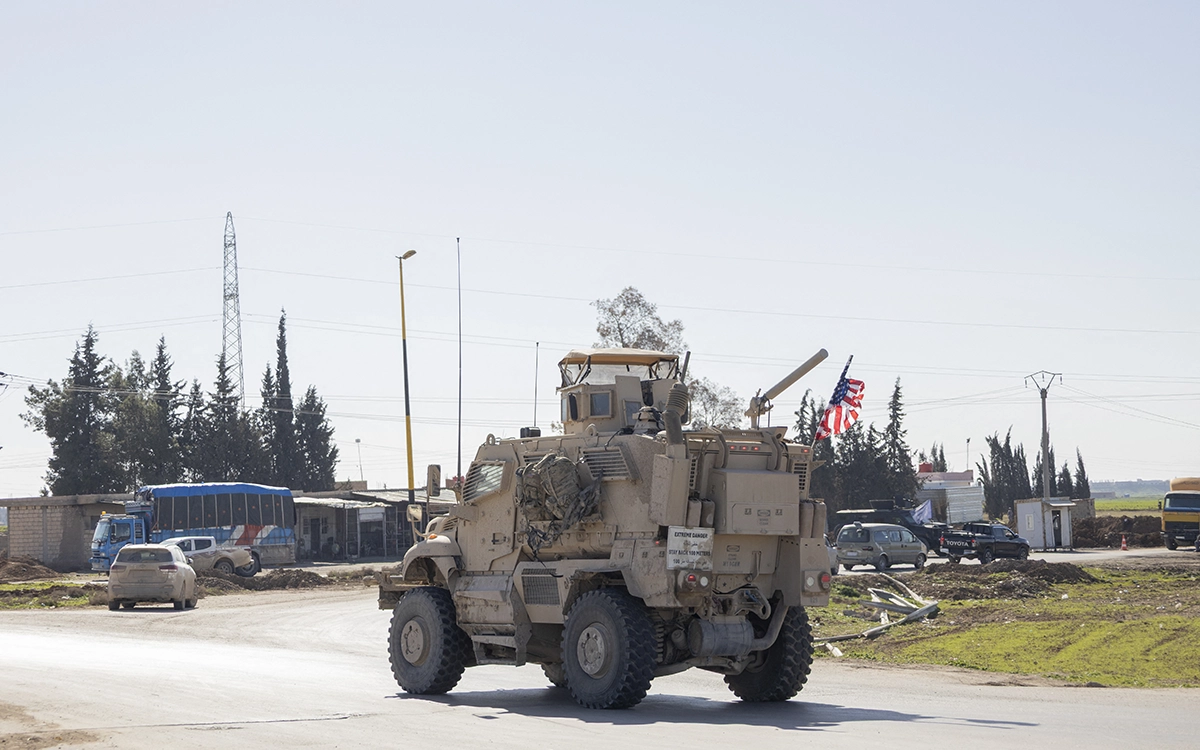
The United States, while operating with different priorities, reflects a similarly cautious approach. Washington maintains a selective presence focused on counterterrorism, regional deterrence, and preventing adversarial consolidation. It retains leverage through sanctions policy, military positioning, and diplomatic coordination but shows limited appetite for deep political involvement. This containment-oriented posture mitigates immediate risks while leaving broader governance questions unresolved.
Regional actors face a more direct exposure to Syrian instability, shaping a distinct set of policy calculations. Turkey remains deeply engaged due to border security concerns, refugee pressures, Kurdish political dynamics, and regional influence ambitions. Ankara combines military presence, economic engagement, and political negotiation, yet domestic economic constraints and shifting regional priorities limit its willingness to pursue comprehensive stabilization strategies.
Iran’s engagement reflects continuity alongside growing constraints. Syria remains strategically important for regional connectivity and deterrence networks, yet economic pressures and regional competition limit Tehran’s ability to expand influence substantially. Iranian policy increasingly emphasizes preservation of existing networks rather than expansion.
Beyond these primary stakeholders, a wider constellation of actors is shaping Syria’s environment in more indirect but still consequential ways. Gulf states, particularly Saudi Arabia and the United Arab Emirates, are cautiously exploring diplomatic and economic engagement driven primarily by pragmatic stability considerations rather than ideological alignment.
Other external actors influence the landscape primarily through security management or economic positioning. Israel remains a security-focused actor prioritizing deterrence and limiting Iranian military entrenchment. European actors operate largely through humanitarian assistance, sanctions regimes, migration management concerns, and diplomatic engagement. China represents a potential long-term economic stakeholder but remains cautious, preferring stability before deeper involvement.
Taken together, this externally managed but incomplete stabilization environment generates structural volatility. Influence is maintained without full responsibility, increasing the likelihood that localized tensions evolve into broader security risks. These dynamics are most clearly visible in the escalation patterns that continue to shape Syria’s fragmented security landscape.
Externally managed but incomplete Syrian stabilization environment generates structural volatility. Influence is maintained without full responsibility
Escalation Dynamics and Structural Security Risks
Diffuse authority generates persistent escalation risks. Localized clashes between militias and foreign-backed forces can escalate without clear political oversight, even when no party seeks a broader confrontation. Overlapping militia networks, uneven command structures, competing external sponsors, and unresolved territorial arrangements create an environment in which localized incidents can escalate unpredictably.
Several identifiable flashpoints illustrate this dynamic. Friction zones between Turkish-backed opposition forces and Kurdish-led Syrian Democratic Forces in northern Syria periodically generate localized confrontations and retaliatory signaling. Similarly, Israeli deterrence operations targeting Iranian-linked military infrastructure in southern and western Syria reflect another recurring escalation pattern, particularly where Tehran-aligned networks seek to maintain logistical presence. In eastern Syria, areas along the Iraq–Syria transit corridor have historically experienced tensions involving militia networks, coalition forces, and local armed actors, creating additional escalation pathways shaped by attribution ambiguity and compressed response timelines.
These dynamics also intersect with residual extremist activity. Although significantly weakened compared with earlier phases of the conflict, their activity contributes to chronic instability, complicates security coordination among local and external actors, and sustains justification for continued foreign military presence.
Border dynamics remain particularly sensitive within this environment. Interactions involving Turkey, Israel, Iran-aligned actors, Kurdish forces, and local militias generate multiple escalation pathways, especially where operational boundaries remain contested. Attribution ambiguity, compressed decision timelines, and overlapping deterrence postures increase the likelihood of miscalculation even when escalation is not strategically intended.
Importantly, escalation risks often emerge from cumulative pressures rather than deliberate strategic decisions. Economic deterioration, militia competition, and geopolitical signaling can interact in ways that strain existing informal deconfliction mechanisms and accelerate crisis dynamics beyond political control.
Taken together, these dynamics suggest that Syria’s trajectory is likely to unfold through evolving patterns of endurance, drift, or episodic escalation rather than through a single linear transition toward stabilization or consolidation. This makes it essential to examine the structural pathways through which instability may be managed, prolonged, or intensified over time.
Taken together, these dynamics suggest that Syria’s trajectory is likely to unfold through evolving patterns of endurance, drift, or episodic escalation
Structural Pathways and Early Warning Indicators
A managed fragmentation pathway would involve relative stabilization of local governance zones, informal coordination among external actors, and gradual but uneven economic recovery. Early indicators include sustained ceasefire adherence, incremental economic normalization, and stable external actor positioning.
A prolonged drift pathway would reflect persistent governance weakness, economic stagnation, and recurring localized instability without major escalation. Indicators include continued militia autonomy, stalled reconstruction financing, and episodic security incidents without systemic breakdown.
An escalation pathway could emerge if economic pressures intensify, militia competition increases, or external geopolitical dynamics shift. Indicators would include breakdowns in deconfliction arrangements, intensified cross-border incidents, or significant economic deterioration.
These trajectories are fluid rather than mutually exclusive, as Syria may move between them depending on internal pressures, regional dynamics, and the evolving calculations of external actors. Understanding this fluidity is essential both for analytical assessment and for shaping realistic external policy responses.
Within this range of possible trajectories, the current balance of incentives suggests that Syria’s fragmented political order is more likely to persist than to give way to rapid political reintegration. External actors continue to prioritize influence without stabilization ownership, while domestic governance structures remain economically and institutionally dependent on localized authority arrangements. Taken together, these dynamics indicate that fragmentation increasingly reflects an adaptive political equilibrium rather than merely post-conflict disruption. Significant consolidation would likely require either sustained external underwriting or a major shift in regional security dynamics, neither of which appears imminent.
Policy Implications and Strategic Considerations
Against this backdrop, Syria increasingly requires a risk management framework rather than expectations of rapid stabilization, as fragmentation is likely to persist as a functional political condition rather than a temporary disruption.
Syria increasingly requires a risk management framework rather than expectations of rapid stabilization
In this context, policies focused solely on reconstruction or security containment risk overlooking the interaction between governance fragmentation, economic pressures, and external competition. Engagement that is more effective will likely require coordinated approaches combining economic stabilization, security deconfliction, political flexibility, and sustained regional diplomatic coordination.
At the regional level, actors must also account for spillover risks, including migration pressures, illicit economic flows, and proxy competition dynamics. These factors suggest that Syria’s trajectory will continue shaping regional security calculations even in the absence of major escalation. Overall, these considerations reinforce the likelihood of a Syrian political order characterized less by transition than by managed endurance under sustained internal and external pressure.
Endurance Without Resolution
Syria after Assad is therefore unlikely to experience rapid state reconstruction or decisive stabilization. Instead, the emerging pattern points toward endurance without resolution, characterized by fragmented authority, selective stabilization, and continued external involvement without comprehensive ownership. The durability of this environment will depend on whether interim governance arrangements gain incremental legitimacy, whether economic pressures intensify or stabilize, and whether external actors maintain restraint despite competing strategic interests.
The most probable near-term trajectory is neither rapid stabilization nor systemic collapse, but a prolonged phase of structurally managed fragmentation. Over the medium term, this dynamic may lead to the consolidation of a form of managed fragmentation, in which relative stability in certain areas coexists with institutional weakness, periodic tensions, and continued external influence, without a clear pathway toward full political reintegration. The central risk lies in the possibility that accumulated economic, security, and geopolitical pressures converge in ways that exceed existing informal stability mechanisms.
Understanding Syria’s trajectory therefore requires moving beyond crisis-driven narratives and recognizing fragmentation not simply as a temporary disruption, but as a potentially enduring political condition. Overall, Syria appears likely to remain in a phase of managed fragmentation in which stability remains partial, externally conditioned, and vulnerable to periodic crises, with significant implications for the future regional security environment.
Overall, Syria appears likely to remain in a phase of managed fragmentation in which stability remains partial, externally conditioned