
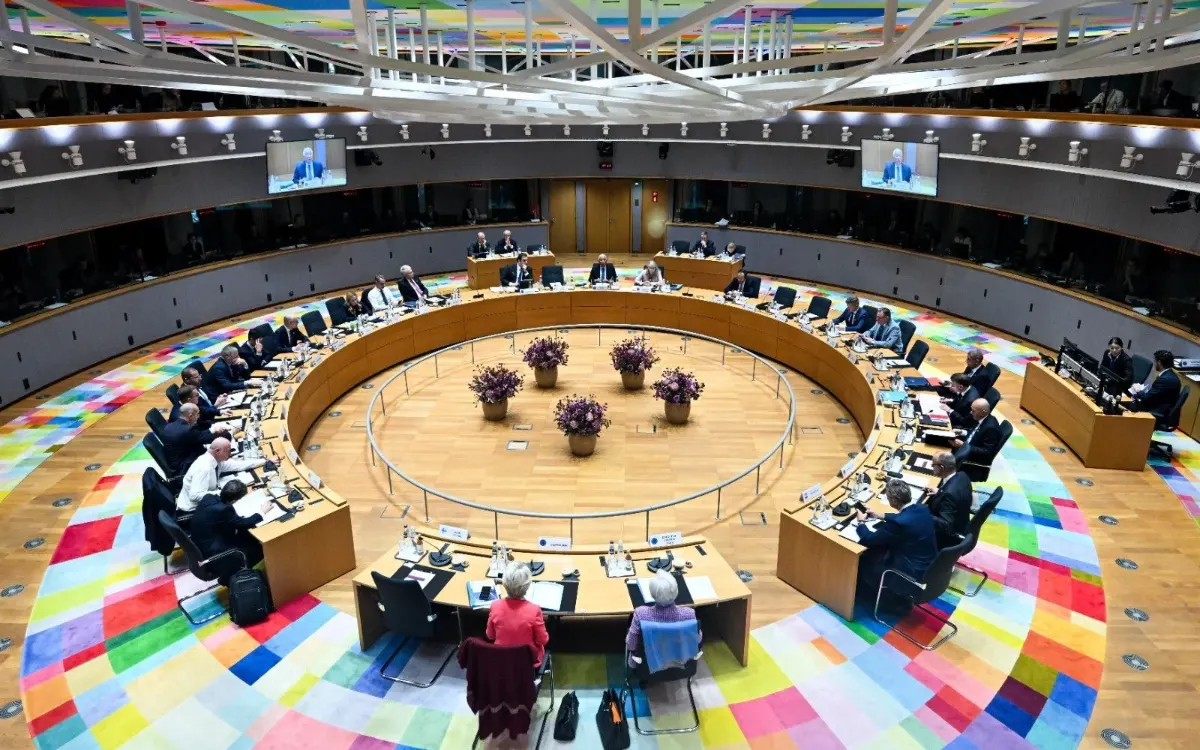
A dispute over financing Ukraine has emerged as a major obstacle to the European Union’s next long-term budget, exposing divisions over how the bloc should share the costs of supporting Kyiv. At Thursday’s Brussels summit, German Chancellor Friedrich Merz insisted that all 27 member states contribute to a proposed 45-billion-euro loan for Ukraine, complicating efforts to secure a budget agreement before year-end.
The loan, worth about $49 billion, would cover two-thirds of Ukraine’s budget gap in 2027. The Czech Republic, Hungary, and Slovakia, which opted out of a similar package last year, want exemptions, and Merz said Bulgaria is seeking one too. Merz has made agreement on Ukraine funding a condition for resolving negotiations over the EU’s 2028–2034 budget. European Council President Antonio Costa has proposed cutting about 204 billion euros from the European Commission‘s original proposal of nearly 2 trillion euros.
“The European Union consists of 27, not 23 or 24,” Merz warned as he arrived at the summit. Slovak Prime Minister Robert Fico accused Germany of “blackmail,” while Czech Prime Minister Andrej Babis pledged to “fight” for EU funds and argued that Ukraine financing should be handled separately.
The confrontation reflects a deeper disagreement over whether support for Ukraine should remain a collective financial obligation or allow national exemptions. The governments seeking opt-outs are all net recipients of EU funds, which sharpens the solidarity argument behind Merz’s demand. The dispute also intersects with politics in France, where presidential frontrunner Marine Le Pen has pledged to halt French financial aid to Ukraine if elected next spring. Brussels is seeking a budget agreement before that election, but Italian Prime Minister Giorgia Meloni has rejected allowing the December deadline to dictate the outcome.
Merz is using the budget, where unanimity gives every capital a veto, to bring all 27 into the Ukraine loan. The tactic raises pressure on the holdouts but risks delaying both agreements. Without a deal by December, the talks would run into France’s presidential campaign, where Le Pen’s pledge could change the position of Paris after the vote. (AFP+EIR)