
As global power competition intensifies, the international order is fragmenting in increasingly visible ways.
The contemporary global order is undergoing continuous fragmentation, driven by intensifying great-power competition and institutional erosion that are reshaping how power is exercised and contested. The gradual decline of rule-based multilateralism, combined with the selective application of norms and growing instrumentalization of economic and technological interdependence, has produced an environment defined less by stability and more by fluidity, uncertainty, and overlapping spheres of influence. Rather than functioning in a coherent manner, the system increasingly operates through parallel alignments, ad hoc coalitions, and situational bargaining.
Within this environment, middle powers have found expanded space to maneuver. States such as India, Turkey, Saudi Arabia, the United Arab Emirates, Egypt, and Israel increasingly influence regional balances, economic flows, and diplomatic outcomes. They do so not by challenging great powers directly, but by exploiting governance gaps, leveraging interdependence, and operating across multiple alignments simultaneously. Their growing visibility, however, raises a deeper analytical question. Does increased agency remain contingent on a fragmented system they did not design and cannot fully control? The key question is whether this expanded agency amounts to real power, or merely reflects a system in flux.
Middle powers have increasingly functioned as system modifiers rather than systemic architects. They can shape outcomes, constrain great-power options, and stabilize specific regions or sectors. Yet their influence remains conditional, fragmented, and embedded within broader hierarchies of power, technology, and rule-making that they do not control. Understanding this distinction is essential for assessing the future trajectory of international governance and the limits of emerging pluralism.
The question, therefore, is whether expanded agency across strategic, economic, technological, and diplomatic domains translates into structural power, understood as the ability to shape rule-making, institutional design, and durable governance outcomes. Instead of viewing middle powers as emergent architects of a new international order or as passive followers of great-power dynamics, they are better understood as system modifiers whose influence is situational, domain-specific, and structurally constrained. This framework is applied first to the strategic domain, where middle-power behavior is most visible.
Strategic Autonomy and Multi-Alignment
Within a fragmented and fluid international system, strategic autonomy through multi-alignment has emerged as the central organizing principle of contemporary middle powers. Rather than committing to exclusive alliances, they increasingly pursue overlapping partnerships across security, economic, and technological domains.
For these states, this approach maximizes flexibility and reduces vulnerability to coercion, particularly in an environment where alliance commitments are perceived as increasingly transactional, conditional, and reversible.
Within a fragmented international system, strategic autonomy through multi-alignment has emerged as the central organizing principle of contemporary middle powers
India
India’s strategic posture illustrates both the advantages and the structural limits of multi-alignment as a pathway to autonomy. By deepening security cooperation with the United States and its partners through frameworks such as the Quad, while simultaneously preserving defense, energy, and diplomatic ties with Russia and maintaining participation in institutions that include China, India maximizes bargaining leverage across multiple arenas. This calibrated ambiguity allows New Delhi to hedge against overdependence and delay forced alignment choices that could narrow its long-term strategic options.
Yet this flexibility does not translate into structural leadership. Dependence on legacy Russian defense systems constrains rapid strategic realignment, while unresolved regional rivalries and internal developmental asymmetries limit India’s ability to project sustained agenda-setting authority. India’s autonomy, therefore, functions primarily as a buffering mechanism against systemic volatility rather than a foundation for institutional or normative leadership.
Turkey
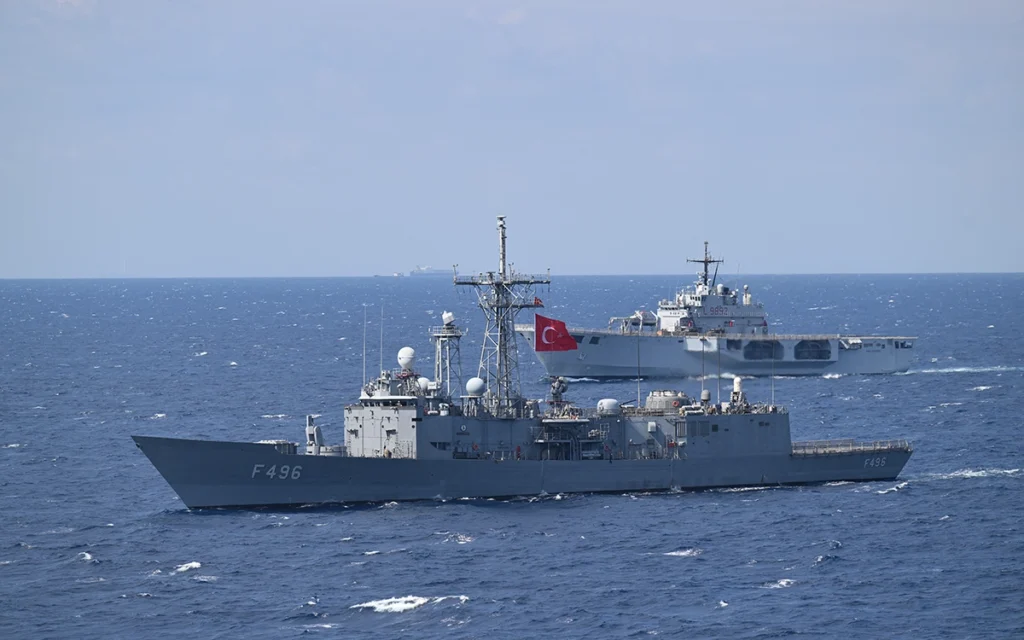
Turkey’s experience highlights the costs and limits of strategic autonomy pursued through confrontation rather than calibrated hedging. Ankara has sought to expand its room for maneuver through independent military interventions in Syria, Libya, and the South Caucasus, as well as through selective defiance of alliance expectations, most notably by procuring the Russian S-400 air defense system while remaining a member of NATO. These moves temporarily enhanced Turkey’s leverage as a security actor and elevated its importance as an operational partner across multiple theaters.
However, this autonomy has been achieved at high structural cost. Persistent tensions with Western partners have translated into economic vulnerability, financial instability, and partial institutional marginalization, thereby constraining access to capital, advanced technology, and long-term investment. Reliance on transactional cooperation with Russia and regional actors has failed to produce durable strategic insulation, leaving Ankara exposed to shifting balances and asymmetric dependencies.
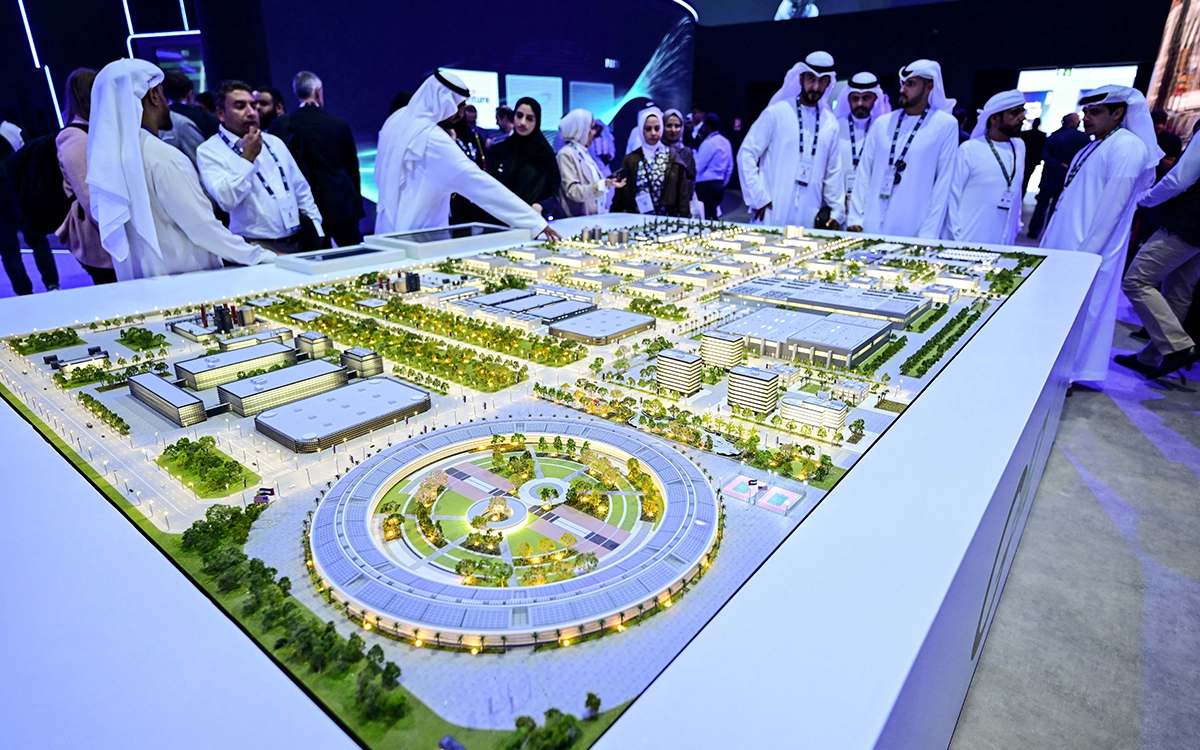
Saudi Arabia and the UAE
Saudi Arabia and the United Arab Emirates exhibit a more insulated form of strategic autonomy, rooted primarily in economic, energy, and investment structures rather than overt strategic defiance. Their approach reduces immediate exposure to pressure and preserves maneuvering space across competing power centers, but it remains contingent on successful economic transformation and diversification. Autonomy grounded primarily in material leverage risks erosion if underlying reform and diversification strategies falter.
While this model provides Saudi Arabia and the UAE with insulation from immediate pressure, it does not translate into independent rule-setting capacity. Their strategic autonomy remains embedded in external demand, global market stability, and sustained access to international financial and technological systems. As a result, their influence is substantial but conditional, with its durability dependent on the successful execution of economic transformation agendas and the broader trajectory of global energy markets.
Taken together, these cases illustrate that strategic autonomy is not a static achievement but a continuously managed condition. Its durability depends on whether middle powers can transform flexibility into more enduring forms of influence rather than merely delaying structural constraints.
Beyond flexibility, multi-alignment functions as a mechanism for risk distribution within a fragmented system, prioritizing choice over optimization. However, as fragmentation deepens and rivalry becomes more institutionalized, particularly in security and technology domains, the space for ambiguity narrows, rendering multi-alignment increasingly difficult to sustain over time.
Economic Statecraft and Structural Limits
If strategic autonomy defines how middle powers position themselves geopolitically, economic statecraft increasingly determines whether that autonomy can be sustained. Economic tools have become principal instruments through which middle powers attempt to convert maneuvering space into more durable influence. Control over energy resources, capital flows, infrastructure development, and connectivity corridors allows these states to shape regional economic environments and emerge as indispensable partners.
Economic statecraft increasingly determines whether strategic autonomy can be sustained
Saudi Arabia represents a form of middle-power autonomy grounded primarily in material leverage rather than institutional authority. Through energy dominance, coordination with Russia via OPEC+, and selective engagement with China and Western partners, Riyadh has expanded its room for maneuver and reduced its exposure to unilateral pressure. This strategy enhances short-term bargaining power and allows Saudi Arabia to operate across competing power centers without formal alignment.
However, this autonomy remains structurally contingent. Saudi influence stems from control over resources and capital flows rather than rule-making capacity or institutional leadership. Its strategic position is therefore highly sensitive to market conditions, energy transitions, and the success of domestic economic diversification under Vision 2030. This form of autonomy is economic rather than strategic and negotiable rather than structural.
Besides, the effectiveness of economic statecraft lies in its ability to generate resilience. Middle powers can absorb external shocks, diversify partnerships, and resist unilateral pressure more effectively than they did in previous decades. Yet economic statecraft encounters a clear structural ceiling. While middle powers can influence the direction and sequencing of flows, they rarely control the rules governing them. Global trade, finance, and investment operate in regulatory and institutional frameworks largely designed, enforced, and arbitrated by major powers. Economic autonomy, therefore, strengthens middle powers as negotiators within the system but does not enable them to redefine the system itself. Influence remains agenda-setting rather than rule-setting, powerful yet derivative.
Moreover, economic leverage is asymmetrically reversible. While middle powers can redirect capital and trade flows, they remain vulnerable to fiscal tightening, supply-chain weaponization, and regulatory shifts imposed by larger economies. As a result, economic statecraft functions primarily as a buffering mechanism rather than a foundation for systemic leadership.
Technology and Strategic Autonomy
As economic leverage encounters structural limits, technology emerges as a complementary domain through which middle powers seek to bypass traditional constraints. Technological capability increasingly functions as a multiplier of middle-power autonomy. Investments in cybersecurity, digital governance, artificial intelligence, and defense innovation allow middle powers to reduce dependence on external providers and generate asymmetric advantages that do not rely on conventional military power.
Israel occupies a distinctive middle-power position rooted in technological dominance rather than multilateral brokerage. Its advanced capabilities in cybersecurity, defense innovation, and artificial intelligence enable it to project influence through technological ecosystems and security partnerships, often bypassing traditional diplomatic channels. However, this influence remains tightly embedded in a close strategic dependency on the United States and is constrained by persistent regional instability. While Israel can export technological models and operational practices, its capacity to act as an autonomous institutional pole remains limited.
The UAE has a clear middle-power strategy in developing its own technological independence, which currently involves significant investment in advanced technologies, including cybersecurity, artificial intelligence, digital infrastructure, and defence innovation. The aim is to reduce the UAE’s dependence on international providers and to move toward becoming a developer, user, and integrator of technology, rather than remaining simply an end user.
However, the UAE’s technology strategy is constrained by the fact that its current technological ecosystem remains reliant on global supply chains and regulatory frameworks that are largely set by major powers. As a result, while these technological investments provide the UAE with a wider operating environment, they do not confer independent control over standards, governance frameworks, or critical technological chokepoints.
This creates a paradox of technological autonomy. The more technologically capable middle powers become, the more exposed they are to pressure over standards, supply chains, and governance norms. Competition over 5G infrastructure, data governance, and access to advanced semiconductors illustrates how technological autonomy quickly encounters external constraints tied to securitized technological ecosystems. Technology thus expands tactical agency while reinforcing strategic dependence at the systemic level.
The more technologically capable middle powers become, the more exposed they are to pressure over standards, supply chains, and governance norms
Middle-Power Mediation
Where economic and technological tools attempt to shape structural positioning, diplomacy offers middle powers a means to exercise influence in moments of acute systemic stress. Diplomatic brokerage has emerged as a complementary tool in an environment characterized by institutional paralysis and great-power deadlock. Middle powers’ ability to maintain access across competing alignments enables them to mediate crises and facilitate limited agreements.
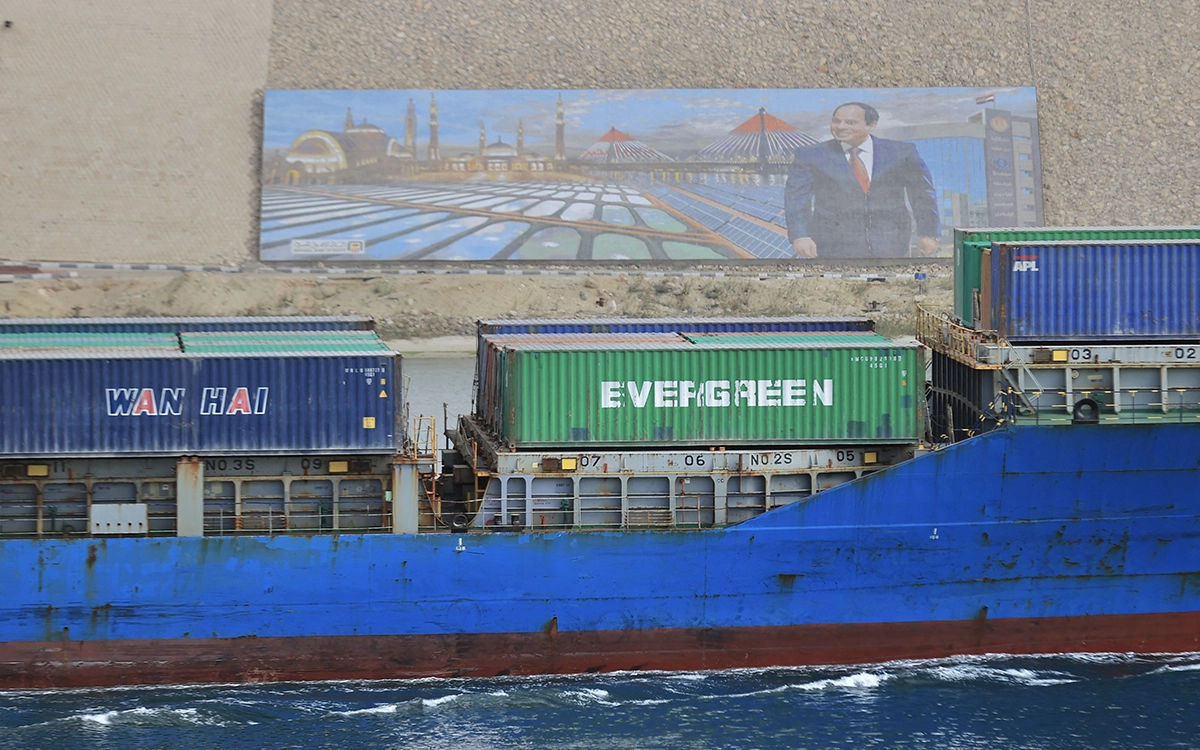
Turkey’s facilitation of Black Sea grain arrangements, the UAE’s involvement in prisoner exchanges and indirect talks, and Egypt’s recurring mediation in Gaza illustrate how middle powers convert access into situational diplomatic authority. Egypt’s case is particularly illustrative as its middle-power role is derived less from autonomous capacity than from geopolitical indispensability. Its centrality to Gaza mediation, Red Sea security, and broader regional crisis management grants Cairo recurrent diplomatic relevance disproportionate to its economic strength, allowing Egypt to function as a stabilizing intermediary in moments of acute systemic stress.
At the same time, heavy dependence on external financial support and Gulf backing severely constrains Egypt’s strategic autonomy. The Egyptian agency is therefore reactive rather than generative. While Cairo can manage crises and facilitate de-escalation, it lacks the capacity to consolidate episodic diplomatic influence into durable institutional outcomes. Egypt’s experience underscores how mediation authority can coexist with deep structural dependence within a fragmented international order.
This pattern reflects a broader logic of middle-power mediation. Strategic ambiguity underpins this role by preserving flexibility and access across competing alliances, but it simultaneously limits credibility and durability. Mediation outcomes remain contingent on great-power consent and typically lack institutional enforcement mechanisms. As a result, middle-power diplomacy contributes primarily to crisis management rather than structural resolution. It mitigates instability without addressing underlying governance deficits and is best understood as a form of situational rather than institutional authority.
System-Level Consequences
These dynamics, replicated across regions and thematic areas, aggregate into broader system-level effects. At the system level, the rise of middle-power activism produces ambivalent outcomes. Middle powers can reduce volatility, fill governance gaps, and prevent escalation in specific contexts. Simultaneously, their selective engagement and resistance to normative convergence weaken collective action and institutional coherence. This interaction produces a form of stability without integration as crises are managed, but systemic fragmentation persists. In this context, the international system becomes more pluralistic but less coordinated, more flexible but less predictable.
Collectively, middle-power strategies contribute to a system characterized by distributed influence but diminished coherence. Power becomes more negotiable as governance becomes thinner. This produces a paradoxical outcome: fewer hegemonic impositions but also fewer enforceable rules.
Middle-power strategies contribute to a system characterized by distributed influence but diminished coherence
In such a system, stability is increasingly transactional and contingent. Middle powers help prevent breakdowns but lack the capacity, and often the incentive, to consolidate gains into durable institutional arrangements. The result is an international order that is resilient to collapse, but resistant to integration.
Middle Powers as System Modifiers
In conclusion, the cumulative effect of these strategies clarifies the structural role middle powers now occupy in the international system. Middle powers today hold consequential yet bounded positions. They possess the capacity to shape regional orders, influence economic and technological domains, and manage crises. But in doing so, they function as system modifiers, capable of altering outcomes and constraining great-power behavior only in specific contexts.
They do not, however, function as systemic architects. Their influence remains conditional, fragmented, and dependent on structures beyond their control. Strategic autonomy has proven effective tactically, but it has not translated into collective leadership, durable institutions, or the provision of global public goods.
Unless middle powers move beyond individualized strategies toward coordinated rule-making and institutional innovation, their role will remain adaptive rather than transformative. In a fragmented world, they manage volatility and exploit opportunity, but they do not yet define the system they navigate.
The distinction between system modification and system construction is therefore decisive for understanding the current and future trajectory of international governance. Middle powers have mastered the former but remain structurally constrained from achieving the latter. Their influence is real, but it is exercised within boundaries set by great powers and inherited institutions. In this context, unless middle powers coordinate beyond ad hoc alignment and invest in shared rule-making capacity, their role will remain limited to adaptive management rather than systemic transformation.