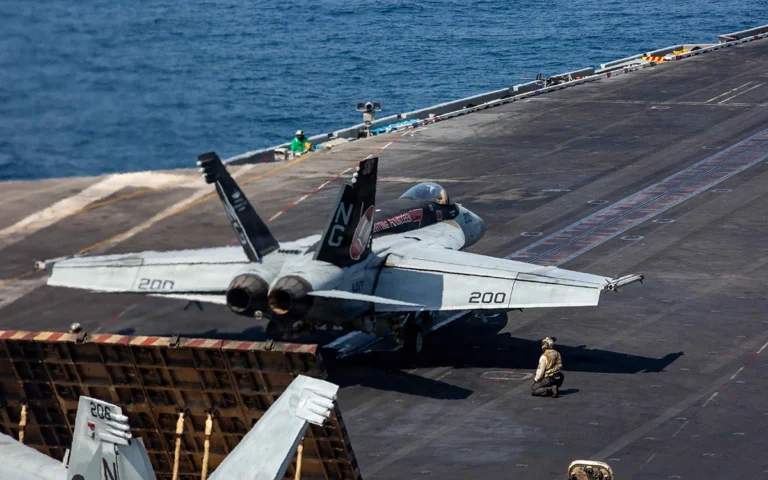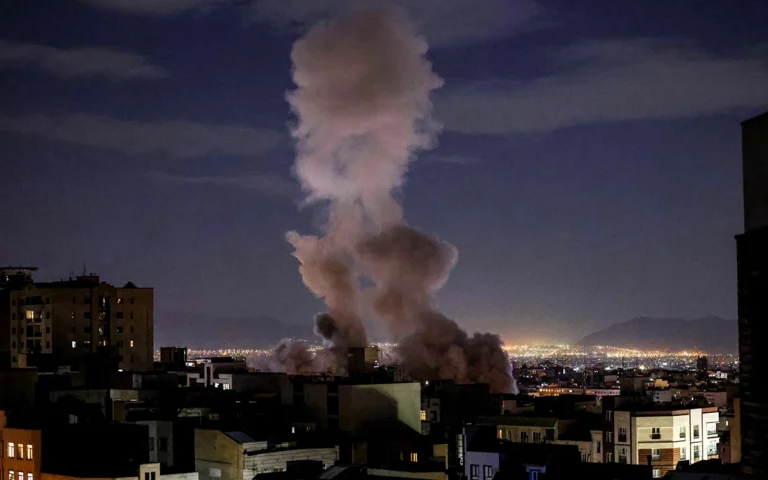


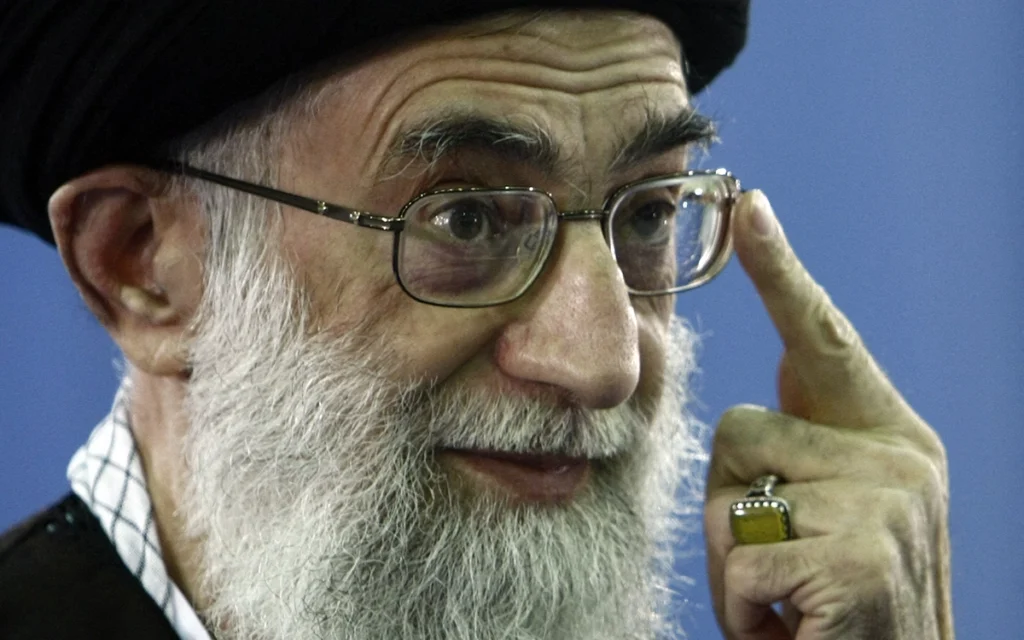
The United States, in coordination with the State of Israel, has launched a major military operation against the Islamic Republic of Iran, striking multiple targets across the country’s territory, notably in Tehran, Isfahan and other cities. President Donald Trump on Saturday evening announced that Iran’s Supreme Leader, Ayatollah Ali Khamenei, had been killed in the course of the operation — a claim formally confirmed by Iranian authorities on Sunday morning, which marks the most consequential decapitation strike in the history of the regime and a profound escalation in Middle Eastern hostilities. Already, Iran has retaliated against U.S. and Israeli assets in the Gulf and beyond, triggering regional security shifts, deepening global diplomatic divisions, and generating acute reverberations in domestic U.S. politics. How will this conflict unfold?
Trump announced the killing of Ayatollah Ali Khamenei, the most consequential decapitation strike in the history of the Iranian regime
Retaliation, Regional Blowback, and Reactions
Almost immediately after the joint U.S. and Israeli strikes on Iran, Tehran’s response signaled that Iran’s leaders had anticipated a campaign and were prepared for a broad regional confrontation. Iranian forces launched multiple volleys of ballistic missiles and armed drones not only at U.S. military bases across the Gulf but at Israeli territory itself. Explosions were reported over northern Israel as air-raid sirens sounded and the Israel Defense Forces confirmed engagement against incoming projectiles. Iran’s retaliation began within hours of the initial strikes and continued as Tehran moved from early denials to formal confirmation of Khamenei’s death.
Israeli authorities responded to the barrage by imposing a nationwide state of emergency. Schools and workplaces were ordered closed, public gatherings banned, and thousands of reservists mobilized to reinforce border areas.
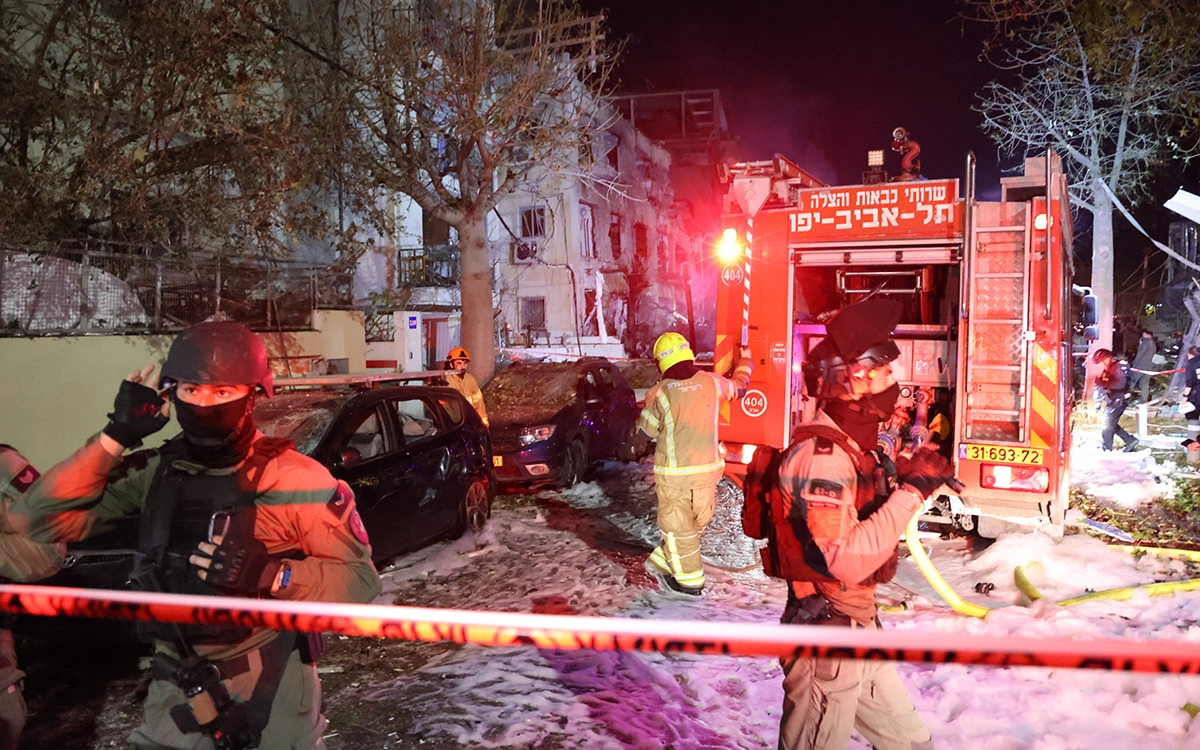
The strikes reached beyond Israel’s borders. Iranian missiles targeted U.S. military assets in Bahrain, Qatar, Kuwait, the United Arab Emirates and Saudi Arabia, many of which host tens of thousands of American personnel. Bahrain reported that missiles struck the headquarters of the U.S. Navy’s Fifth Fleet it hosts, while UAE and Qatar public messaging acknowledged successful interceptions, though debris from an intercepted missile in Abu Dhabi caused civilian fatalities.
This multi-axis retaliation appears calibrated to impose costs simultaneously on both American and Israeli strategic positions and on Gulf Arab partners whose airspace and territory long underpinned U.S. regional power projection. Iranian state media and official statements emphasized that “all American and Israeli assets and interests in the Middle East have become legitimate targets” in response to the offensive.
The multi-axis retaliation appears calibrated to impose costs simultaneously on both American and Israeli strategic positions and on Gulf Arab partners
Tehran’s Foreign Ministry framed its response within international law, insisting it was exercising its right of self-defense under Article 51 of the United Nations Charter and that the initial American-Israeli strikes constituted violations of international peace and security. “We will use all our might and resources to confront this criminal aggression,” the ministry declared in a statement to the UN.
The E3 — France, Germany and the United Kingdom — issued a joint statement declaring while they did not participate in the strikes, they remain in close contact with the US and Israel. However, the statement also condemns Iranian attacks on countries in the region.
Meanwhile, major non-Western states have reacted with caution and, in some cases, criticism. Russia — ironically — expressed concern over regional instability while balancing its strategic relations. China formally expressed “high concern” and called for respect for Iranian sovereignty as well as an immediate halt to hostilities in favor of renewed negotiation efforts.
Turkey and other regional actors have similarly urged restraint, emphasizing the danger of a broader conflagration. At the United Nations, Secretary-General António Guterres called for de-escalation and urgent diplomatic engagement to prevent wider war, underscoring the international community’s alarm at the scope of military actions and the leadership uncertainty stemming from Supreme Leader Khamenei’s death.
Strategic Context of the Offensive
The coordinated strikes targeted Iranian military infrastructure, missile facilities, and selected nodes of regime command and control. The emphasis on dual-use facilities and missile stockpiles was not incidental but reflects a long-standing Israeli strategic doctrine that views Iran’s missile program, rather than its nuclear file alone, as the more immediate operational threat. The Israeli argument is straightforward: nuclear latency can be managed through intelligence and targeted sabotage, but precision-guided munitions in the hands of a hostile regime and its proxies alter the regional military balance today.
From Tel Aviv’s vantage point, the logic of action has been building for years. Since the collapse of the original nuclear framework during President Trump’s first term and the failure of subsequent attempts at restoration, Iran has steadily reduced breakout time while simultaneously expanding its regional footprint through Hezbollah in Lebanon, militias in Iraq and Syria, and the Houthis in Yemen. Israel’s calculus is that deterrence has been eroding incrementally, not collapsing dramatically. The strike therefore represents an attempt to reset the deterrence equation through shock rather than attrition.
For Washington, the strategic framing is more layered. President Donald Trump characterized the offensive as necessary to defend American security interests and protect allies, but he also introduced a broader ideological claim. In his address announcing “major combat operations”, he appealed directly to the Iranian public, urging them to confront the clerical establishment. That rhetorical move mattered as it signaled that the objective would extend beyond degrading capabilities to shaping political outcomes, i.e. usher in regime change, which became evident when Khamenei was killed in what appears to have been a targeted attack.
It is not yet an invasion, nor even a sustained air campaign on the scale of Iraq in 2003 but it contains an implicit wager: that military pressure, when combined with existing economic strain and social discontent inside Iran, could catalyze internal fissures. The appeal to the Iranian people suggests that Washington is attempting to transform a military action into a political moment.
It is not yet an invasion, nor even a sustained air campaign, but it contains an implicit wager: that military pressure could catalyze internal fissures
There is also a regional layer to this strategic context. The Abraham Accords reshaped parts of the Middle Eastern alignment structure, but they did not eliminate the Iranian axis. Gulf states have quietly deepened security coordination with Israel and the United States while maintaining diplomatic hedging with Tehran and Beijing. By striking Iran directly, Washington and Tel Aviv have forced these actors into a more explicit position. That has consequences for basing rights, energy markets, and the long-term architecture of regional order.
Khamenei’s Death: Impact on Iran’s System and Succession Dynamics
The news that Khamenei had been killed broke late on Saturday via reports from major international outlets and official statements from Israeli and U.S. sources. Donald Trump, soon thereafter, confirmed the death of Khamenei, describing it as a pivotal moment and “justice for the people of Iran and the world.” He characterized the outcome as the result of advanced intelligence cooperation with Israel and signaled that heavy bombing would continue until military objectives were achieved. Trump’s statement went beyond battlefield reporting to urge elements of Iran’s security forces and populace to reconsider their allegiance to the clerical establishment. Iranian state media initially rejected the claims late Saturday, before authorities formally confirmed Khamenei’s death on Sunday morning.
Tehran, meanwhile, also confirmed the death on Sunday morning, with 40 days of mourning announced by state media. In previous statements, state media and official sources had denied reports that the supreme leader was killed, asserting that he remains “steadfast and firmly commanding the field” and dismissing foreign claims as psychological warfare.
His death strikes at the core of the Islamic Republic’s constitutional architecture. The supreme leader is not merely a symbolic figure but the ultimate arbiter of military authority, foreign policy direction, and ideological legitimacy. Under normal circumstances, his death triggers an immediate constitutional process for succession. However, given the current situation, succession cannot occur in a neutral political environment but under military pressure and heightened external threat.
Iran’s constitution formally assigns the task of selecting a new supreme leader to the Assembly of Experts, with a temporary council assuming authority until a successor is chosen. In theory, this provides procedural continuity. In practice, wartime conditions would complicate both deliberation and coordination. Communication disruptions, security concerns, and elite mobilization around defense priorities would shape the speed and nature of decision-making.
The strategic environment will strongly influence the selection process. In conditions of external war, institutional actors typically prioritize cohesion, deterrence credibility, and control over coercive instruments.
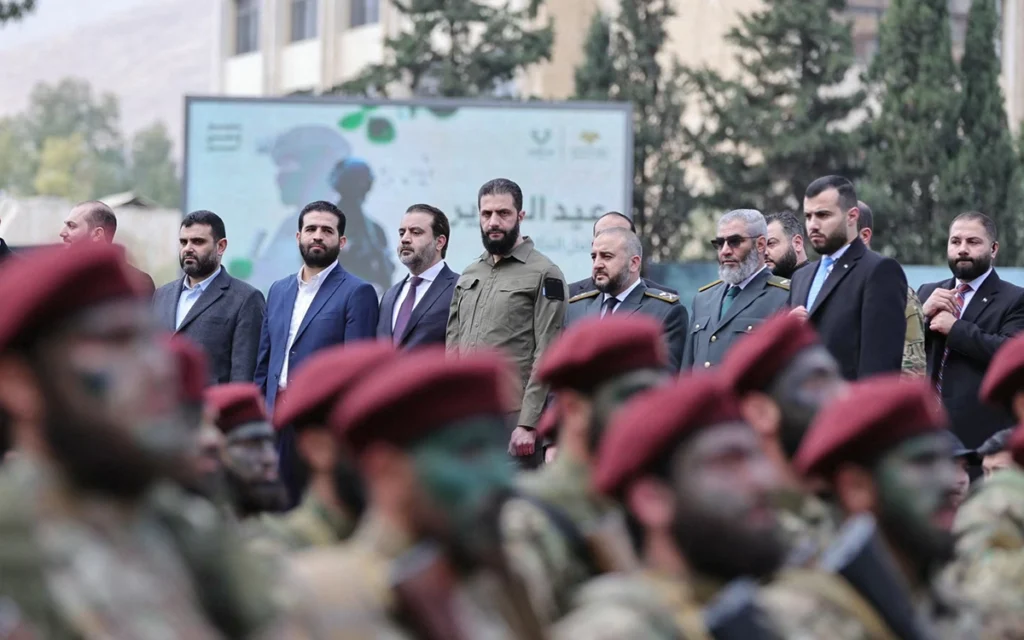
However, in the absence of confirmed official Iranian succession communications, the Islamic Revolutionary Guard Corps (IRGC) — already central to operational responses during the crisis — appears to be the dominant force coordinating defense and command structures.
In the absence of confirmed official Iranian succession communications, the IRGC, already central to operational responses during the crisis, appears to be the dominant force coordinating defense and command structures
U.S. Domestic Political Dynamics
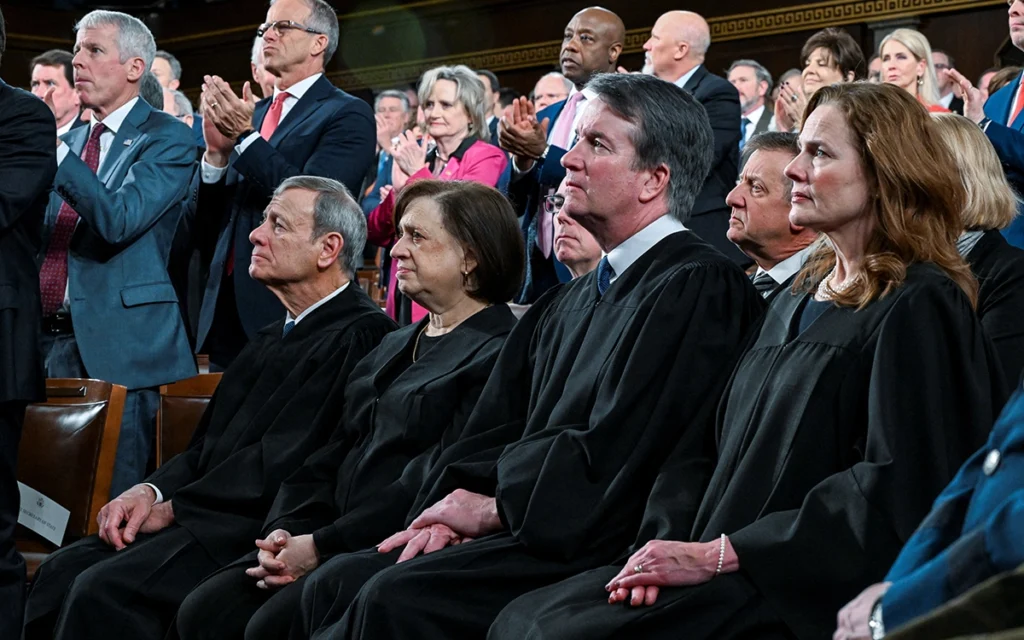
The events are unfolding at a moment of structural political fragility for Donald Trump. His approval ratings have been persistently negative for months, not because of a single catalytic failure but because of an accumulation of doubts about competence, stability and strategic judgment. On foreign policy in particular, polling has shown a paradox: Americans continue to regard Iran as a hostile power and a proliferation risk, yet a significant share express limited confidence in Trump’s handling of military force and crisis escalation.
The strikes therefore function as both a geopolitical act and a domestic stress test. In political science terms, Trump is attempting to convert an external security crisis into a leadership validation moment. But the conversion mechanism is fragile. The classical “rally around the flag” effect is often overstated in public commentary.
Empirically, rallies tend to occur under specific conditions: when the action is clearly defensive, when elite cues are unified across parties, and when the strategic objective is comprehensible and limited. None of those conditions is fully present here. Congressional Democrats have criticized the absence of consultation. Some Republicans have expressed unease about scope and endgame. And the administration’s rhetoric oscillates between deterrence, coercive diplomacy and implicit regime change.
That ambiguity complicates domestic consolidation. If the objective is deterrence, voters will evaluate success in terms of reduced Iranian capability and a return to stability. If the objective drifts toward regime transformation, the benchmark becomes far more demanding and historically perilous. American voters remember Iraq and Afghanistan less as moral crusades than as cautionary tales of mission creep.
The president’s political base is not ideologically homogeneous. It comprises at least three partially overlapping blocs: traditional Republican national security voters, populist nationalists skeptical of foreign entanglements, and cultural conservatives primarily motivated by domestic issues. The second group has been central to Trump’s identity as an “America First” candidate. For many in that camp, the defining break with Republican orthodoxy was opposition to open-ended Middle Eastern wars. Military action against Iran therefore risks cognitive dissonance. It can be framed as strength, but it can also be framed as regression to the very interventionism Trump once derided.
The criticism from figures such as former member of Congress Marjorie Taylor Greene prior to the strikes signaled a live fault line within the coalition. Greene and like-minded voices have warned against what they characterize as neoconservative drift, arguing that domestic renewal, border control and economic sovereignty should eclipse foreign military ventures.
Layered onto this is the ongoing political turbulence surrounding the Jeffrey Epstein investigation. The renewed focus on document releases, congressional testimony and alleged institutional concealment has created a background climate of mistrust toward political elites broadly construed.
Even absent direct legal jeopardy for Trump, the controversy has sustained a narrative environment of scandal and opacity. In such an environment, any major executive action is filtered through a lens of suspicion and the timing of the strikes conveniently shifts media oxygen away from domestic investigations. There is no conclusive evidence of diversionary intent. Yet in politics, perception can be as potent as proof.
Thus, from a strategic communications standpoint, the administration faces a narrow corridor. To benefit from a rally effect, it must present the operation as necessary, proportionate and finite. Overreach risks reframing the story from decisive leadership to reckless escalation. Under-communication risks allowing opponents to define the narrative as politically motivated adventurism. Trump’s instinct has historically favored maximalist rhetoric.
The approaching midterm elections heighten the stakes. Congressional control rests on slender margins. Historically, presidents with sub-50 percent approval entering midterms face structural disadvantages. A foreign policy success can mitigate but rarely erase those headwinds. A foreign policy failure can amplify them. The Iran operation is therefore a high-variance political move. If the conflict becomes protracted, disrupts energy markets, or exposes U.S. personnel to sustained risk, Democrats will argue that Trump traded domestic stability for geopolitical spectacle.
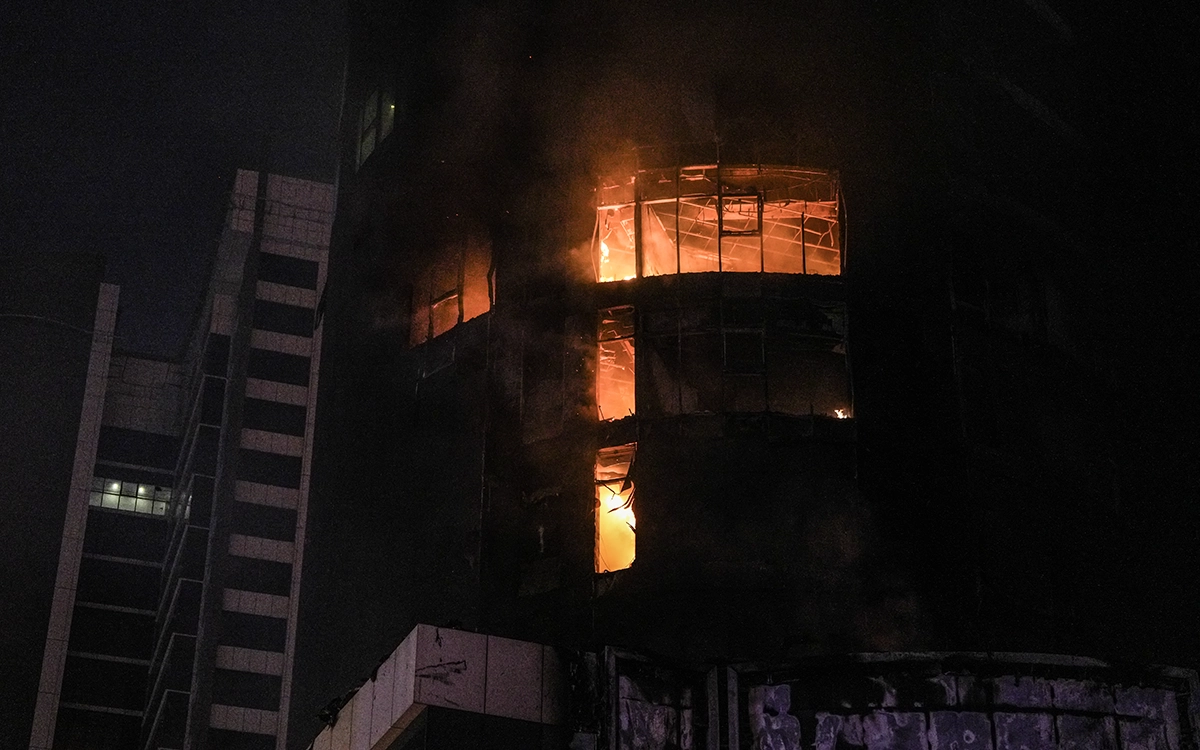
Forecast of Plausible Scenarios Moving Forward
The immediate military confrontation signals a potentially profound shift in regional geopolitics. Several strategic outcomes are plausible, and each carries distinct risks:
Prolonged Conflict Without Regime Collapse
In this pathway, the contests between Tehran and the U.S.–Israel coalition evolve into a protracted kinetic confrontation. External strikes continue to degrade military capabilities and specific leadership targets, but they do not succeed in dismantling Iran’s broader state apparatus or coercive institutions.
Iran’s IRGC and affiliated security organs retain sufficient organizational coherence to sustain counter-strikes and asymmetric warfare. Meanwhile, proxy groups and allied militias across the region (including in Iraq, Syria, Lebanon and Yemen) embed the conflict in a broader landscape of regional tension. Operational escalation remains cyclical rather than decisive.
Under these conditions, Iran might oscillate between retaliation and negotiation pressure points, but the core governance structure — security, administrative, and command hierarchies — survives. The conflict morphs into a state of attrition rather than achieving a clear resolution.
Internal Regime Reconfiguration by Power Brokers
This scenario assumes a significant internal recalibration of power within Iran’s political elite, but not a full overthrow of the state. If top leadership figures such as the supreme leader are killed or incapacitated, succession dynamics become central.
Senior military and clerical factions might negotiate among themselves to preserve state continuity. Power could shift toward military elites (including senior IRGC commanders) or toward a hybrid civilian-military transitional council designed to manage governance under duress.
This type of regime shift differs from collapse in that institutional continuity persists; authority changes hands within the existing ruling coalition rather than dissolving.
Rapid Regime Collapse and Systemic Disintegration
The most disruptive possibility is a rapid breakdown of Iran’s state machinery following compounded internal dissent, loss of elite cohesion, and failed suppression of widespread domestic protest movements. This would occur only if security forces abandon loyalty to central command en masse, provincial authorities assert autonomy, and mass public mobilization undermines institutional control.
Rapid systemic collapse carries extreme uncertainties and risks, including civil conflict, emergent warlord dynamics, or external interventions seeking to shape the void — reminiscent of historical patterns observed in other contexts where central authority disintegrated suddenly.
Rapid systemic collapse carries extreme uncertainties and risks, including civil conflict, emergent warlord dynamics, or external interventions seeking to shape the void
US Political Recalibration and Withdrawal Due to Domestic Pressure
A distinct but cross-cutting pathway is pressure emanating from U.S. domestic politics that alters American strategic orientation. If significant pushback in Congress, public opinion, or legal challenges over war powers authority escalates, the U.S. executive may be compelled to scale back direct military involvement.
Trump’s public framing of the offensive has already provoked criticism from some U.S. political figures. Domestic political backlash, concerns about international law, and economic repercussions could channel U.S. strategy toward constrained engagement, sanctions leverage, or demands for negotiated containment.
A reduction in U.S. military input would shift bargaining leverage inside Iran and recalibrate Tehran’s assessment of both threat and opportunity, potentially altering the course of other scenarios.
Most Probable Outcome
The situation on the ground is ongoing and thus difficult to assess with any certainty, but given what we know thus far, the intent behind the actions and the modus operandi used, it suggests that the conflict is unlikely to produce instantaneous regime collapse or rapid systemic overhaul in Iran, given the resilience and adaptability of its coercive institutions and security apparatus. At the same time, the intensity of external strikes and internal fractures place the regime under unprecedented strain and opens the door to elite-level realignment or negotiated containment if pressures cohere in that direction.
Right now, a scenario involving prolonged conflict that evolves into elite-driven reconfiguration is the most likely medium-term trajectory because it accounts for both external military pressure and domestic political constraints on all major actors.
The killing of Khamenei may reshape Iran’s leadership, but it also underscores how difficult it is to translate military force into durable political outcomes.