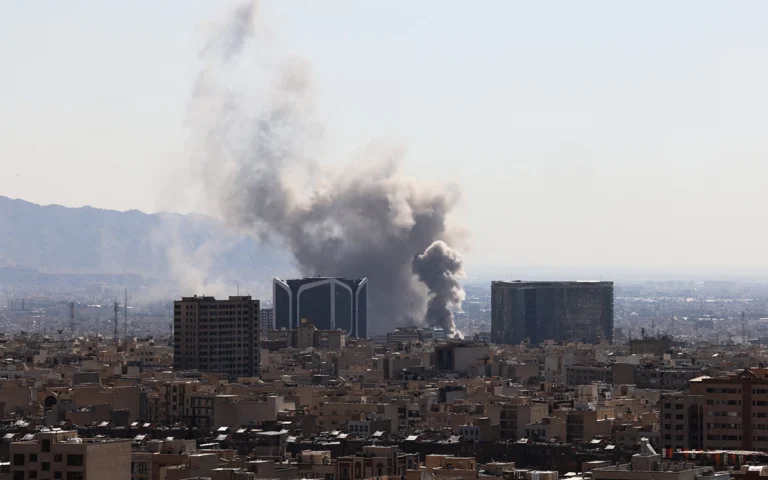

The Dutch seizure of Chinese-owned semiconductor maker Nexperia underscores Europe’s fragmented posture towards China’s growing presence on the continent. Rather than a unified strategy, member states rely on ad hoc measures that now strain Europe’s commitment to a rules-based order. Prior French and British actions targeted Chinese firms exporting military technology to Russia or used investment screening to force divestment in sensitive sectors. The Dutch measure goes further, invoking a Cold War-era 1952 statute to seize control of Nexperia.
The Hague argues that any erosion of technological capacity threatens not only Dutch security but European security as a whole. The claim evokes a Cold War framing, linking high-tech production to supranational security and Europe’s shared geostrategic interests. Yet the comparison has limits. In the early Cold War, Western Europe operated within a comprehensive U.S.-led security architecture backed by Marshall Plan aid and the Truman Doctrine’s containment commitments.
Today, no such framework exists, and unilateral actions like the Nexperia takeover carry diminishing leverage. The absence of a coherent transatlantic strategy leaves Europe exposed as a modernizing China attempts to reshape the emerging multipolar world.
Europe Between Washington and Beijing
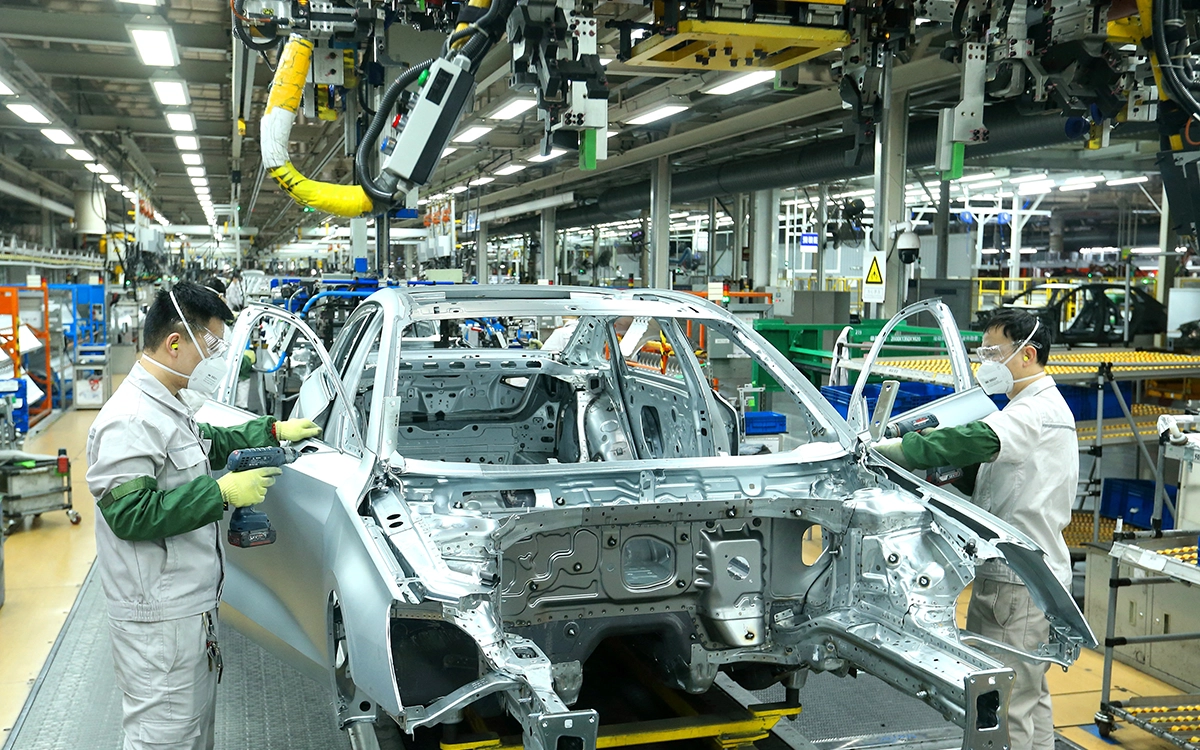
China’s increasing presence in Europe is reshaping the security environment. And President Trump’s bilateral, improvisational style complicates the Western bloc’s ability to craft a coherent counterstrategy. After Trump met Xi Jinping in Busan, China resumed shipments from Nexperia facilities. Volkswagen confirmed the restart but cited chip supply uncertainties and Trump tariffs to explain its third-quarter loss of $1.5 billion. Yet even as Germany verges on recession, The Hague retains control of Nexperia, drawing criticism from its Chinese parent firm, Wingtech.
Trump’s provocative reference to a “G2” before meeting Xi reflects a conception of leadership no longer anchored in the transatlantic coalition. But Europe’s larger problem is not Trump’s idiosyncrasies. It is the fact that the post-Cold War model of decision-making depended on uncontested U.S./NATO hegemony, unipolarity, and the dollar’s global primacy. That world is gone.
But Europe’s larger problem is not Trump’s idiosyncrasies. It is the fact that the post-Cold War model of decision-making depended on uncontested U.S./NATO hegemony, unipolarity, and the dollar’s global primacy. That world is gone
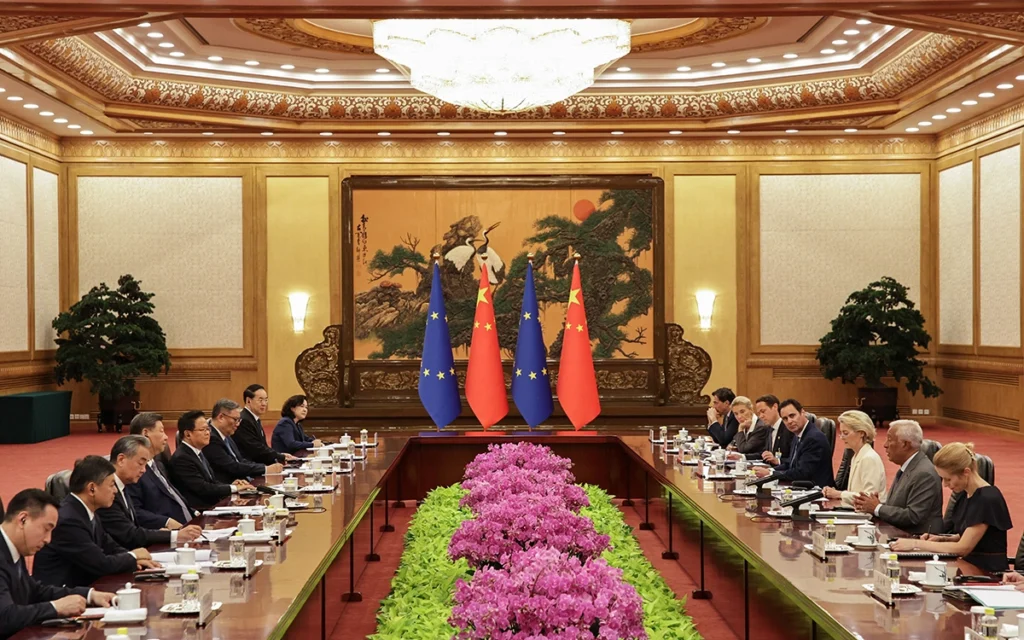
Today, Europe is strategically exposed between a rising China and a volatile United States. After China’s rare-earth export controls hit European producers in October, European Commission President Ursula von der Leyen warned that economic and national security had effectively merged. She accused Beijing of weaponizing interdependency and declared “a new era of geoeconomics.” Just as the war in Ukraine exposed Europe’s overreliance on Russian gas, China’s coercive measures reveal structural vulnerabilities at the core of Europe’s industrial model.
Yet much of Europe’s vulnerability is self-inflicted. Since the late 1980s, major European firms—from Volkswagen and BMW to Siemens and Philips—have offshored significant production to East Asia. Today, European industrial capacity is deeply embedded in Chinese value and supply chains, creating the very dependencies that give Beijing such leverage.
Offshoring production ensured continuing profitability for Europe’s firms and cheap consumer goods for its citizens. Thus, Europe dismantled controls on foreign investment, profit repatriation, and cross-border acquisitions. As capital flowed into cheaper labor markets, profitability eclipsed security risks. But Europe’s joint ventures in China required technology-sharing as a condition of market access. This helped cultivate the rival Chinese firms now acquiring majority stakes in European companies.
Europe’s China Entanglement Problem
European policymakers failed to grasp the implications of their growing entanglement because they assumed that China’s post-1989 reforms would include political liberalization. They expected China’s opening to produce Western-style institutions such as electoral democracy, press freedom, and an open civil society. Yet China’s financial and trade liberalization, undertaken to enter APEC and the WTO, had no political equivalent.
Europe’s optimism rested more on the ideological certainties of the post-Cold War order than on empirical assessment. Fukuyama’s “end of history” thesis reinforced the belief that all trajectories would converge on liberal democracy and market capitalism. As the Cold War ended, so too would the PRC as a viable political model. Yet Beijing viewed global integration as a means of strengthening state capacity, not diluting it. The West’s optimism reflected a limited engagement with Chinese political culture—a strategic mistake Europe risks repeating today.
Europe’s optimism rested more on the ideological certainties of the post-Cold War order than on empirical assessment
Deng Xiaoping’s maxim to “hide capabilities, bide time, and avoid leadership” guided Chinese policy for two decades after the collapse of Communism in Europe. China opened to global markets while entrenching Party authority. The EU and other major trading partners supported Beijing’s WTO accession, viewing integration as a way to embed China within a Western-led rules-based order. Instead, China advanced a state-led modernization program that paired competitiveness reforms in its State-Owned Enterprises with tighter political control.
Stronger SOEs reinforced Party authority, while market reforms delivered rising living standards and enhanced legitimacy. Foreign investment accelerated industrial upgrading while strategic sectors remained under SOE control. The state aimed for controlled capitalist development that would avoid producing a politically empowered capitalist class. Crucially, Beijing viewed global economic interdependence as a tool for leveraging future markets for strategic advantage.
The 2008 economic crisis deepened Europe’s entanglement with China. Beijing responded with a vast program of state investment in infrastructure, housing, and social provision. In contrast, Europe’s austerity-driven fiscal consolidation accelerated its political and strategic fragmentation. As firms operating in a cash-poor Europe increased investment in China, Beijing’s rapid infrastructure modernization made higher-value production more viable. Today, China relies on expanded high-tech industrial capacity to underpin its global ambitions.
The Implications of China’s Global Ambitions
China has shifted from global integration to power projection. Deng’s caution has given way to Xi’s call to “strive for achievement.” Beijing now seeks to reshape the international system, presenting its modernization model as an alternative to the West’s. Xi claims that China’s peaceful rise renders great power competition unnecessary and self defeating. Yet as Beijing strengthens its geostrategic position relative to the U.S.-EU bloc, this narrative becomes increasingly convenient. Regardless, if Europe intends to counter China’s global project, it must first understand it.
Beijing’s global initiatives are predicated on its domestic development successes. The Belt and Road Initiative channels China’s industrial overcapacity into infrastructure and energy projects across the developing world. Xi’s Global Development Initiative seeks to export China’s poverty-reduction model, while the Global Security Initiative marks a shift from near-seas to far-seas defense orientation. Together, these programs embed China’s military and industrial presence into the infrastructure of global commerce. Beijing’s Global Civilization Initiative promotes Chinese culture abroad at a time when Western soft power is strategically weak. Europe is embroiled in cultural battles while USAID’s capacity to counter China‘s efforts has sharply diminished under Trump.
The political implications of China’s global undertakings are significant. The core instruments of its domestic development—centralized authority, large-scale state investment, strict political and cultural discipline, and coercive governance—are not easily exportable. Moreover, China’s Confucian tradition has long viewed the state as a source of order and moral conduct. Onto this, Beijing has grafted a centralized Marxist-Leninist governance model whose opacity and mass-mobilization potential stand in sharp contrast with Western traditions of state constraint.
The core instruments of its domestic development—centralized authority, large-scale state investment, strict political and cultural discipline, and coercive governance—are not easily exportable
China’s global project, therefore, is as ideological as it is developmental. As Beijing reshapes global norms with its own development principles, it seeks to align the emerging multipolar order with its distinctive political culture.
China and the European Security Environment
Europe now operates in a strategic environment in which the instruments and doctrines of transatlantic power yield ever-diminishing returns. It confronts a strengthened China that is unencumbered by supranational governance, EU rules-compliance, or the competing interests of individual member states. China’s expanding strategic footprint in Europe shows that Beijing’s ambitions extend beyond Xi’s stated focus on developing countries. Beijing now offers European states a range of incentives to cooperate with its global project, exploiting the gaps created by the West’s diminished strategic coherence.
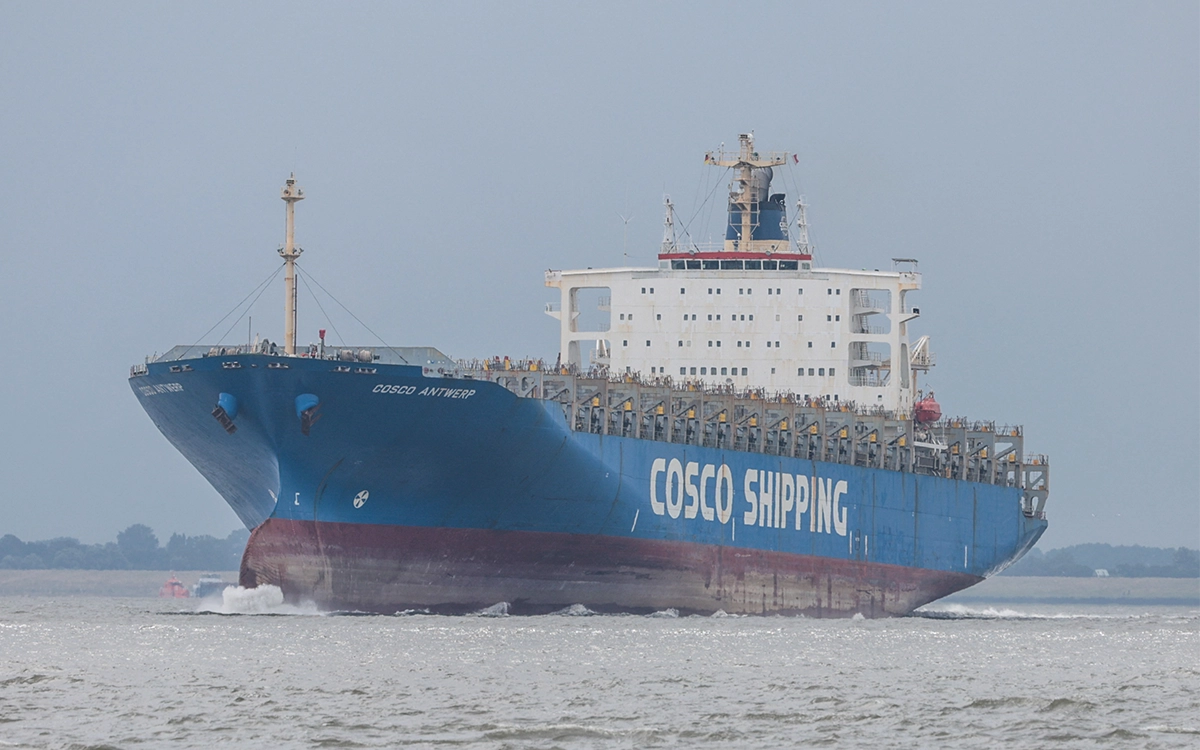
China’s SOE giant COSCO now holds a 67 percent majority stake in the Greek port of Piraeus. BRI is constructing a high-speed rail corridor linking the port to Hungary via North Macedonia and Serbia. Yet because BRI projects are negotiated on a state-to-state basis, the corridor faces significant political obstacles. Its Budapest-Belgrade segment has run into EU state-aid prohibitions, anti-competitive bidding laws, and debt transparency requirements. Still, when it is completed, the corridor will strengthen supply continuity and reduce exposure to U.S.-EU geopolitical pressure—not least for BYD’s €4 billion EV plant in Hungary.
The rapid advance of the Piraeus-Belgrade-Budapest corridor has produced a mix of enthusiasm and unease. Citing security concerns, neighboring EU member state Romania ended China’s involvement in Romanian infrastructure in 2021. By contrast, the non-EU microstate of Montenegro now boasts the technically impressive, Chinese-built and Chinese-financed Bar-Boljare highway. Serbia, meanwhile, opened Eastern Europe’s first high-speed rail line last month, inaugurating it with the Chinese ambassador and personnel from China’s state-owned builder CCCC.
China also projects power through symbolic diplomacy that positions Beijing at the center of global governance alongside Europe. Xi’s September military parade commemorating the “World Anti-Fascist War” demonstrates China’s ability to assemble an alternative ideological coalition, including Vladimir Putin and Kim Jong-un. Yet the attendance of Aleksandar Vučić of Serbia and Robert Fico of Slovakia, an EU member state, signals Beijing’s deepening political inroads in Europe. Beijing now uses a shared history of anti-fascist struggle as a basis for contemporary geopolitical alignment.
In the wake of the parade, the Xi-Fico joint declaration stated that Slovakia supports China’s governance initiatives and pledges to work with Beijing “to reform and improve the global governance system.” After Sino-Serbian talks, Belgrade likewise endorsed China’s flagship global initiatives. Subtly adopting Beijing’s lexicon, Serbia announced that it was “ready to build a community with a shared future with China in the new era.”
Vučić’s meeting in Beijing follows Xi’s visit to Serbia last year—a visit timed to coincide with the 25th anniversary of the U.S./NATO bombing of the Chinese embassy in Belgrade. This strategic messaging revives China’s grievance narrative and reinforces deepening Beijing-Belgrade alignment. The symbolism is not lost on EU policymakers, even as Serbia continues EU accession negotiations.
Europe’s Strategic Outlook and Possible Trajectories
The Nexperia dispute reflects Europe’s growing recognition of its waning hard-power capacity and fragmented strategic orientation in the face of increasing Chinese pressure. As the EU confronts China’s global modernization drive, it risks further weakening its geostrategic position if it does not alter course. The following are the most likely scenarios.
I. Fragmented Europe, Expanding China
The EU continues ad hoc investment screening, piecemeal defense-industrial projects, and inconsistent coordination with Washington. Individual member states deepen engagement with Beijing through SOE projects and narrative diplomacy. China leverages Europe’s fragmentation to consolidate its political and economic presence, embedding its governance agenda within discontented EU member states.
II. Reconstituted Transatlantic Alignment
Europe reestablishes strategic unity with the United States through coordinated military-industrial policy and long-term strategic planning. It adopts a harder power posture, implementing EU-wide investment controls, screening mechanisms, and supply chain reconstruction. Internal political convergence emerges through an industrial policy that integrates populist insurgencies while stabilizing legacy political parties through coalition. An expanded state compels reshoring, reverses capital outflows, and rebuilds “factory Europe,” while keeping prices down through long-term subsidy.
III. Managed Multipolarity
Europe embraces a multipolar order and builds strategic autonomy between Washington and Beijing. Expanded transatlantic trade enables partial decoupling from China. Increased state investment strengthens Europe’s competitiveness against a China that faces rising costs and demographic pressures. While this approach institutionalizes rather than resolves Europe’s strategic dilemma, it may still produce a long-term equilibrium of managed instability reminiscent of the late Cold War.
Understanding Modern China as a Systemic Rival
As Europe confronts what von der Leyen has called a “systemic rival” in China, it should look to its own past. Europe faced another such rival—Soviet Communism—which sought to reshape economic and political life. Yet the Cold War was structured by self-contained economic blocs, stable alliances, and uncontested American supremacy. Today the challenge is more diffuse. Europe’s economy is deeply embedded in China’s technologically sophisticated hybrid public-private system.
But the Cold War was not won by state investment in military and dual-use technology alone. It also required large-scale investment in knowledge production. Sovietology rested on deep analysis of Russian language, history, and politics. Nothing comparable exists today for understanding China. Europe cannot afford to forget a central lesson of the Cold War: to contend with a systemic rival, you must first understand it. Western policymakers ignore that history at their peril.
Europe cannot afford to forget a central lesson of the Cold War: to contend with a systemic rival, you must first understand it. Western policymakers ignore that history at their peril