

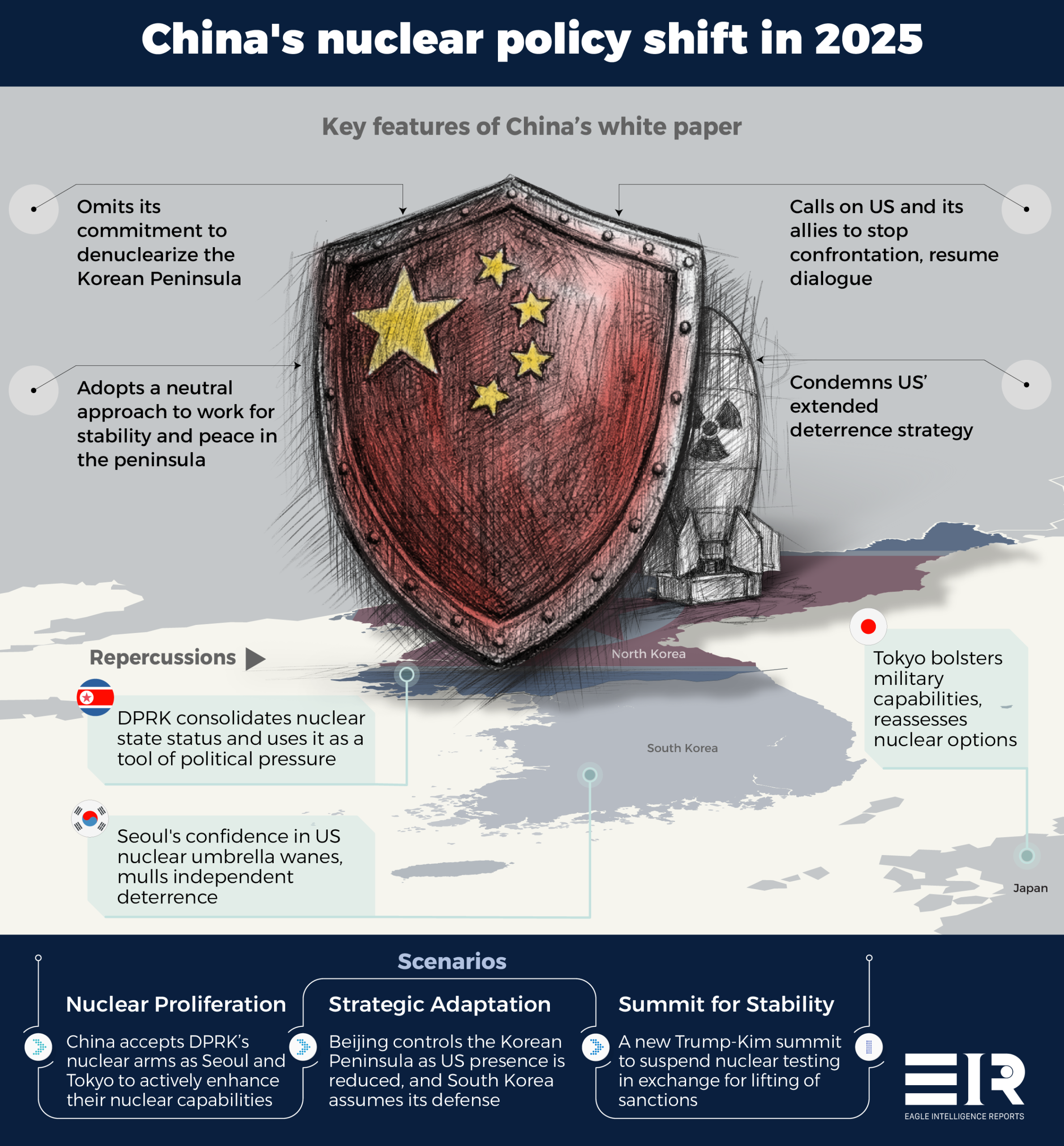
On November 27, 2025, China released its latest arms control white paper titled “China’s Arms Control, Disarmament, and Nonproliferation in the New Era” for the first time since 2005. The new white paper marked a critical policy divergence from its 2005 predecessor by omitting China’s long-standing commitment to the denuclearization of the Korean peninsula.
While the 2005 white paper explicitly stated, “China supports denuclearization of the Korean peninsula,” the 2025 version replaces this non-proliferation goal with vague, stability-focused language, saying, “With regard to the Korean peninsula issue, China adopts an impartial stance and adheres to the right approach of always working for peace, stability and prosperity of the peninsula and the resolution of the Korean peninsula issue through political means.” It also calls for relevant parties (directed at Washington and its allies) to “desist from an approach based on aggressive deterrence and coercion, restart dialogue and negotiations, and play a constructive role in resolving the Korean peninsula issue through political means and realizing lasting peace and stability on the peninsula.”
Another notable feature of the new white paper was the condemnation of the United States’ extended deterrence strategy, i.e., the policy of assuring allies and partners against attacks from adversaries by providing a security umbrella, including the use of nuclear arsenals. It notes a “certain country,” in a veiled reference to Washington, seeking “absolute strategic superiority by constantly expanding its armaments, strengthening combat readiness, and provoking bloc confrontation,” while criticizing its actions. This has led to “escalated international and regional arms races, outbreaks of regional conflicts at multiple spots, and repeated new highs in global military expenditures,” particularly in the Asia-Pacific region.
A notable feature of the new white paper was the condemnation of the US’ extended deterrence strategy, i.e., the policy of assuring allies and partners against attacks from adversaries by providing a security umbrella, including the use of nuclear arsenals
Omission of the Korean Peninsula’s Denuclearization
The absence of the “denuclearization” goal from China’s 2025 white paper constitutes a watershed moment in Beijing’s policy toward the Korean peninsula. The long-standing objective, which was a clear feature of the 2005 document, has been replaced with language centered on achieving “peace, stability, and prosperity in the peninsula.” This suggests China’s shift toward the tacit acceptance of North Korea as a de facto nuclear-armed state.
This reorientation reflects a judgment that complete denuclearization is no longer a viable policy goal in the current geopolitical climate. The People’s Republic of China (PRC) instead chooses to manage the risk of conflict and preserve its relationship with its strategic buffer state, while providing Beijing with greater strategic flexibility amid escalating US-China rivalry. It likely suggests that instead of pressuring Pyongyang to give up its nuclear weapons, China has acknowledged North Korea’s strategic value in countering the competition with Washington. This shift allows China to avoid friction with its neighbor while focusing its diplomatic and military resources on the perceived primary threat from the US.
This logic was also applied to its criticism of extended deterrence, framing US security guarantees and military activities, such as joint exercises and the deployment of strategic assets, as the primary sources of regional instability and escalation. By characterizing the US nuclear umbrella and Washington’s deepening alliances with South Korea and Japan as destabilizing, China justifies its own defense posture, including its accommodation of North Korea.
This shift in policy language reflects China’s deliberate effort to redefine the regional security architecture. By tacitly accepting or at least accommodating a nuclear-armed North Korea and simultaneously condemning the US nuclear umbrella, Beijing’s narrative shifts the focus from a non-proliferation challenge to a geopolitical challenge, i.e., from Pyongyang’s possession of nuclear weapons to the American alliance network. This diplomatic maneuver reflects China’s priority of countering strategic competition with the US in the Asia-Pacific, demonstrating a willingness to leverage its policy stance on the Korean Peninsula to advance its own security interests and challenge the existing US-led order.
China’s Nuclear Policy
In the face of growing confrontation with the US, China’s trajectory for nuclear buildup and future policy is poised to expand significantly. The white paper formally maintains its commitment to a No-First-Use (NFU) policy and a “nuclear strategy of self-defense” at the “minimum level required for national security.” However, this rhetoric is contradicted by the simultaneous pledge in the same document to upgrade capabilities in “strategic early warning, command and control, missile penetration, and rapid response, as well as its survivability” amidst the unprecedented growth of its nuclear arsenal.
According to a Stockholm International Peace Research Institute report, China’s nuclear warhead stockpile would exceed 1,000 by the end of this decade. Moreover, as part of the proposed 15th five-year plan endorsed in November, Beijing has pledged to “strengthen strategic deterrence capabilities,” which is generally understood as nuclear forces, and safeguard “global strategic balance and stability.” This possibly suggests China’s aim to narrow the nuclear gap with the US and Russia.
These signs, along with the white paper’s condemnation of extended deterrence and omission of the issue of denuclearization in the Korean Peninsula, suggest Beijing’s effort is aimed at defeating Washington’s advanced missile defense capabilities in the region. Motivated by the need to guarantee the credibility of its retaliatory forces, while acknowledging North Korea as a nuclear power, the PRC intends to enhance its second-strike capability to complicate the US deterrence strategy in the Asia-Pacific region.
Future Chinese nuclear policy will thus involve a transition from a simple “minimum deterrence” doctrine to one of “assured counter-deterrence.” To credibly undermine US extended deterrence, China faces the pressure to develop a much larger, more sophisticated, and more resilient force capable of overcoming allied missile defense systems and holding the US homeland credibly at risk.
Consequently, the white paper serves as a foreign policy statement that underpins a domestic military imperative. Accelerating the creation of a nuclear arsenal that is large, credible, and advanced enough to undermine US security guarantees extended to its allies in a crisis, shifts the strategic balance in the Indo-Pacific. Hence, the 2025 white paper solidifies a new, more assertive Chinese strategic posture. The implicit acceptance of a nuclear North Korea can be seen as part of a tactical move to complicate the US regional security architecture, while the explicit condemnation of extended deterrence provides the ideological justification for China’s massive nuclear modernization.
The white paper serves as a foreign policy statement that underpins a domestic military imperative. Accelerating the creation of a nuclear arsenal that is large, credible, and advanced enough to undermine US security guarantees extended to its allies in a crisis
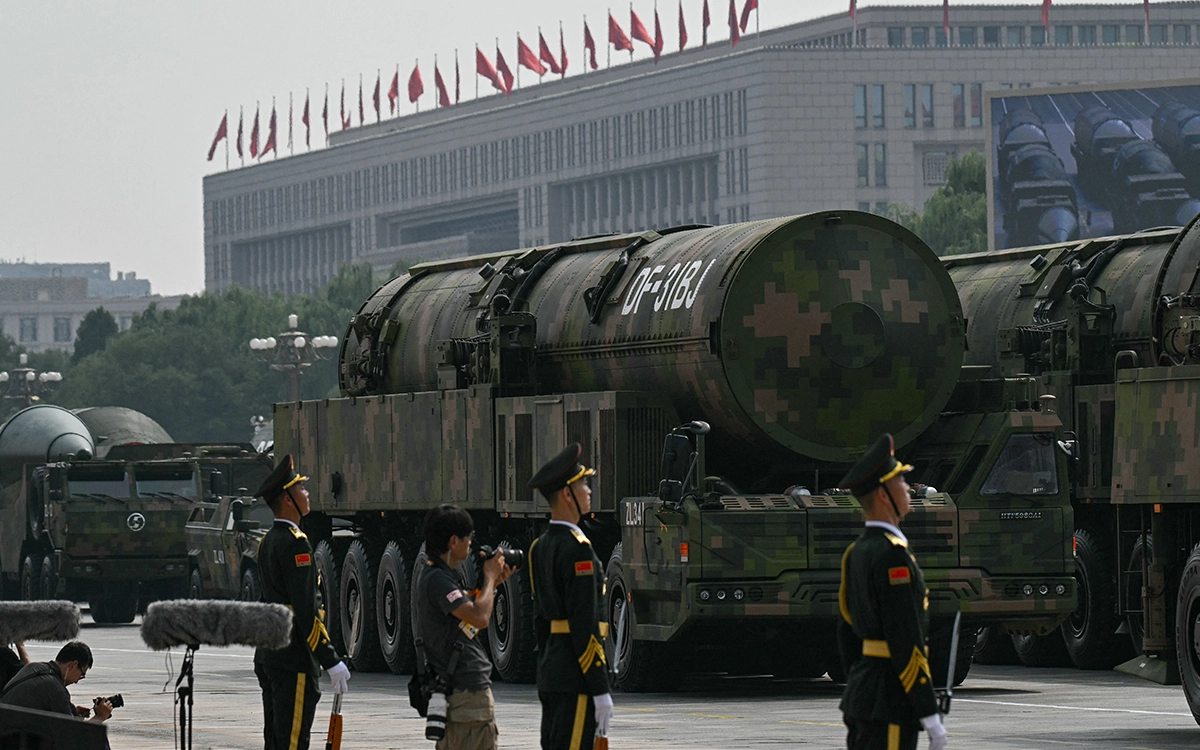
This realignment confirms that the key driver behind China’s nuclear policy is its intensifying geopolitical competition with the US. This cements its trajectory toward a larger, more sophisticated nuclear arsenal designed to project power and maintain strategic stability. As evidenced by the September military parade showcasing the latest intercontinental ballistic missiles (the DF-61, DF-31BJ, and DF-5C), China’s drive to modernize its nuclear forces is aimed at fundamentally redefining and maintaining strategic stability on Beijing’s own terms. It serves as a necessary deterrent against potential US intervention in regional conflicts, particularly over Taiwan, and discourages any perceived US nuclear superiority to secure its core national interests.
North Korea and Russia
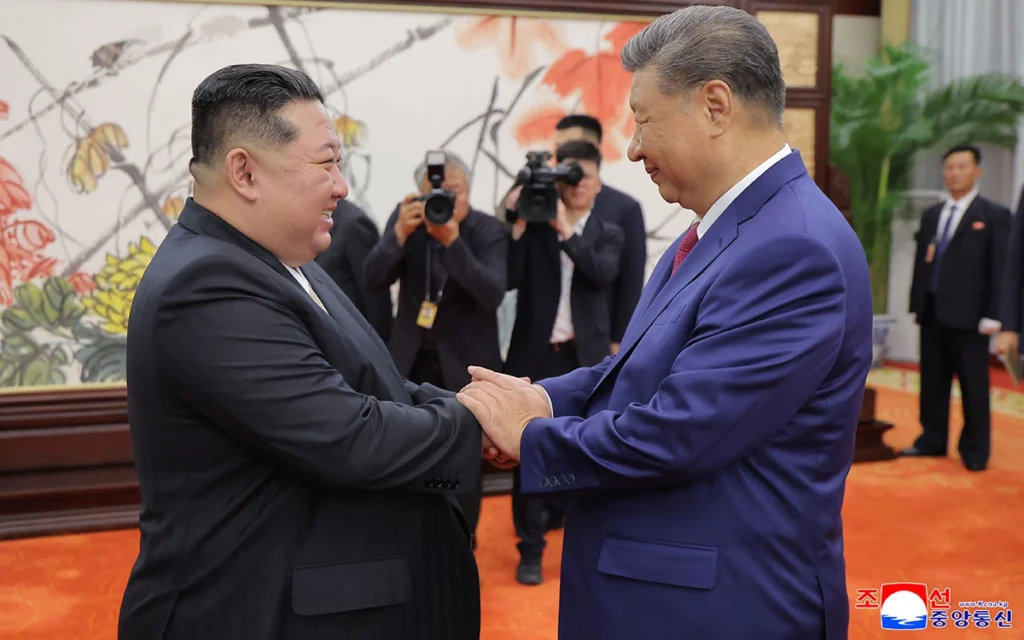
The white paper also demonstrates that Pyongyang has become an active variable shaping the US-China strategic rivalry and the regional security order. By compelling China to drop the “denuclearization” clause, North Korea has transitioned from a sanctioned pariah state to an indispensable strategic asset in China’s regional architecture. This shift emboldens North Korean leader Kim Jong Un to leverage his trading card, as US President Donald Trump repeatedly attempts to revive the bilateral dialogue, which began during his first term. North Korea’s significance in Beijing’s strategic outlook also strengthens Kim’s position to avoid any dialogue centered on disarmament, but rather pressures Washington to recognize his country as a nuclear state. It further threatens to weaken the US-ROK alliance, affecting joint military exercises or the “modernization” of US troops on the Korean peninsula, which enabled the US Forces Korea’s strategic flexibility to be deployed to other parts of the Indo-Pacific region. The situation places a greater burden on the US and South Korea to coordinate their strategies to manage the North Korean challenge while navigating the broader complexities of US-China great power competition.
North Korea’s recent advancement in its nuclear capabilities in the past years also further highlights its attempts to manipulate the US-China competition to its own gain. The unveiling of the Hwasong-20 ICBM during the October military parade in Pyongyang before Chinese Premier Li Qiang signals that Pyongyang is intensifying its nuclear arms development as part of its efforts to pressure both Beijing and Washington to recognize its nuclear state status. This suggests that Pyongyang not only intends to use its arsenal for defense, but also as a diplomatic tool to secure permanent regime legitimacy and get economic sanctions lifted.
The solidification of the Russia-North Korea Comprehensive Strategic Partnership has fundamentally expanded North Korea’s nuclear program and its strategic leverage. This has revived Pyongyang’s Cold War-era foreign policy of oscillating between Beijing and Moscow to increase its strategic position. This deepening coordination allows North Korea to trade conventional munitions and personnel for sensitive Russian technology needed in advanced weapons. While China remains cautious of Moscow’s destabilizing influence over the Korean Peninsula, it has been forced into a coordinated silence on Moscow and Pyongyang’s rapprochement, prioritizing the survival of its own strategic buffer over non-proliferation.
China has been forced into a coordinated silence on Moscow and Pyongyang’s rapprochement, prioritizing the survival of its own strategic buffer over non-proliferation
US NSS: South Korea, Japan’s Response
The combined strategic shifts emanating from China and the US are fundamentally altering the security landscape for South Korea and Japan, pushing both nations to significantly upgrade their defense capabilities and potentially reigniting the debate over nuclear armament. Simultaneously, along with China’s new white paper, the Trump administration’s National Security Strategy (NSS) made a striking omission. There was no mention of either the denuclearization of the Korean Peninsula or North Korea for the first time since the 1990s, raising profound questions about Washington’s long-term commitment to the issue.
The NSS explicitly elevates the Western Hemisphere as a top national security concern, calling for the reassertion and enforcement of a “Trump Corollary” to the Monroe Doctrine. This Western Hemisphere pivot is coupled with a narrowed approach to the Indo-Pacific, centered on the First Island Chain, the defensive line stretching from Japan through Taiwan and the Philippines. The NSS emphasizes the necessity of maintaining strong deterrence and a US military posture along the First Island Chain to counter China’s growing military power and prevent any unilateral change to the status quo in the Taiwan Strait. The core interest, though, is preventing China from inflicting damage on the American economy, maintaining freedom of crucial sea lanes, and ensuring access to supply chains. The NSS is subdued on the US’s strategic competition with China, with an emphasis on the balance of power rather than domination.
The reduced US efforts in deterring any conflict with China outside the Taiwan Strait also emphasize increased “burden-sharing” from allies, specifically naming South Korea and Japan, where the NSS says that Washington “must urge” them to increase their defense spending, with a focus on acquiring the capabilities necessary to deter adversaries and protect the First Island Chain.
The NSS’s omission of the Korean Peninsula, combined with the focus on the maritime First Island Chain, suggests the US admission of the respective spheres of influence for both Beijing and Washington. It is a sign that concerns policymakers in Seoul, who are left with diminished US commitment to denuclearize North Korea, yet face demands for increased input in the defense of the First Island Chain. This requirement essentially redefines the roles of Seoul and Tokyo. Instead of primarily relying on the US to contain the North Korean threat, they are now expected to contribute significantly to the broader maritime security agenda focused on the Taiwan Strait, while South Korea ought to lead the conventional defense against North Korea on the Korean Peninsula.
These fundamental shifts in Washington’s national security priorities fuel concerns about the reliability of the US extended deterrence commitment to South Korea and Japan. The simultaneous erosion of China’s commitment to non-proliferation and the conditional nature of the US security guarantee create a critical security vacuum.
For South Korea, this confluence of events directly exacerbates the domestic push for independent nuclear capabilities. The public opinion supporting the indigenous nuclear weapons already exceeds 70%, driven by the reality of an unchecked North Korean nuclear program and the lack of confidence that the US would risk New York from a nuclear attack on Seoul’s behalf. China’s tacit acceptance and Washington’s neglect of the discussion on North Korea’s nuclear weapons only validate the fears that South Korea’s security is now subordinate to the US-China rivalry, making the acquisition of a domestic deterrent a highly favored option to secure sovereignty and de facto parity.
South Korea’s security is now subordinate to the US-China rivalry, making the acquisition of a domestic deterrent a highly favored option to secure sovereignty and de facto parity
While bound by a deeply ingrained non-nuclear principle, Japan also faces a similar dilemma with the growing nuclear threat from both China and North Korea, driving the need to transform its defense policy. Japan has already committed to raising its defense spending to 2% of GDP and acquiring long-range counterstrike capabilities. If China’s enhanced capabilities degrade the perceived effectiveness of US deterrence, coupled with Washington’s hint of reducing its commitment in the Indo-Pacific region, the strategic pressure to break the nuclear taboo could become Tokyo’s new reality.
The shift in China’s nuclear policy and the transactional demands of the Trump administration mutually reinforce the forces that incentivize South Korea and Japan to enhance their nuclear capabilities. By accommodating North Korea’s arsenal, China has inadvertently strengthened the security rationale for its neighbors to arm themselves that drives both key US allies toward greater military autonomy and possibly nuclear proliferation in Northeast Asia; the very outcome both the US and China long sought to prevent.
Scenario 1: Accelerated Regional Nuclearization
China’s acceptance of a nuclear North Korea and a perceived transactional US extended deterrence drives a rapid shift in South Korean and Japanese security. Seoul faces pressure for an indigenous nuclear deterrent, publicly announcing its intent to acquire nuclear weapons. Tokyo simultaneously accelerates long-range counterstrike missile development and re-evaluates its non-nuclear principles, signaling a move toward greater military autonomy and a potential regional nuclear arms race, justified by China’s expanding arsenal and a diminished US commitment.
Scenario 2: Strategic Spheres of Influence
Beijing’s new policy tacitly abandons denuclearization, marking a geopolitical shift that the US recognizes as it pivots toward the Western Hemisphere and the First Island Chain. This leads to a negotiated strategic accommodation, with China securing the Korean Peninsula as its sphere of influence, managing North Korea while limiting US military presence outside the Taiwan Strait. South Korea unwillingly takes the leading role in defending the Korean Peninsula, while integrating its air and naval assets into the US-led First Island Chain defense.
Scenario 3: Summit for Stability and Coexistence
Driven by Trump’s preference for top-down diplomacy and the omission of “denuclearization” in the National Security Strategy, a fourth summit with Kim Jong Un could be set during his second term. The meeting would focus on “peaceful coexistence” and “risk reduction” rather than complete denuclearization. The resulting agreement could offer a nuclear freeze, i.e. suspension of nuclear testing in exchange for limited, temporary sanctions relief. While welcomed by Beijing for stability on the Korean Peninsula, Seoul and Tokyo may fear that it legitimizes North Korea’s existing nuclear arsenal.
China has changed how it perceives the Korean Peninsula and the way it addresses its security interests there as strategic competition with the United States continues to deepen. As China develops its nuclear weapons capability, it is also providing North Korea with support in developing its own nuclear weapons capabilities. The result will be a new way of operating deterrence in the region. In the end, these changes are likely to diminish the credibility of the United States’ extended deterrence and create additional long-term pressure for nuclear proliferation in Northeast Asia.