

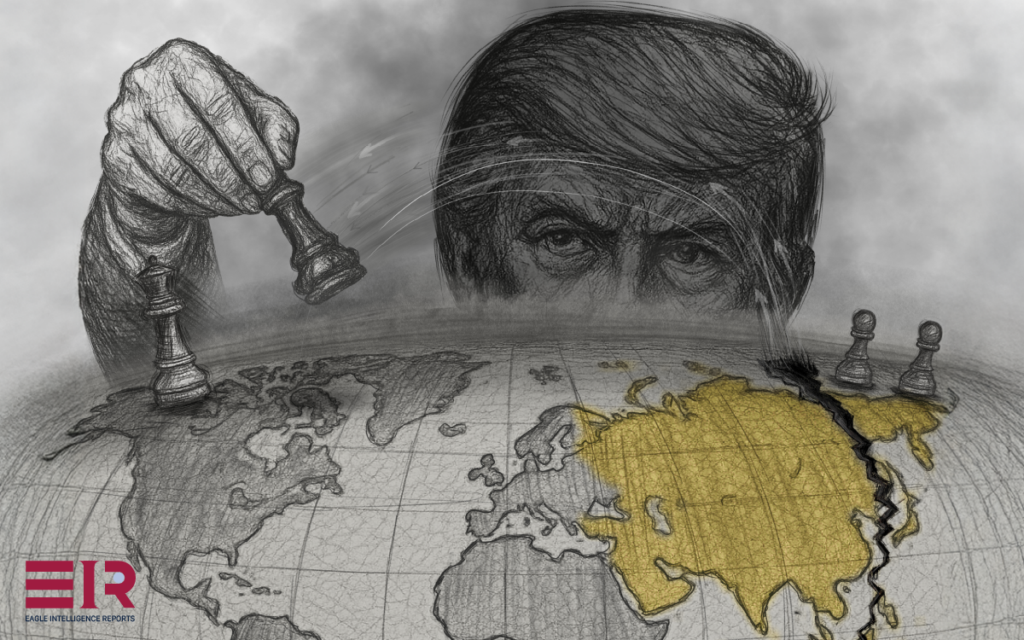
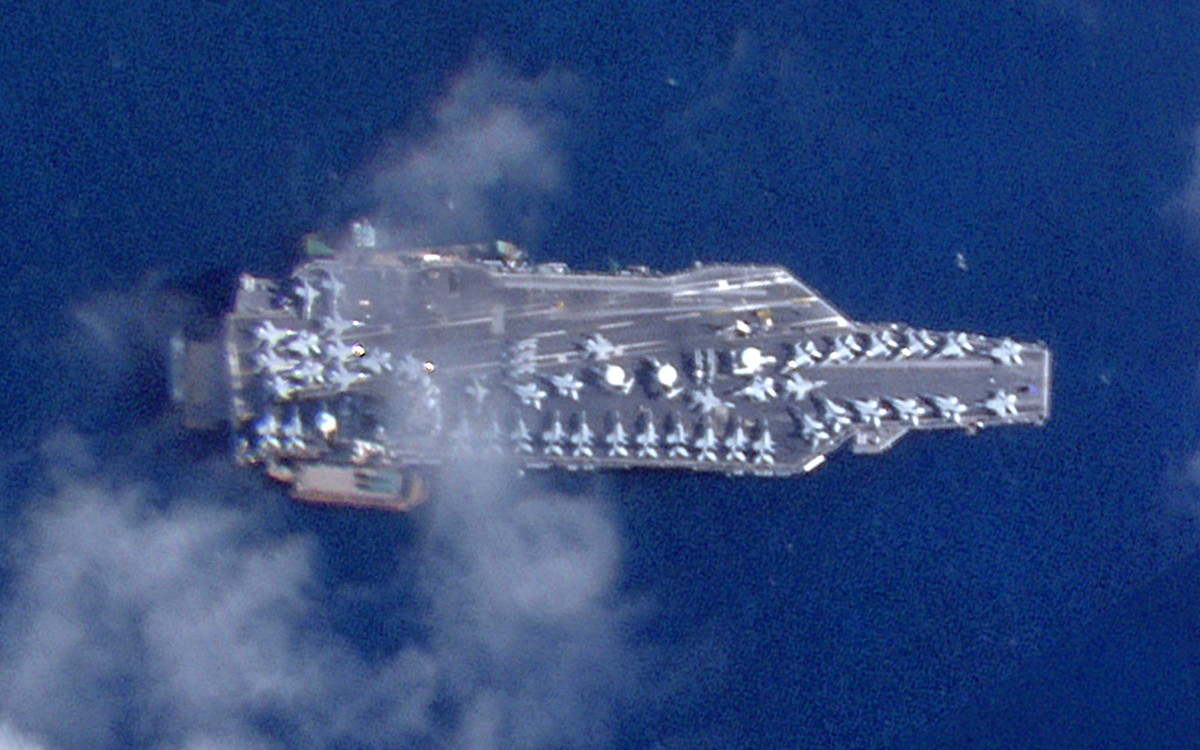
Last month, the United States deployed the USS Gerald R. Ford Carrier Strike Group (CSG) in the Caribbean Sea for the first time since 1994, signaling an escalation of US military engagement in the Western Hemisphere. Its official mission was to “dismantle Transnational Criminal Organizations and counter narco-terrorism in defense of the Homeland,” justifying a significant buildup of US naval and air power near Venezuela and along key drug transit routes.
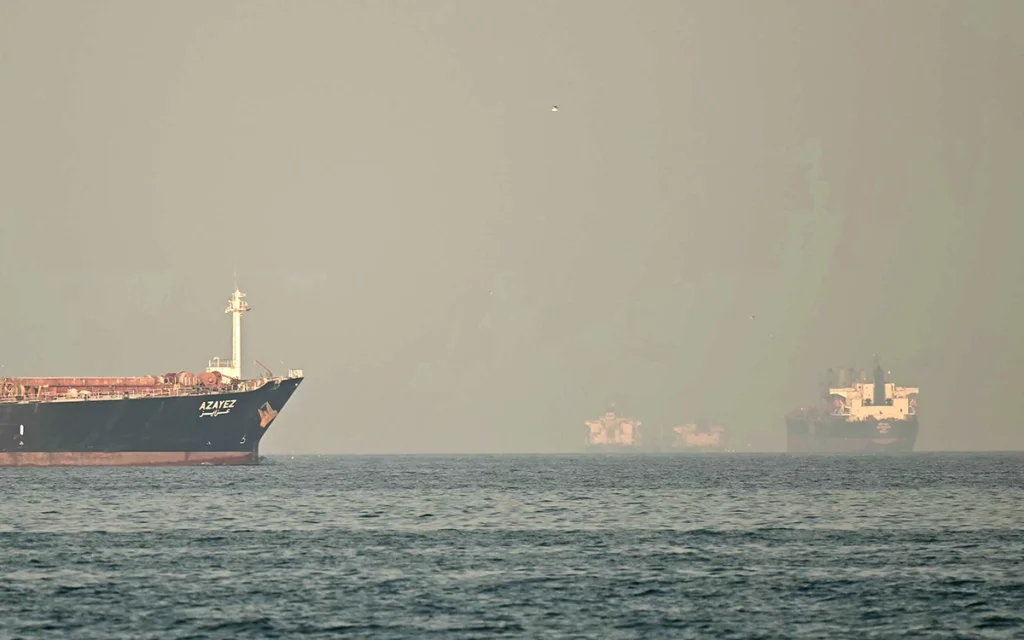
This major naval deployment follows an ongoing campaign of US strikes against suspected narcotics vessels in both the Caribbean Sea and the Eastern Pacific Ocean, which began in early September, with the first publicly acknowledged strike allegedly on a vessel linked to Venezuelan criminal networks. By mid-November, US forces executed at least 21 strikes, killing over 80 alleged drug traffickers in international waters.
The overarching military escalation is inseparable from the deeply strained and worsening tensions between the US and Venezuela under its leader, Nicolas Maduro. The ongoing tension is driven by the US position that Venezuela is linked to drug trafficking with alleged involvement of the Cartel de los Soles, which was designated as Foreign Terrorist Organization (FTO) in late 2025, legitimizing the military posture and the lethal kinetic strikes as part of a “war on terror” and transnational crime that poses an imminent threat to the American homeland. US President Donald Trump has also called for closing the airspace over Venezuela on his social media, increasing speculation of possible use of force against the country.
The USS Ford’s deployment and the kinetic strikes represent not only a high-stakes, maximum-pressure strategy against the Maduro regime, heavily prioritizing military deterrence and security goals over traditional diplomatic engagement, but also a visible commitment of a premium asset to the Western Hemisphere. This signals a fundamental shift in the proposed National Defense Strategy (NDS) toward Homeland Defense, potentially impacting the Indo-Pacific region. By dedicating high-end naval capabilities to counter-narcotics in the Caribbean, the US creates a resource drain and a strategic vacuum in the Western Pacific, fueling concerns among allies that the US is reducing its capacity for forward defense against China.
By dedicating high-end naval capabilities to counter-narcotics in the Caribbean, the US creates a resource drain and a strategic vacuum in the Western Pacific, fueling concerns among allies
The New National Defense Strategy
The Trump administration is pursuing an overhaul of the National Defense Strategy (NDS), which is projected to shift the US security premise from forward power projection to prioritizing the Defense of the US Homeland and the Western Hemisphere under the “America First” banner. The 2022 NDS, adopted by the Joe Biden administration, was explicitly framed around Great Power Competition, identifying China as the “pacing challenge” and emphasizing an Integrated Deterrence strategy built on a robust network of alliances focusing on deterring strategic attacks and aggression against the US, its allies, and partners, primarily in the Indo-Pacific. Simultaneously, it had also sustained forward deployment of a combat-credible US military.
The proposed Trump administration’s NDS, however, would likely redefine the defense of the US Homeland in literal and geographical terms, evidenced by initiatives like “Golden Dome”, an ambitious, layered continental missile defense system covering all of the US territory similar to Israel’s Iron Dome, and the elevation of border security, counter-narcotics, and counter-migration missions to primary military functions, demanding a massive reallocation of resources and strategic attention towards North and South America. The deployment of the USS Gerald R. Ford Carrier CSG to the Caribbean Sea for the first time in over 30 years is one of the real-world demonstrations of this strategic pivot.
Considering that the National Security Strategy (NSS) released earlier this month also listed the Western Hemisphere and homeland security as top concerns, the new NDS would also likely emphasize such an agenda. The new NSS called Washington to “reassert and enforce the Monroe Doctrine” as part of restoring “American pre-eminence” in the region and to safeguard domestic security, while denying any “non-hemispheric competitors” the ability to position forces or other threatening capabilities, or to own or control strategically vital assets” in the Western Hemisphere. It also reduces Washington’s role in the Indo-Pacific, focusing on the defense of the Taiwan Strait against Beijing’s possible invasion as part of assuring collective defense within the First Island Chain, while ruling out any other regional issues that appeared in previous versions of the NSS, such as the denuclearization of the Korean Peninsula, were completely wiped out. This policy suggests that the Trump administration is toning down US strategic competition with China in the Indo-Pacific, largely seen as admitting the two countries’ respective spheres of influence, but also ruling out external players from intervening in its periphery in the Americas.
The proposed redirection of the US military’s strategic focus immediately creates a severe opportunity cost in the Indo-Pacific. As the global US military force structure is finite, every high-value asset committed to prolonged counter-narcotics and border security missions in the Western Hemisphere is one less asset available for forward deployment or rapid reinforcement in Asia. This diversion directly undermines the strategy of Integrated Deterrence, which relies not only on maintaining capable forces but also on their physical, credible presence near key flashpoints. The resulting strategic vacuum signals to allies such as Japan and South Korea that the US commitment may be geographically divided and unreliable. It simultaneously signals to adversaries, especially China, a window of opportunity to accelerate aggression, believing a decisive, timely US response is less likely.
This geographical shift in focus translates directly into credibility erosion concerning specific US defense guarantees, fundamentally destabilizing the delicate balance of power in Asia. Deterrence in the Indo-Pacific operates on two critical components: Deterrence by Denial and Extended Deterrence. The former seeks the ability to physically stop an adversary’s aggression, such as Beijing’s invasion of Taiwan, and the latter provides a nuclear and conventional arms umbrella for allies like South Korea. By committing significant naval and air power to the Caribbean, the US degrades its capacity to execute Deterrence by Denial in the Western Pacific, increasing the risk of Chinese attack. At the same time, it witnesses the erosion of trust among allies, who fear that Washington’s priorities in homeland defense could lead it to abandon the Extended Deterrence.
This strategic confusion creates an asymmetric advantage for China. Beijing can leverage the US distraction to accelerate its gray-zone coercion in the East and South China Seas and intensify political pressure on Taiwan, aware that the most advanced components of the US military are thousands of miles away, focused on missions that do not directly challenge Chinese military ambitions. This dynamic validates the notion that the US is strategically trading short-term domestic political gains in the Western Hemisphere for long-term systemic vulnerability in the Indo-Pacific.
The US is strategically trading short-term domestic political gains in the Western Hemisphere for long-term systemic vulnerability in the Indo-Pacific
Regional Impact in the Indo-Pacific
The impact of the renewed NDS will be particularly acute on the Korean Peninsula and South Korea, with media reports suggesting the possible exclusion of explicit defense commitments to Seoul from the highest-tier NDS priorities, leaving the South Korean military to have a leading role in defending against North Korean aggression. While the US-ROK Mutual Defense Treaty remains legally binding, a strategy prioritizing domestic concerns risks interpretation that the US commitment is conditional or negotiable. This could lead to a repositioning or even reduction of US Forces Korea (USFK) assets, introducing uncertainty into the US commitment to deploying reinforcement forces in a contingency.
As historical analysis suggests that the exclusion of the Korean Peninsula from the Acheson line was one of the causes of the Korean War, the renewed NDS would ring an alarm bell for Seoul, as it pursues a possible reduced US engagement in potential contingencies with Pyongyang. Such ambiguity in the NDS would significantly degrade deterrence against North Korea, potentially emboldening Pyongyang to increase its provocations, while also pushing Seoul to seriously pursue independent nuclear armament as a necessary hedging strategy to replace the perceived withdrawal of US security guarantees.
For the Taiwan Strait, the NDS rewrite also carries the gravest risk of miscalculation. US deterrence against Beijing’s invasion or coercion attempt relies heavily on the perceived willingness and capability to intervene. A shift that reallocates forces away from the Western Pacific and explicitly calls into question the commitment to defend Taiwan would severely compromise the US strategy of deterrence by denial. Beijing would interpret this as a clear signal of US strategic retrenchment and distraction, potentially calculating that a window of opportunity has opened for coercive action. The military balance across the Taiwan Strait would tilt further in Beijing’s favor, increasing the likelihood of a major cross-strait conflict.
In the broader maritime territorial disputes in the East China Sea and the South China Sea, the pivot could drive reduced consistency of US Freedom of Navigation Operations (FONOPs) and alliance exercises, which have been primary mechanisms for challenging China’s territorial claims and maintaining the international rules-based order. If US naval and air assets are preoccupied with the Caribbean, homeland and border security, the resulting security vacuum would see Beijing increasing its gray zone tactics against allies like the Philippines and Japan, consolidating its effective control over disputed islands, and furthering its Anti-Access/Area Denial (A2/AD) strategy along the First Island Chain. Ultimately, China would cement its regional maritime hegemony without credible opposition.
Long-term Strategic Impact of the NDS
While the Trump administration’s attempts to address threats like drug trafficking and political instability in the Western Hemisphere are also valid, there remains doubt about whether they are as strategically equivalent to or more urgent, and therefore requiring the utmost priority in the US’s strategic planning, than the existential long-term challenge posed by China’s geopolitical ambitions.
The kinetic actions in the Caribbean are not merely counter-narcotics operations but a demonstration of Washington’s revised prioritization in its overall military resource allocation, signaling to both allies and adversaries that US military power is being reoriented toward its own geographical periphery. The critical danger in this strategy is that it confuses tactical success, such as interdicting drug vessels, with strategic security. By assigning high-end, limited assets like the Ford CSG to tasks historically more aligned with Coast Guard and border patrol functions, the US is strategically withdrawing from its most important theaters of competition, while also increasing the risk of an accidental war with Caracas, as speculation of Washington’s possible armed invasion of Venezuela grows.
The kinetic actions in the Caribbean are not merely counter-narcotics operations but a demonstration of Washington’s revised prioritization in its overall military resource allocation
This resource reallocation carries a significant risk of escalation leakage, where a perceived reduction in US commitment encourages adversaries in the Indo-Pacific to take greater risks. The potential loss of deterrence credibility against China in the Taiwan Strait or against North Korea on the Korean Peninsula represents a catastrophic strategic trade-off.
Still, there remains a high probability that the Trump administration’s forthcoming NDS will retain the core objective of the China containment strategy, considering that Beijing is the only country with military and economic might to challenge Washington’s hegemony. However, this strategic goal will be pursued through a drastically revised framework, prioritizing the “America First” principle, which treats alliances transactionally and seeks to limit direct US military expenditure abroad. The strategy therefore pivots toward “denial-by-alliance,” in which the US provides critical, high-end, distant capabilities while compelling its Asia-Pacific partners to assume the primary responsibility for forward defense and the immediate costs of deterring Chinese aggression.
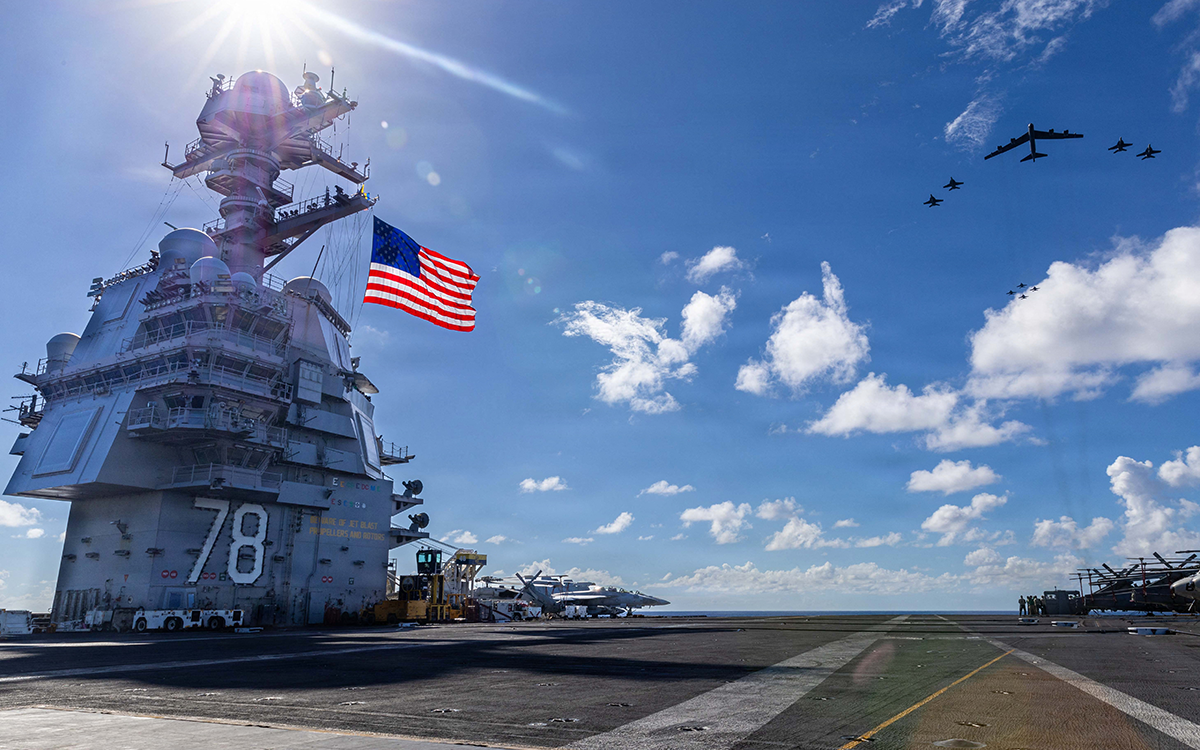
This strategy of dual prioritization, Homeland Defense alongside China Containment, is inherently contradictory in terms of resource allocation, where the demands for increased allied defense spending become critical, as Trump has repeatedly urged since his first term. To offset this military drain from concentration on homeland defense and to satisfy domestic political demand for reduced overseas spending, the NDS will likely impose explicit and significant financial and operational demands on allies such as Japan, South Korea, Australia, and the Philippines. The US will press these nations to rapidly increase their defense budgets, with reported targets ranging up to 3.5% or 5% of their respective GDPs, demanding a fundamental realignment of roles and missions, with possible investment into asymmetric capabilities, such as long-range precision anti-ship missiles, robust air defense, and nuclear-powered submarines that can deny China’s ability to achieve its strategic goals, thereby increasing the cost of aggression to unacceptable levels for Beijing.
The outcome of this NDS revision for the Asia-Pacific will usher in a phase of acute strategic tension and high-stakes negotiation. US allies, aware of their dependence on the US security guarantee to counterbalance Chinese military might, will feel compelled to comply with the increased defense spending demands to avoid provoking a complete US strategic retrenchment. This pressure will accelerate existing domestic movements toward military modernization and higher defense budgets.
This NDS revision for the Asia-Pacific will usher in a phase of acute strategic tension and high-stakes negotiation
However, the explicitly transactional nature of the US commitment pushes uncertainty into the alliance system. This approach risks eroding the trust and diplomatic cohesion that underpins Integrated Deterrence, validating Beijing’s narrative that the US treats its allies as mere vassals. While the strategic goal of China containment will remain, the means employed, compulsory and maximal burden-sharing, generate domestic political friction for allied leaders and introduce significant operational unpredictability into the regional security calculus.
Scenario 1: Accelerated Allied Rearmament and the “Denial” Gap
The US NDS shift, combined with mandatory defense spending targets, will accelerate asymmetrical rearmament among key US allies. Fearing abandonment, these nations will prioritize denial capabilities to raise the immediate cost of a Chinese aggression. While this fulfills the transactional goal of burden-sharing and increases regional firepower, the rushed, unilateral procurement risks interoperability issues and strategic gaps, resulting in stronger but less politically cohesive conventional deterrence.
Scenario 2: Nuclear Hedging and the Collapse of Extended Deterrence
A long-term, reduced US commitment risks triggering nuclear proliferation as strategic hedging. South Korea, distrusting the conditional US extended deterrence and facing a North Korean nuclear threat, would likely seek its own nuclear capability. Japan could rapidly follow, shattering the non-proliferation regime. This would compel China and Russia to react to a nuclearized neighborhood, dramatically increasing the risk of miscalculated nuclear warfare.
Scenario 3: Chinese Coercion and the Maritime Power Vacuum
The NDS’s pivot to Homeland Defense will reduce the US’s operational presence in maritime theaters like the South China Sea and the East China Sea, as high-value assets focus on the Western Hemisphere. China will exploit this vacuum by intensifying gray zone tactics using coast guard and fishing militias against allies like the Philippines and Japan. Without a reliable US presence to challenge its claims, Beijing will solidify its A2/AD capabilities, establishing regional maritime hegemony and altering the strategic balance in the Western Pacific.