

The war that began with Russia’s full-scale invasion of Ukraine in February 2022 is approaching a diplomatic crossroads. For months, Washington and Moscow have pursued talks that, in their earliest form, produced a perilous 28-point draft settlement. In theory, it was to serve as the foundation of a political end to Europe’s largest land war since the Second World War. In practice, it triggered a political storm in Kyiv, across Europe, and even within the American national-security establishment.
Now, a slimmed-down 19-point version is circulating after intense exchanges between US and Ukrainian negotiators in Geneva. Despite the revision, it still contains the DNA of its predecessor: a blueprint that asks Ukraine to swallow far-reaching political, territorial, and military compromises in exchange for a ceasefire. However, as the architecture evolves and as Europe asserts itself more forcefully, the negotiations have morphed into something larger: a contest over the future of European security, Western unity, and the meaning of sovereignty in the twenty-first century.
As the Ukraine settlement architecture evolves and as Europe asserts itself more forcefully, the negotiations have morphed into something larger: a contest over the future of European security
Diplomacy at the Edge of Concession
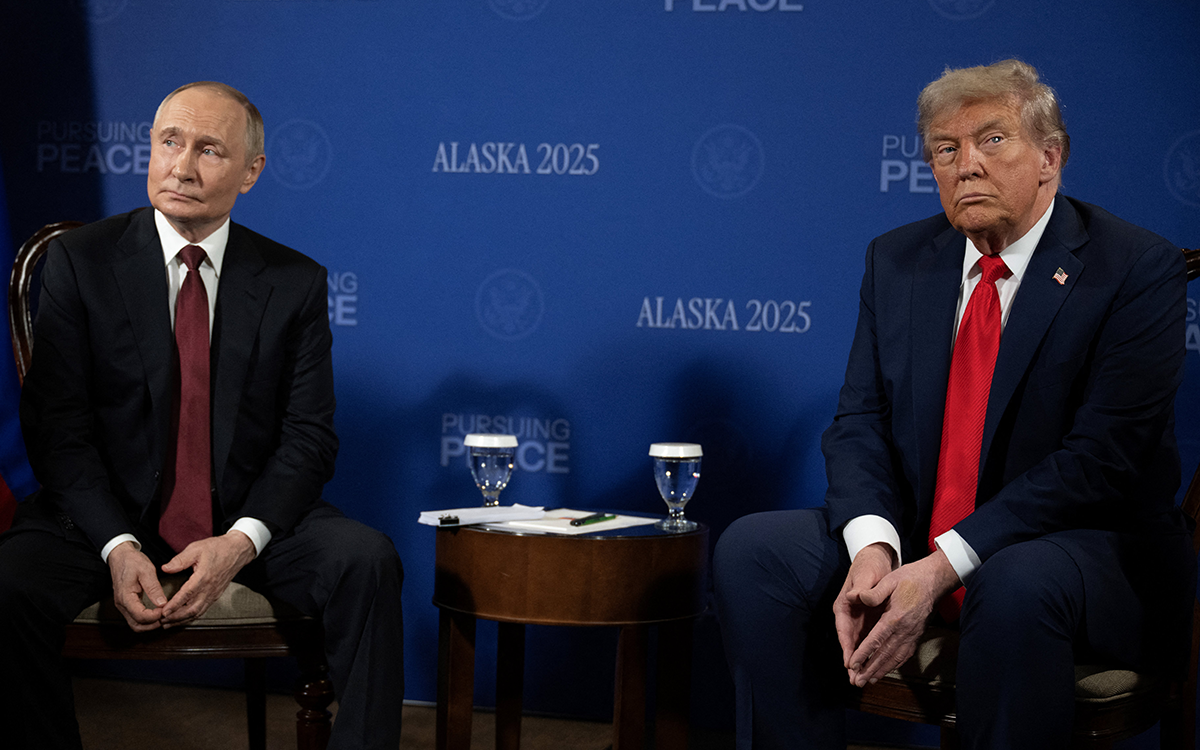
The original 28-point proposal reflected the geopolitical asymmetries of its birth. It was drafted at a moment when Washington, under mounting domestic pressure to show progress, was searching for an off-ramp from a grinding European war. Moscow, having failed to win quickly on the battlefield, saw the diplomatic channel as a second front: a venue where it might secure through negotiation the political spoils it had been unable to seize by force.
The result was a document that bore the unmistakable imprint of Russian priorities. It required Ukraine to accept Moscow’s annexations across the east and south; codify constitutional neutrality; indefinitely suspend its NATO ambitions; limit the size and scope of its armed forces; curtail Western military aid; and restore cultural rights for the Russian language and the Moscow-aligned Orthodox Church. These demands read less like a diplomatic compromise than a list of political humiliations designed in the Kremlin.
The imbalance was so pronounced that, when the proposal leaked, even parts of the US government appeared blindsided. At a security forum in Halifax, senators from both parties publicly claimed that Secretary of State Marco Rubio had told them that the 28-point plan “was not our recommendation,” but rather “essentially the wish list of the Russians.” According to their account, the draft had reached the Trump team through an emissary believed to be speaking for Moscow and circulated in Washington before being vetted or endorsed by the State Department.
Rubio disputed the allegation, insisting that the plan was “authored by the US, with input from both Russians and Ukrainians,” and the State Department dismissed the senators’ version as false. But the episode revealed something indisputable: the proposal did not emerge from a coherent American diplomatic strategy. It came into the world already contested, its lineage questioned, intent mistrusted, and authorship politicized. That is why the draft read the way it did. It was less of a peace plan than a Rorschach test of competing bureaucracies, political factions, and foreign interlocutors, with Moscow’s imprint clearly visible.
In exchange for these sweeping concessions, Ukraine was offered security guarantees, a phrase that in the post-Cold War Europe has become synonymous with ambiguity. There was no reference to Article 5, no treaty of mutual defense, and no binding mechanism compelling the United States or any ally to act in the event of renewed Russian aggression. The guarantees amounted to little more than political encouragement.
Russia, by contrast, was asked to relinquish almost nothing. Its territorial gains would be normalized; its strategic veto over Ukraine’s future formalized; and its path back to Western markets and institutions reopened. A state that had launched the largest war in Europe since 1945 would be rewarded with legitimacy, relief, and geopolitical influence. It was, by any reasonable measure, an invitation to institutionalize conquest.
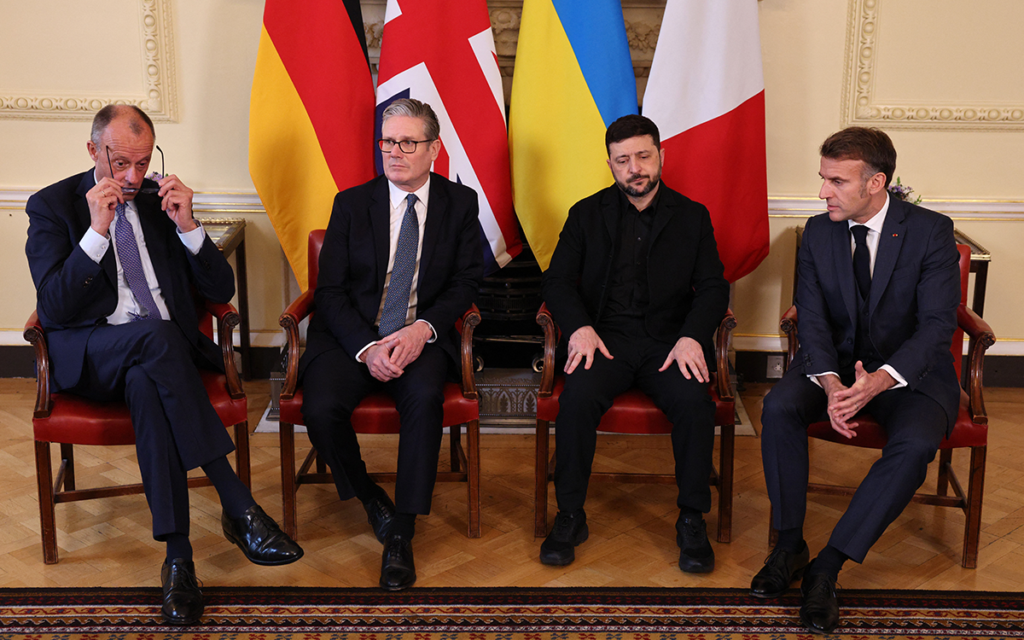
Predictably, Kyiv rejected the terms almost instantly, but what mattered more was Europe’s reaction. European capitals, excluded from the drafting and alarmed by the substance, signaled immediately that any settlement built on Ukrainian capitulation would be politically and morally untenable. They pressed for revisions. This pressure, combined with Ukrainian resistance, resulted in a slimmed-down 19-point version in Geneva. The most egregious demands were removed: provisions limiting Ukraine’s army, clauses implying recognition of Russian territorial gains, and explicit curbs on Western military aid.
But removal is not resolution. The core dilemmas remain embedded in the architecture: a territorial freeze that risks becoming permanent; security arrangements built on vagueness rather than treaty; and constraints on Ukraine’s long-term strategic freedom. The gravitational pull of Moscow’s preferences is still visible, even if softened.
In this sense, the negotiations reveal far more than an attempt to end a war. They expose the slow, uneasy return of a world structured by spheres of influence, and the struggle, in Kyiv and across Europe, to prevent those spheres from hardening into the new normal.
Survival for Sovereignty?
For Ukraine, the negotiations are not an academic exercise in conflict resolution. They touch on identity, independence, and the existential stakes of the war. Kyiv’s strategic position is paradoxical: it must negotiate because the country is exhausted, yet it cannot endorse a settlement that sanctifies Russia’s gains or condemns Ukraine to indefinite semi-neutrality.
President Volodymyr Zelensky understands that his mandate (political, moral, and even historical) depends on resisting any agreement that appears to reward Russian aggression. The defensive war that the Ukrainians have fought since 2022 was waged not only for territory, but also for the right to chart their own political future. A document that compels Ukraine to renounce NATO membership, cede land outright, or disarm would fracture national unity and almost certainly collapse the government.
Moreover, the military situation is both fragile and dynamic. Ukraine has demonstrated extraordinary resilience, inflicting substantial losses on Russian forces, striking the aggressor’s naval and energy assets, and maintaining pressure along multiple fronts. These peculiarities shape Kyiv’s negotiating position: a country still capable of defending itself has more leverage than one on the brink of collapse.
Domestic politics complicate this further. The recent resignation of Andriy Yermak, Zelensky’s influential chief of staff and lead negotiator, under corruption allegations, has shaken public trust. The administration must now navigate a war, a negotiation, and a crisis of internal credibility simultaneously; a dangerous trinity. If the public perceives the talks as capitulation engineered by a compromised elite, unrest is possible, and in wartime, unrest has strategic consequences. Putin, of course, is cognizant of these dynamics.
Yet Ukrainian leaders are also realists. They grasp the sheer cost of continuing the war indefinitely: the human toll, the economic devastation, the strain on energy infrastructure, and the unrelenting psychological burden. Four years of conflict have left millions displaced, industries shattered, and cities in ruins, as the Russians have targeted civilian infrastructure with impunity. Zelensky’s dilemma is not whether to seek peace, but whether the available peace is genuine or illusory.
Zelensky’s dilemma is not whether to seek peace, but whether the available peace is genuine or illusory
This is the heart of the strategic dilemma: Ukraine must weigh the relief of an end to hostilities against the risk that a flawed settlement leaves the country weaker, vulnerable, and ultimately condemned to fight again, alone.
A Clash of Strategic Cultures
Perhaps the most revealing development of recent months is not happening on the battlefield at all, but in Europe’s capitals. What began as quiet discomfort with Washington’s draft settlement has hardened into open resistance. The reason is straightforward: Europe now grasps, viscerally, that Ukraine’s fate is its own. For them, this is not a remote conflict on the edge of the map but a war fought on the fault line between authoritarian revisionism and the security architecture that has kept the continent intact for decades. If Ukraine is coerced into accepting a diminished status (neutral, truncated, indefinitely vulnerable), then the eastern frontier of Europe simply shifts westward. The buffer collapses, and the threat moves closer.
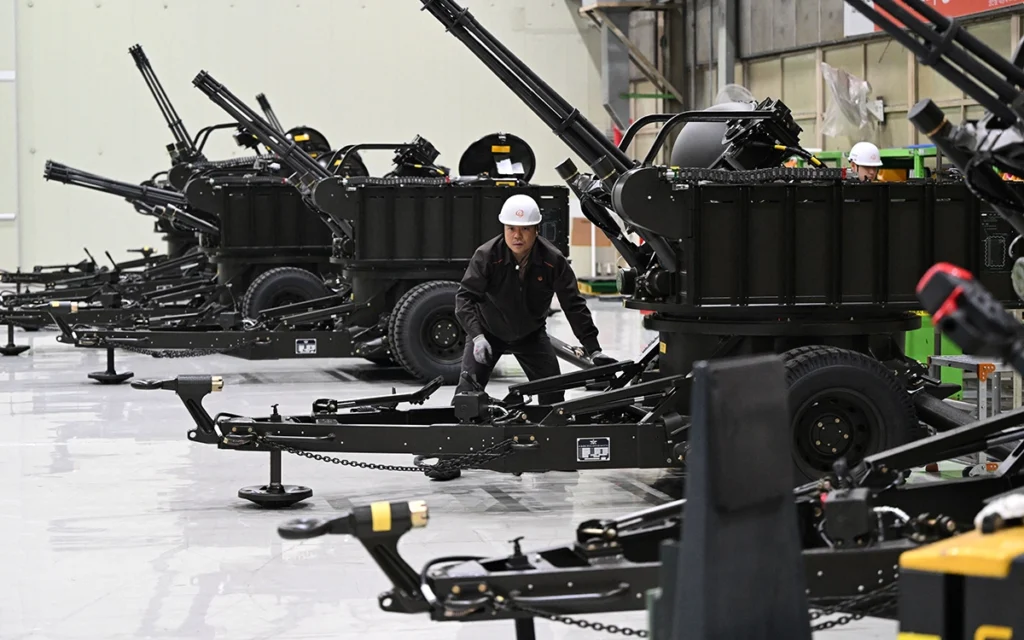
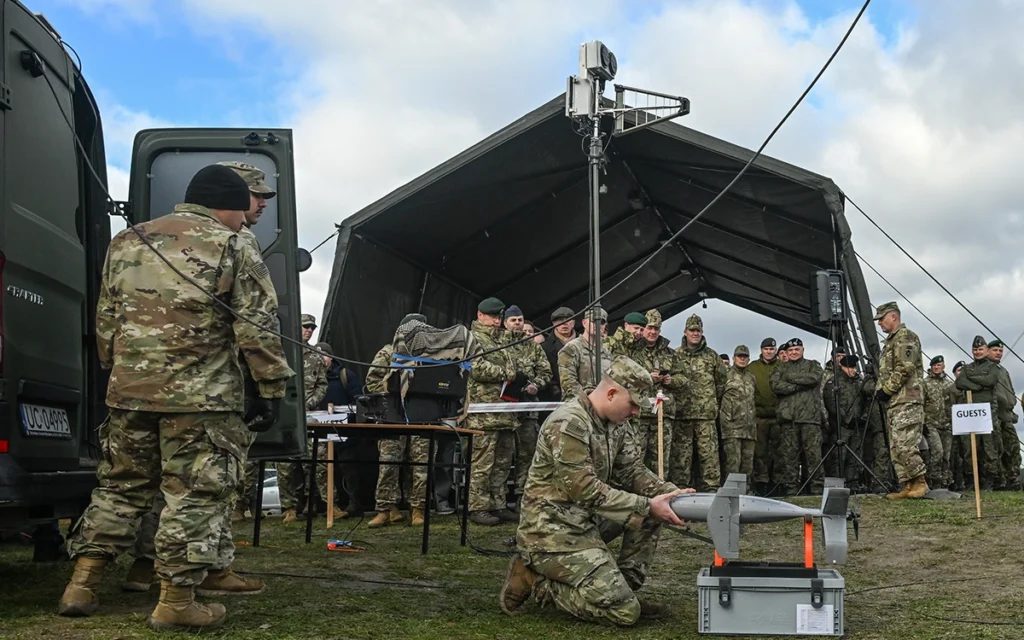
This recognition has already spurred unprecedented investment. As of 2025, NATO reports that every member state now meets the alliance’s 2% of GDP defense-spending benchmark; a threshold that, for years, was treated as aspirational at best. Across the European Union, military expenditure has risen just as sharply. EU members spent €343 billion on defense in 2024, a level unimaginable before the invasion, with a steadily increasing share directed toward equipment and readiness rather than bureaucratic maintenance.
On NATO’s eastern flank, the shift is even more dramatic. Poland now spends roughly 4.5 to 4.6 percent of its GDP on defense. The Baltic states, Finland, and Romania have all expanded procurement, mobilization capacity, and forward deployments. Collectively, these figures represent something Europe has not displayed in decades: strategic seriousness. The war has transformed Europe, but Washington’s initial proposal seemed determined to pretend that the transformation never occurred.
This is why European leaders insist that Ukraine’s security cannot rest on ambiguous assurances or informal understandings. They want mechanisms embedded in institutions such as NATO or structures directly adjacent to it, not another Budapest Memorandum to be violated at will. They know that guarantees without enforcement are not guarantees at all. They are invitations for a Russian dictator who has repeatedly shown his propensity for war.
Russia, sensing the divergence, has been eager to negotiate with Washington alone. It understands that Europe is the obstacle. It is thus no surprise that Moscow dismisses the European counterproposal as “unconstructive” precisely because it restores the very principles Russia hopes this war will erase.
NATO and Europe’s Military Future
If Ukraine is denied NATO membership, or if accession is indefinitely postponed, the alliance loses one of its central deterrent goals: to extend credible security guarantees to states seeking protection from Russian aggression. A Ukraine left in a liminal space, neither fully sovereign nor fully protected, becomes a magnet for future crises.
Moreover, if the plan limits Ukraine’s military capacity, even indirectly, the balance of forces in Eastern Europe shifts decisively in Russia’s favor. A demilitarized or lightly armed Ukraine would create a strategic vacuum that NATO would then have to fill, either by deploying more permanent forces or by accepting a greater risk of future conflict.
European defense planning, already under significant strain, would have to adapt to a world in which Russia retains territorial gains, military power, and political confidence. The myth that the post-Cold War security order could function without confrontation would finally evaporate.
Even the notion of security guarantees outside NATO carries dangers. Unless embedded in enforceable, treaty-based mechanisms, such guarantees risk being as empty as the agreements that preceded the war. Without automaticity, they depend on political will. And political will changes. The latter is particularly important as Russia has repeatedly shown that it cannot be trusted.
The notion of security guarantees outside NATO carries dangers. Unless embedded in enforceable, treaty-based mechanisms, such guarantees risk being as empty
The Future of Power Politics
The implications extend beyond Ukraine and Europe. Should Russia secure a settlement that recognizes, either explicitly or implicitly, its territorial gains, the message to the world will be clear: borders are malleable, force works, and international opprobrium is temporary. The precedent would echo from East Asia to the Middle East.
For the United States, the outcome will shape how its allies and adversaries perceive its reliability. A hurried or conciliatory settlement risks giving the impression of American impatience or inconsistency. Russia, China, and Iran will interpret such an outcome as weakness.
For Russia, the stakes are transformative. A negotiated outcome on favorable terms would vindicate Vladimir Putin’s belief that geopolitical revisionism can succeed if pursued with persistence, brutality, and strategic timing. It would reintegrate Russia into global markets, restore diplomatic channels, and prove to the Russian public that sacrifice brings gains. A Kremlin strengthened in this fashion would not retreat into isolationism. It would look outward again.
For the global order, the settlement will determine whether the norm against territorial conquest, supposedly the great achievement of the post-1945 international system, survives or collapses in practice. If Russia can invade a neighbor, annex its territory, and secure recognition four years later, then that norm becomes merely aspirational. Therefore, the Ukraine settlement is not a regional matter. It is a referendum on whether the age of power politics has already returned and whether the guardians of the liberal order are prepared to defend it.
Scenarios Moving Forward
Against this geopolitical backdrop, the negotiations now stand before three possible trajectories, though only one appears strategically plausible.
- A complete settlement, involving formal recognition of Russia’s annexations, Ukrainian disarmament, and constitutional neutrality, is politically impossible. Kyiv would not sign it; the Ukrainian public would reject it, and Europe would refuse to endorse it. It survives only in Moscow’s imagination.
- An interim ceasefire without a treaty, freezing the front lines without resolving the core political disputes, is feasible and perhaps even desirable for Ukraine. It preserves strategic ambiguity, avoids humiliating concessions, and keeps the possibility of NATO membership alive. But Russia is averse to such an agreement that offers no sanctions relief and no legitimization of its gains.
- That leaves the third option: a hybrid political settlement, in which Ukraine concedes de facto, but not de jure, Russian control of occupied territories; receives ambiguous security guarantees; accepts limits on its geopolitical freedom; and receives financial support for reconstruction in exchange for stability.
This hybrid outcome is not the best scenario. It is merely the most likely. It offers each party a partial victory: Russia keeps the stolen land, Ukraine avoids total capitulation, Europe can claim a diplomatic achievement, and Washington can argue it has ended a costly conflict.
A Settlement Sans Peace as the US Retreats
This is the trajectory of the negotiations as they stand: a fragile compromise shaped by exhaustion, fear, and fantasy that a conflict rooted in imperial ambition can be ended without confronting that ambition. It is diplomacy designed not to resolve a war, but to postpone accountability for it.
The trajectory of the negotiations as they stand: a fragile compromise shaped by exhaustion, fear, and fantasy that a conflict rooted in imperial ambition can be ended without confronting that ambition. It is diplomacy designed not to resolve a war, but to postpone accountability for it
Yet there is a deeper tragedy hidden beneath the procedural language of ceasefire terms and security guarantees. Under a coherent and internationalist United States, one that still believed its power served a purpose beyond transaction, the outcome would have been different. For decades, Washington acted as the final stabilizer of the international system, the only state capable of tilting the balance in favor of democracies and against the world’s autocrats. It was imperfect, but it was present.
The deal now taking shape is, in its own way, a monument to the end of that era. It reflects a United States that no longer sees itself as the custodian of any order at all, but as a power that trades, bargains, and retreats according to its mood. The message to allies is unmistakable: security is no longer guaranteed by principle but by transaction; no longer by permanence but by whim.
Ukraine deserves something sturdier. So does Europe. And so does the international system that was built painstakingly, imperfectly, on the premise that borders cannot be changed by force and that democracies protect one another because no one else will. But wars do not end because justice demands it. They end because political actors choose imperfect alternatives.
The tragedy is that the least bad option available, the hybrid deal, may entrench precisely the dangers it claims to avert: a revanchist Russia, a fractured Europe, and an America that no longer remembers what it means to lead.