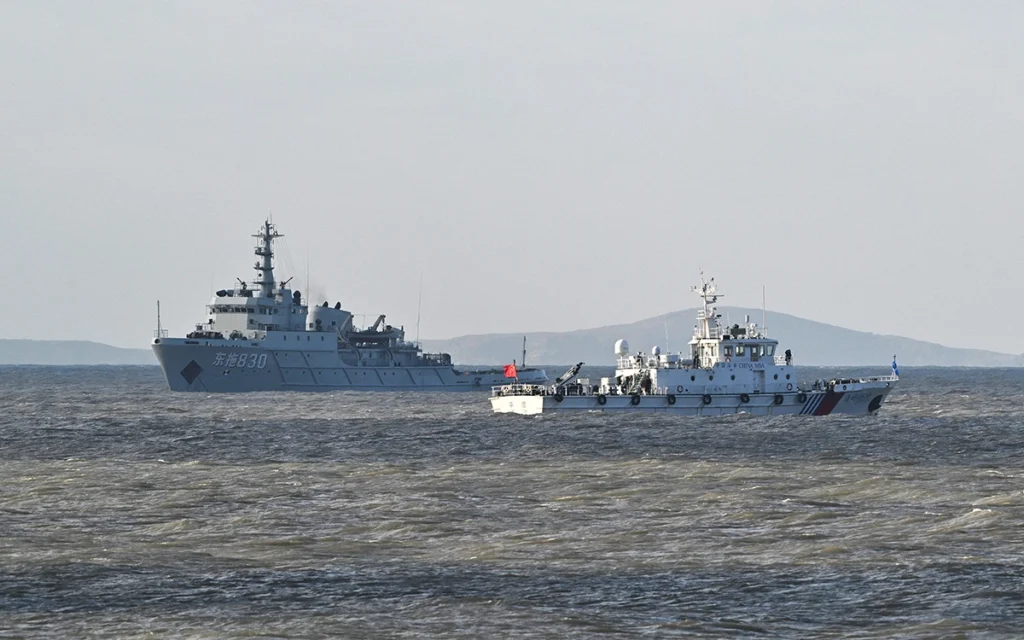
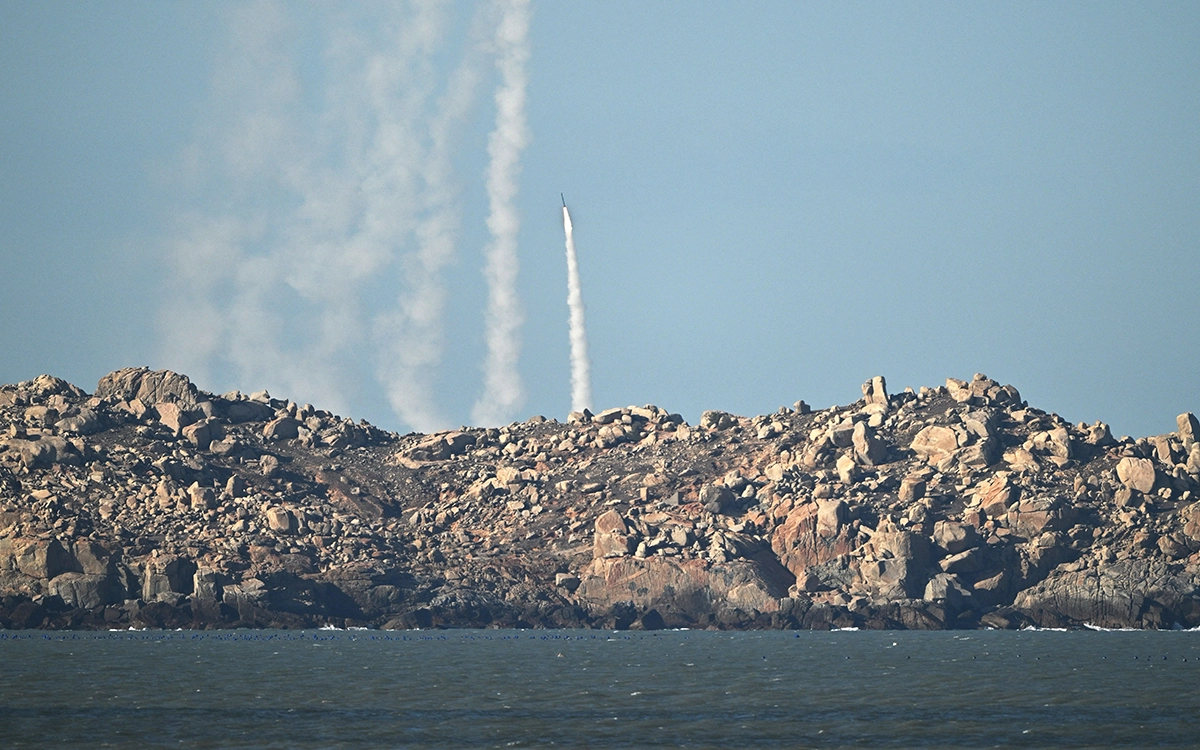
The world just witnessed another high-intensity, live-fire Chinese military exercise around Taiwan. The dispute over the island represents one of the most serious risks of another great-power war. Even if unsuccessful, a Chinese attack against Taiwan would risk nuclear escalation, global economic shock, and long-term degradation of international relations.
The risk of war is increasing as China’s military power and assertiveness grow. Yet Beijing’s unrelenting insistence on unification runs up against declining support for that option within Taiwan, amplifying the risks of both vertical and horizontal escalation. In Washington, increasingly contested debates over trilateral economic decoupling and the U.S.–Taiwan security commitment further heighten the danger of escalation and war.
The risk of war is increasing as China’s military power and assertiveness grow. Yet Beijing’s unrelenting insistence on unification runs up against declining support for that option within Taiwan
The Old Regime
In the past, the prevailing view held that, rather than planning a near-term invasion, the PRC used the risk of war to coerce Taiwanese and U.S. leaders into making concessions. PRC officials issued threats backed by calibrated displays of military power, creating an atmosphere of escalation. Beijing would then use this context to press for constraints on Taiwanese autonomy, restrictions on U.S. arms sales, and reduced official contacts between Taipei and Washington. In essence, Beijing sought rewards for defusing crises of its own making—confrontations it likely did not intend to escalate into war given the prohibitive economic and military costs.
Taipei and Washington would respond to the PRC’s repeated probing for vulnerabilities and red lines by denying aspirations for formal independence while insisting on maintaining the status quo. Confident in its escalation dominance and counterforce capabilities, the Pentagon would conduct high-profile maneuvers near Taiwan and build forces for deterrence by denial through a mix of damage limitation, selective preemption, and retaliation.
U.S. diplomats insisted that they opposed changing the status quo, sought only a peaceful resolution of cross-strait differences, and would accept whatever arrangement the other two parties embraced. Separately, U.S. representatives reiterated their commitment to the Three Joint Communiqués to Beijing while also reaffirming to Taipei continuing support for the Six Assurances and the Taiwan Relations Act. This framework reliably avoided sustained escalation, producing a managed but fragile stability.
Another stabilizing factor was the shared belief among the three parties that time was on their side. PRC policymakers anticipated that China’s growing military and economic power would eventually alter Taiwan–U.S. cost-benefit calculations. The advantages of Taiwan’s economic integration with the PRC would increase alongside the risks of waging war against it. Meanwhile, policymakers in Taipei and Washington expected China’s reform and opening up to produce political liberalization akin to that seen in Taiwan and neighboring Asian states. Thus, unification would grow more attractive over time, or at a minimum, Taiwan’s tolerance for de facto but not de jure independence would increase.
Increased PLA Power and the New World
Several critical developments over the last few years have eroded this status quo of managed instability. Most notably, the Chinese military has become far more capable, increasing the risks associated with direct U.S. military intervention to defend Taiwan. The People’s Liberation Army’s expanding conventional and nuclear capabilities have weakened deterrence by denial while heightening risks associated with damage-limitation strategies involving strikes against the Chinese mainland.
Meanwhile, PLA maneuvers around Taiwan have become more assertive, persistent, and routine. China’s exercises increasingly resemble rehearsals for a comprehensive blockade or invasion of Taiwan rather than the controlled intimidation of the past. Unlike Russia, which required months to mobilize forces for its invasion of Ukraine, the PLA could attack Taiwan from a standing start due to its frequent deployments around the island. By contrast with the Cold War confrontation between the United States and the Soviet Union, arms control regimes, crisis hotlines, and other escalation guardrails in the Sino–U.S. relationship remain rudimentary or non-existent.
PLA maneuvers around Taiwan have become more assertive, persistent, and routine. They increasingly resemble rehearsals for a comprehensive blockade or invasion of Taiwan
An Unrelenting Beijing
Despite fundamental differences, Russia’s Ukraine operation has raised troubling questions about the possibility of deterring a Chinese attack on Taiwan. Beijing’s insistence on the complete unification of Taiwan on its own terms invites comparison with Moscow’s unyielding territorial claims in Ukraine. Beijing’s goals for Taiwan now imply an indefinite PLA presence, the extension of the PRC’s one-party system, and the establishment of a tightly controlled information ecosystem on the island.
Official PRC discourse frames control of Taiwan as a prerequisite for ending China’s long century of humiliation and advancing the Chinese Dream of national rejuvenation. Taiwan is not a negotiable political issue but rather a core component of China’s territorial and historical settlement. Unification is an unfinished historical question rather than a contingent policy choice. In this framework, a PRC failure to achieve unification would leave the issue unresolved and strategically destabilizing.
Alliance Shattering and Japan Entanglement
China’s objectives regarding Taiwan extend beyond bringing the island under Beijing’s control. By seizing Taiwan, the PRC aims to shatter the U.S. alliance network that has underpinned Indo-Pacific security since the Cold War. PRC policymakers view the interlinked security commitments connecting Washington with its allies as a vulnerability, likened to spokes on a bicycle wheel with the United States as the central axle. The successful seizure of Taiwan in defiance of Washington, they calculate, would erode American credibility among Japan, South Korea, and other U.S. allies. A loss of confidence in Washington’s capacity and willingness to defend them could facilitate greater accommodation by these allies rather than confrontation with Beijing.
By seizing Taiwan, the PRC aims to shatter the U.S. alliance network that has underpinned Indo-Pacific security since the Cold War
Japanese Prime Minister Sanae Takaichi aroused Beijing’s ire by stating that Tokyo would regard a Chinese invasion of Taiwan as an existential threat to Japan, potentially implicating Japanese intervention. Previous Japanese leaders also depicted a Taiwan contingency as a “survival-threatening situation” for Tokyo. Deputy Prime Minister Taro Aso, for instance, said in 2021 that if China invaded Taiwan, Tokyo and Washington would need to respond together. This shared risk perception and alliance logic still binds Japan to the United States, but a successful PRC capture of Taiwan could shatter Japanese expectations regarding U.S. protection.
Unpredictability in U.S. and Russian Reponses
In Washington, support is growing for reducing U.S. defense commitments in Europe and the Middle East and redirecting military resources toward homeland protection and the reestablishment of U.S. primacy in the Western Hemisphere. Support for countering China remains strong, but the once-settled assumption that the United States would defend Taiwan is now visibly contested. Calls both to strengthen and weaken the U.S. defense commitment to Taiwan have intensified, challenging the previous Washington consensus.
In the past, Taiwan won support in Washington for its successful democratic transition. This refuted claims that Chinese culture was inhospitable to Western-style liberal democracy and inspired hope that the PRC would pursue similar political liberalization. Yet today, a diminished U.S. commitment to defending fellow democracies has reduced the strategic value of Taiwan’s democratic credentials.
Moreover, while in earlier decades, U.S. policymakers welcomed Taiwan’s economic and technological progress, today the priority has shifted toward reducing dependence on foreign technology suppliers, pressing Taiwan and other partners to reduce trade deficits with the United States, and encouraging greater investment in the U.S. economy. As economic decoupling accelerates, incentives for Chinese, Taiwanese, and U.S. leaders to subordinate security differences to the pursuit of mutual economic gains have weakened.
How the Russian Federation would respond to a Taiwan contingency represents another wildcard. Prior to its invasion of Ukraine, Moscow publicly supported the PRC’s One China policy while Russian firms maintained extensive economic ties with their Taiwanese counterparts. At the same time, some Russian strategists appeared to prefer that Taiwan retain autonomy. They calculated that its incorporation into the PRC would strengthen China’s geopolitical position and potentially redirect Beijing’s attention toward other unresolved territorial disputes.
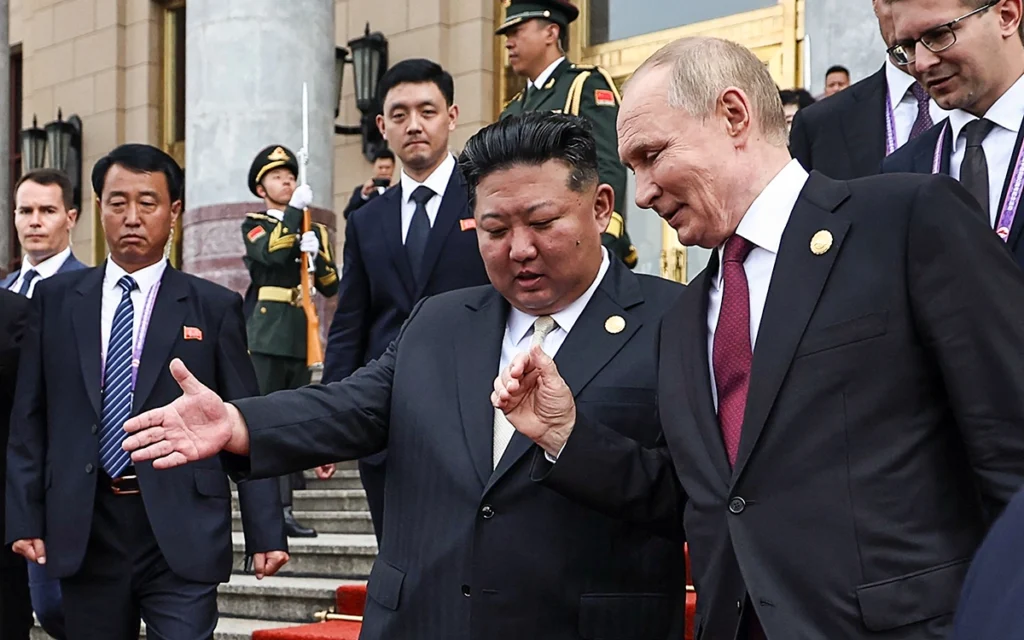
As Russia has grown more dependent on PRC support to sustain its military-industrial capacity in the face of Western sanctions, the Kremlin has more explicitly backed Beijing’s claims against Taiwan. Russian warships now regularly operate near Taiwan en route to joint exercises with the Chinese navy. Given Beijing’s substantial diplomatic and economic support, PRC leaders would likely expect continued Russian alignment on Taiwan even after the war in Ukraine ends.
Taiwan Contingency Scenarios
Kuomintang-facilitated Peaceful Integration or Unification
Prospects for peaceful integration are often dismissed outside China but merit consideration given the limited—though nonzero—possibility of politically favorable developments in Taiwan, China, or the United States.
The Democratic Progressive Party’s victory in Taiwan’s January 2024 presidential election marked the first time a single party had secured the presidency in three consecutive contests. Yet the Kuomintang party, which won the most legislative seats in the concurrent ballot, may return to power in future elections, potentially in coalition with the Taiwan People’s Party or other partners. The opposition majority in the Legislative Yuan has already constrained DPP-proposed increases in defense spending and arms procurement. Many KMT leaders favor a more comprehensive reconciliation with Beijing, a posture that could alienate Washington.
Authoritarian systems often recalibrate policy following leadership transitions, sometimes through partial repudiation of predecessors. If Xi left office, a subsequent PRC leader may moderate his rigid, assertive posture toward Taiwan. Such a moderation could increase support for peaceful integration within Taiwan, especially if it is paired with growing economic tensions with the United States or doubts about the U.S. security commitment to Taiwan.
Arms Sales: A Double-Edged Sword
Although Washington severed its formal defense alliance with Taiwan when it recognized the PRC as the sole government of China in 1979, the Taiwan Relations Act obliges continued U.S. arms sales to help sustain the cross-strait military balance.
However, sustained high levels of U.S. arms transfers may accelerate rather than deter Chinese military action against Taiwan. PRC officials maintain that such weapons transfers impede unification and embolden pro-independence sentiment on the island. Beijing may therefore calculate that continued improvements in Taiwan’s military capabilities narrow the window of opportunity in which to act and significantly raise the tolerable cost of coercion or force.
Opportunistic Aggression and Lateral Escalation
Non-U.S. third parties such as Japan and Russia are now more deeply entangled in the Taiwan question. This increases the risk that an active Taiwan contingency may spark conflicts elsewhere, catalyzing and widening a PRC–U.S.–Taiwan confrontation.
An active Taiwan contingency may spark conflicts elsewhere, catalyzing and widening a PRC–U.S.–Taiwan confrontation
One pathway involves military conflict breaking out between China and the United States over a separate issue, such as Beijing’s claims in the East or South China Sea. If Washington defended Japan or the Philippines against PLA operations, PRC decision-makers could strike Taiwan as an act of lateral escalation. Similarly, a major U.S. conflict with Russia or North Korea could lead Beijing to judge that U.S. attention and strategic capacity were sufficiently strained, lowering the perceived barriers to direct action against Taiwan.
Great-Power Transition and Confrontation
Great-power transitions are historically associated with heightened instability, and the Taiwan issue looms as the most acute potential flashpoint for a broader Sino-American conflict. The convergence of today’s military, political, and economic pressures has weakened the foundations of deterrence and raised the risk of escalation and war.