

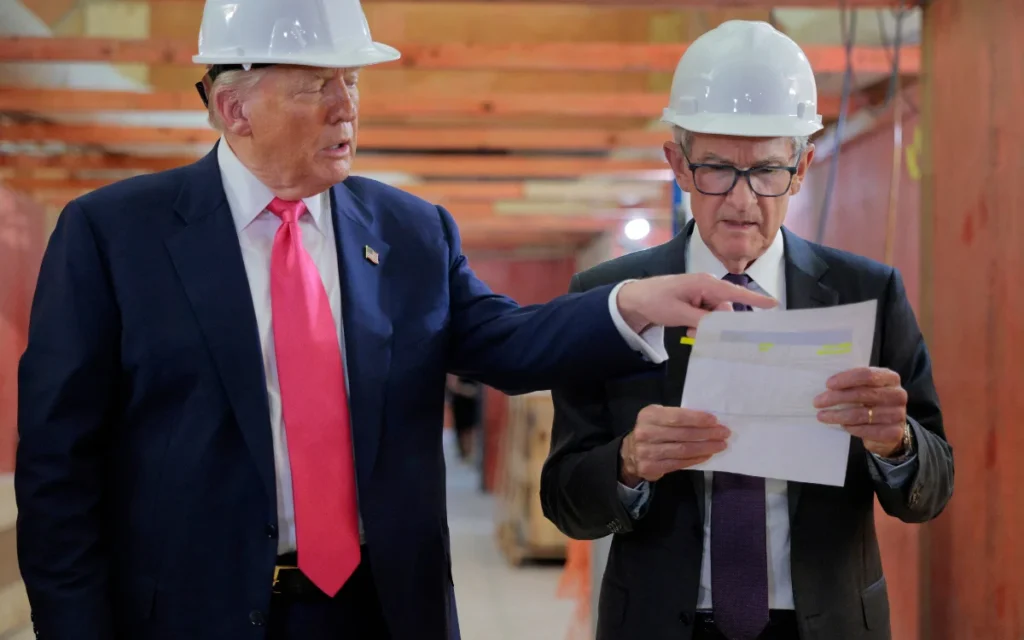
Tensions between the White House and the U.S. Federal Reserve boiled over this weekend after federal prosecutors opened a criminal investigation into Fed Chair Jerome Powell related to renovations to Federal Reserve buildings. Powell issued a response by video Sunday evening, accusing President Trump of threats and political pressure. Markets have responded in a measured but defensive way, as the political risk of confrontation looms.
“This is about whether the Fed will be able to continue to set interest rates based on evidence and economic conditions,” Powell said, “or whether instead monetary policy will be directed by political pressure or intimidation.” Former Fed Chair Janet Yellen called the probe “extremely chilling,” and warned that market volatility may follow. U.S. stocks retreated from records Tuesday, as oil prices jumped amid ongoing uncertainty surrounding the immediate future of Iran.
Stocks remained mixed even as new inflation data came in calmer than expected—staying at 2.7 percent for December. Markets indicate a holding pattern, as investors await clearer signals in the ongoing Trump–Fed clash. Treasury yields moved lower, reflecting a cautious market atmosphere and confidence that Fed policy will remain data-dependent rather than politically driven. More volatility exists, though, in longer-dated yields, signaling concern not about inflation but rather policy unpredictability.
Global Central Bankers and Trump the Populist
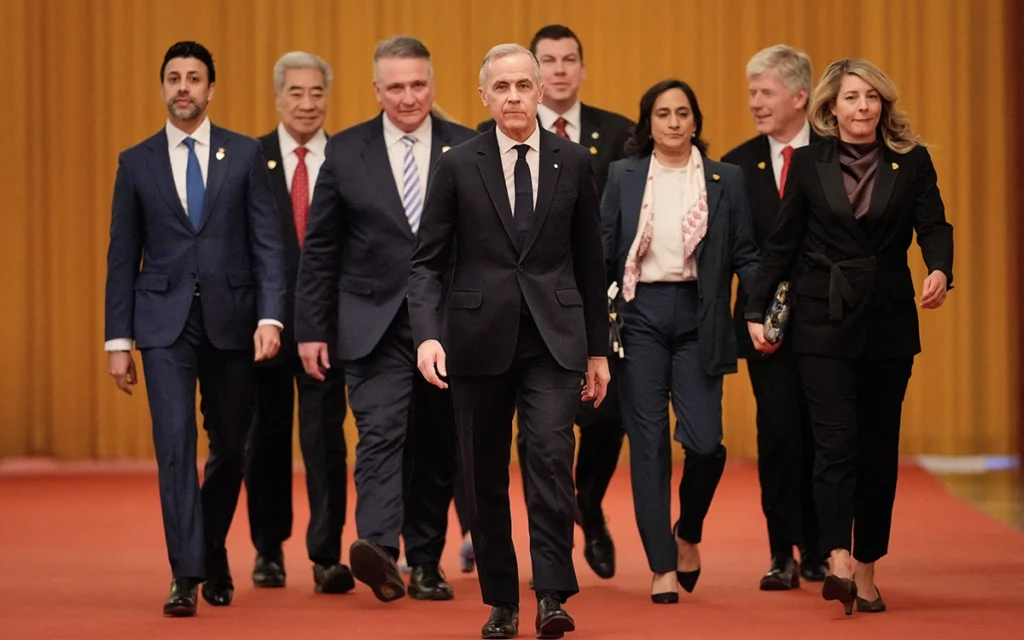
Global leaders in central banking have positioned themselves behind Powell. Heads of the ECB, Swiss National Bank, Bank of England, and eight other institutions issued a joint statement Tuesday morning saying they stood “in full solidarity” with the beleaguered Fed Chair. The ECB’s Christine Lagarde said that real banking independence is critical to making unbiased decisions. The ability to carry out medium- and long-term planning, she said, is non-negotiable for price stability.
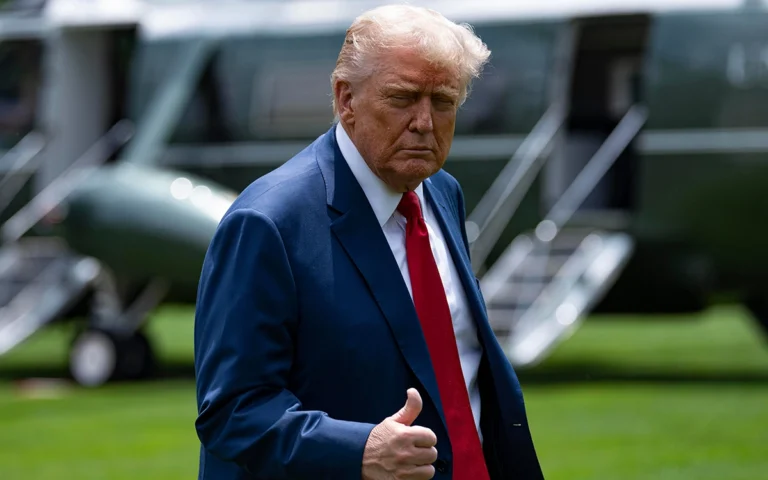
Asked on the White House lawn whether the probe would undermine confidence in the Fed, Trump said that Jerome “Too-Late” Powell was billions over budget on the renovations, adding “so either he’s incompetent or he’s crooked.” Trump has long targeted Powell for delays in cutting interest rates. Yet the president’s remarks are not pure theater; through maneuvers like this, Trump seeks to position himself outside of and against the financial elite, building a populist credential.
The president’s remarks are not pure theater; through maneuvers like this, Trump seeks to position himself outside of and against the financial elite, building a populist credential
Trump’s comments also come on the heels of a sudden surprise announcement that he will cap credit card interest rates at 10 percent, saying he would “no longer allow the American public to be ripped off by credit card companies.” While analysts say the measure would exacerbate lender risk aversion and could backfire in practice, Trump’s message resonates with a population that is heavily indebted and politically polarized. In the absence of more extreme executive measures, Trump’s APR cap might seriously limit credit extension by lenders who typically offset risk with higher pricing.
The Trump–Fed Clash and the Real Estate Sector
Asset markets are also likely to be shaken by the escalating Fed clash, particularly amid Trump’s increasingly unpredictable policy course. Last week, the president announced he would ban large institutional investors from buying single-family homes, declaring that “people live in homes, not corporations.” In response, giants in real estate saw stocks dive, with Invitation Homes, the largest of its kind, posting a near 8 percent 90-day share price decline Tuesday.
Asset demand rather than housing utility has driven up valuations, stretching the market further. On pricing metrics, today’s real estate market is more overvalued than the 2006 bubble, with higher price-to-income ratios, even if the absence of significant subprime lending reduces actual crash potential. Trump’s promise to ban institutional investors is more recognizable as a policy goal of Bernie Sanders and the progressive wing of the Democrat establishment. Yet with executive power, Trump is better positioned to translate the rhetoric into policy. But he faces significant obstacles in Congress, as several Republicans have criticized the probe into the Fed. Trump’s own Treasury Secretary, Scott Bessent, said he was unhappy with the move, calling it “an unnecessary distraction.”
JPMorgan Chase CEO Jamie Dimon has been among the most prominent financial executives to warn against the politicization of economic institutions. Trump has also targeted Dimon, suggesting that he “probably wants higher rates; maybe he makes more money that way.” As America’s top credit card lender, JPMorgan Chase holds roughly $60 billion more in outstanding debt than its nearest rival. The bank posted significantly lower fourth-quarter profits Tuesday, after which Dimon issued support for Powell and optimism regarding the U.S. economic outlook.
Yet markets remain fragile as the Trump–Fed dispute adds to volatility concerns and threatens to undermine U.S. monetary credibility. In this context, JPMorgan Chase and others face heightened exposure in the face of Trump’s housing and credit card measures.
Dollar Credibility and Monetary Politicization
The growing politicization of monetary policy has implications for the credibility of the U.S. dollar as the global reserve currency. The Trump–Fed dispute undermines a general perception of U.S. monetary independence, which has the potential to drive non-dollar reserve diversification. While there have not been any sharp selloffs, the incident may encourage investors to reduce exposure, especially as the U.S. continues to leverage dollar power through sanctions on various adversarial states. Notably, China, the United States’ primary competitor and formerly the largest foreign holder of U.S. Treasuries, continues to sell off its dollar reserves.
The Trump–Fed dispute undermines a general perception of U.S. monetary independence, which has the potential to drive non-dollar reserve diversification
Yet Trump’s escalation comes against the backdrop of prior concerns about dollar credibility. Global demand for U.S. Treasuries as a benchmark risk-free asset has fallen in recent years, particularly amid concerns about strategic coherence in the U.S.–EU bloc. After Russia’s invasion of Ukraine, the bloc took unprecedented action, freezing roughly $300 billion in Russian central bank reserves held in dollars and euros. Cautious to preserve confidence, the EU has authorized the use only of income generated by those assets to finance arms purchases for Ukraine.
Through such actions, the West signals that reserve assets are politically contingent and subject to forfeiture. Yet it remains unclear whether dollar dominance can be sustained through these coercive tools as well as it can through the perception of dollar neutrality that historically underpinned the Western-led international monetary system.
U.S.–China and Global Finance
Trump’s unpredictable domestic policy mirrors a more confrontational approach in foreign affairs, but it is also shaped by a rapidly changing global financial environment. Viewed in geopolitical terms, the Trump–Fed clash highlights structural vulnerabilities in the West’s ability to mobilize and coordinate capital at scale in pursuit of strategic objectives at a time when Beijing increasingly positions itself as an alternative financial and lending center.
Trump’s unpredictable domestic policy mirrors a more confrontational approach in foreign affairs, but it is also shaped by a rapidly changing global financial environment
The shift has been rapid and profound. At the turn of the century, no Chinese bank ranked among the world’s top 75; today, the four largest banks in the world are Chinese state-owned lenders, making up roughly 13 percent of total global banking assets. Unencumbered by short-term profitability constraints and insulated from public–institutional frictions, China’s banking SOEs are central instruments of Beijing’s long-term strategic planning.
While U.S. institutions still lead in profitability and market influence, China’s SOEs have expanded rapidly into the space left in foreign lending after the 2008 financial crisis. Since then, Western banks’ share of global cross-border lending has fallen from 85 percent to roughly 60 percent, with China’s SOE lenders making up most of the difference. Strategic lending underpins Beijing’s diplomatic engagement while infrastructure financing is keyed to its export-oriented development model.
China’s rise has weakened the geopolitical leverage of western lending, while also reshaping the nature of global finance. In an increasingly multipolar environment, financial activity and geostrategic considerations are intertwined. Against sustained competition, the market-led financial practice of the post-Cold War order appears increasingly unable to keep up with the state-directed approach to strategic capital allocation pioneered by the PRC.
Perhaps it is no coincidence that Trump’s populist rhetoric echoes the Xi Jinping slogan, “Houses are for living, not for speculation.” Whether future trajectories are characterized by convergence or entrenchment in macro-political-economic terms, episodes such as the Trump–Fed clash reveal stress fractures in the West’s strategic posture.