
Iran has accused the United States of repeated miscalculations and warned it to “be careful” about “intelligence failures.”
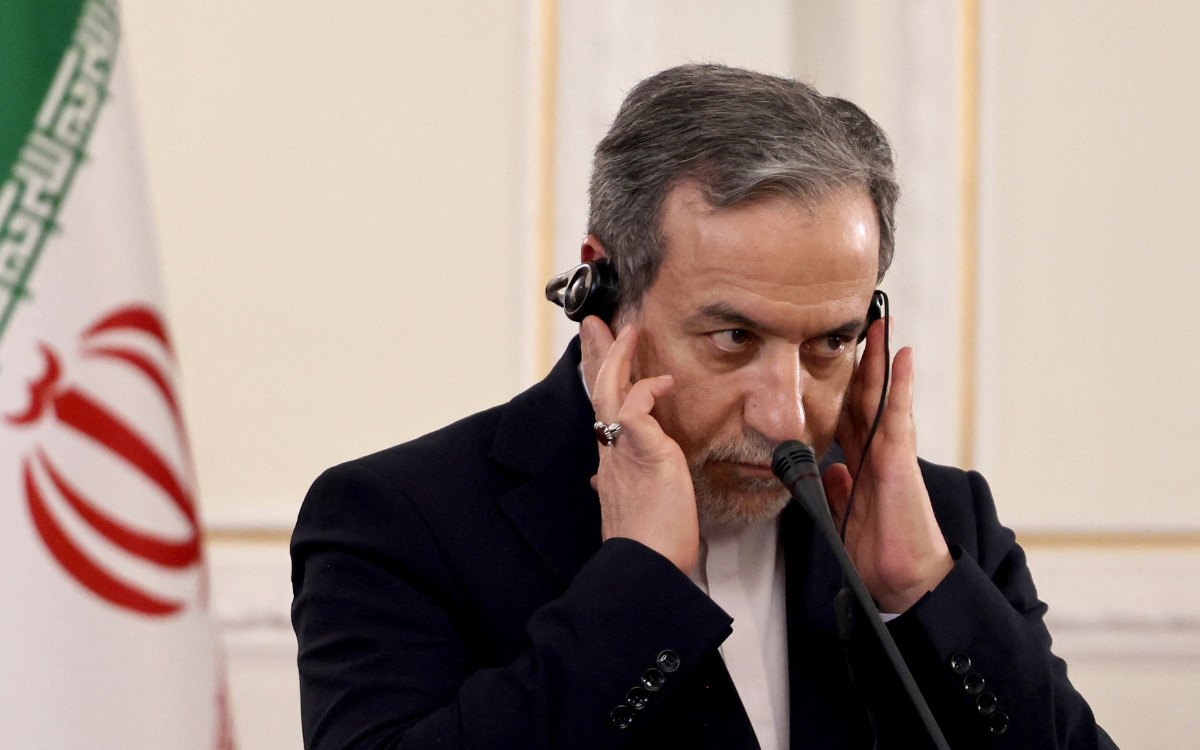
“The U.S. has long miscalculated due to intelligence failures. Case in point: The war on Iran. Now, an even bigger miscalculation on the Strait of Hormuz. Worse than fake news is fake intelligence. Be careful. Allah is Great, Greater than ANY power on Earth. In Allah we trust,” Iranian Foreign Minister Abbas Araghchi wrote on X on Thursday.
The U.S. has long miscalculated due to intelligence failures. Case in point: The war on Iran. Now, an even bigger miscalculation on the Strait of Hormuz.
Worse than fake news is fake intelligence. Be careful.
Allah is Great, Greater than ANY power on Earth. In Allah we trust.
— Seyed Abbas Araghchi (@araghchi) August 13, 2026
The statement comes after former U.S. national security adviser John Bolton told Eagle Intelligence Reports last month that the failures related to the Iran operation could not be attributed to the intelligence community (IC).
Bolton said that “there is no chance” that President Donald Trump was not warned by the Pentagon that “it was possible that Iran would try and close the Strait of Hormuz.” He criticized the U.S. president for failing to prepare adequately for regime change, adding that he had not done the “necessary preliminary work” before military operations began. Bolton’s statements follow those of retired CIA senior executive Brian O’Neill who claimed in June that, despite the IC’s warnings, Trump launched the war against Iran anyway.
Araghchi’s warning carries strategic significance beyond the immediate dispute over U.S. intelligence assessments. By publicly framing Washington’s actions as repeated “intelligence failures,” Tehran is challenging the credibility of U.S. threat assessment and decision-making at a moment when miscalculation around the Strait of Hormuz could have major regional consequences. The message is also aimed at Gulf states: if U.S. warnings and intelligence are perceived as repeatedly failing to anticipate Iranian actions, confidence in U.S. protection could decline further.
Strategically, that could encourage regional states to hedge more aggressively, diversify their security relationships, and place greater emphasis on their own intelligence and deterrence capabilities. Araghchi’s comment therefore seeks not only to defend Iran’s narrative, but to amplify doubts about the reliability of U.S. security guarantees across the Gulf.