
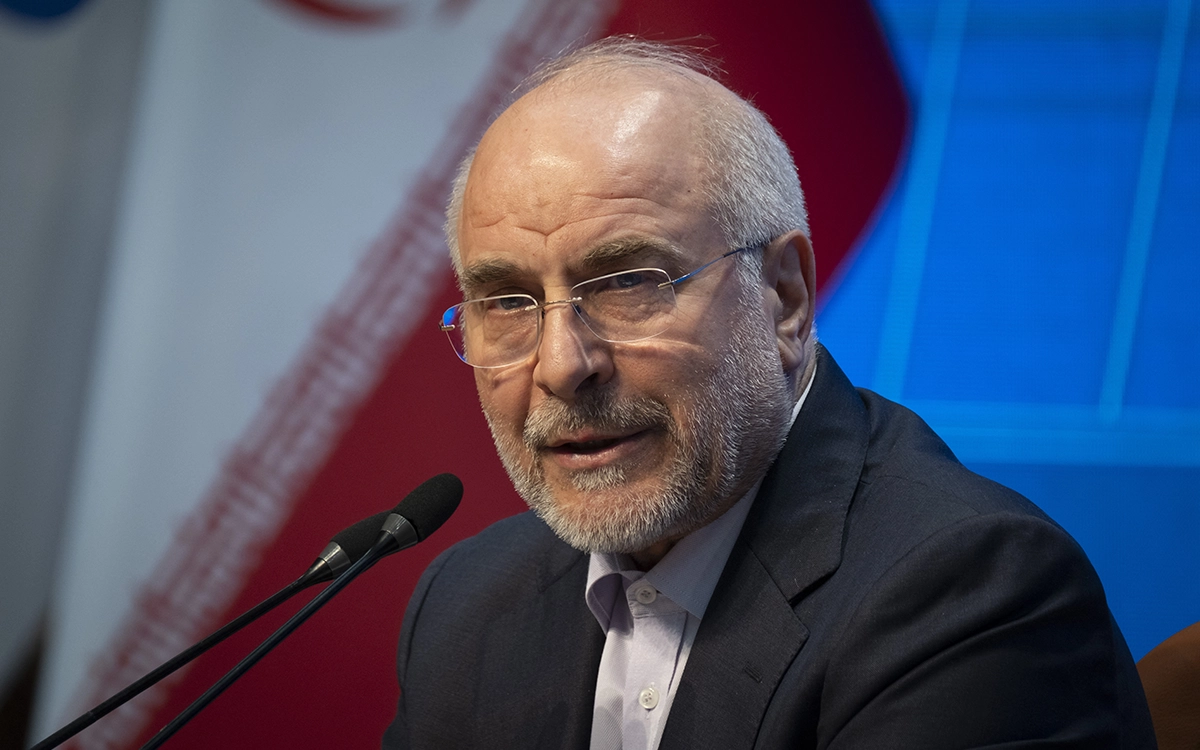
Iranian Parliament Speaker Mohammad Bagher Ghalibaf said on Sunday that Iran will not reopen the Strait of Hormuz until its conditions are met, its rights are recognized and the United States fulfills its commitments, according to Iranian media.
Addressing the parliament, Ghalibaf said Tehran’s messages and conditions had been explicitly conveyed to Washington through intermediaries, describing Iran’s diplomatic position as “completely clear, rational and non-negotiable.”
“Until these conditions are met, the legitimate rights of the Iranian nation are recognized, and the Americans’ commitments are implemented, there will be no opening for a return to the previous conditions for negotiations or the reopening of the Strait of Hormuz.”
Ghalibaf did not specify which U.S. commitments Washington would have to implement.
His remarks came a day after Iran’s top security official, Mohsen Rezaei, said Tehran had already sent its conditions to Washington for re-engaging in negotiations aimed at ending the war.
Rezaei said the conditions included ending the war on all fronts, unfreezing Iranian funds and ending what Tehran describes as a U.S. naval blockade. He said consultations were continuing through Qatari and Pakistani intermediaries and that Iran was awaiting a response from U.S. President Donald Trump.
The statements by Ghalibaf and Rezaei indicate that Tehran is publicly tying any renewed diplomatic process to concrete steps by Washington, while keeping indirect channels with the United States open through regional intermediaries.
Ghalibaf also rejected the idea that Iran must choose between military confrontation and diplomacy. “We believe that the dichotomy of war or negotiations is not real; rather, we must both fight and negotiate.”
He said Iran should fight “reasonably and with strength” when necessary and negotiate “with power and rationality at the appropriate time.”
Ghalibaf said Tehran’s approach was to use its military capabilities when necessary and turn to diplomacy after securing battlefield gains, with the aim of consolidating those gains through negotiations.
The combination of the two messages — conditions for talks outlined by Rezaei and Ghalibaf’s insistence that Hormuz will remain closed until U.S. commitments are fulfilled — puts pressure on Washington to respond to Tehran’s terms while leaving the door open to further indirect diplomacy. (EIR)