

Sources familiar with the developments taking place on the ground in Gaza say the militant group Hamas has already begun restructuring its organization from an armed faction into a political entity capable of confronting the upcoming phase in the Strip. The group now recognizes that the emerging political reality leaves no room for its current model of governance to survive in its former shape.
The militant group that has ruled Gaza since 2007 is now under intense and unprecedented international and regional pressure. Although the transition from arms to politics is not a new phenomenon in the context of armed struggles, Hamas’s case is fundamentally different.
The equation here extends beyond any mere organizational restructuring to a deep and dangerously complex mix between ideology, the central role of its military apparatus, and external pressures that ultimately dictate Gaza’s future arrangements.
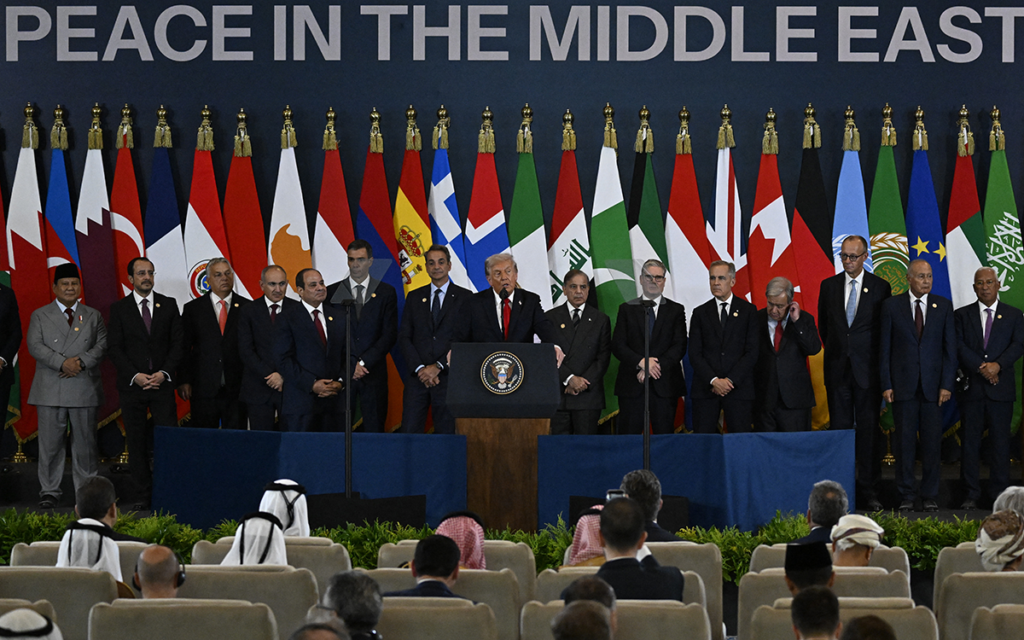
The logic of the shift for Hamas is undeniably clear. If it continues to hold on to previous positions, it risks a complete loss of its influence in the Palestinian arena. US President Donald Trump’s plan has become a tangible political reality, backed by significant Arab and Islamic countries, especially Qatar and Turkey, which makes the continuation of the current model of governance not just extremely difficult but also virtually impossible. This has pushed Hamas to consider this shift as an enforced option to protect what little remains of its authority in Gaza.
The logic of the shift for Hamas is undeniably clear. If it continues to hold on to previous positions, it risks a complete loss of its influence in the Palestinian arena
However, the question that forcefully arises today is: Does Hamas actually have the power to make this transformation, or is its future being entirely shaped beyond Gaza’s control?
Challenges to Abandon the Armed Struggle
Obstacles Within the Group
Internally, Hamas faces a major dilemma that begins at its very formative core. The Muslim Brotherhood ideology is firmly entrenched in its organizational structures and popular base, making any radical political transformation a direct confrontation with generations raised on an ideology that categorically rejects such a proposition.
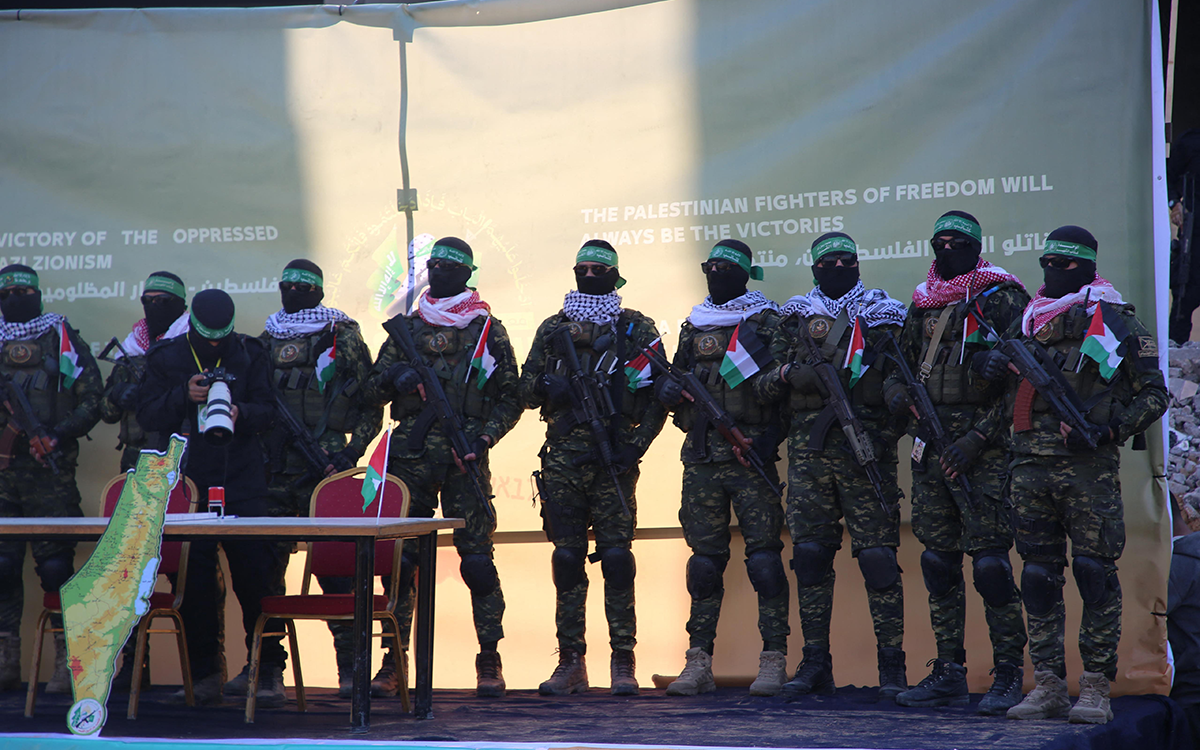
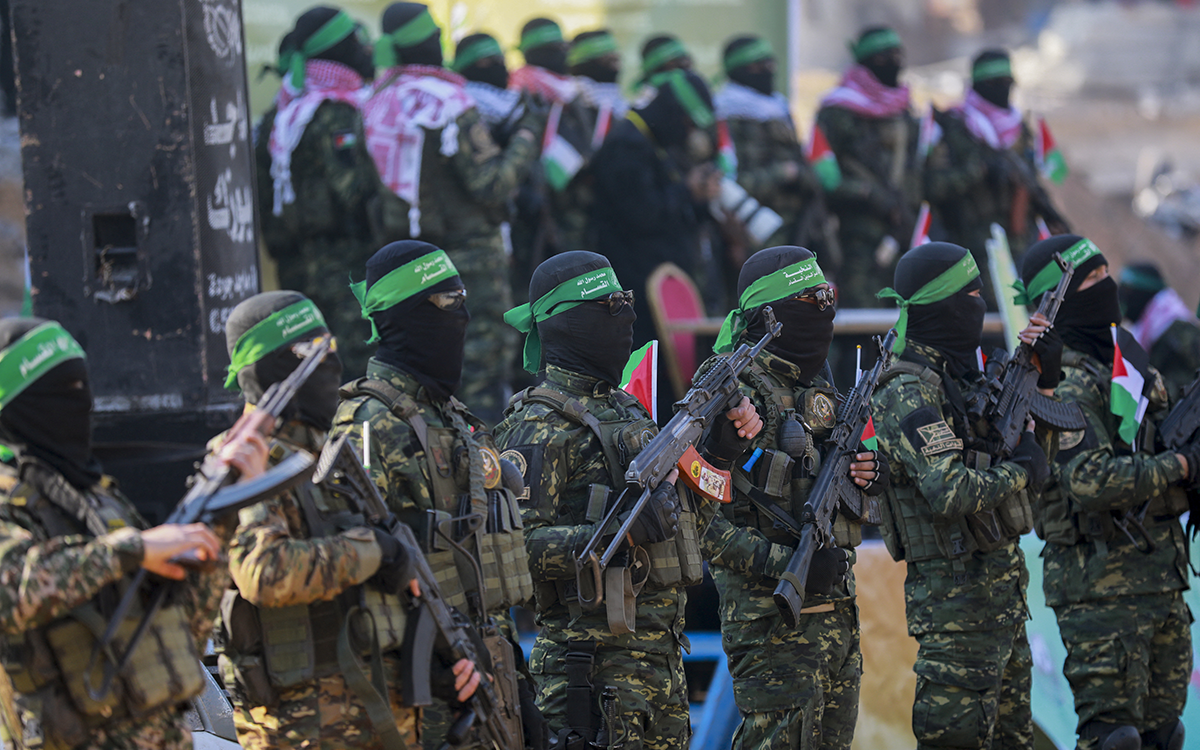
The complexity deepens, especially with the presence of its military wing, which has historically been the primary source of the group’s legitimacy and influence in Gaza. Giving up its weapons without tangible gains would appear as an unacceptable defeat among the leaders and fighters, opening the door to defections and the emergence of new, more radical armed outfits entirely beyond the control of the political leadership and shattering many of the red lines that Hamas has not crossed in recent decades.
The Hamas leadership is aware that any miscalculated decision in this context could trigger serious internal ruptures between those who prioritize remaining in power and those who consider armed resistance the very foundation of the movement’s existence.
Obstacles Within the National Realm
In the context of the ongoing disputes, the Palestinian Authority (PA), which suffers from institutional fragility and a deep erosion of popular support, alongside persistent regional and international demands for reform, is increasingly alarmed by the prospect of Hamas’s transformation into a political party. It fears Hamas’s new political identity could allow it to fully occupy the vacuum created by the decline of the Fatah movement in the streets, given the waning influence of Fatah’s leaders and the recognized legitimacy Hamas has gained through its resistance.
Hence, the PA will certainly not be amenable to Hamas positioning itself as a political party. It will surely seek to obstruct this path with all the tools at its disposal, certainly for fear of losing whatever remains of its influence and status.
The PA will certainly not be amenable to Hamas positioning itself as a political party. It will surely seek to obstruct this path with all the tools at its disposal
Regional and International Obstacles
In the Arab world, the core identity of Hamas takes precedence over its weapons. The Arab countries that oppose the Muslim Brotherhood, especially Egypt, the UAE, Saudi Arabia, and Jordan (albeit to a lesser extent), see the movement’s ideology as an existential threat. Therefore, they will not endorse a transformation that keeps the group’s ideological networks active, especially since these countries are the primary and indispensable funders of Gaza’s reconstruction.
Conversely, Turkey and Qatar, the traditional supporters of the Muslim Brotherhood, including Hamas, calibrate their positions according to their interests with Washington. Consequently, this significantly reduces Hamas’s ability to maneuver. Although Ankara and Doha will try to advocate a strictly managed transformation as a guarantee for stability in Gaza, they will not go so far as to jeopardize their relations with the Trump administration for the sake of ensuring Hamas’s survival.
As for Israel, its security concerns remain the ultimate determining factor and the main driver of its position. Even if Washington accepts the political integration of Hamas, the hardline far-right in Tel Aviv will not. Thus, Benjamin Netanyahu’s government will certainly not imperil the ruling coalition. Netanyahu is fully aware that if the extreme right abandons him, he will have to face a moment of political reckoning threatened by the left-wing parties.
Hamas and Trump’s Dream of a “Historic Achievement”
Hamas may bet on US President Trump’s desire to achieve a “historic” accomplishment and a legacy etched in his political career. In this context, Trump could turn a blind eye to Hamas’s roots to ensure his peace plan’s success in Gaza and portray the group’s transformation as a supposedly reformative step toward disarmament, severing ties with the Muslim Brotherhood, and distancing it from the Iranian axis.
Trump is known for his policy of relentlessly pressuring both allies and adversaries to impose arrangements that serve his objectives. Should Trump feel that completely excluding Hamas from Gaza would lead to the failure of his plan, he might give Hamas a chance to survive politically. In that case, regional stakeholders may face pressure to accept a new political formula that keeps Hamas as part of the future arrangements in the strip, as long as it serves the progress of Trump’s plan and prevents a return to war. Nonetheless, it is a conditional prospect, and Hamas may not meet all the criteria for it.
Should Trump feel that completely excluding Hamas from Gaza would lead to the failure of his plan, he might give Hamas a chance to survive politically.Nonetheless, it is a conditional prospect
In light of all this, Hamas’s transition from an armed group to a political party is by no means an easy matter, nor is it merely a decision the group makes at all, whether out of conviction or as a means to navigate the pressures of the second phase of the peace plan. Thus, Hamas’s fate is no longer in its own hands. Its future will be determined by relentless internal and external factors surrounding it.
Scenarios
Based on these realities, the possible scenarios for the next stage, despite their uneven likelihoods, can be summarized into three primary paths:
Radical Transformation
The first scenario is a truly radical transformation in Hamas. Its logic would require the complete dissolution of its military wing, severing all ties with the Muslim Brotherhood, and joining Gaza’s administration within a broader Palestinian system. In return, the group would receive Arab funding for reconstruction and international recognition as a political entity.
Although the success of this scenario could provide relative stability and accelerate the reconstruction process, its difficulty lies in the fact that it would directly collide with the group’s ideological and organizational structure, making this scenario a weak possibility.
Transition for Formality
The second scenario is a purely formal transformation. In this, Hamas maintains its ideological and military structure, while making strictly calculated concessions to adapt its existence to the current stage, without any fundamental changes to its identity. This scenario has a moderate probability of success.
In this scenario, international and regional pressures will continue to weigh heavily, the refusal to fund reconstruction will remain widespread, and Gaza will stay in a state of political and security paralysis, without real progress, opening the door for the emergence of new, even more hardline and competitive currents around Hamas.
Resistance
The third scenario, which is the most likely outcome, is that Hamas will continue to hold onto its weapons and remain in power by refusing to implement the terms of the Trump plan. This would lead to the gradual exhaustion of its military structure and political organization, yet without a total collapse.
The true risk of this scenario lies in the dangerous security vacuum it may create, followed by the return of chaos, and the emergence of parallel or competing armed groups, which Israel may readily exploit to ignite the situation once again and completely derail Trump’s plan in Gaza.
Conclusion
Thus, the future of Hamas is tied to a far more complex equation: reconstruction of Gaza cannot take place without Arab funding, which is explicitly contingent on the group severing its ties with the Muslim Brotherhood. In addition, disarmament cannot take place without firm American guarantees that Hamas will not be entirely eradicated from the scene.
With no clear commitment to a political path that achieves security for both Israelis and Palestinians, it seems that the “Trump-Kushner concoction” will deliver nothing more than a temporary anesthetic for Gaza, merely postponing a new and inevitable round of conflict and bloodshed. The success or failure of Hamas’s transition is not the core issue here since Hamas was born over four decades ago, while the Palestinian-Israeli conflict is approaching a century with no resolution whatsoever in sight.
With no clear commitment to a political path that achieves security for both Israelis and Palestinians, it seems that the “Trump-Kushner concoction” will deliver nothing more than a temporary anesthetic for Gaza
In the end, everyone rejects everyone else, initiatives are born only to collapse, and the question remains as it always has: Can the political future of Gaza be engineered in isolation, without resolving the conflict itself?