
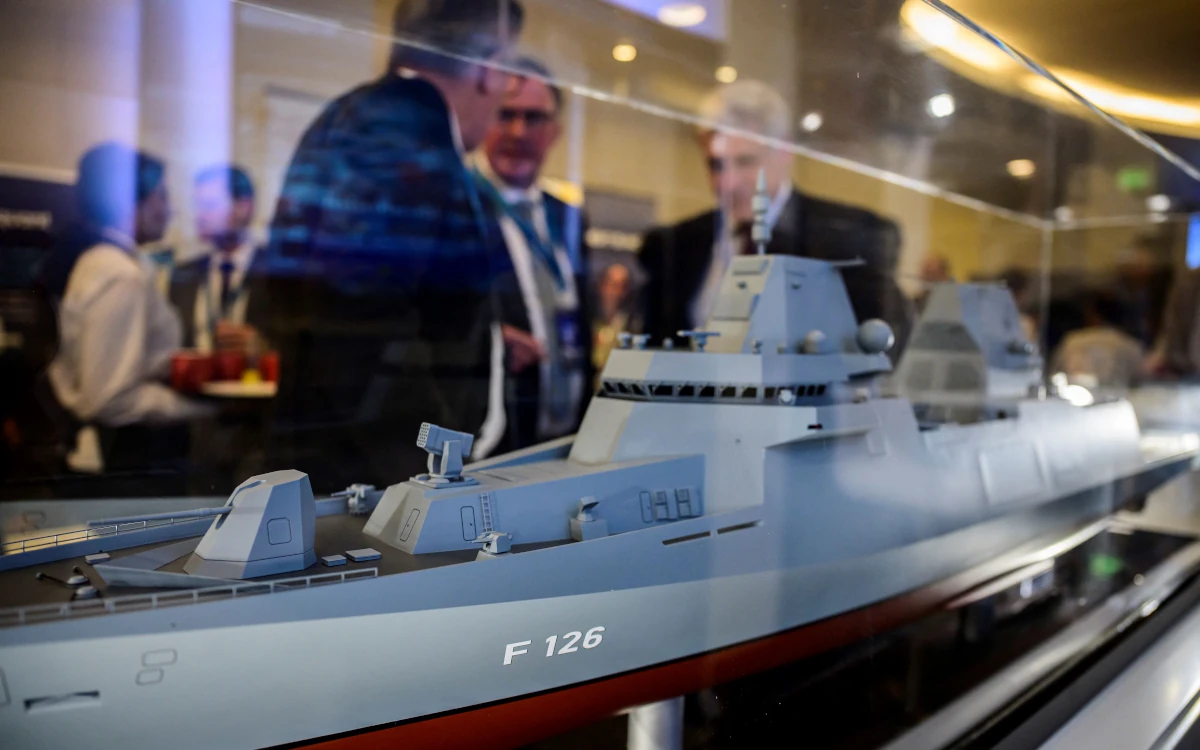
Germany on Wednesday pulled the plug on its largest naval order in decades after the anti-submarine warship project suffered delays, a setback for the country’s ambitions to overhaul its military.
The multi-billion-euro project to build six new-generation frigates, set to be the biggest in the German navy, was being abandoned in favor of purchasing eight smaller warships, the Defense Ministry said.
The ministry said in a statement that it had “decided not to pursue the construction of a total of six frigates of the F126 class any further. “This is a response to the considerable delays in the project, and the foreseeable cost increases.”
Anti-submarine warfare has become a key focus for European NATO members following alleged Russian submarine movements near vital undersea cables and pipelines in the Baltic Sea and the Atlantic.
Germany ordered four F126 anti-submarine frigates in 2020 from Dutch group Damen Naval, with the price set at 10 billion euros (then $11.2 billion), with the deal later expanded to include two more vessels.
The first was due to be delivered in 2028, with all due to be operational by 2033, according to the Defense Ministry.
But the procurement project was beset by repeated delays, that pushed back the frigates expected entry into service.
The F126 contract was widely expected to be transferred to German defense giant Rheinmetall, and its CEO Armin Papperger told reporters last year that the firm was in talks to handle the work.
But the government had concluded that handing over the work to NVL, a shipyard acquired by Rheinmetall in March, would be too costly, the Defense ministry said.
Shares in the German defense giant Rheinmetall plunged on Wednesday after press reports that Berlin had scrapped a 12.8 billion euro ($14.5 billion) plan to build six new frigates for its navy.
The stock fell almost 17 percent in early trading before recovering slightly, Rheinmetall’s biggest intra-day fall in over a year. (AFP)