

The discussion surrounding the two U.S. combat search-and-rescue (CSAR) operations conducted inside Iran prior to the ceasefire and the subsequent move toward direct negotiations in Pakistan has shifted. It is no longer centered on whether the missions succeeded, but rather on what they reveal about the changing nature of personnel recovery, the level of force it now requires, and the strategic implications had such operations failed.
Both operations suggest that recovering two isolated aircrew required a level of force more consistent with a localized air campaign than with a conventional rescue effort. This contrast points to a broader shift in the character of modern warfare.
Both operations suggest that recovering two isolated aircrew required a level of force more consistent with a localized air campaign than with a conventional rescue effort
Personnel recovery continues to rest on the principle of “leave no one behind,” but in contested environments, upholding that principle now appears to require overwhelming force, extended multi-domain coordination, and an increased tolerance for operational and escalation risk.
The two American combat search-and-rescue (CSAR) operations must therefore be reconstructed through convergent open-source reporting.
Using cross-source triangulation of sources such as journalists like Michael Weiss, reputable aviation magazines like The War Zone and The Aviationist, and observable military movements, a story can be stitched together despite gaps in official statements regarding both operations.
Regardless, the two sequential recovery operations were conducted under contested conditions, with various force packages and CIA deception, and both showed how a CSAR mission went from a supporting activity to a strategically consequential event.
This reconstruction of both air operations points to a central analytical question: are these rescues evidence of operational mastery, or do they reflect the rising cost, complexity, and escalation risk associated with upholding that principle under modern contested conditions?
These are important questions to consider given how many social media postings from average Iranians that filmed parts of the ingress and egress of both recovery missions.
The Operational Puzzle: Scale as a Function of Environment
The downing of an F-15E Strike Eagle over southwestern Iran on 3 April triggered two separate recovery efforts: an initial extraction of the pilot, followed by the recovery of the weapons systems officer (WSO) about 48 hours later who evaded capture by hiking about 5 miles southeast of his position to the top of a mountain area that was around 2,000m high.
Open-source reports consistently show that both missions required large, layered force packages composed of fighters, bombers, ISR platforms, tankers, and rotary-wing rescue elements. This scale of force reflects the broader shift in personnel recovery identified above rather than an isolated operational choice. The second operation, in particular, appears to have involved over 100 aircraft and around 100 ground personnel.
Both missions required large, layered force packages composed of fighters, bombers, ISR platforms, tankers, and rotary-wing rescue elements. This scale of force reflects the broader shift in personnel recovery
The reason why such a scale of force was needed to recover two individuals, has less to do about symbolism, although President Trump made it clear he would not let the capture of the WSO be an Iranian bargaining chip, and more to do with the operational demands of contested environments where recovery missions must generate localized superiority.
A rescue mission in contested Iranian airspace is not a discrete extraction. It is instead designed and executed as a concentrated effort to impose temporary, localized multi-domain superiority in a denied and hostile environment.
Rescue platforms must fly through altitudes, even when flying low-level below 300m above ground level (AGL), where they can be exposed to mobile air defense systems and Man-Portable Air-Defense Systems (MANPADS).
Even after 5 weeks of U.S.–Israeli strikes against Iran’s integrated air defense system (IADS), they have been unable to achieve air supremacy. This persistent threat environment helps explain why personnel recovery now requires large, layered force packages to mitigate risk.
This is because Iran appears to have adapted tactics and used new air defense systems, like its “358” loitering air defense missile, which appears capable of targeting and hitting aircraft like an F-35 and drones like an MQ-9 below 25,000 mean sea level (MSL). After the initial shoot-down of the F-15E, numerous sources posted videos of small-arms fire, MANPADS risk, and active ground searches by Iranian forces and affiliated militias.
These observations further illustrate how recovery operations unfold within an actively contested environment rather than a permissive one. The reality for both CSAR missions was that the rescue force must suppress threats in real time while protecting recovery assets, reinforcing the need for continuous threat suppression and layered force protection in modern personnel recovery operations.
This helps explain why layered force packages appeared, such as fighters and bombers providing suppressive fire, ISR platforms like MQ-9s maintaining persistent tracking of the downed pilot and WSO while also shooting IRGC assets that approached either, and the use of aerial refueling tankers to extend operational range.
Helicopters then execute the most dangerous phase of the mission under this protective umbrella. In effect, the recovery force must solve the problem of temporary air dominance over a narrow area, under time pressure, and against an adversary capable of exploiting this exposed vulnerability.
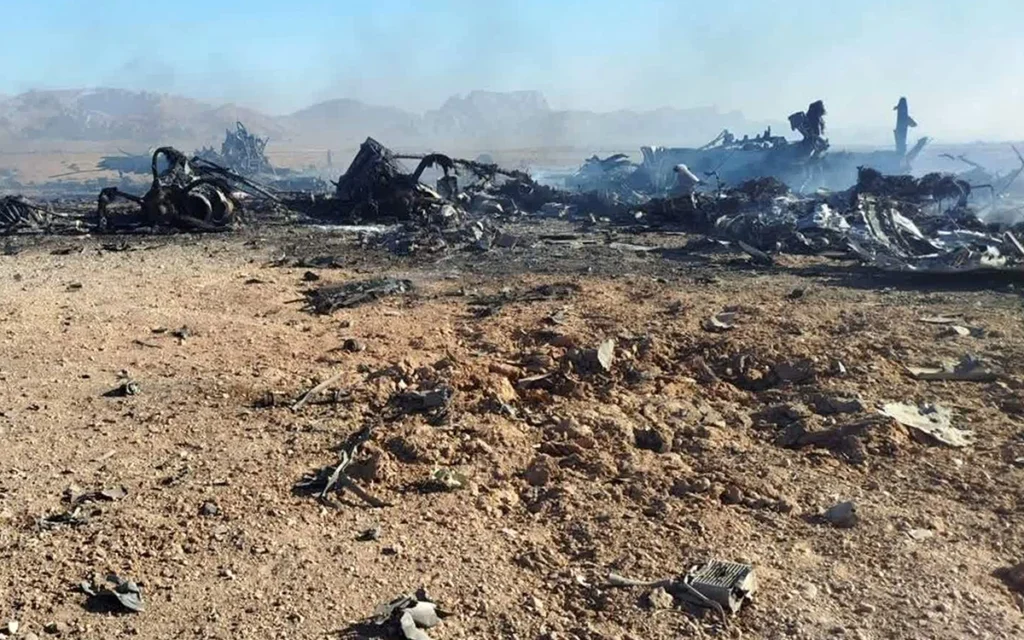
Reports indicate that at least one helicopter was damaged while egressing Iran during the rescue of the pilot. Moreover, similar reports indicate that during the rescue of the WSO, two MC-130 Commandos and four MH-6 Little Birds had to be abandoned and destroyed due to the inability of the aircraft to depart the dirt airstrip east of the Iranian city of Mahyar, highlighting the material cost and operational risk incurred even in successful recovery missions.
A Doctrinal Shift in Personnel Recovery
Both operations further reinforce that personnel recovery requires overwhelming force in modern warfare. The principle of “leave no one behind” is unchanged, but the bigger change is the cost and complexity of conducting it, particularly in contested environments where recovery efforts must generate localized superiority.
The principle of “leave no one behind” is unchanged, but the bigger change is the cost and complexity of conducting personnel recovery
In permissive environments, CSAR is executed with relatively small packages of helicopters, escorts, and localized ISR. The Iran CSAR operations suggest that in contested environments, recovery missions are essentially small-scale combined-arms operations, requiring significantly greater force concentration and coordination than traditional rescue efforts.
They require synchronized effects across airpower, special operations, intelligence, information shaping, logistics, and space; often sustained over extended periods, further underscoring the complexity and scale now associated with personnel recovery.
For the second mission, the WSO evaded capture for 48 hours, by relying on survival, evasion, resistance, and escape (SERE) training. This extended timeline increased the complexity of the recovery, as prolonged evasion places additional demands on ISR, locating and authenticating isolated personnel under these conditions requires persistent ISR and secure communications, both of which must be maintained while trying to hold off adversarial search efforts.
The longer the evasion period, the more time the adversary has to concentrate forces, increasing the risk of interception and/or ambush during recovery, thereby amplifying the scale and risk associated with personnel recovery operations.
The scale of the recovery reflects a shift in doctrine driven by environment. Personnel recovery is no longer a supporting function operating on the margins of combat. In contested airspace, it becomes a focal point of operational planning, requiring dedicated resources and introducing additional risk into a broader military campaign, while reinforcing the growing resource demands and operational significance associated with such missions.
This shift also highlights a growing asymmetry. The United States expends high-value assets (e.g., precision munitions, flight hours, and specialized platforms) to recover personnel.
The adversary, by contrast, can impose friction through relatively low-cost means: dispersed militia networks, small-arms fire, and mobility in complex terrain, further compounding the resource demands placed on recovery forces.
This asymmetry does not prevent successful recovery, but it raises the difficulty and cost of each CSAR operation, reinforcing the increasing burden associated with conducting personnel recovery in contested environments.
Strategic Consequences: Escalation, Sustainability, and Signaling
Recovering isolated personnel inside a hostile state carries inherent escalation risks. Each penetration of Iranian airspace to conduct recovery operations created opportunities for miscalculation or retaliation.
That these missions proceeded suggests that U.S. decision-makers assessed the risk of escalation as acceptable relative to the consequences of failing to recover the aircrew.
Those consequences extend beyond the tactical. The capture of an American aircrew member inside Iran would have had immediate political and strategic implications, providing Tehran with leverage and a potential propaganda victory.
In this sense, personnel recovery is more than just a military obligation but also a strategic imperative shaped by reputational considerations and domestic expectations, further reinforcing the willingness to commit significant resources despite the associated costs and risks. The Vietnam War is instructive of this concern, as Hanoi used American POWs for propaganda purposes and for leverage in negotiations.
Personnel recovery is more than just a military obligation but also a strategic imperative shaped by reputational considerations and domestic expectations
At the same time, these operations raise questions about sustainability. If recovering a single crew requires dozens to over a hundred aircraft, then repeated missions of this scale would impose significant strain on force posture and broader military campaign goals, highlighting the cumulative burden such operations place on available resources. Tanker availability, maintenance cycles, and the readiness of specialized rescue units become limiting factors over time.
Already both rescue operations have implications for future crises and wars. Against a more capable adversary, with denser air defenses and more advanced ISR, the cost and risk of personnel recovery would likely increase further, suggesting that the resource intensity observed in these operations may represent a baseline rather than an exception.
The Iran CSAR missions are a preview of future challenges: how to maintain commitments to personnel recovery where an adversary can impose high costs on CSAR forces.
Conclusion: Success with Strategic Implications
Thus far, both CSAR operations inside Iran appeared to have been successful. Both aircrew were recovered without any further losses of U.S. military personnel. That outcome reflects a high degree of joint force operational competence and integration across multiple domains, despite the scale, complexity, and risks involved in conducting such recovery missions. But success also reveals a new trend. Personnel recovery in high-intensity conflict is a resource-intensive, escalation-sensitive endeavor that requires a massively localized effort to achieve a major military advantage to protect CSAR forces and also the personnel being recovered, reinforcing the broader shift toward force-intensive recovery operations in contested environments.
“Leave no one behind” will continue being a guiding principle to U.S. military operations. However, what is changing is the cost of upholding it, as demonstrated by the scale and complexity of recent recovery operations, in contested environments, recovering a single pilot is no longer a tactical event.
It is a measure of operational reach, industrial capacity, and political resolve, reflecting the increasing demands placed on modern personnel recovery. These are going to be bigger considerations of how future military campaigns are planned, resourced, and sustained, and may ultimately shape how far states are willing to go to uphold that principle.