


Last week, Saudi-backed forces seized control of Mukalla City, a key port and capital of Hadramout province. Beyond its immediate military value in the evolving struggle over southern Yemen, the port carries deeper historical significance. In its modern form, Mukalla was financed and constructed by the South Yemeni state as part of a broader project to integrate eastern regions into a unified maritime political economy. The port thus stands as a material expression of the continuity of southern state formation. It is a reminder that the southern question is not a product of the present war, but of a long-standing struggle over political agency and self-determination.
Today’s crisis in South Yemen did not arise from a regional power vacuum, nor is it simply the product of competition between regional actors. Yemeni society is not a tabula rasa onto which external actors can impose an ahistorical unity. Rather, the crisis reflects a deeper fault line: the persistent refusal to acknowledge the fundamental differences between North and South, two societies shaped by divergent social and political trajectories. Treating those differences as problems to be erased rather than realities to be governed has not resolved the crisis—it has only deepened it.
Today’s crisis in South Yemen did not arise from a regional power vacuum, nor is it simply the product of competition between regional actors. Yemeni society is not a tabula rasa onto which external actors can impose an ahistorical unity
A unified and functioning Yemeni state exists largely as an idea in contemporary political discourse, not as a reality in Yemeni history. North and South Yemen both emerged from long-term colonial legacies—Ottoman in the north and British in the south. Yet even after the British withdrew in the 1960s, the two states developed along distinct social and political trajectories. The ad hoc tribalism and religiously inflected pragmatism of the Yemen Arab Republic of the North contrasted sharply with the secular People’s Democratic Republic of Yemen, the only Marxist-Leninist state in the Middle East. And although the global Cold War shaped both, the internal development of each produced fundamentally different state structures, institutional arrangements, and political cultures.
With the end of the Cold War in 1990, South Yemen collapsed. Unification proceeded on the assumption that geography alone could reconcile Yemen’s institutional and material differences within a single socio-political framework: the present-day Republic of Yemen. When that process failed, the response was not a deeper political reconsideration but rather coercion. Yemen’s southern question ceased to be a matter of negotiated power-sharing and instead became one of subjugation. Core issues of legitimacy, political will, and southern consent were left unresolved, and a model of governance the South did not help shape was imposed upon it. The current attempt to construct a single twenty-first-century Yemeni state exposes both the depth of North-South divergence and the limits of unity as it has been pursued.
In this context, overstating the role of external influence does not help explain the crisis; rather, it conceals its origin. External support, however consequential, is not the engine of social or political development. It cannot manufacture shared historical memory or generate a collective sense of political identity. Those emerge only through long-term historical experience. Profound crises arise when the realities of structural and historical difference are overlooked or denied. They are prolonged when legitimate claims to rights and political agency are reduced to matters of external interference and geopolitical maneuvering.
A Cause Older than the Players and Deeper than the Alliances
Claims that the southern cause is merely the product of external backing—Emirati today or Soviet during the Cold War—fail to account for historical realities that cannot be overlooked. After the collapse of Ottoman power in 1918, the North existed as a loose theocratic order dependent on tribal alliances, even after military officers declared the Yemen Arab Republic in 1962. Low state penetration combined with a subsistence-oriented agricultural structure and limited industrial development to produce an uneven and inconsistent modernization.
Minimal administrative capacity constrained the state’s ability to develop infrastructure, industry, and social provision, particularly outside of the urban centers of Sana’a and Taiz. This drove Yemeni labor migration in the region, creating a reliance on remittances to underwrite consumption. These socioeconomic factors contributed to a weak fiscal structure dependent less on systemic taxation than on rentier patterns and tribal mediation.
By contrast, the South evolved along a distinct social and political path. By the 1960s, the century-long British imperial administration of Aden had developed the South around transit and shipping priorities rather than internal extractive imperatives. The resulting urban political economy grew out of integration into global commerce, producing a socially stratified and institutionally differentiated society. State authority developed in response to the demands of commerce, fostering standardized governance and service provision capacity rather than ad hoc tribal negotiation.
After the British withdrew in 1967 amid an anti-colonial insurgency, the Marxist-Leninist state in the South extended and repurposed the legacy of centralized administration, legal uniformity, and urban development. It expanded state capacity through mass literacy campaigns, public health provision, and a bureaucratic consolidation that bore little resemblance to the unevenly developed North. For a quarter century, South Yemen transformed the colonial-era urban administrative order into a post-colonial project of social modernization.
Its coastal, trade-oriented economy combined with a strong state authority to form a durable political identity marked by social pluralism and class differentiation, despite its Marxist-Leninist orientation. Its party-state structure, unique in the region, regularized and institutionalized governance through social mobilization, grounding political authority in civil institutions. State ownership helped insulate industrial capacity from market volatility and brought development and provision to rural areas historically neglected by the British. This trajectory has produced a South characterized by higher levels of urbanization, literacy, and institutional development.
Unification by Absorption, Not Integration
With the end of the Cold War and the collapse of the South in 1990, Yemeni unification attempted to erase these historical differences rather than manage them. The North-led unity process was imposed even as it contradicted social and political realities in fundamental ways. Although unification was formally presented as a partnership, power rapidly centralized in Sana’a, which emerged as the political and administrative core of the unified state. Backed by Western lenders and guided by the post-Cold War policy environment, the new center imposed sweeping market reforms, creating acute tensions around the redistribution and privatization of southern state assets.
With the end of the Cold War and the collapse of the South in 1990, the North-led unity process was imposed even as it contradicted social and political realities in fundamental ways
Sana’a’s structural adjustments reduced social provision, cut subsidies, and curtailed public spending. Under President Saleh, the southern state apparatus was aggressively dismantled, sidelining its political leadership and unifying Yemen through northern patronage networks rather than durable state institutions. This process accelerated elite competition, military fragmentation, and administrative breakdown. In practice, North-led unification concealed unresolved structural divisions, producing an uneasy coexistence marked by political violence and institutional paralysis. It sought absorption rather than integration. The subsequent turn toward southern self-determination emerged from this context—not as a rejection of unity per se, but as a response to a unification process defined by systematic political, military, and economic exclusion of southern interests.
This arrangement predictably proved unsustainable, and civil war engulfed Yemen in 1994. Saleh framed the conflict as a defense of unity, combining control over state institutions with tactical alliances with tribal militias to secure victory. Internationally, Western powers and neighboring Gulf states prioritized territorial integrity and stability over self-determination, particularly in the fragile post-Cold War state environment. The South, meanwhile, had lost its former Soviet backer and entered the conflict in isolation. The southern question was thus settled by force rather than consent.
The North’s decisive victory foreclosed any possibility of an equal partnership. Through the outcome of the war, unification transformed from a political negotiation into a relationship of subjugation. The southern issue thus ceased to be a matter of internal reform and became one of domination.
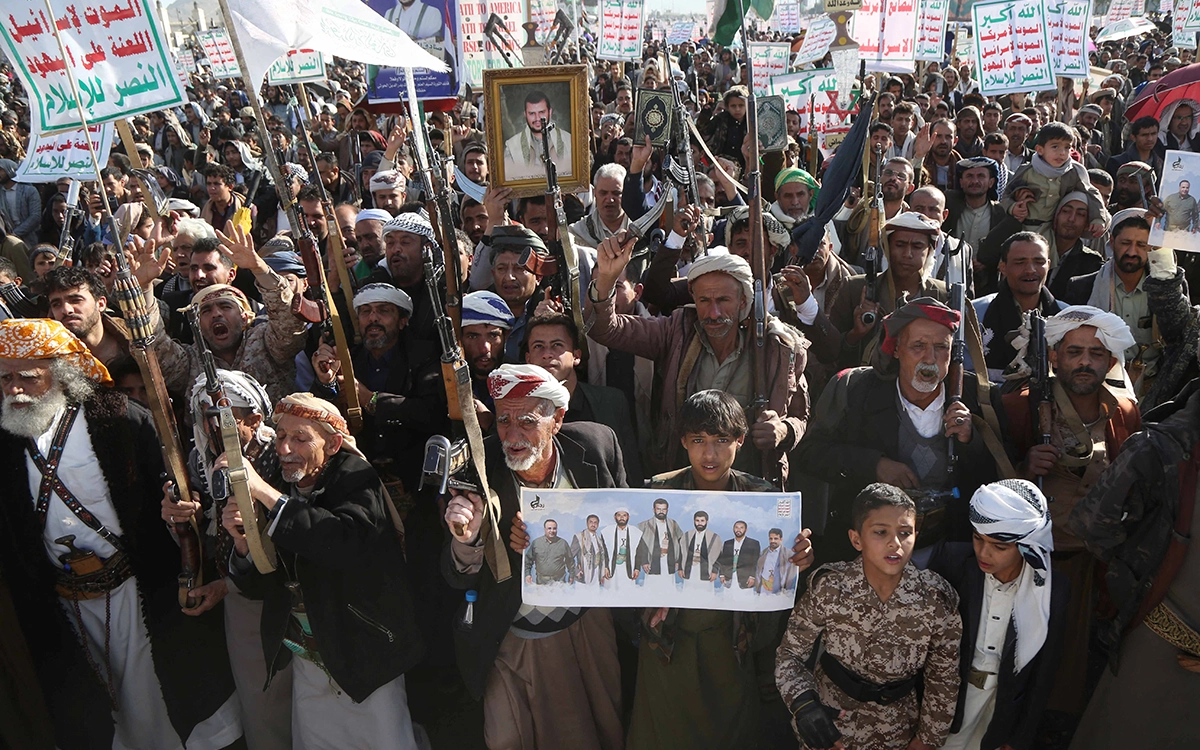
The Houthi takeover of significant parts of the North in 2015 did not emerge in a vacuum, but out of the structural dysfunction produced by Yemen’s unresolved post-unification settlement. The Houthis are a symptom of post-1994 disorder, not its cause. Their consolidation in the North underscores the exhaustion of the unity project imposed after the civil war. In this light, it is unsurprising that the Saudi-led coalition’s war against the Houthi movement has proven strategically futile.
The Houthis are a symptom of post-1994 disorder, not its cause. Their consolidation in the North underscores the exhaustion of the unity project imposed after the civil war
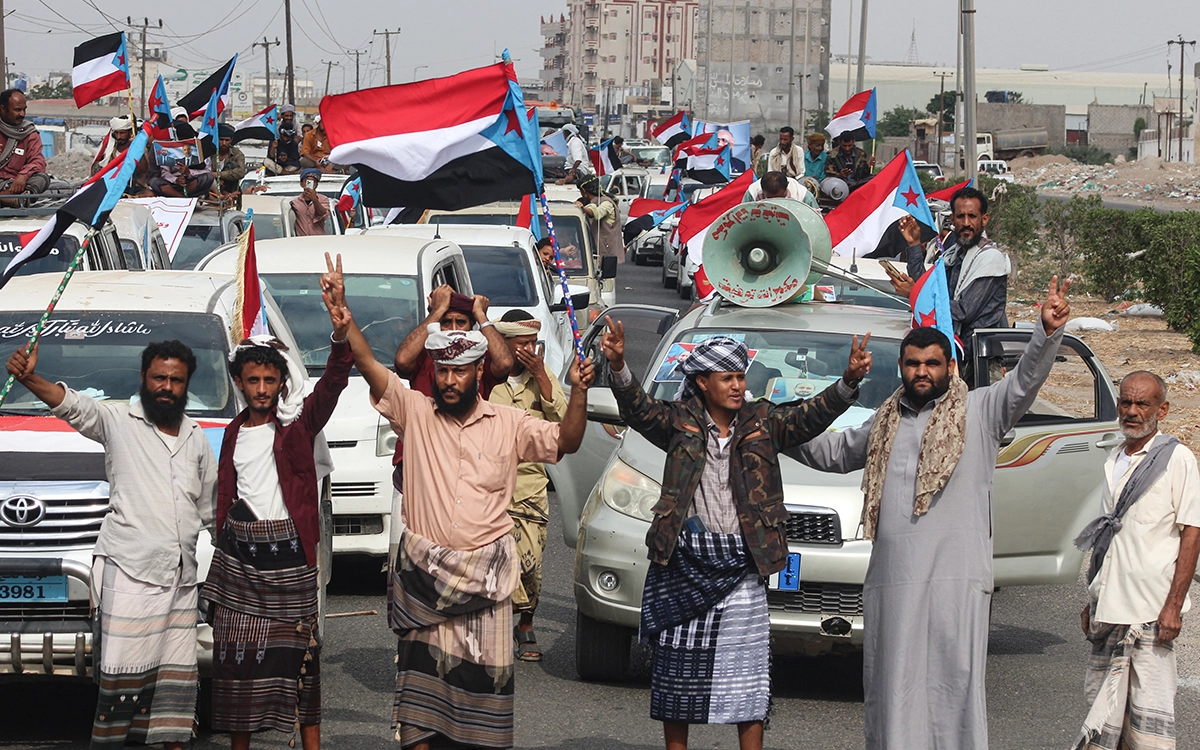
In this context, the renewed southern self-determination movement has emerged not as an opportunistic reaction to war, but as the revival of a long-suppressed political claim grounded in a distinct historical experience. Many in the South judged that their moment had arrived—a rare opening that history does not often provide. Yet southern aspirations have repeatedly been undermined or dismissed as merely the by-product of foreign influence. This framing functions as a political instrument: it strips demands for southern self-determination of legitimacy. But external support, Emirati or otherwise, did not create these deeply rooted historical demands; it encountered them as a de facto reality.
External Support Does Not Mean Permanent Dependence
Among the most common arguments against South Yemeni self-determination is the assumption that external support during a period of conflict necessarily translates into long-term dependence once statehood is achieved. This assumption, however, does not withstand scrutiny in the record of modern political history. External backing is often a condition of survival during initial phases, not a determinant of governance after sovereignty is secured. Alliances built under the pressure of war change when entities transition from the logic of survival to the logic of national interest.
Poland’s reemergence as a sovereign state after World War I, for example, relied heavily on French and U.S. backing during its conflict with the nascent Soviet Union. Yet once independence was consolidated, Warsaw pursued its own interests, resisting incorporation into any durable sphere of influence. Likewise, Algeria’s postwar struggle for independence depended on substantial external support from Egypt and the Soviet bloc in its war against the French Empire. Here again, independence did not translate into long-term dependence. Algeria maintained strategic autonomy, at times asserting its interests even against former allies. Even extensive Soviet and Chinese aid during Vietnam’s decades-long struggle against French and American forces did not determine Vietnamese policy in the post-war period, as the enduring unease in China-Vietnam relations continues to demonstrate.
In these cases, external backing functioned as a temporary condition of state survival rather than a permanent constraint on sovereignty. A distinction must be made between founding alliances and post-independence national interest. It is, of course, unrealistic to imagine an international system in which regional powers lack any interest in the success or failure of political movements in their vicinity. But interest alone does not make them the cause.
Many political movements have emerged with external backing, only to recalibrate and realign once sovereignty was secured. Sovereignty is not defined by alliances or assistance in phases of weakness or incipient struggle. It is determined by the capacity to independently redefine those relations once power is consolidated, even when this means clashing with former patrons as interests diverge.
From this perspective, the claim that an independent South Yemen would inevitably be beholden to external supporters reflects not rigorous analysis but rather selective reasoning. It is a prior judgment that strips Southerners of political agency before they have the opportunity to exercise it. Under such conditions, to deny self-determination out of fear of dependence amounts, in essence, to denying the right of sovereignty itself.
An instructive contemporary case demonstrating that external support for a political project does not, a priori, determine post-conflict orientation and policy is Syria. When the post-Assad leadership assumed power, many observers expected the new order to remain bound by the interests of Turkey, its principal external supporter during the conflict. Within a single year, however, the assumption proved unfounded. The new authorities undertook a visible recalibration, even reopening files long considered taboo such as an exploratory engagement with Israel aimed at establishing a more stable and predictable Israel-Syria relationship.
North-South Difference as a Social Fact
In much Arab political discourse, difference is treated as a threat, even when it arises from social fact. As a result, any articulation of southern distinctiveness is dismissed as an implicit call to dismantle the Yemeni state. Experience suggests the opposite. It is the denial of difference, not its acknowledgment, that generates instability. The fact is that South and North Yemen developed within distinct and long-term social and political contexts. This does not imply the superiority of one over the other; it merely signals the reality that two distinct development trajectories are at play. Stable states are not built on denying material reality, but on the management of difference through a negotiated and flexible social contract.
Moreover, the post-1990 imposition of unity that culminated in the 1994 civil war did not harm the South alone. The North too forfeited a significant opportunity. Rather than benefiting from the legacy of two different developmental and administrative models, unification pushed North and South into a zero-sum struggle: a center that dominates and a periphery that resists. The result has been the squandering of opportunities for progress and prosperity on both sides, in the name of a formal unity that no longer exists in practice.
Double Standards and Spheres of Influence
The flaw in regional and international reasoning is evident in how Yemen’s crisis is treated today. Despite their limited popular base and destabilizing regional posture, the Houthi authorities in the North are widely treated as a political reality that must be accommodated. By contrast, the South, despite its geographic presence, strong state-administrative tradition, popular support, and the coherence of its political claims, is denied even the space to raise the question of self-determination.
Instead, the South is confronted with unrealistic demands imposed on no other actor: it must have total consensus, absolute political purity, and complete insulation from external support. These are not standards derived from international law, but instruments of obstruction. They rest on an implicit distinction: the Houthis are treated as a fact that does not redraw political boundaries, while southern demands force a reconsideration of the state itself—an outcome that regional and international powers fear more than managed disorder.
The Houthis are treated as a fact that does not redraw political boundaries, while southern demands force a reconsideration of the state itself—an outcome that regional and international powers fear more than managed disorder
This asymmetry does not arise in isolation. It reflects a broader logic that has been re-legitimized at the systemic level: the return of spheres-of-influence thinking. The dominant power in the international system, the United States, has itself contributed to re-legitimizing the notion of the “backyard,” particularly in its approach to Latin America since Donald Trump’s return to the White House. In the case of Venezuela, the American stance is not a neutral defense of democracy, but rather an explicit revival of the Monroe Doctrine and its sphere-of-influence logic. Washington decides who is allowed to rule and who is not in its backyard. If neighboring states’ domestic policies diverge from its great-power interests, the United States imposes diplomatic isolation, monetary sanctions that leverage dollar power, and now outright military intervention to capture a foreign head of state.
When a dominant power embraces this logic openly, it forfeits any credible moral basis for preventing others from applying it. If Washington treats its surroundings as a legitimate sphere of influence, it becomes increasingly difficult to deny other regional powers the same claim. In this context, denying the right to self-determination is not a defense of the international order, but an expression of its contradictions.
Geography, Consent, and Stability
At the core of objections to South Yemeni self-determination lies the logic of the large state that treats its surroundings as extensions of its national security space. Geography is invoked as fate, as if proximity alone confers a permanent right of guardianship. Yet geography is not destiny, nor does it nullify political rights. If this were the case, new states would not have emerged, maps would not have changed, and political systems would not have evolved through changing material circumstances and development. To elevate geography into a veto over self-determination is not to safeguard stability, but to legitimize the right of the stronger to determine the future of the weaker.
Allowing a people to determine their political future does not, in itself, endanger the national security of neighboring states. Influence across borders is a reality that cannot be denied, regardless of geography. But treating self-determination as unacceptable per se reflects a zero-sum framework that rejects the possibility of managed coexistence. Genuine security relationships are built on the management of political change and difference, not on attempts to suppress them through the logic of influence and counterinfluence.
From this perspective, powerful states can devise political and security arrangements that protect their borders without negating another people’s right to shape its own future. Many states have, in fact, preserved their security and territorial integrity for decades while bordering active conflicts or persistent instability on multiple fronts, without sponsoring factions or dictating political outcomes beyond their borders.
The southern cause, therefore, is not a tactical matter to be adjudicated by regional powers. It is a question of whether a people with a distinct and deeply rooted historical experience have the right to determine their political future. Today’s crisis in South Yemen has structural origins in the post-Cold War denial of difference and the subjugation that followed. It is not an opportunistic or ad hoc emergency to be managed by external actors. Imposing unity by force did not preserve Yemen in the past, nor will it do so in the future. If structural and historical differences are once again erased rather than managed, the prospects for development and prosperity in both the North and the South will be squandered.
The southern cause, therefore, is not a tactical matter to be adjudicated by regional powers. It is a question of whether a people with a distinct and deeply rooted historical experience have the right to determine their political future
Acknowledging difference and opening a legal, democratic path through which Southerners can express their will is not a threat to stability. Regardless of whether it leads to an improved formula for unity or to two independent entities, it is a necessary step. Stability rooted in consent is always more durable than unity imposed by force. By contrast, continuing to manage the region through the logic of geographic destiny and spheres of influence, and persisting in the view that the southern cause is externally manufactured, will only defer the crisis and deepen its eventual consequences.