

The initial three-day phase of the U.S.–Israeli campaign embodies modern Western airpower doctrine: rapid suppression of adversary command systems, air defenses, and launch infrastructure to create operational dominance. Yet despite its initial success, the campaign’s trajectory may hinge on sustainability. If burn rates outpace replenishment, operational tempo may degrade, shifting the campaign from rapid suppression toward a costly and politically challenging war of attrition that will test defense industrial capacity and partner tolerance. As the operation extends, material balance as much as strategic viability will determine what paths emerge.
The U.S.–Israeli campaign’s trajectory may hinge on sustainability. If burn rates outpace replenishment, operational tempo may degrade, shifting the campaign from rapid suppression toward a war of attrition
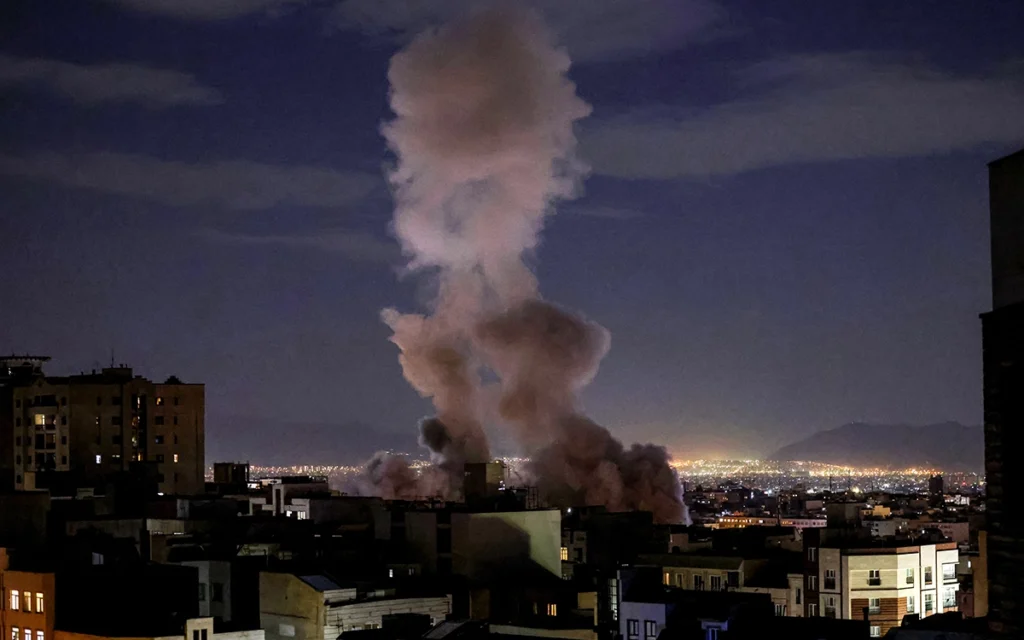
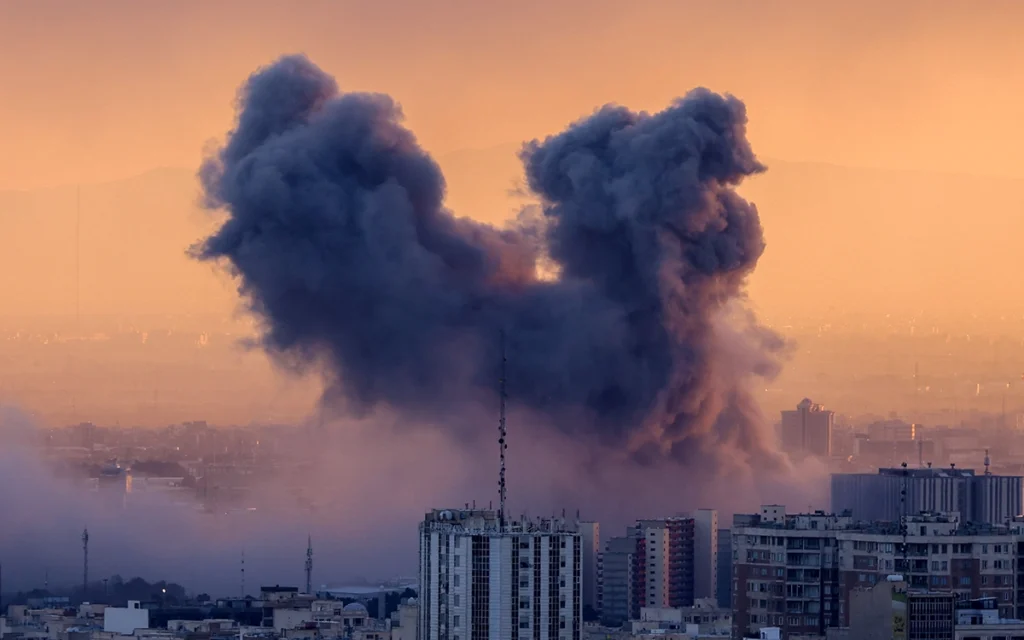
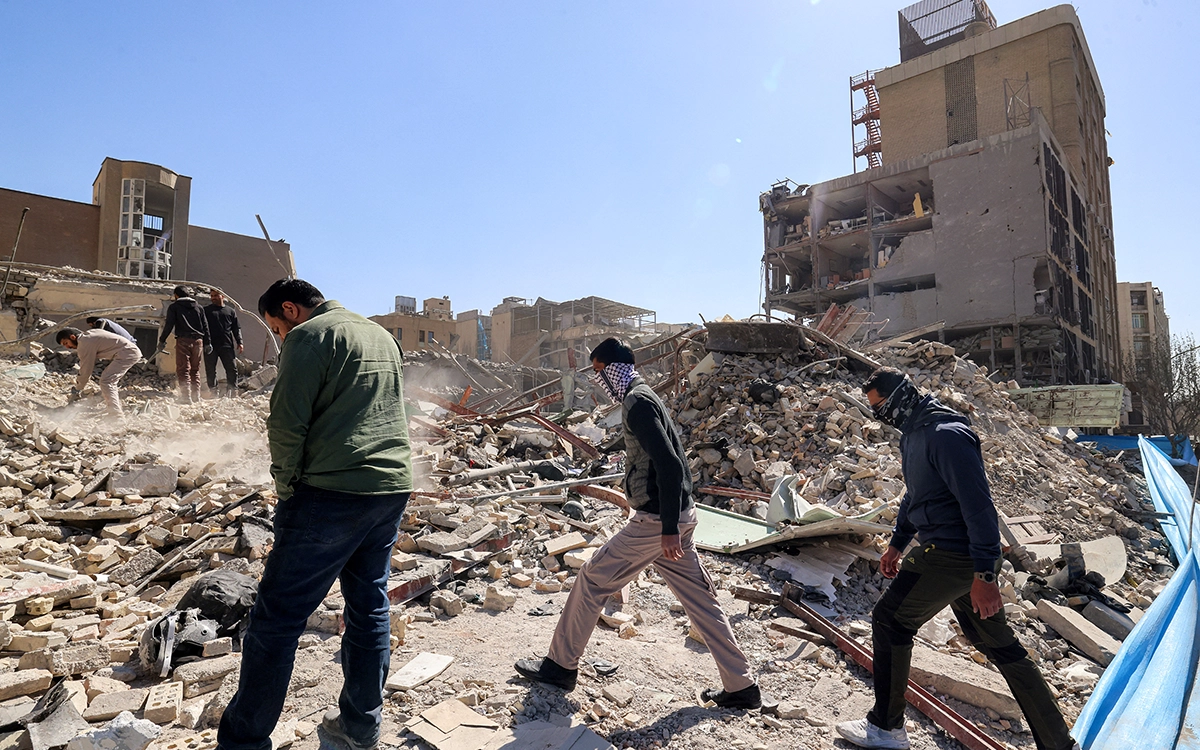
During the initial phase, Iran has launched over 500 missiles and 1,000 Shahed drones against Israel, U.S. installations, and allied Gulf partner infrastructure. In response, the U.S. and Israel have expended approximately 3,000 precision-guided munitions for offensive purposes and roughly 1,000 air defense interceptors against incoming Iranian threats. The initial strike sequence targeted leadership compounds, command-and-control nodes, integrated air-defense systems, missile production and launch facilities, naval assets, and key Islamic Revolutionary Guard Corps infrastructure. The logic reflects a classic operational design: paralyze decision-making, suppress retaliatory capacity, and establish permissive airspace before escalating to broader strategic goals.
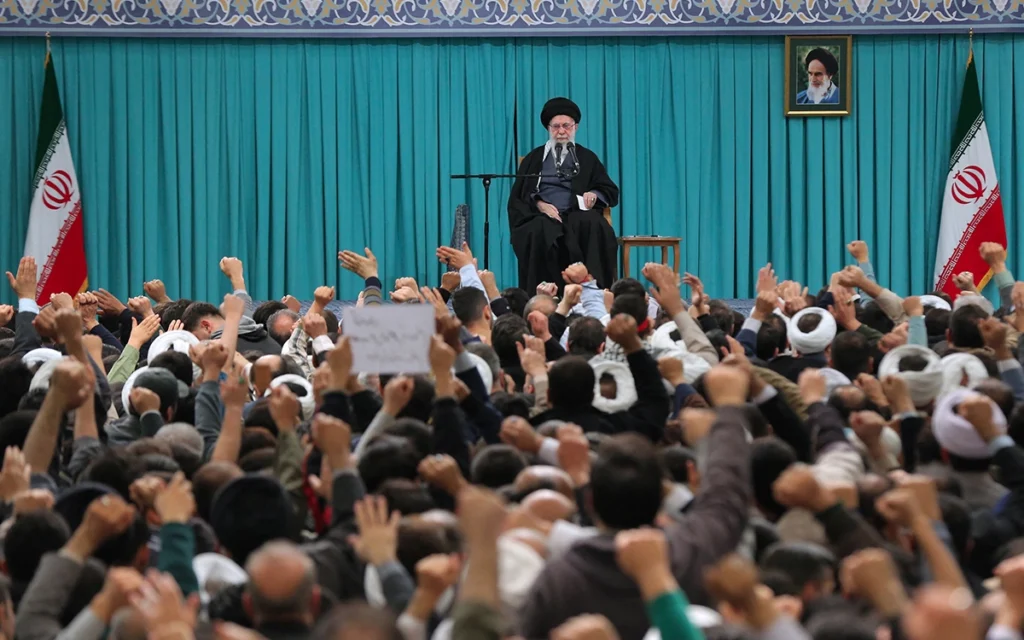
Targeting leadership and command nodes was intended to disrupt military coordination, an effect conceded by senior Iranian leaders. The killing of fifty senior Iranian officials, including the Supreme Leader, was meant to degrade the centralized synchronization of missile launches, air-defense cueing, and proxy force activation. While strikes have induced disorientation, Iran’s retaliatory actions continue, with missile launches still paired with Shahed drone salvos to saturate coalition air defenses. Concurrently, Hezbollah forces in Lebanon have conducted missile strikes against Israeli targets, demonstrating a willingness to expand the war. In response, Israeli strikes in Lebanon have killed dozens. The degradation of Iranian command creates opportunities to neutralize missile launchers, shaping escalation dynamics by reducing Iran’s ability to overwhelm allied defenses. In parallel, U.S.–Israeli strikes on radar arrays and surface-to-air missile batteries have enabled air superiority, allowing platforms like the IAI Heron TP and MQ-9 to operate with minimal risk.
Given the broader economic and political risks of Iranian strikes, missile launchers are a central priority. Iran’s retaliatory doctrine is predicated on its ability to generate massed ballistic and cruise missile salvos, saturated with drones, to inflict symbolic damage and attrit allied air defense stocks. The U.S.–Israeli air campaign has correctly identified that launch platforms, not just stockpiles, are a decisive operational center of gravity. By targeting mobile launchers, fixed missile infrastructure, and drone warehouses early, the campaign directly undermines Iran’s ability to impose sustained retaliatory costs by targeting installations and civilian infrastructure across the Gulf.
Iran’s retaliatory doctrine is predicated on its ability to generate massed ballistic and cruise missile salvos, saturated with drones
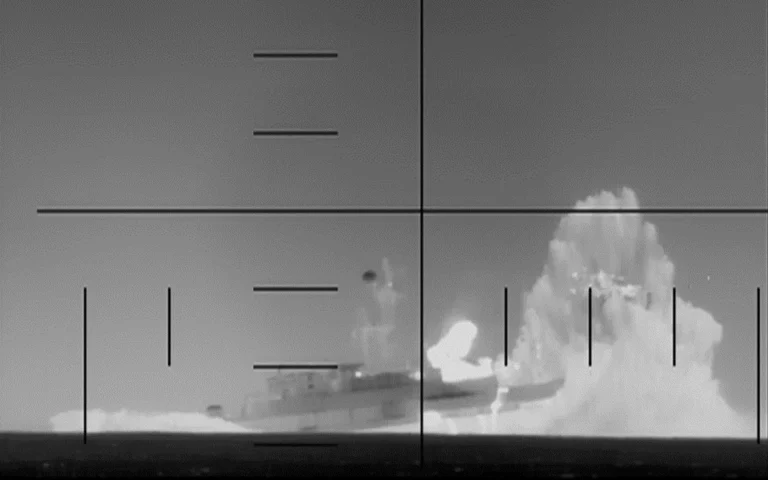
At least eleven Iranian naval vessels have also been destroyed. Iran’s naval forces are structured for asymmetric denial operations in the Strait of Hormuz, relying on fast attack craft, mines, and anti-ship missiles. Neutralizing these assets early reduces the likelihood of maritime attacks and constrains Tehran’s ability to disrupt vital energy flows, given that twenty percent of global oil and gas transits that chokepoint.
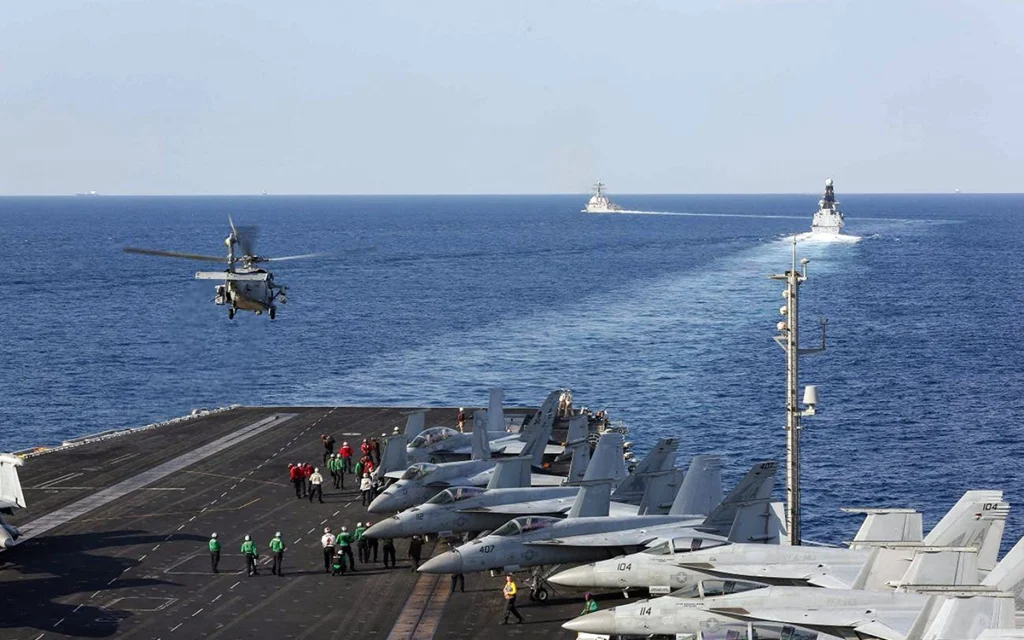
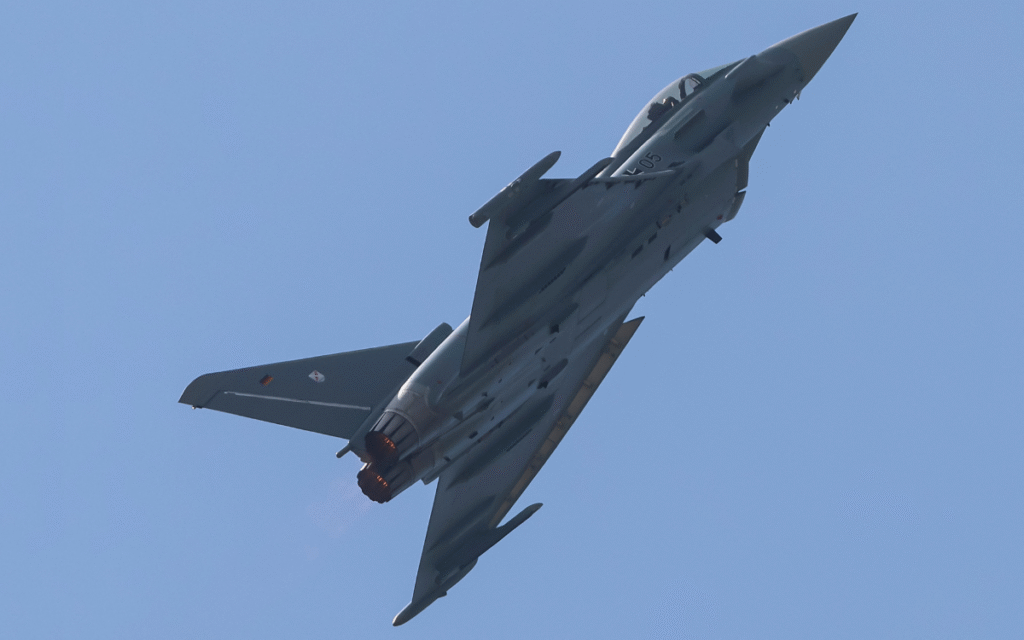
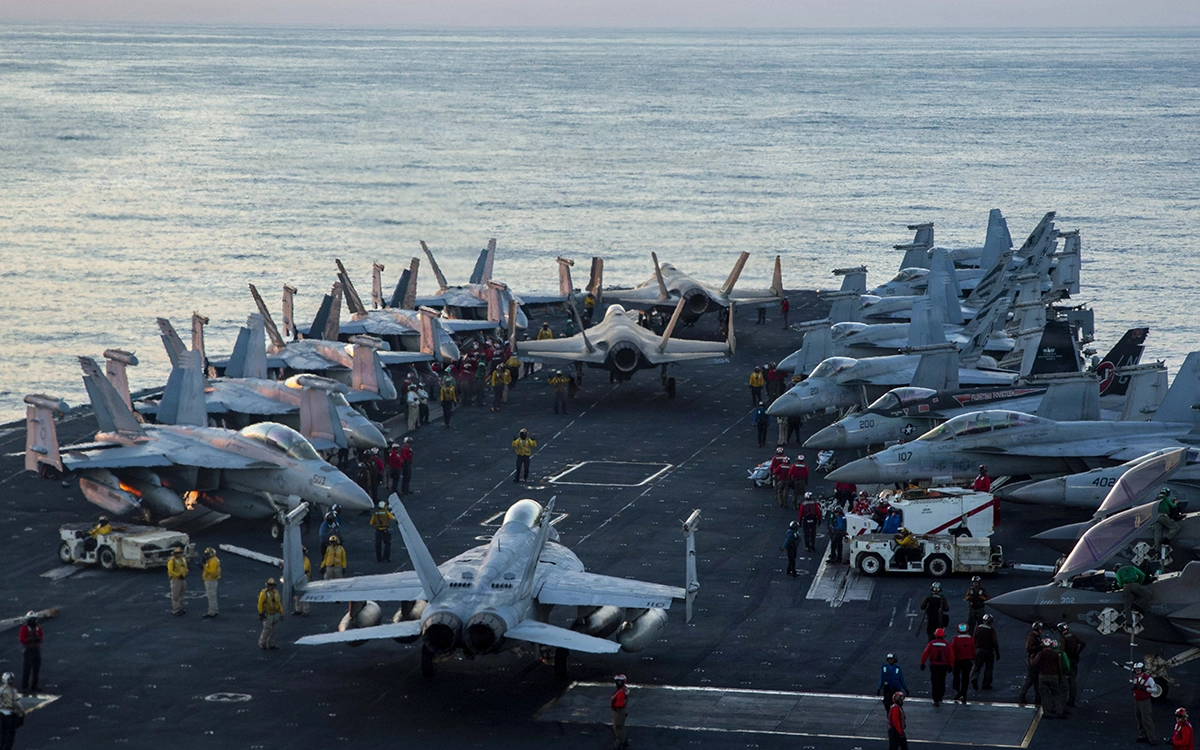
The operational integration between U.S. and Israeli forces appears to be structured around complementary capabilities. Israel contributes intelligence, a rapid strike tempo, and a dense, layered air-defense architecture. The United States provides long-range strike platforms, carrier aviation, deep ISR (Intelligence, Surveillance, and Reconnaissance) penetration, aerial refueling, and regional air-defense reinforcement. This integration maximizes sortie generation capacity, distributes operational risk, and forces Iran to disperse its attacks.
The U.S. and Israel operational integration maximizes sortie generation capacity, distributes operational risk, and forces Iran to disperse its attacks
The high-ops tempo of the first seventy-two hours appears to have been designed around the suppression of Iranian strategic capabilities. A key question for the next phase is whether this tempo can be sustained or increased. Concerns already exist regarding munitions, with the top U.S. general noting stockpile limitations for a war with Iran and analysts warning that air defense inventories may be at risk.
Material Constraints on Sustainability and Endurance
High-intensity air campaigns are ultimately constrained by sustainability, specifically the endurance of supplies needed for combat sorties. The central question for the U.S.–Israeli coalition is whether it can maintain operational tempo longer than Iran can sustain retaliation. For the strike campaign, munitions expenditure is the primary limiting factor. Precision-guided munitions, stand-off cruise missiles, and anti-radar missiles are rapidly consumed during air defense suppression strikes. While carrier-based aviation generates elevated sortie rates for limited windows, long-term operations depend on continuous support, manageable maintenance cycles, and the timely replenishment of munitions.
Aerial refueling and ISR persistence are two additional critical enablers for the campaign. Sustained deep strikes from carrier groups or U.S. bases require continuous tanker orbits to enable fighter operations that need a “bridge” to-and-from bases and targets. A measurable surge in tanker deployments would enable aircraft rotation for required maintenance, signaling preparation for prolonged operations rather than a short suppression phase. ISR persistence is also decisive because it provides tracking, targeting, and battle damage assessment for strikes on mobile missile launchers and dispersed command nodes. Such operations are intelligence-intensive and place significant strain on unmanned systems, satellites, and reconnaissance aircraft. Limited ISR availability can therefore place a quiet constraint on operations.
On the defensive side, the key sustainability metric is air-defense interceptor consumption. Israel’s multi-layered air-defense architecture—including Iron Dome, David’s Sling, and Arrow interceptors—remains highly capable but finite. High-volume salvos stress inventory and strain reload cycles, magazine depth, and the defense industrial base’s ability to replenish them. The same constraints apply to U.S. and Gulf partners relying on finite stockpiles of expensive Patriot and THAAD interceptors. These are difficult to replace as the Western defense industrial base lacks surge capacity—reportedly, it is only able to triple its usual production rate during critical intervals. Repeated waves of Iranian missiles and drones thus impose severe financial and logistical strain, as even successful interception campaigns erode these crucial defensive inventories across the alliance. In such a scenario, interceptor–projectile cost asymmetry severely constrains operational sustainability over time.
Interceptor–projectile cost asymmetry severely constrains operational sustainability over time
Civilian resilience also factors into sustainability. Repeated missile impacts on exposed urban environments in Gulf states will likely produce domestic unrest and political pressure on governments to curtail basing and support for U.S. operations. Spain is the first to ban U.S. operations involved to the attack against Iran from using U.S. bases on its territory, but it may not be the last.
Iran’s endurance model operates on a different logic. It does not need to deny U.S. and Israeli air forces completely; it must only retain sufficient retaliatory capability to impose costs and complicate coalition cohesion. Even with U.S.–Israeli forces destroying approximately fifty percent of Iranian launcher inventories, an estimated 250 launchers and almost 2,000 missiles remain. This allows Tehran to maintain intermittent but persistent salvos. Additionally, Iranian-backed proxies such as Hezbollah, the Houthis, Iraqi militias, and potential terrorist “sleeper cells” in foreign capitals add a dispersed threat that can escalate the situation horizontally with only minimal coordination.
These dynamics create asymmetry in the conflict’s burn rate, intensity, and scale. The U.S.–Israeli side expends high-cost precision munitions, while Iran launches drones and missiles that are comparatively cheaper and can be produced at a greater rate. The longer the operation extends, the more asymmetric cost pressures will strain U.S.–Israeli endurance.
Trajectories: Rapid Victory or Managed Conflict?
By the fourth day of operations, the campaign appears to be approaching a strategic inflection point. Two operational trajectories are possible.
The first is a rapid suppression model: a decisive application of overwhelming force that Trump has favored, which promises to deliver a “punishing blow” against Iran. This model of rapid victory would entail continued high-tempo strikes aimed at eliminating all remaining missile launchers, neutralizing air defenses, destroying drone production and storage facilities, and degrading Iran’s nuclear infrastructure to compel capitulation.
A more likely second trajectory involves a longer, managed campaign of attrition and escalation control, especially if no popular revolt materializes to challenge the theocratic regime. A managed campaign would feature calibrated strike waves constrained by material resupply patterns that produce operational pauses. It would aim to maintain military dominance while avoiding a broader regional war.
Escalation dynamics reaching beyond the current air and missile battle are also shaped by target prioritization. Targeting Iranian naval assets reduces the risk of oil and gas tankers being targeted and mitigates broader energy disruption, while prioritizing missile launchers limits retaliatory salvos. The avoidance of widespread civilian infrastructure strikes may also signal limited objectives. On the other hand, a shift toward targeting internal security apparatuses would indicate movement toward broader regime transformation goals.
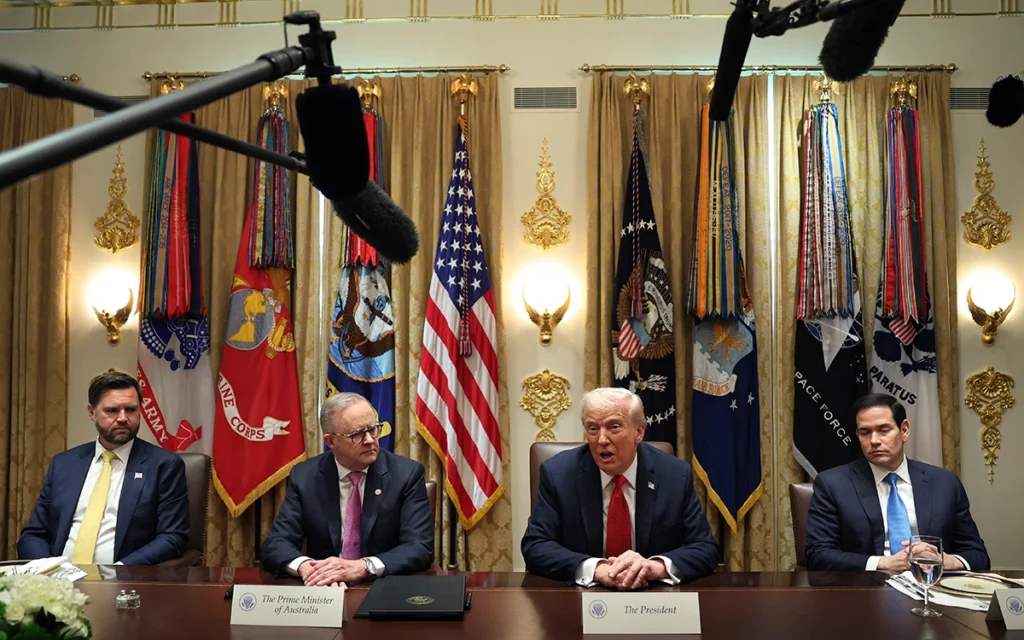
Termination posture will be the most revealing indicator. Preparations such as reserve mobilization, additional carrier deployments, expanded tanker basing, or forward deployments of ground forces like the 82nd or 101st Airborne in the region would signal readiness for a prolonged conflict. President Trump’s recent statement that he will not rule out using U.S. ground forces in Iran signals the possibility of significant escalation. Despite this rhetoric, the nature of the ongoing air campaign suggests Washington is posturing for a decisive, conflict-terminating strike rather than a protracted engagement.
Regional partner tolerance will also likely constrain medium- to long-term operations. While Israel’s air defenses are robust, prolonged missile and drone attacks raise economic and political costs. Gulf states may tolerate limited attacks, but sustained damage to their civilian areas or energy infrastructure could quickly alter their willingness to host coalition forces or grant overflight rights. Coalition endurance is therefore dependent not only on munitions stockpiles but also on unpredictable partner resilience thresholds.
Gulf states may tolerate limited attacks, but sustained damage to their civilian areas or energy infrastructure could quickly alter their willingness to host coalition forces
At present, the campaign’s initial sequencing is consistent with a rapid suppression strategy. Whether that escalates or transitions into controlled attrition will ultimately depend on the sustainability of coalition munitions and political willpower. The next operational phase will reveal whether the coalition has the inventory and intelligence to end the conflict quickly, or if it must shift to managing a prolonged confrontation that may involve introducing U.S. ground forces.