
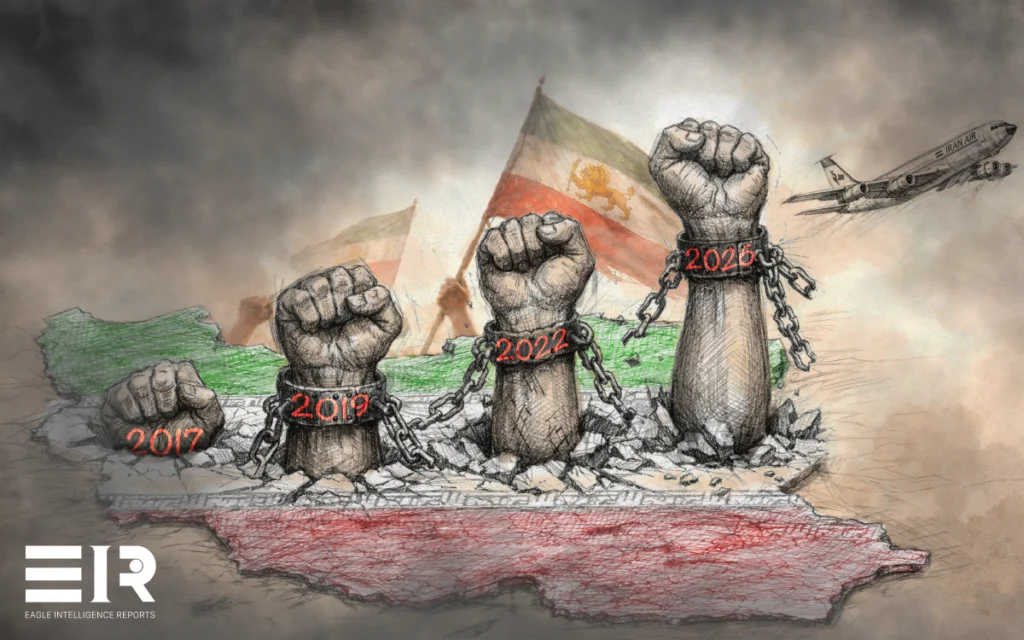
Iran is entering a fundamentally new phase of tension. Despite the regime’s ability to contain the intensity of protests across multiple cities through a harsh security crackdown, the Iranian system now stands at a historic crossroads. Protest discourse is no longer confined to economic or livelihood demands; it has now expanded to the regime’s very legitimacy.
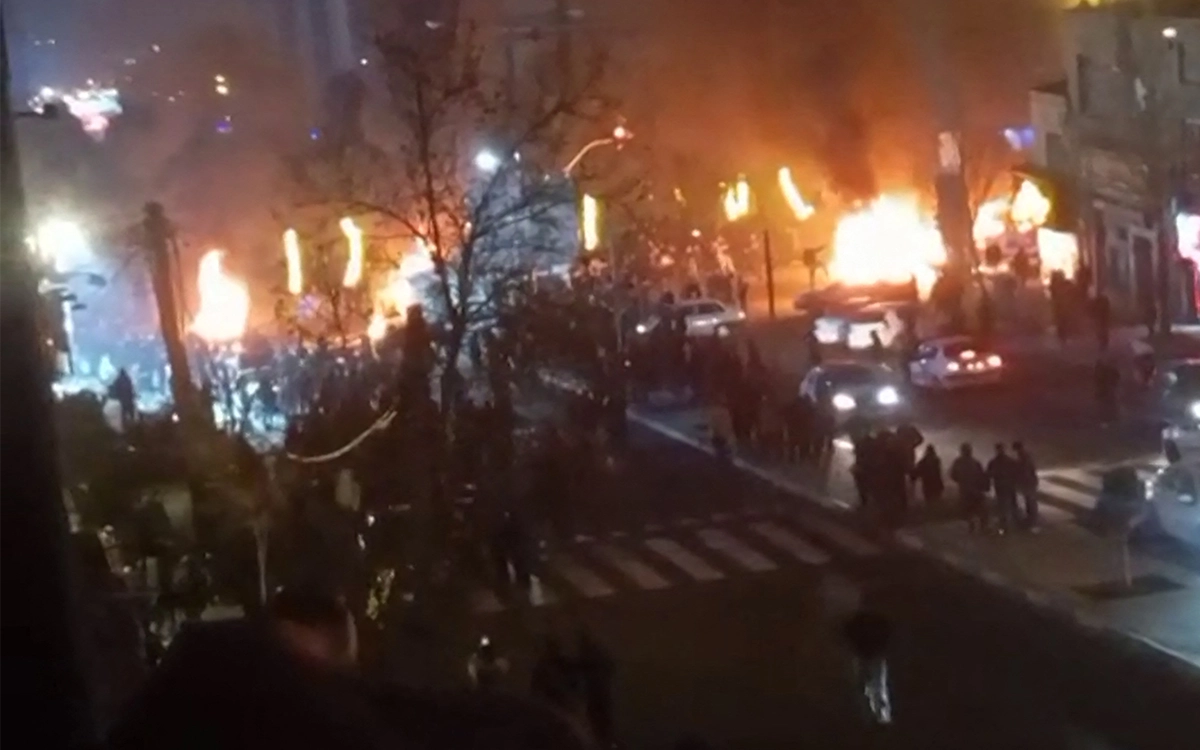
The Iranian authorities have consistently responded to protests with a purely security-based approach, relying on severe repression that has left hundreds dead or injured and an unknown number of detainees whose fates remain unclear. The brutal crackdown has pushed many protesters off the streets, with authorities branding demonstrators as terrorists and foreign-backed agents seeking to incite chaos and undermine national security.
In the 16 years since the emergence of the Green Movement protests in 2009, Iran’s streets have seen multiple waves of demonstrations, the latest of which remains ongoing. With each new wave, they have evolved, steadily raising the ceiling for demands. The 2017 protests marked the emergence of a sustained protest cycle. By 2019, the renewed demonstrations had expanded but remained largely grievance-driven, sparked by high fuel prices and the rising cost of living. Protestors demanded improvements while still stopping short of directly challenging the regime, the governance model, or the distribution of power.
In 2022, a third wave of major protests swept the country after the killing of a young Kurdish woman, Mahsa Amini. The movement saw a significant expansion of both its social base and its objectives, as protests emphasized freedom and women’s rights alongside longstanding economic grievances. The most recent protest wave, however, went further still, directly challenging the sanctity of the Supreme Leader himself and openly calling for the toppling of his regime. At a minimum, current demands include structural reforms that would alter the balance of power among state institutions.
The most recent protest wave, however, went further still, directly challenging the sanctity of the Supreme Leader himself and openly calling for the toppling of his regime
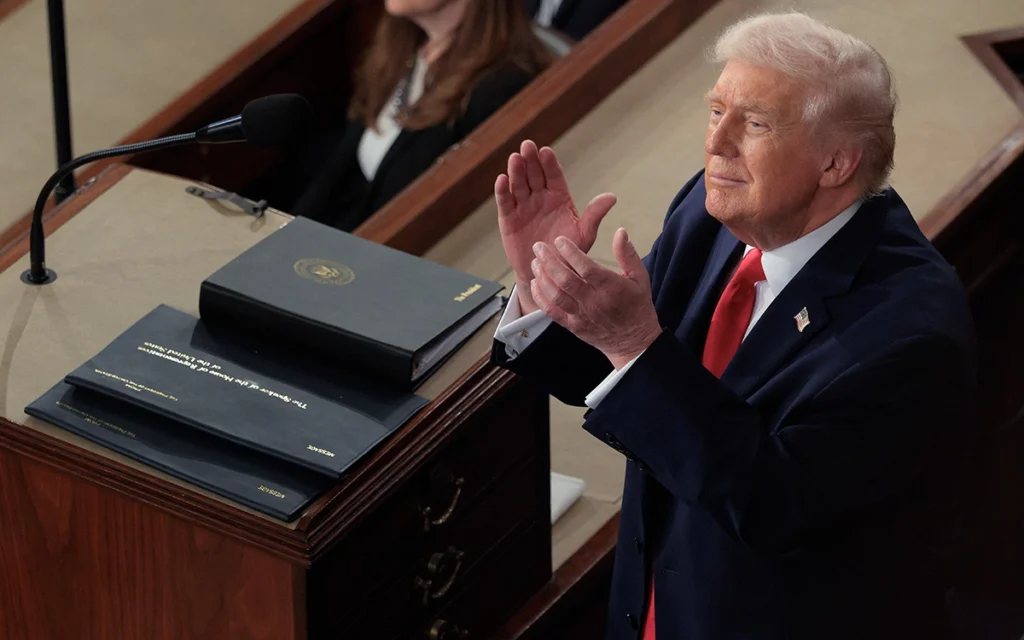
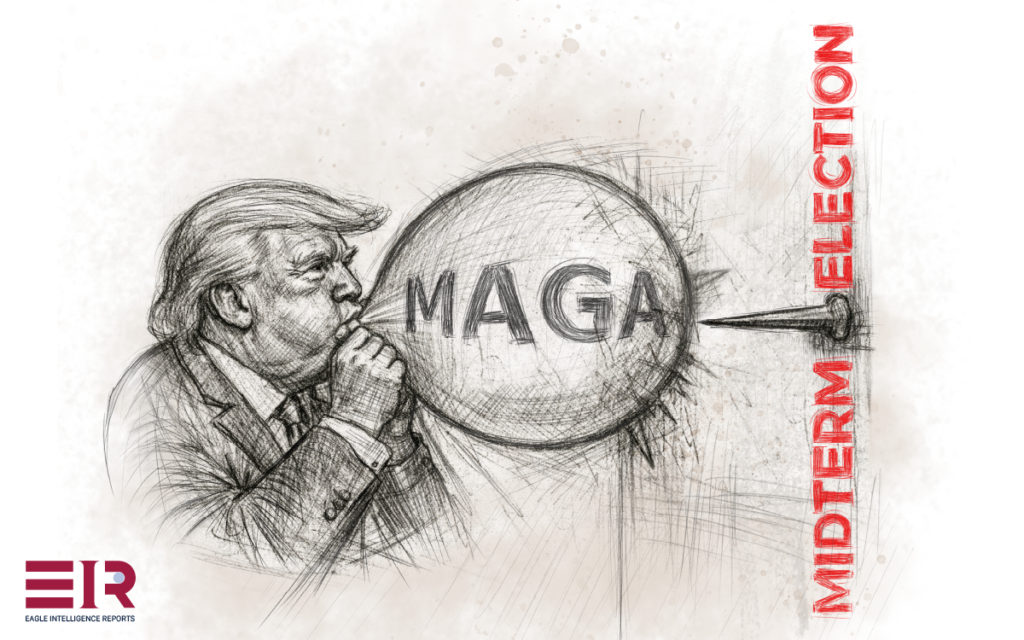
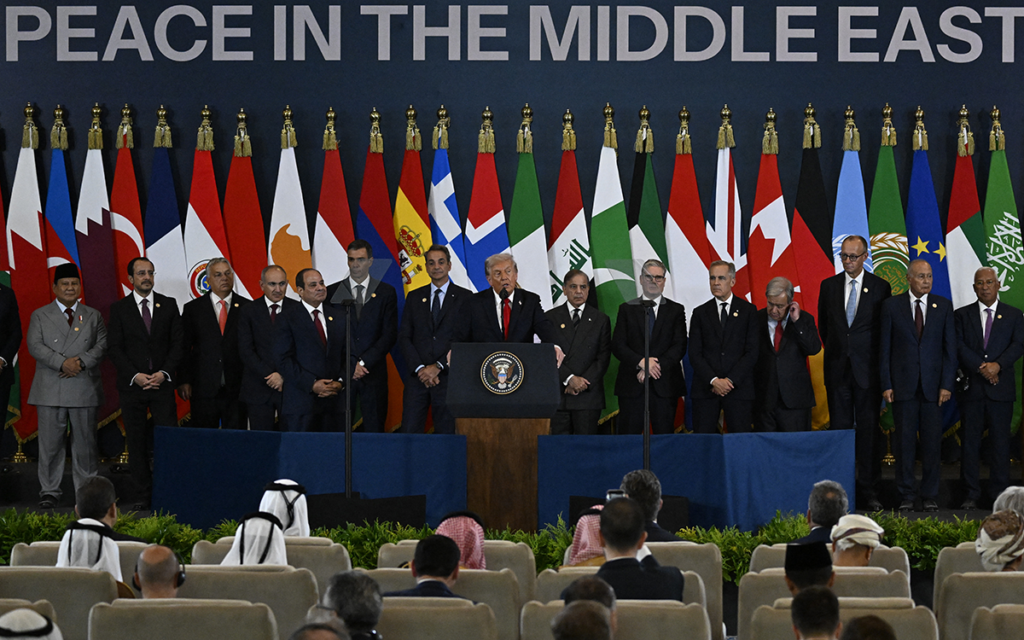
The current protests coincided with renewed external pressure from U.S. President Donald Trump, who issued multiple public signals affirming Washington’s support for demonstrators. Trump went so far as to urge protesters to take control of Iranian institutions, drawing explicit red lines for the Iranian regime: no killing of protesters and no executions of detainees. These signals temporarily raised the perceived cost of the most extreme forms of repression, reinforcing the perception that the U.S. administration, this time, would not turn a blind eye to repression by Iranian authorities.
On January 14, 2026, the world—particularly the Middle East—stood on edge, anticipating a possible American strike against Iran. As expectations mounted, Trump announced from the White House that he had received reliable information indicating that no executions would take place and that over 800 death sentences would be halted. Whether symbolic or tactical, this announcement contributed to a temporary de-escalation of external pressure, and Iran returned once again to its established pattern.
Trump’s retreat was not a minor detail. It marked the end of a brief period during which external pressure had constrained the regime’s room for maneuver, enabling it to deploy its full repressive toolkit once that pressure receded to crush the protests at minimal international and reputational cost. Rather than reflecting a change in state behavior, the episode illustrated the system’s ability to absorb pressure tactically and wait for its dissipation.
The familiar cycle then repeated itself. Citizens took to the streets to demand rights and freedoms, the state unleashed violent repression, and then life gradually returned to “normal.” The authorities continued their practices without internal review or acknowledgment that the failure of protests to achieve immediate change does not constitute a victory for the system.
As Winston Churchill once observed, “Study history; there lie the secrets of statecraft.” Despite profound global transformations and developments, history remains a repository of accumulated experience and distilled wisdom—and its patterns often repeat, producing the same outcomes from similar events.
What has unfolded in Iran today—protests met by severe repression—closely resembles a recent chapter in the country’s own past: the events culminating in the overthrow of Shah Mohammad Reza Pahlavi in 1979. That episode fundamentally reshaped Iran, as Ayatollah Khomeini returned from exile in France.
What has unfolded in Iran today—protests met by severe repression—closely resembles a recent chapter in the country’s own past: the events culminating in the overthrow of Shah Mohammad Reza Pahlavi in 1979
The Iranian Revolution was not born overnight. Its early signs date back to 1963, when protests erupted against the Shah’s reform program known as the “White Revolution.” Demonstrations continued uninterrupted over the next 16 years, despite extensive repression carried out by the notorious SAVAK intelligence and security apparatus. Khomeini and his circle understood the importance of providing a central idea when mobilizing the masses, rather than relying solely on economic concerns, unemployment, and inflation to motivate the movement.
The doctrine of Velayat-e Faqih (Guardianship of the Jurist) was framed as a mission to protect Islamic law and resist Western domination. Cassette tapes smuggled into Iran by Khomeini’s followers became a critical tool of mobilization, adding fuel to the fire of revolution, energizing protesters, and sustaining the movement’s momentum until the complete overthrow of the regime. All of this unfolded while the Shah sat confidently on his throne, never asking the most critical question raised by years of unrest: Why had protests persisted since 1963, despite the fear and repression provoked by SAVAK’s brutality?
This question appears to have fully confronted him only as he personally piloted his Boeing 707 out of Iran, never to return. Exile, rather than reform, became the final response to a crisis long misunderstood. The Shah’s departure marked not merely the end of his rule, but the collapse of a system that had mistaken repression for stability.
Iran today is not far from such a moment. For years, protests denouncing corruption, economic hardship, and unemployment have persisted, even as the regime has grown increasingly brutal and sophisticated in suppressing dissent. Each time demonstrations are extinguished, the system resumes the same mode of governance, as if nothing had occurred.
Yet the current situation may be fundamentally different. The 2022 protests coalesced around a central organizing idea. They were no longer driven solely by economic grievances, but by collective outrage following the killing of Mahsa Amini.
The same dynamic applies to the latest protests. What moves people today is not only economic hardship, but a clear rejection of the governance model and the system of Velayat e Faqih which impedes on the individual freedoms of Iranians. This shift is evident in the breadth of participation of diverse segments of society and in the emergence of calls to overthrow the regime itself, rejecting what the Supreme Leader enforces under the pretext of protecting religion and morality. Just as Khomeini once invoked the defense of Islamic law to depose the Shah, history may now repeat itself through demands to remove the Supreme Leader in defense of personal rights and freedoms.
For 16 years, Iranian protesters have not retreated. With every suppressed uprising, the movement returns stronger, with a wider social composition and geographical concentration. It expresses a deep public resentment toward a system that enforces morality, values, and tradition in service of its own interests, while denying individuals the right to live according to their beliefs and convictions. As Khomeini once relied on cassette tapes to spread his message, today’s regime now faces a generation armed with modern communication tools, through which young people declare their rejection of the system and mobilize new social groups in opposition to it.
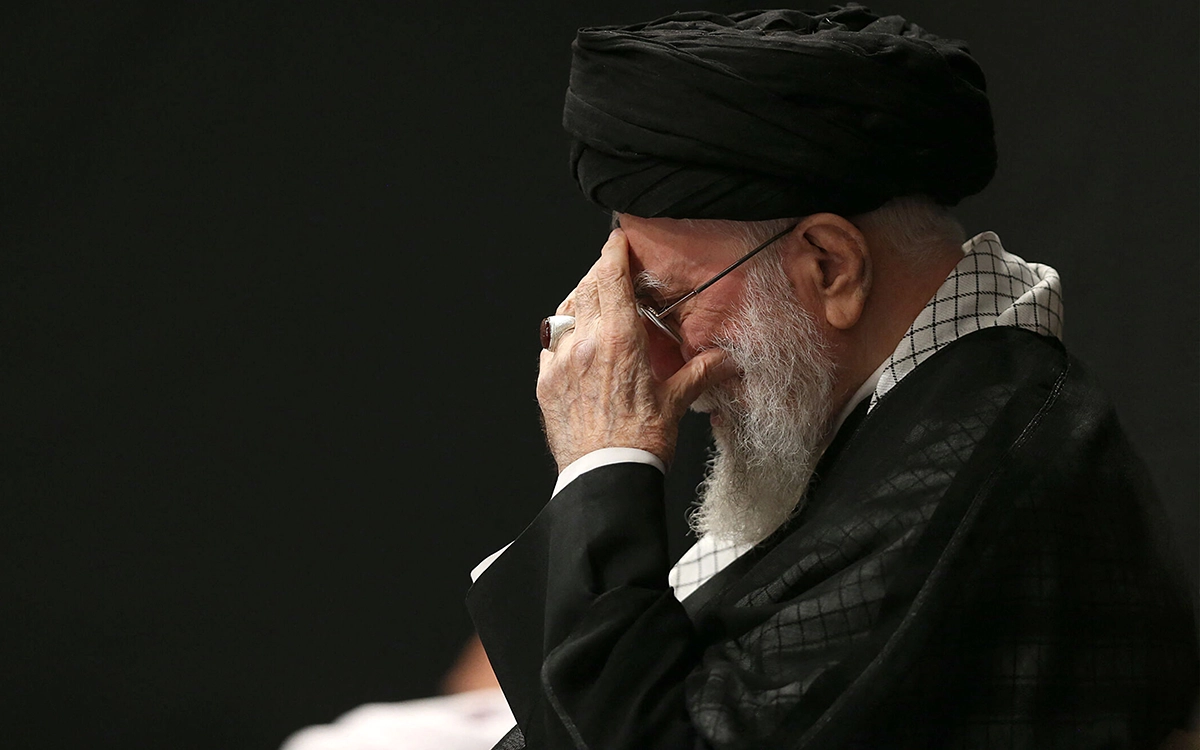
The Shah delayed for 16 years before confronting a reality that had become increasingly unavoidable. At the cost of his throne, he finally came to ask himself why it was that the Iranian people opposed his rule with such conviction and resolve.
Today the Supreme Leader appears to have delayed even further before asking the same question. The Iranian regime continues to display the same security arrogance that once reassured the Shah, bringing the Supreme Leader ever closer to reaching his own “point of no return.”
The Iranian regime continues to display the same security arrogance that once reassured the Shah, bringing the Supreme Leader ever closer to reaching his own “point of no return”
Just as Khomeini’s invocation of the protection of Islamic law and resistance of Western influence provided ideological motivation for the toppling of the Shah, the current protest movement’s emphasis on individual freedom may, if the regime continues to privilege coercion over adaptation, do the same, bringing down the Velayat-e Faqih.
Despite its reliance on external support and the United States’ military build-up—whether intended to restrain Iranian behavior or to escalate to a decisive blow—the original spark of regime decline was ignited as early as 2017. A decade and a half of sustained protests may ultimately be sufficient to erode the authority and prestige of the Supreme Leader and undermine the system he imposes on the Iranian people, regardless what tactical arrangements are reached with the outside world.
In such a context, elite perception failure can be just as decisive and costly as protest momentum and intensity, as a ruling clique repeatedly opts for violence over adaptation in the face of dissent. When regimes fail to study the lessons of their own past—when the secrets of statecraft remain just that—history repeats itself.