


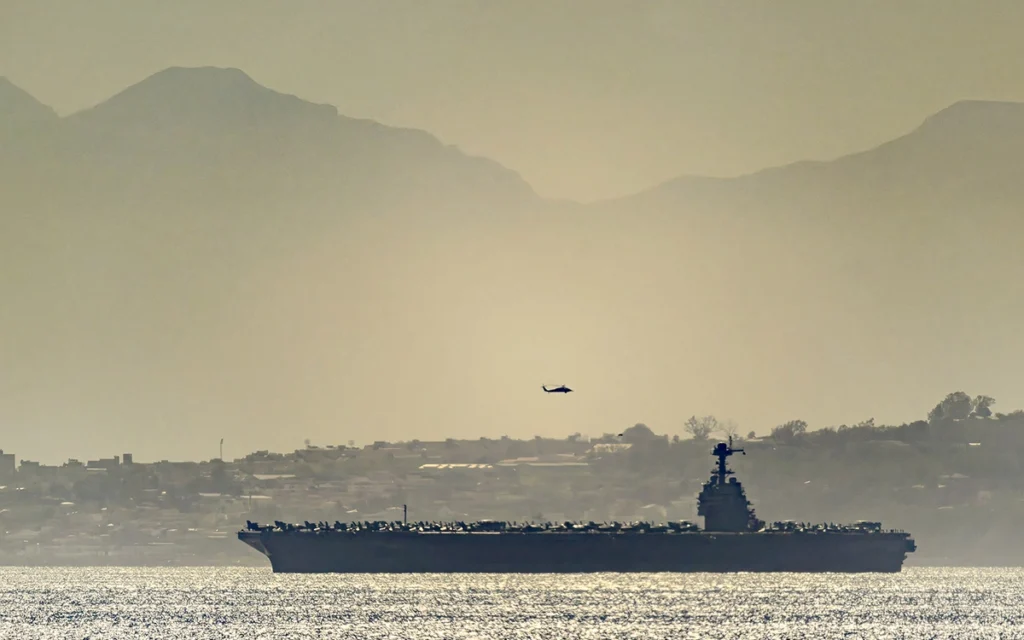
The deployment of a second U.S. aircraft carrier strike group to the Middle East marks a strategic inflection point in the unfolding U.S.–Iran confrontation. The buildup now includes guided-missile destroyers, additional strike aircraft, surveillance platforms, and reinforced air defenses such as Patriot batteries. While it does not make war inevitable, the buildup significantly widens the spectrum of escalation pathways and compresses the margin for miscalculation.
The expanded U.S. military footprint also narrows strategic ambiguity; this is not a symbolic armada. Washington is pairing force posture with diplomatic signaling. American officials emphasize openness to negotiation even as deployments grow and the State Department has publicly warned Americans to “leave Iran now.” Similarly, Tehran signals willingness to negotiate if talks are “fair and equitable.” This remains a classic coercive bargaining environment. Yet U.S. military density alters the risk calculus. As more weapon systems move into the region and Iranian drills intensify, there is a likelihood that miscalculation, proxy action, or a maritime incident could outpace diplomatic control.
Historical precedent reinforces the potential fragility of escalation management. The 2019 tanker attacks in the Gulf and the U.S. response to Iran’s downing of a Global Hawk drone demonstrated how regional friction can trigger military, cyber, and economic retaliation without tipping immediately into full-scale war. Yet today’s environment is even more volatile.
The deployment of another strike group changes the military balance in the region, expanding sortie generation capacity, enhancing integrated air defense, and increasing the credibility of both punitive and preemptive options. U.S. officials have acknowledged preparation for “sustained, weeks-long operations.” Now the question becomes less about the type of strike than about the escalation path—and whether it can be bound by political design.
Now the question becomes less about the type of strike than about the escalation path—and whether it can be bound by political design
Diverging Escalation Pathways
The expanded American footprint creates multiple escalation pathways, each defined less by rhetoric than by objective and operational architecture.
The most restrained American option would involve short-duration precision strikes designed to punish and deter rather than dismantle Iranian capability. Likely targets would include Iranian military command nodes, missile infrastructure, drone production facilities, and hubs that support proxy networks. Operations would likely rely on long-range munitions, compressed timelines, and intentionally calibrated political signaling. The June 2025 U.S. strikes on Iranian nuclear facilities at Fordow, Isfahan, and Natanz illustrate this model. Seven B-2 bombers dropped 14 “bunker buster” bombs, setting Iran’s program back without triggering regime collapse. The objective was leverage, not invasion.
However, limited strikes still carry escalation risk. Iran’s January 2020 missile barrage on Al Asad Air Base in Iraq—a retaliation to a U.S. drone strike that killed an Iranian General in Iraq—injured more than 100 U.S. personnel despite advance warning, demonstrating how Tehran can escalate while attempting to manage thresholds.
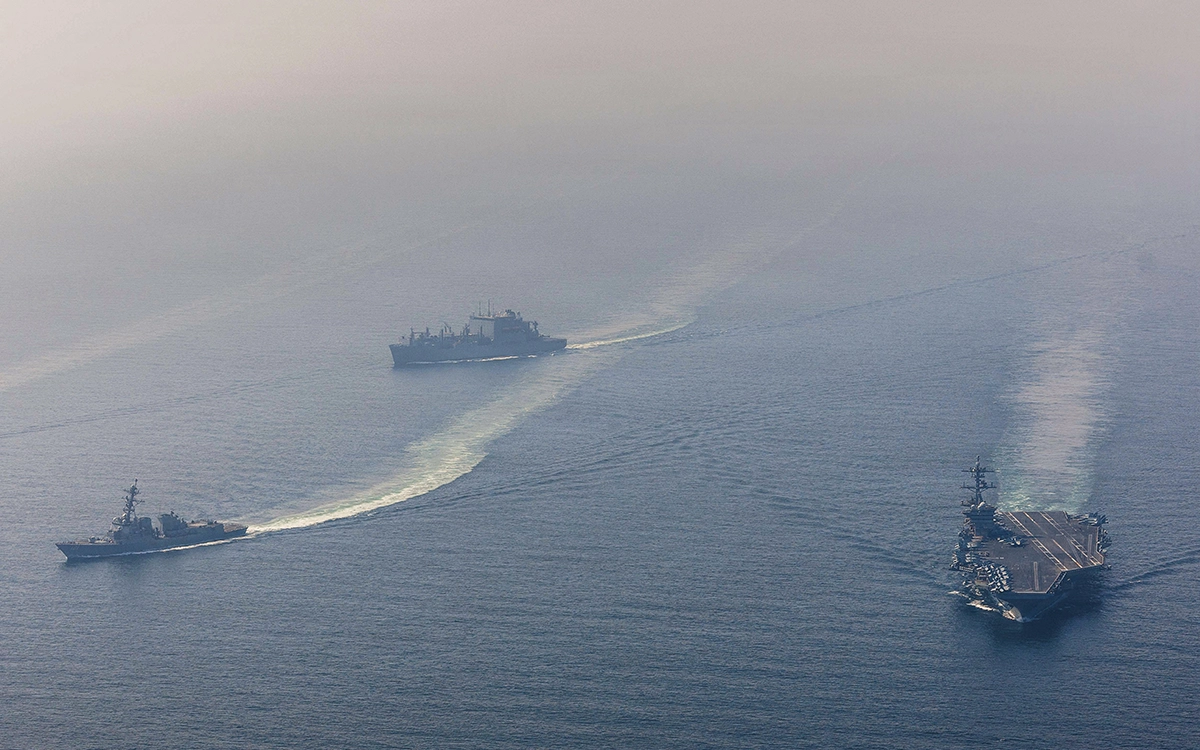
A second pathway would shift from punishment to sustained degradation. Target sets would expand to include integrated air defense systems, long-range missile complexes, command-and-control architecture, maritime denial capabilities, and additional nuclear infrastructure. The dividing line between strike and campaign is structural. Sustained deployments of aerial refueling tankers, ISR (Intelligence, Surveillance, and Reconnaissance) platforms for target development and battle damage assessment, specialized aircraft to suppress and destroy enemy air defenses, and the logistical infrastructure required for multi-week operations would signal preparation for a broader effort. Such a campaign would represent a transition from coercive pressure to structural weakening of Iranian military capacity.
It would also invite broader retaliation. The 2025 Israel–Iran exchanges demonstrated Tehran’s ability to launch hundreds of missiles and more than a thousand drones in coordinated waves despite Israel’s layered defenses and U.S. assistance in intercepts. A sustained U.S. campaign would likely trigger escalation by proxy across Lebanon, Iraq, Syria, and the Arabian Gulf.
Any escalation scenario must also account for Israel as a potentially independent variable that might take actions independent of American desires. Tel Aviv has repeatedly demonstrated willingness to strike Iranian assets unilaterally, particularly where missiles or nuclear advancement is perceived as existential. In a crisis, preemptive Israeli action against Iranian facilities—or against proxies elsewhere in the Middle East—could compress U.S. decision timelines and alter escalation sequencing. Washington may find itself responding not solely to Iranian actions, but to alliance dynamics shaped by Israeli threat assessments. Israeli operational tempo therefore becomes a variable in escalation control rather than a peripheral consideration.
Any escalation scenario must also account for Israel as a potentially independent variable that might take actions independent of American desires
Finally, escalation does not require American jets or cruise missiles entering Iranian airspace. Cyber operations, covert sabotage, maritime harassment, and intensified proxy activity offer alternative or complementary pathways. Iran’s past cyberattacks against U.S. financial institutions and Saudi energy infrastructure revealed its willingness to impose economic cost below the conventional threshold. Similarly, Iran has also relied on proxies to attack critical infrastructure in Saudi Arabia and has threatened to activate “sleeper cells” in Western capitals. Maritime harassment in the Strait of Hormuz—including vessel seizures in 2025—demonstrates how insurance rates and energy volatility can be manipulated without formal declarations of war, particularly given that 20 percent of global oil exports transit the area.
Hybrid escalation preserves ambiguity while sustaining pressure. In this crisis, it is layered, interactive, and adaptive, complicating attribution, fragmenting response options, and widening confrontation across domains.
Iran’s Response Architecture
Any escalation pathway must be evaluated against Iran’s response architecture. Tehran cannot match U.S. conventional dominance in a direct exchange, but it does not require parity to impose costs on Washington. Iran’s advantage lies in expanding confrontation geographically and economically in ways that complicate American and allied objectives.
The most immediate response would involve ballistic and cruise missile strikes against U.S. bases, naval assets, or infrastructure across the Gulf. Iran maintains thousands of short- and medium-range systems capable of reaching Israel and U.S. facilities throughout the region. Recent naval exercises in the Strait of Hormuz—including live-fire missile drills conducted on the eve of talks in Geneva—underscore Tehran’s willingness to signal retaliatory capacity even amid diplomatic engagement. Even a limited U.S. strike would likely trigger calibrated demonstrations designed to preserve deterrent credibility.
The operational question is more than just missile defenses intercepting incoming threats. It also concerns whether neighboring states would tolerate elevated risk—particularly if Iran targets countries providing basing access or overflight permissions.
Iran’s escalation toolkit also extends beyond direct retaliation. Hezbollah in Lebanon, militia networks in Iraq and Syria, Houthi forces in Yemen, and “sleeper cells” in Western countries provide Tehran with mechanisms for asymmetric escalation. Transfers of advanced weapons to Iraqi militias in 2025 illustrate how escalation could expand without overt attribution. Distributed use of Iranian proxies could create a multi-theater crisis. Attacks on U.S. military personnel, maritime harassment in the Red Sea, infrastructure strikes in Gulf states, or internal attacks inside Western countries would strain coalition cohesion. Diffuse escalation complicates calibration for all actors and increases the probability of misaligned response cycles.
Attacks on U.S. military personnel, maritime harassment in the Red Sea, infrastructure strikes in Gulf states, or internal attacks inside Western countries would strain coalition cohesion
This is where asymmetry becomes decisive. The United States would dominate the initial military phase. Iran, lacking symmetric capability, would rely on endurance. Tehran has historically absorbed economic pressure and pursued prolonged indirect confrontation, stretching crises across time and geography rather than escalating decisively. The strategic contest would depend less on military might than on which side can sustain political cohesion and economic resilience as confrontation lengthens.
Escalation Dynamics and Warning Indicators
Escalation dynamics depend partly on military capability but also on political tolerance. Arabian Gulf states, Jordan, and Iraq seek a contained Iran without becoming primary staging grounds—or targets—in a regional war. Basing access, overflight permissions, and logistical support remain politically contingent. If confrontation begins to threaten domestic stability or economic security, coalition cohesion could quickly become an operational constraint for Washington.
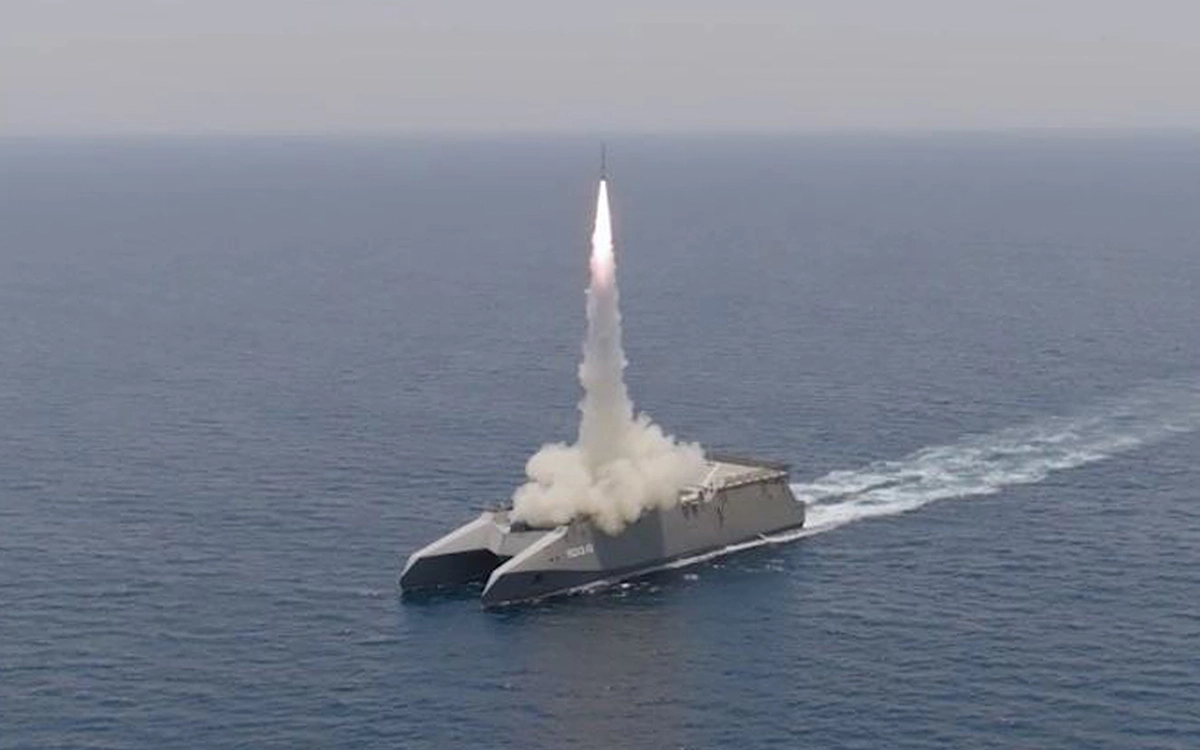
Leadership signaling adds another layer of complexity. Deployments can enhance bargaining leverage, and ambiguity can preserve flexibility. Yet as the American footprint increases, the margin for off-ramps narrows. Crowded maritime corridors, overlapping air patrols, and elevated alert postures compress decision timelines. In such an environment, accidents or miscalculations become structural risks capable of spiraling hostilities without the usual diplomatic brakes.
In such an environment, accidents or miscalculations become structural risks capable of spiraling hostilities without the usual diplomatic brakes.
For Iran, the use of proxies and “sleeper cells,” alongside maritime disruption in the Arabian Gulf, would represent an asymmetrical dagger against the United States and its allies. Increased drone and missile dispersal, hardening of key infrastructure, or elevated naval activity near commercial shipping lanes would similarly signal preparation for a sustained response rather than symbolic retaliation.
The expanding U.S. posture does not predetermine war. Rather, it expands available actions while increasing systemic risk. The decisive variable will be whether operational preparation and regional political endurance align in ways that transform signaling into sustained military action. Confrontations of this scale rarely collapse because leaders seek catastrophe; they unravel when tempo, alliance dynamics, and retaliatory cycles fall out of sync.
The growing American armada certainly projects power. Whether it deters or accelerates confrontation, however, will depend on how deliberately that power is managed in a crisis where endurance, signaling discipline, and escalation control matter more than spectacle. Whether talks in Geneva deescalate tensions or merely postpone confrontation will hinge on the extent to which military signaling produces bargaining leverage—or just further erodes escalation control.