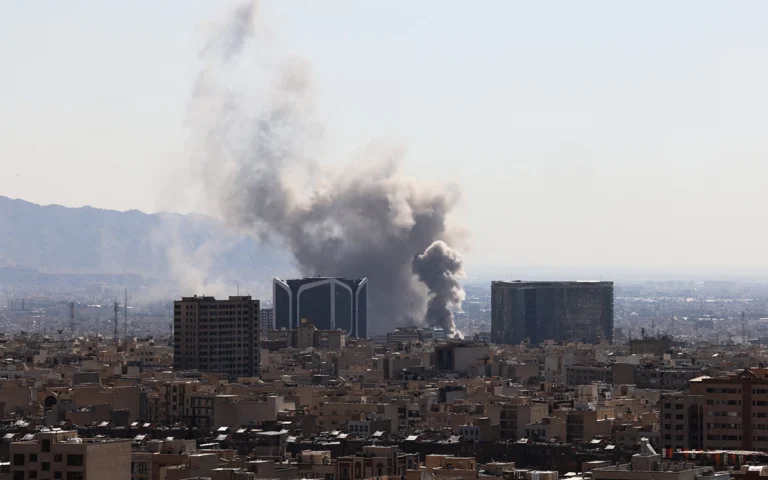


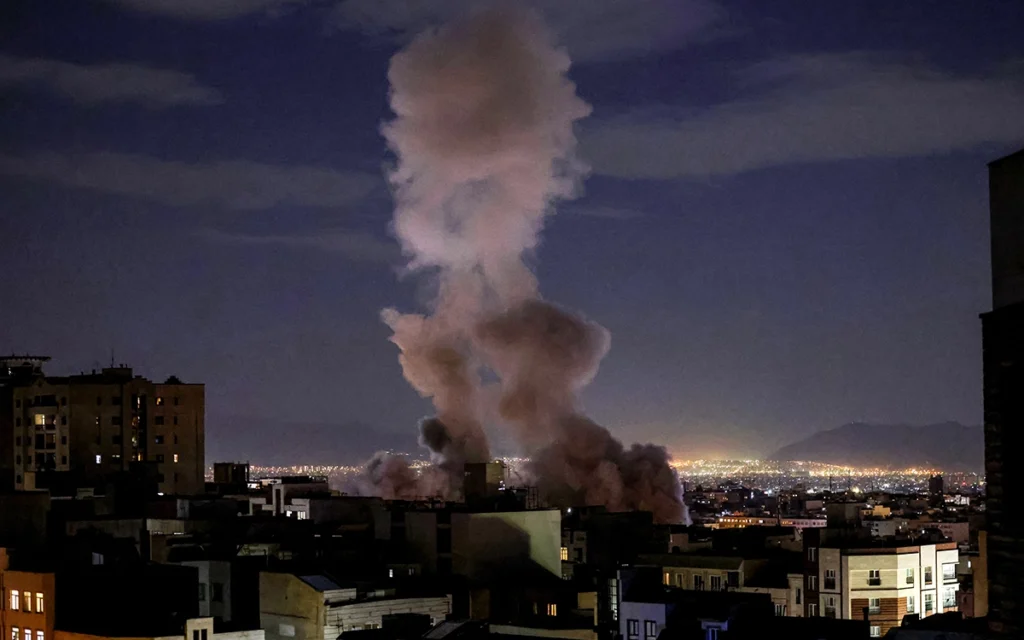
Israel’s strike on Iranian territory marks a structural rupture in the Israel–Iran deterrence framework. For more than a decade, confrontation was geographically displaced and institutionally buffered through proxy networks, covert operations, and calibrated signaling, preserving escalation ceilings. Direct state-level exposure narrows the margin for controlled retaliation. The timing is strategically consequential: the strike coincides with the death of Supreme Leader Ali Khamenei. Thus, the regime faces a leadership transition at the precise moment deterrence thresholds are transforming, compressing escalation timelines, raising the reputational value of any response, and increasing the risk of signaling misinterpretation. As time windows narrow and strategic response space compresses, military actors gain more influence.
This phase of confrontation must therefore be assessed through interacting structural drivers: the breakdown of distributed deterrence, institutional rebalancing within the Islamic Revolutionary Guard Corps (IRGC), nuclear timeline compression, horizontal proxy activation risk, U.S. credibility signaling, and systemic energy vulnerability. These variables reinforce one another, producing an environment defined less by gradual escalation management and more by strategic compression.
The Structural Breakdown of the Proxy Buffer
For more than a decade, the Israel–Iran rivalry operated within a calibrated system of distributed deterrence. Israel concentrated its actions largely outside Iranian sovereign territory, targeting IRGC-linked infrastructure in Syria, disrupting precision-guided munitions transfers to Hezbollah, and conducting sabotage and cyber operations against nuclear facilities. Iran responded indirectly through a layered proxy architecture spanning Lebanon, Iraq, Syria, and Yemen. This structure functioned as an informal escalation-management regime. Proxy actors absorbed operational friction, allowing both states to signal resolve without crossing into overt interstate confrontation. Informal escalation ceilings—never codified but reinforced through repetition—were broadly understood. Deterrence was mediated through networks rather than directly through sovereign force.
Direct Israeli action against Iranian state-linked assets fundamentally alters this equilibrium. Once sovereign territory or nationally attributable infrastructure is targeted, escalation shifts from distributed signaling to direct reputational exposure. Deterrence credibility becomes regime-centered rather than network-centered. The strategic utility of ambiguity correspondingly declines. Under the proxy model, Tehran could calibrate retaliation through Hezbollah, Iraqi militias, or Syrian deployments without triggering immediate systemic escalation. Under exposed deterrence, failure to respond proportionately risks erosion of regime-level credibility—not only vis-à-vis Israel, but across Iran’s wider deterrence network, whose cohesion depends on perceptions of central authority strength.
Once sovereign territory or nationally attributable infrastructure is targeted, escalation shifts from distributed signaling to direct reputational exposure
Escalation elasticity has therefore narrowed. As ambiguity fades and response space compresses, strategic signaling cycles accelerate: decisions must be made and interpreted more quickly, reducing the time available for calibration and increasing the risk of misreading intent. It is within this exposed structure that leadership transition becomes materially consequential.
Leadership Transition and Institutional Rebalancing
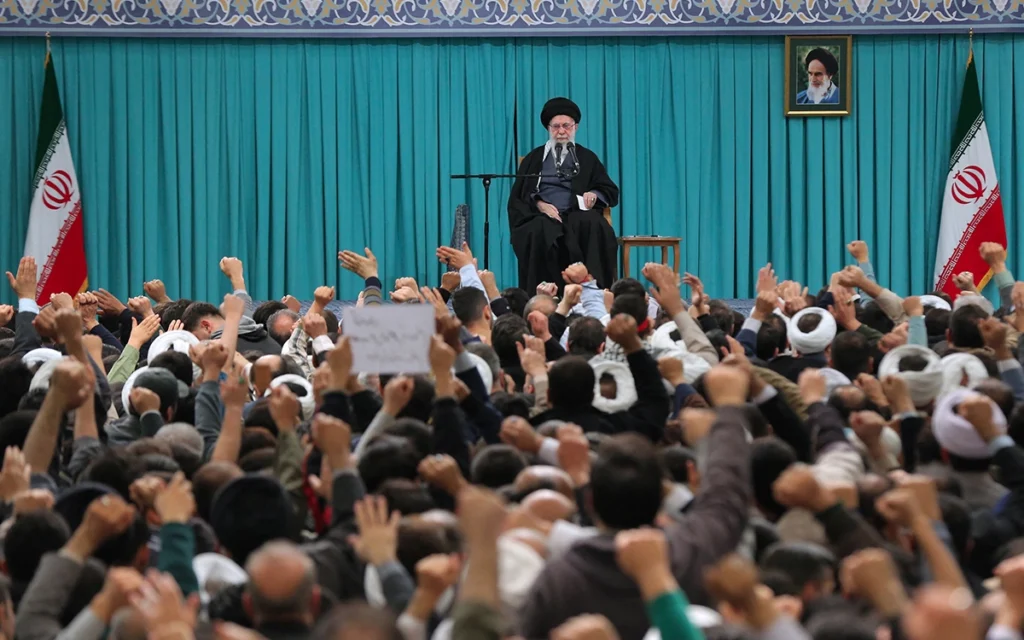
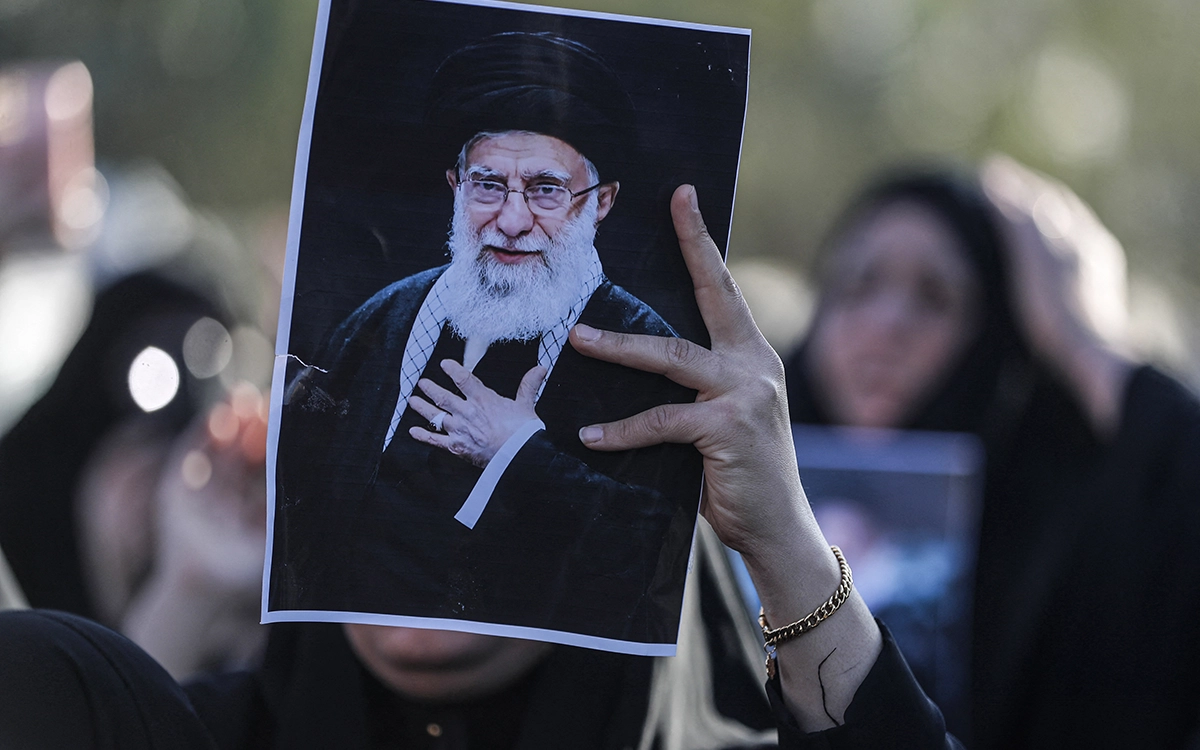
The death of Ali Khamenei removes the central coordinating authority of Iran’s political–military system at a moment of elevated external pressure. Khamenei’s role extended beyond ideological leadership; he served as the integrator of nuclear doctrine, regional intervention thresholds, missile policy, and escalation ceilings. His authority provided coherence across clerical institutions, elected bodies, and the IRGC.
Although the Assembly of Experts formally governs succession, transitional periods typically shift relative influence toward coercive institutions. The IRGC controls ballistic missile forces, oversees strategic weapons development, manages regional proxy networks, and commands significant economic assets through affiliated conglomerates. In conditions of uncertainty, operational actors gain greater structural leverage than clerical ones. This rebalancing reshapes escalation calculus. The IRGC controls the instruments of retaliation and therefore determines response options. Retaliation can be framed internally as regime preservation, reinforcing institutional legitimacy during transition. At the same time, transitional regimes are acutely sensitive to perceptions of weakness; preventing reputational erosion becomes a central strategic priority.
Two competing strategic impulses emerge. While a projection imperative favors visible retaliation to signal continuity and deter opportunism, a stabilization imperative favors calibrated restraint to prevent escalation from destabilizing internal consolidation and elite bargaining. The balance between these logics depends on succession velocity, factional alignment, and elite cohesion. A rapid and uncontested succession reduces perceived vulnerability, while a prolonged or contested transition heightens insecurity, increasing the probability that escalation signaling becomes more assertive.
A rapid and uncontested succession reduces perceived vulnerability, while a prolonged or contested transition heightens insecurity
Nuclear Timeline Compression and Preventive Incentive Structure
The nuclear file remains the core structural driver shaping Israeli preventive logic. Iran’s enrichment trajectory, expansion of advanced centrifuge cascades, and accumulation of enriched uranium stockpiles have shortened potential breakout timelines. Although weaponization requires additional technical steps beyond enrichment, the reduction in breakout time alters strategic warning horizons.
From Israel’s perspective, deterrence is defined not only by declared intent but by capability thresholds. As enrichment levels rise and centrifuge efficiency improves, the window for preventive action narrows. Preventive doctrine therefore becomes increasingly timeline-driven: the shorter the breakout window, the greater the perceived urgency of intervention. Leadership transition intensifies this logic. During institutional recalibration, Israeli planners may see this as a narrowing opportunity to disrupt capability before new leadership consolidates.
Conversely, transitional elites in Tehran may interpret external military pressure as justification for accelerating nuclear capability as a form of regime survival. Hardline elements could frame capability advancement as both deterrent reinforcement and internal consolidation. More cautious factions may seek to avoid overt nuclear escalation to limit sanctions exposure and diplomatic isolation.
The structural risk lies in timeline asymmetry. Israel may interpret succession as a moment demanding decisive preventive action. Iranian actors may interpret the same moment as requiring assertive capability signaling to avoid perceived vulnerability. When preventive urgency and regime-preservation urgency coincide, escalation thresholds compress further.
The interaction between nuclear timeline compression, institutional transition, and exposed deterrence increases the likelihood that decisions are made rapidly and without complete information or strategic consensus.
U.S. Posture and Multi-Level Deterrence Calibration
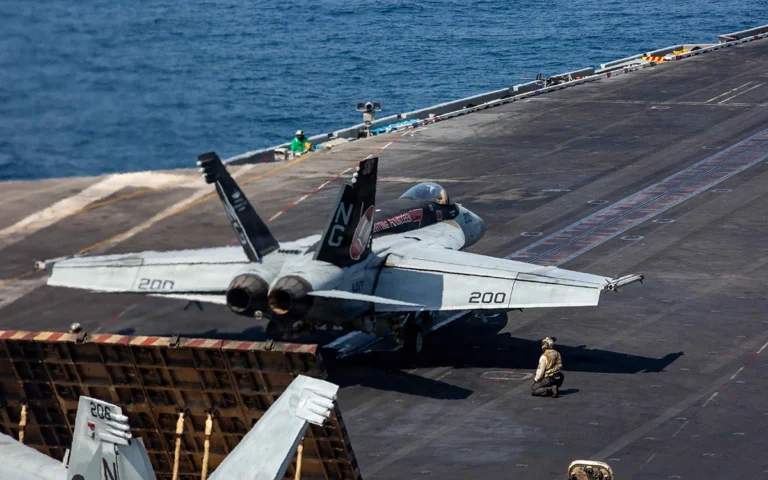
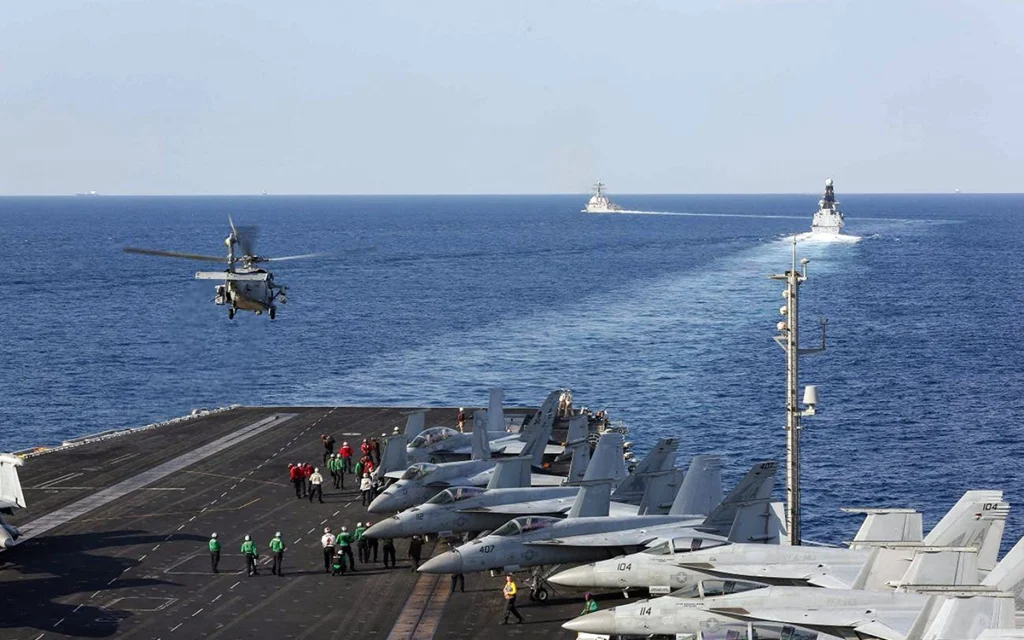
This dynamic broadens the conflict’s external perimeter, particularly through the United States. Containment capacity depends significantly on American posture. The United States maintains layered military infrastructure across the Middle East, including naval carrier groups, missile defense systems, forward air assets, and logistical hubs. These deployments serve defensive, deterrent, and signaling functions simultaneously. While U.S. alignment with Israel raises the perceived cost of Iranian escalation, overt involvement also widens exposure. U.S. installations in Iraq, Syria, and the Gulf remain vulnerable to Iran-aligned militia retaliation. The more visible the American role, the wider the potential retaliation perimeter.
Conversely, strategic distancing reduces immediate exposure but carries reputational cost. Allies and adversaries evaluate American calibration as an indicator of security guarantee reliability. Moscow and Beijing will interpret posture adjustments as data points relevant to broader deterrence credibility assessments beyond the Middle East.
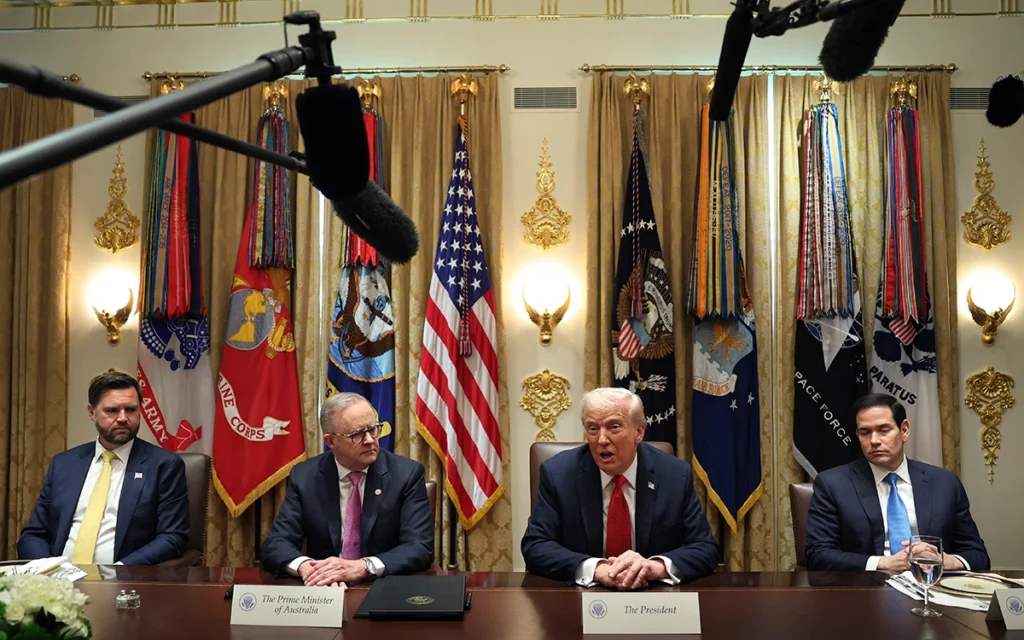
Leadership transition further complicates U.S. signaling. Transitional regimes interpret external military deployments through a regime-survival lens. Defensive positioning may be read as preparation for intervention, while restraint may be interpreted as opportunity. American posture therefore operates across overlapping layers: deterrence assurance for Israel, escalation containment vis-à-vis Iran, and global credibility signaling. Calibration errors across any layer risk accelerating escalation dynamics rather than containing them.
American posture operates across overlapping layers: deterrence assurance for Israel, escalation containment vis-à-vis Iran, and global credibility signaling
In an environment of compressed deliberation time, U.S. signaling becomes a dynamic variable rather than a stabilizing constant. Its precision will significantly influence whether confrontation remains geographically contained or disperses across proxy theaters.
Horizontal Escalation and Proxy Activation Dynamics
The Israel–Iran rivalry has always operated across multiple theaters. Under exposed and accelerated deterrence conditions, those theaters become potential escalation multipliers rather than buffers. Hezbollah represents the most consequential high-capability vector. Its missile inventory, including precision-guided systems capable of targeting critical infrastructure, provides Tehran with credible retaliatory leverage without direct Iranian attribution. Activation of the northern front would dramatically steepen the escalation gradient.
Beyond Lebanon, Iran-aligned militias in Iraq retain demonstrated capacity to target U.S. installations. Their activation would expand confrontation beyond Israel, widening the escalation perimeter and directly pressuring Washington. Syria continues to function as a transit corridor and operational staging ground where IRGC-linked networks would be exposed to interdiction cycles, sustaining an iterative strike–counterstrike pattern. In Yemen, Houthi maritime capabilities introduce systemic economic vulnerability; Red Sea disruption extends escalation into global trade routes.
Leadership transition modifies proxy activation logic. Central authorities may authorize calibrated activation to demonstrate continuity and resolve. Alternatively, transitional uncertainty may weaken command discipline, increasing the probability of unsynchronized escalatory responses that exceed intended thresholds.
Leadership transition modifies proxy activation logic. Central authorities may authorize calibrated activation to demonstrate resolve. Alternatively, transitional uncertainty may weaken command discipline
As confrontation disperses across theaters, escalation risk expands geometrically through interaction effects rather than linearly through simple accumulation. Additional nodes increase the number of decision points and further compress timelines. In a system already operating under reduced deliberation space, horizontal activation significantly raises the probability of miscalculation or misalignment across actors.
Energy Transmission and Strategic Signaling
This dispersion intersects directly with energy vulnerability. Energy transit remains the principal global transmission mechanism of regional instability. Approximately one-fifth of global oil supply transits the Strait of Hormuz. Even limited maritime signaling—temporary vessel detention, missile launches, naval posture adjustments—can trigger immediate price volatility. Notably, Iran has historically used calibrated maritime signaling as a strategic instrument. Under succession pressure, such actions provide visible demonstration of resolve while remaining below formal war thresholds.
However, markets react to perceived instability rather than confirmed disruption. The convergence of direct Israeli strikes and regime transition increases uncertainty premiums embedded in energy pricing mechanisms.
Red Sea transit represents an additional vulnerability node. If proxy networks expand maritime disruption into this corridor, economic consequences would compound. Energy exposure therefore acts simultaneously as constraint and amplifier. It deters full-scale war due to systemic repercussions, yet magnifies the strategic impact of limited signaling operations.
Legal Doctrine and Escalation Legitimacy
This dynamic intersects with questions of legal doctrine and escalation legitimacy. The invocation of anticipatory self-defense under Article 51 remains contested, particularly where preventive logic extends from imminent attack to emerging capability thresholds. Such interpretation reshapes normative boundaries governing the lawful use of force.
Legal framing, however, is not merely rhetorical; it affects coalition alignment and escalation management. Whether partners characterize action as anticipatory self-defense or unlawful prevention influences diplomatic alignment, sanctions architecture, and the availability of containment channels. Normative interpretation therefore carries operational consequences.
Under conditions of political succession, these legal narratives acquire heightened sensitivity. Actions undertaken during leadership transition may be read either as opportunistic exploitation of uncertainty or as necessary responses to compressed decision timelines. In such contexts, both deterrence credibility and legal legitimacy are more vulnerable to contestation.
Escalation Compression as Structural Baseline
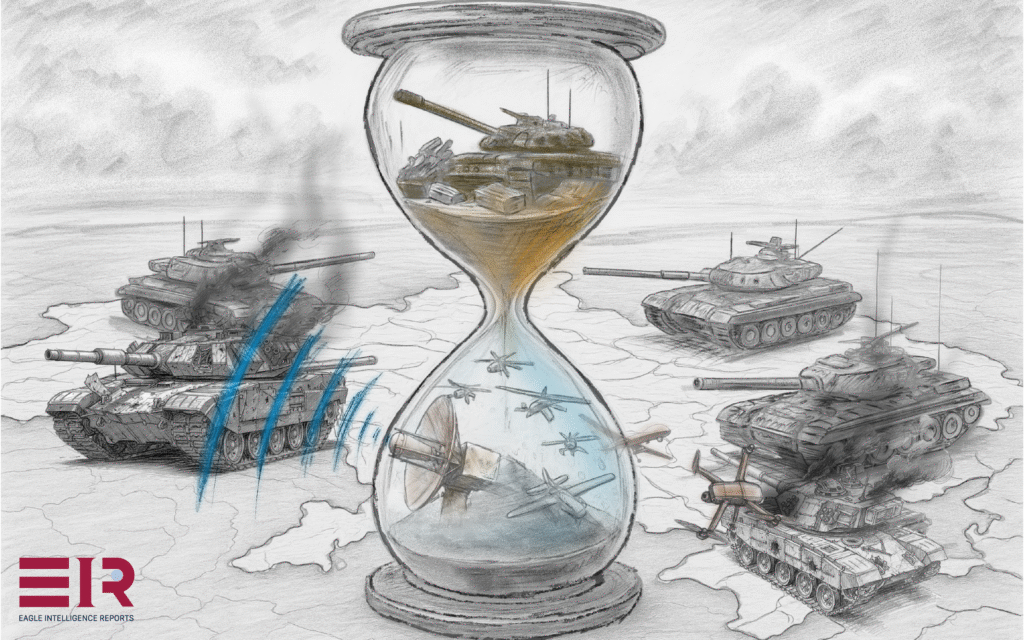
Taken together, these interacting pressures define the current phase of confrontation as one of escalation compression. Direct state exposure now coincides with leadership transition, shortened nuclear timelines, proxy dispersion, and systemic energy vulnerability. The interaction of these variables reduces reaction windows while increasing the visibility and strategic consequence of each decision. Escalation dynamics are therefore shaped less by isolated events than by the cumulative interaction of structural pressures and constraints.
The interaction of leadership transition, shortened nuclear timelines, proxy dispersion, and systemic energy vulnerability reduces reaction windows while increasing the visibility and strategic consequence
The most plausible near-term trajectory remains managed escalation: calibrated retaliation contained below systemic war thresholds. Such containment will depend less on genuine de-escalation than on disciplined signaling, credible red lines, and tacit coordination mechanisms. Stability is likely to be procedural rather than reconciliatory, sustained through risk management rather than resolution.
If this pattern persists, deterrence boundaries are likely to recalibrate at a higher baseline of intensity. Once confrontation shifts from proxy insulation to overt state-level exposure, reversion to buffered deterrence becomes structurally challenging. Even if proxy intermediation resumes tactically, reputational expectations and demonstrated capabilities will continue to anchor expectations and responses at the state level.
The cumulative effect is thus a structural baseline defined by sustained tension under compressed margins of error. As warning horizons shorten, signaling cycles tighten, and interaction complexity and unpredictability grow, deliberation space contracts. In such an environment, escalation may not occur through deliberate strategic choice but rather the cumulative, time-compressed, and unpredictable responses of various actors.
The Israel–Iran confrontation has transitioned from distributed deterrence to exposed and compressed deterrence under conditions of Iranian institutional recalibration and large-scale U.S. intervention. Escalation may not be predetermined. But in this configuration, the margin for miscalculation is significantly reduced.