

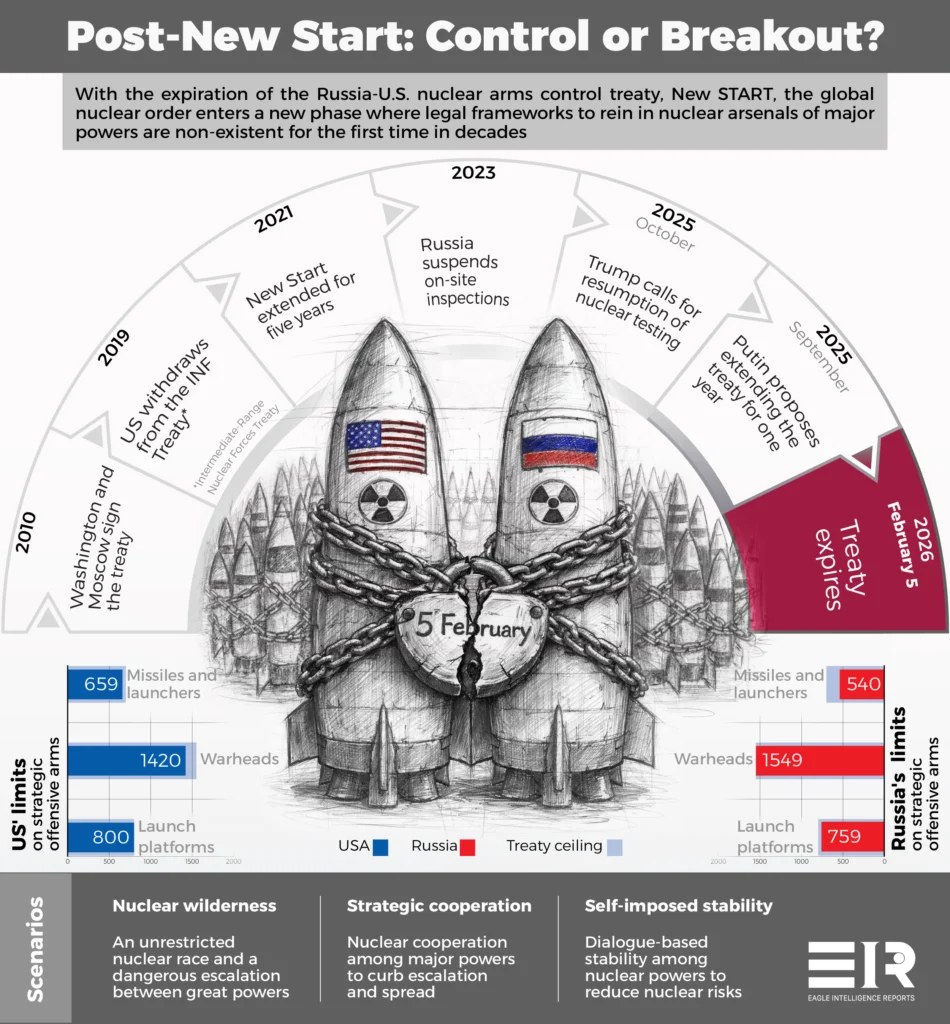
The last Russian–U.S. nuclear arms control treaty, New START, has just expired. For the first time in decades, there are no legally binding ceilings on the great powers’ nuclear arsenals. This development marks a further collapse of the nuclear arms control architecture arduously built during the Cold War. Partly for this reason, the Bulletin of Atomic Scientists recently moved the dials of its Doomsday Clock closer to midnight than ever before. The key question, however, is whether this sense of doom and gloom is warranted or whether the lack of treaties necessarily implies the absence of constraints.
Eroding arms control frameworks and emerging strategic technologies are reshaping the global security environment as the nuclear order transitions toward multipolarity. Key factors include Russia’s fielding of exotic nuclear systems, U.S. military retrenchment and force restructuring, China’s rapid nuclear buildup, North Korea’s nuclearization drive, Iran’s unregulated nuclear activities, and the weakening of international treaties and strategic norms. Together, these dynamics point to a range of potential pathways, risks, and scenarios.
Eroding arms control frameworks and emerging strategic technologies are reshaping the global security environment as the nuclear order transitions toward multipolarity
Last Treaty Standing
New START was the latest iteration in a series of nuclear arms control treaties between Moscow and Washington, beginning with the U.S.–Soviet Strategic Arms Limitation Talks launched in 1969. Despite differences in scope and structure, these agreements shared several core features. They functioned to constrain, channel, and control—rather than eliminate—both parties’ nuclear weapons programs. Their goal was to enhance transparency and predictability, not to promote comprehensive nuclear disarmament.
Their central limits applied only to the parties’ intercontinental-range delivery systems—the so-called nuclear triad of strategic submarines, strategic bombers, and Intercontinental Ballistic Missiles (ICBMs). The treaties capped both the number of deployed systems and the number of warheads they carried, while also regulating how those systems were modernized and tested. For the most part, they included extensive verification provisions to minimize noncompliance, including mandatory on-site inspections, detailed data exchanges, and bilateral consultative commissions to address implementation issues.
Great Power Competition and Arms Racing
Several drivers contributed to the demise of New START and other Russian–U.S. arms control agreements like the Intermediate-Range Nuclear Forces Treaty. Worsening relations between Moscow and Washington have sapped support for existing agreements. Russian officials have cited U.S. support for Ukraine and other hostile actions to justify suspending New START verification procedures, withdrawing from other arms control treaties, and rejecting nuclear stability talks with the United States in recent years.
Meanwhile, the U.S. government has become firmer in its posture towards Russia over its violations of arms control agreements, which has decreased enthusiasm in Washington for negotiating new treaties. At the same time, the constitutional requirement that two-thirds of the U.S. Senate ratify international treaties presents a substantial institutional barrier to future legally binding arms control accords.
The intensification of great power competition has made it considerably harder to compartmentalize arms control from other strategic issues or to pursue package deals in which one party would accept a disadvantage in one area in exchange for a more advantageous position in another. In earlier periods, for example, the United States tolerated Russia’s huge arsenal of non-strategic (“tactical”) nuclear weapons while Moscow set aside demands to limit U.S. missile defenses. This is no longer the case.
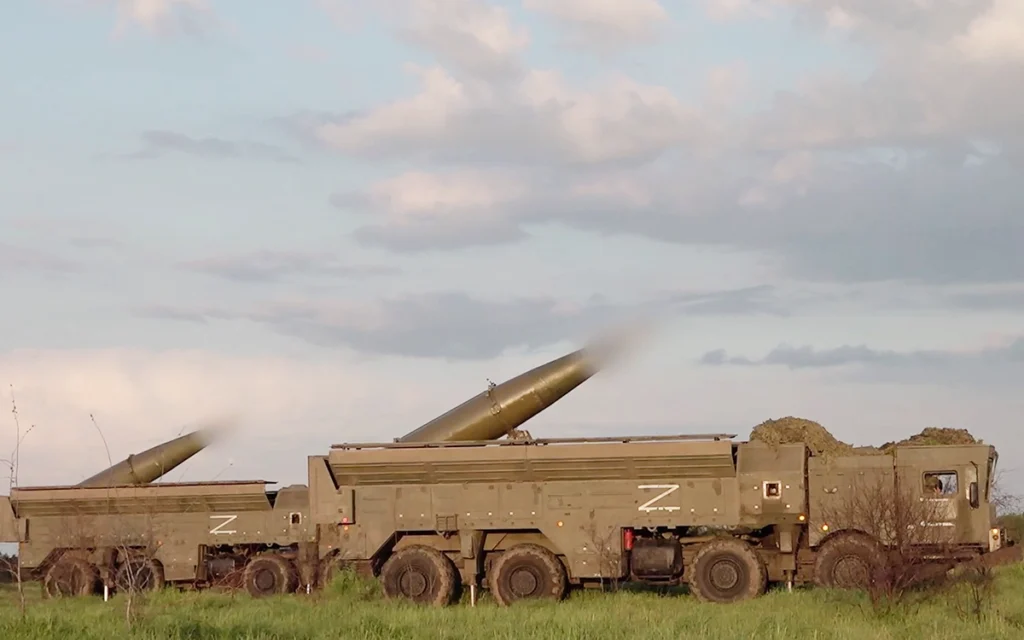
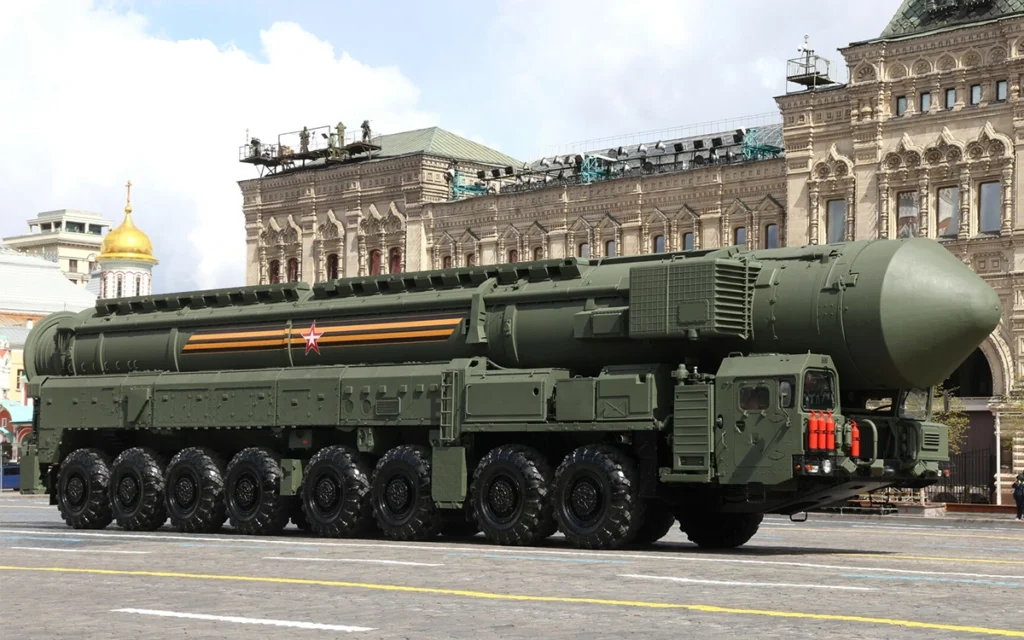
Additionally, Russian and U.S. strategic forces are becoming increasingly asymmetric, driven by the Kremlin’s deployment of exotic nuclear delivery systems and the U.S. pursuit of ambitious missile defense architectures. These systems were never covered by the START framework. At the same time, the poor performance of Russia’s conventional forces in Ukraine may increase Moscow’s reliance on nuclear coercion and warfighting. The Kremlin views its nuclear arsenal as one of the few markers of great-power status—it remains a rare domain where Russia is an equal of the United States and ahead of China.
The Kremlin views its nuclear arsenal as one of the few markers of great-power status—a rare domain where Russia is an equal of the United States and ahead of China
The China Challenge
The magnitude of China’s nuclear buildup presents a distinct challenge. Projections that the People’s Liberation Army could field an active nuclear arsenal comparable in size to those of Russia and the United States within the next decade have led the Trump administration, along with many members of Congress, to argue that any future arms control framework must encompass the PRC. The Russian government has similarly called for future nuclear treaties to include additional countries and weapon systems.
Even if Moscow, Washington, and Beijing were to agree in principle to pursue a new trilateral strategic arms control treaty, it would take years to negotiate an appropriate trilateral balance. Each capital would engage in worst-case planning, including scenarios in which two parties combine forces against the third, complicating the establishment of such a balance. Verification measures would present an additional challenge, as China has no experience with on-site inspections, mandatory data exchanges, or other transparency measures.
Proliferation Problems
These great-power tensions are facilitating further nuclear proliferation. India, Pakistan, Israel, and, more recently, North Korea have become entrenched de facto nuclear-armed states despite the illegitimate status of their programs under the Nuclear Non-Proliferation Treaty. Iran is exploiting great-power animosities to maintain uranium enrichment capabilities. If Tehran seeks nuclear weapons, Saudi Arabia, Turkey, and other Middle Eastern actors will likely follow.
Additionally, concerns about “friendly proliferation” among U.S. allies have intensified in recent years. Not only are these allies facing growing nuclear threats from Russia, China, North Korea, and potentially Iran, but developments over the past decade have deepened doubts about Washington’s willingness to defend them even as nuclear threats to the U.S. homeland increase. Calls for independent European, South Korean, or Japanese nuclear deterrents have become increasingly mainstream in strategic discourse.
Technical Complications
A growing range of emerging technologies could alter the strategic balance. These potentially disruptive capabilities include artificial intelligence, cyber weapons, hypersonic glide vehicles, high-precision conventional strike systems, quantum computing, counterspace capabilities, and directed energy weapons. Together, they present unprecedented challenges for a strategic arms control process that has historically focused on a narrow range of long-range air and missile delivery systems.
For example, novel cyber capabilities can undermine critical nuclear command-and-control networks and crisis communication mechanisms. Similarly, if advances in AI and quantum computing increase the detectability and vulnerability of strategic submarines, mobile missiles, and other nuclear delivery systems, states are more likely to move toward launch-on-warning, “use-it-or-lose-it” postures.
Tumbling Treaties
These political and technological developments have placed growing strain on existing nuclear treaties, regimes, and norms. The disruptions have constrained institutional mandates, politicized technical issues, and diluted verification and enforcement mechanisms. They have particularly degraded the Nuclear Proliferation Treaty, the International Atomic Energy Agency, the UN Security Council, and global and regional nuclear test ban treaties.
Ironically, one of the few issues on which the established nuclear-armed states agree has been their shared opposition to the Treaty on the Prohibition of Nuclear Weapons, which would require the rapid elimination of all their nuclear weapons.
One of the few issues on which the established nuclear-armed states agree has been their shared opposition to the Treaty on the Prohibition of Nuclear Weapons
Ukraine’s experience after renouncing nuclear weapons, the collapse of the Iran nuclear deal, the failure of the North Korean nuclear talks, and other developments have weakened the credibility of regionally focused, mini-lateral solutions to nuclear proliferation challenges. As a result, the influence of middle powers and non-nuclear-weapon states in this domain has correspondingly declined.
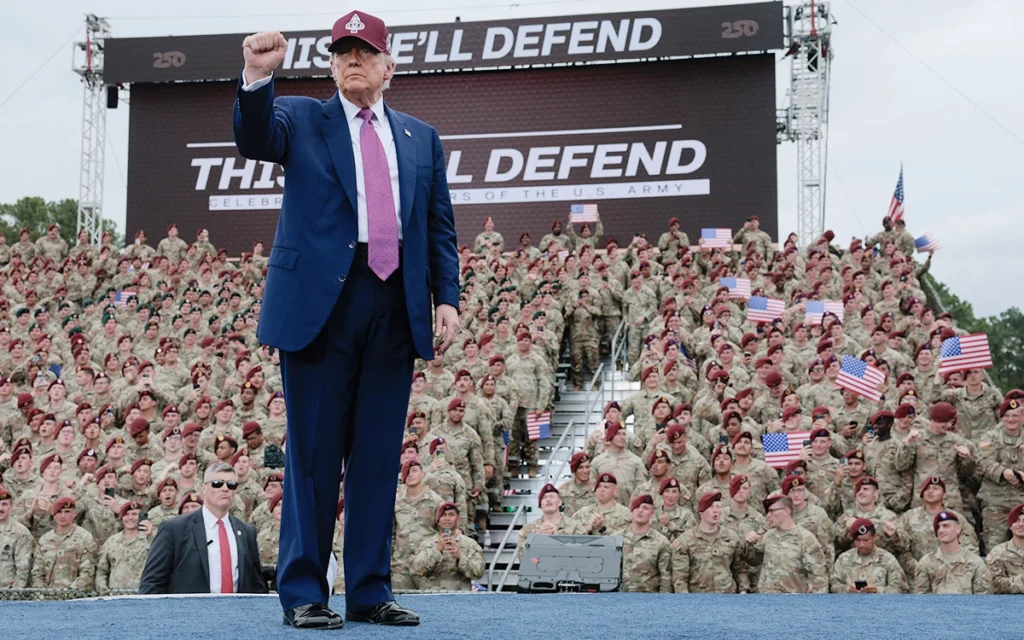
U.S. policy choices will have the greatest impact on the future nuclear order. However, the Trump administration has maintained considerable ambiguity and flexibility in this domain. Neither the publicly released texts of the National Security Strategy nor the National Defense Strategy contains a substantive discussion of U.S. nuclear and arms control policy. For the first time since the practice began in 1994, the administration has declined to issue a separate Nuclear Posture Review.
President Trump has expressed support in principle for substantially increasing the U.S. defense budget, resuming nuclear testing, and building an impenetrable missile defense dome over the United States. At the same time, the administration’s actual programs and budgetary allocations support less ambitious policies. Trump has also said he wants to reduce nuclear threats, improve relations with potential nuclear adversaries, and pursue diplomatic achievements, including winning a Nobel Peace Prize.
Scenarios
Nuclear Wilderness
In the absence of treaty constraints, the strategic environment increasingly comes to resemble the first nuclear age (1945-1990). Over the next few years, Washington and Moscow redeploy warheads previously removed from their active arsenals onto their silo- and submarine-launched strategic missiles. Afterwards, they would sustain production of additional strategic delivery systems with Russia prioritizing the deployment of more missiles and the United States fielding more B-21 bombers and Columbia-class submarines than currently planned. Meanwhile, China continues its rapid nuclear expansion in pursuit of parity with Russia and the United States.
Russia, China, and the United States assist friendly states to acquire nuclear weapons while engaging in militarized counterproliferation to deny other states such capabilities. Some governments presume that they can hide behind their nuclear shields to commit aggression, raising the risks of nuclear brinkmanship, miscalculation, escalation, and war.
Great-Power Strategic Cooperation
In this scenario, the great powers limit their nuclear capabilities, eschew nuclear threats and other risky behavior, and cooperate to prevent the proliferation of nuclear weapons to other countries and non-state actors like terrorists. In essence, they return to the kind of enhanced nuclear cooperation that characterized the second nuclear age (1991-2014).
Moscow and Washington reach a gentleman’s agreement to refrain from exceeding New START caps. Such arrangements persist until the negotiation of a new, more comprehensive treaty that encompassed additional countries and technologies. Meanwhile, governments and other non-governmental actors collaborate to remove potential pathways to nuclear escalation and war.
Prevailing Non-Treaty Constraints
In this scenario, Russia, the United States, and other nuclear-armed states engage in strategic stability dialogues, transparency and confidence-building measures, unilateral restraints—such as avoiding nuclear explosive testing—and other instruments to reduce nuclear risks.
In the absence of formal treaty limits, resource constraints, competing priorities, and other institutional frictions shape state behavior. Developing, maintaining, and modernizing nuclear weapons is costly, and many publics and policymakers, including military leaders, would prefer to spend money elsewhere. Capacity limitations could also constrain future arms racing, as both the United States and Russia have faced significant challenges rebuilding nuclear production complexes dismantled after the Cold War.
Several technological developments could further devalue states’ incentive to acquire large nuclear arsenals. For example, advances in high-precision conventional strike systems could deliver strategic effects comparable to those of nuclear weapons at lower financial, environmental, and diplomatic costs.
Signals to Watch
Although this final scenario is more complex than the other two, it appears the most probable. Its emergence would be evident in only modest Russian and U.S. nuclear modernization even in the absence of a new strategic treaty. By contrast, indicators of a transition toward an unconstrained environment would include rapid increases—first in the number of deployed Russian and U.S. nuclear warheads, and then in the size and capabilities of their delivery systems. Although disarmament advocates would welcome the cooperative scenario—with its robust treaty-mandated reductions, intrusive verification, and cooperation against common nuclear threats—that outcome appears the least likely of the three.
New START’s demise represents only the most recent sign of the erosion of nuclear arms control. Yet the emerging era of multiple nuclear-armed states and strategically consequential technologies could paradoxically strengthen strategic stability by creating a level of complexity and uncertainty that diminishes leaders’ confidence in achieving “victory” through nuclear escalation or war.
New START’s demise represents only the most recent sign of the erosion of nuclear arms control