

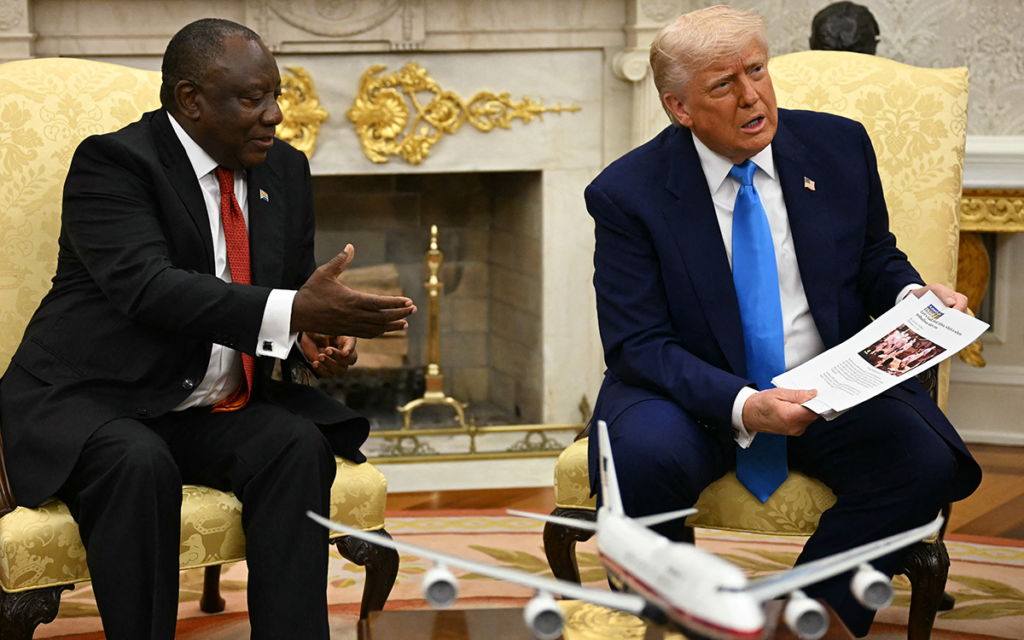
All eyes have been on the United States and South Africa since the last quarter of 2025: what was once seen as a deep alignment, shared values, and economic partnership has taken a turn for the worse, with tangible economic and geopolitical consequences now unfolding.
The crack started as a diplomatic misunderstanding and morphed into a face-off over non-aligned trade policies, high economic stakes, and a diplomatic feud.
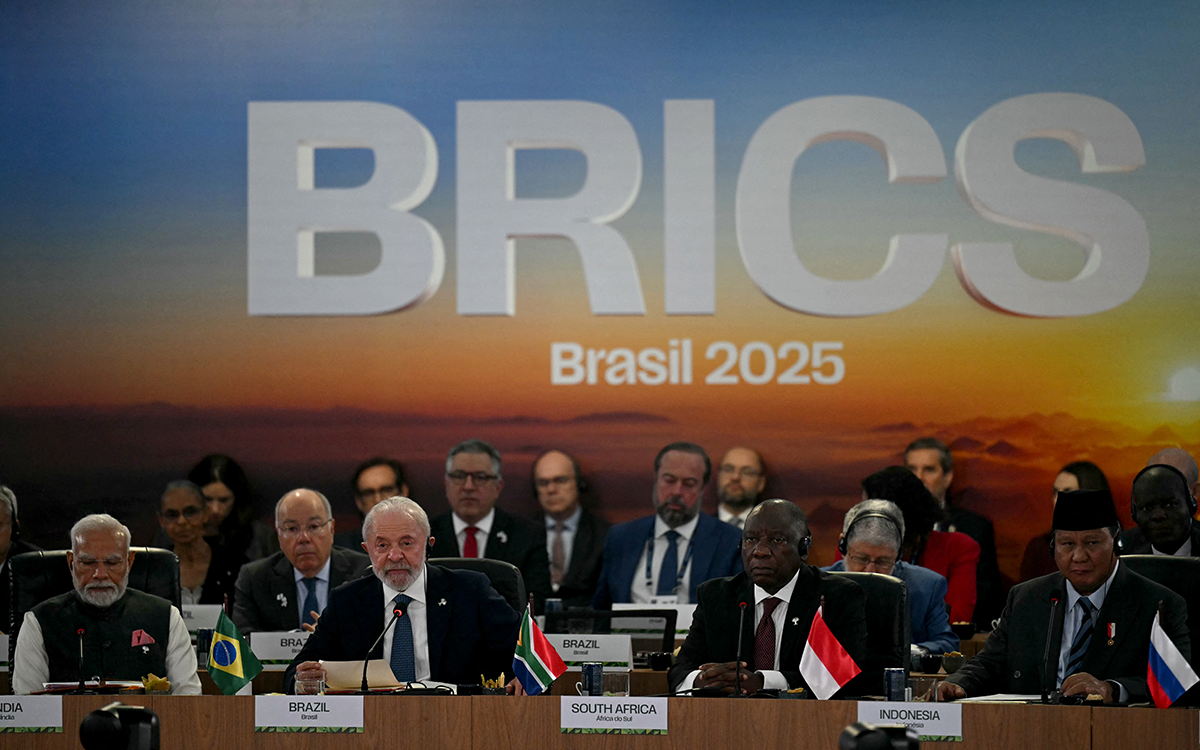
Washington has taken a cautious approach amid South Africa’s growing profile within the BRICS and its bromance with China. In addition, tensions have heightened due to the bilateral decisions taken by the Cyril Ramaphosa-led administration in Pretoria.
Washington has taken a cautious approach amid South Africa’s growing profile within the BRICS and its bromance with China
However, the core of this feud does not rest on policy decisions; it rests on sequential patterns in South Africa’s trade relations, which have raised questions within the Donald Trump-led administration about whether South Africa remains a reliable long-term economic partner.
Trade and Security Cooperation
In terms of South Africa’s export destinations, the US comes second after China, which holds the top spot, making it by far South Africa’s most preferred trading ally, according to statistics.
US government data confirms that two-way trade between the Asian and African giants totaled $21 billion in 2023, up from about $18 billion in 2022. The same data also confirms that South Africa exported roughly $14 billion in goods to the US, with half of that amount entering as imports, thereby giving Pretoria a trade surplus.
This trade surplus is largely attributed to the US African Growth and Opportunity Act (AGOA) initiative, which provides seamless duty-free access to US markets and has been particularly beneficial to South Africa’s export-driven sectors, including agricultural produce, vehicles, and other valuable goods.
Reportedly, the South African automotive sector is the largest beneficiary of AGOA, with auto sales reaching $2.5 billion in the US in 2023, which also helped create over 10,000 direct and indirect jobs.
Beyond trade, the US and South Africa have maintained a healthy relationship over the years through developmental initiatives in health, security, and humanitarian aid, among other areas. The US remains the top direct investor in South Africa, with over 150,000 South Africans employed across several sectors.
Given this economic antecedent between the two nations, it is evident that the ongoing quarrel might prove detrimental and create compounding economic and diplomatic risks.
A Timeline of Escalation
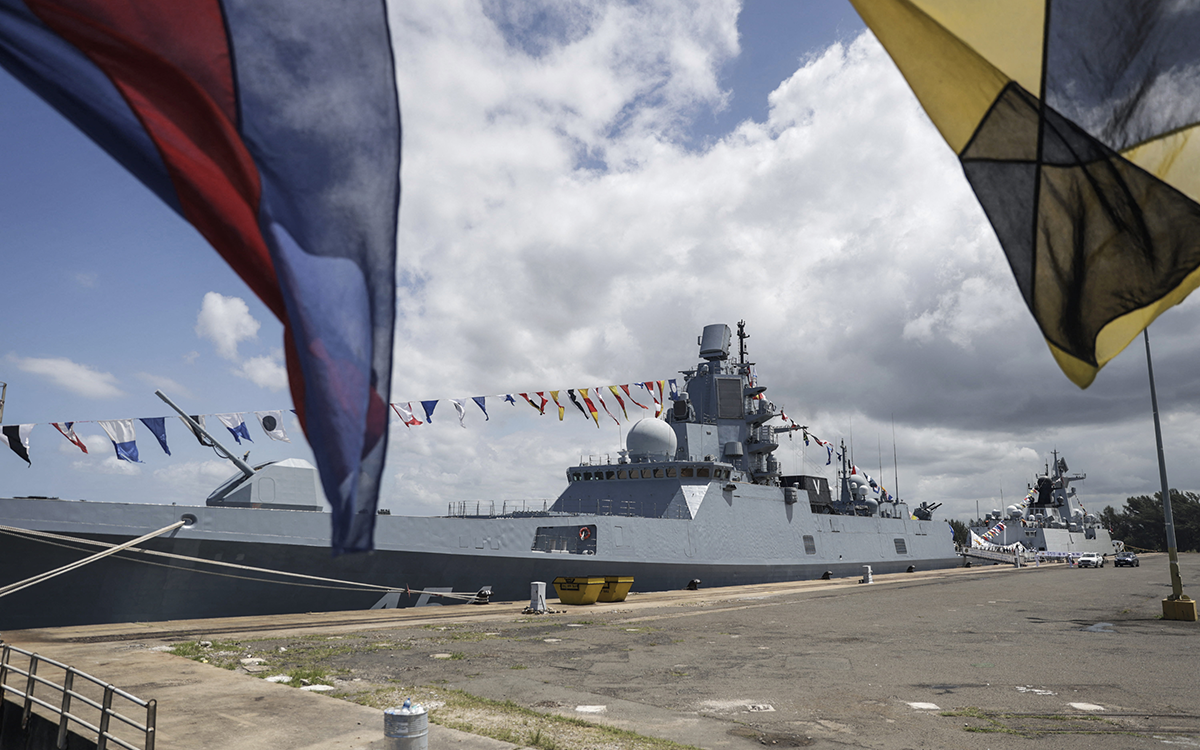
The origins of this feud can be traced back to 2023, when South Africa, alongside China and Russia, conducted a joint naval drill that was rumored to be held in commemoration of the first anniversary of Russia’s invasion of Ukraine. This singular act did not go down well with the US, which expressed deep concerns despite South Africa’s stern claim that it was just a routine drill with no intent to spark a feud.
Tensions flared further in May 2023, when the US, through its consulate-general in South Africa, Reuben Brigety, alleged that a Russian cargo ship docked at the Simon’s Town naval base had been loaded with weapons, which insinuated that South Africa must have supplied arms to Russia. The South African government immediately denied the allegation and released a panel report that stipulates that there was no evidence to substantiate the US allegations.
As a diplomatic feud ensued between the two nations, it rattled the trade market, causing a sharp decline in the rand against the dollar. Meanwhile, investor concerns grew that South Africa might face heavy sanctions.
At the tail-end of 2023 into 2024, attention was entirely focused on trade, with lawmakers in the US Congress debating whether South Africa was worthy of enjoying the benefits of AGOA. Members of Congress raised concerns about South Africa’s foreign policy stance and its refusal to condemn Russia and its case against Israel at the International Court of Justice.
By the first half of 2024, the debate over South Africa’s place in AGOA had intensified, with the Joe Biden-led administration declaring that the African giant’s eligibility was under review. In response to this move, South Africa sounded the alarm, fully aware of the consequences, and warned that US credibility in Africa might be at risk.
BRICS and China as Context, Not Cause
South Africa’s trade ties with China and its BRICS affiliation are not the leading cause of its dispute with the US, but they do provide an essential backdrop to the unease in Washington.
South Africa’s trade ties with China and its BRICS affiliation are not the leading cause of its dispute with the US, but they do provide an essential backdrop to the unease in Washington
Since 2009, China has been South Africa’s major trade partner, with bilateral trade crossing $56 billion in 2023, according to Chinese customs data. This cuts across partnerships in several sectors, including energy, infrastructure, mining, and others.
Washington has seen the formation of the BRICS as a counterweight to its Western-led values, as China and Russia are gradually expanding their ideals across borders.
South Africa, on the other hand, has been vocal in its support for BRICS expansion, especially in its role as a financial alternative, raising concerns in the West that Pretoria is slowly deviating from its alignment with the US.
The Ramaphosa-led government has consistently reiterated that its BRICS membership is based solely on economic diversification, not on alignment of political ideologies. “South Africa does not choose sides,” President Cyril Ramaphosa stated in an address, emphasizing that the country’s foreign policy is one of strategic autonomy and constructive engagement with all major powers.
At present, this framing helps paint a broader picture of why BRICS and China are best understood through a contextual lens. It underscores even more clearly why the US has been sensitive to South Africa’s actions now, as the immediate frictions stem from bilateral expectations and perceived breaches of trust.
Economic Exposure and Real-World Impact
The ongoing diplomatic row has further highlighted the US’s influence on the South African economy across several sectors, with bilateral trade in tens of billions of dollars annually.
South Africa’s greatest strength has always been exports, especially the automotive manufacturing industry, where the US had tapped in, creating thousands of jobs for South Africans. The auto sector is currently under threat as the US demand for South Africa’s automotive products has diminished since the advent of the feud.
Though the export of agricultural products such as citrus fruit, wine, nuts, and processed foods to the US has significantly boosted revenue, the South African labor market remains affected, threatening the job security of local workers. South Africa’s central bank and industry leaders forecast that this feud could affect the jobs of at least 100,000 workers, directly or indirectly, nationwide.
With the high costs of tariffs and AGOA preferences out of the way, exporters are in a tight spot, facing severe supply chain constraints, inflation, and low demand for their products. Amid all these, the Ramaphosa-led administration has improvised quite well through temporary export reforms, the provision of credit facilities, and assistance with market diversification.
However, Pretoria has admitted that these temporary reliefs cannot be compared to the economic privileges that come with a good US trade relationship.
Pretoria and Washington’s Stances
The position of the Ramaphosa-led administration in this diplomatic feud with the US has been based on sovereignty and economic agency rather than ideological alignment. It has reiterated that its ties with China and other BRICS member nations are purely based on economic diversification, not on strategic alignment as perceived in Washington.
Ronald Lamola, South Africa’s international relations minister, had stated that the nation “will not be forced to choose between global powers,” and that its foreign policy is guided by national interest, non-alignment, and diversification. The African giant further clarified that all its trade relations with the US opposition were necessary for economic sustainability, aligning with the common interests of citizens.
Pretoria argued that the current dispute could be settled amicably through diplomatic negotiations rather than coercion. This argument, in turn, has popularized the call for an update to bilateral treaties between the US and South Africa.
Washington’s View
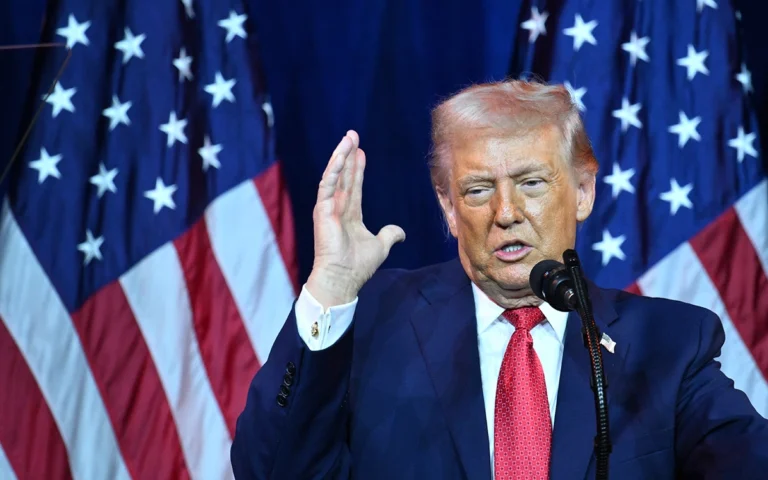
For the Trump-led administration in Washington, the body language is different, as officials have expressed their displeasure over South Africa’s diplomatic decisions. It has labelled these diplomatic actions as drifting away from the Western norm and as a deceitful alignment with US arch-rival China. Pretoria, on its part, has been unable or unwilling to convince Washington otherwise.
Earlier reports confirmed that Washington threatened additional trade sanctions against members of the BRICS for considering the adoption of a single currency, a move that could prove even more deadly for South Africa. “The idea that the BRICS Countries are trying to move away from the Dollar while we stand by and watch is OVER,” Trump wrote in a social media post, taking a swipe at South Africa and other BRICS members.
President Trump’s statement is a clear indication that economic diversification and South Africa’s preferences are not automatic and require what the US perceives as good for business and financial flow.
Points of Contention and Justifications
This feud is underpinned by three central issues: trade, diplomacy, and alignment.
On trade, the US argues that granting South Africa preferential access to its market for so many years must reflect a deeper alignment. This also connects to the aspect of diplomacy, particularly South Africa’s economic relations with Russia amid the ongoing Ukraine war.
On the issue of alignment, US policymakers are questioning whether South Africa can be both a strategic partner and a leading voice within blocs perceived as adversarial. South Africa justifies its position by invoking non-alignment, historical solidarity with liberation movements, and a commitment to multilateralism.
The United States justifies its pressure by pointing to domestic laws, alliance politics, and the need to ensure that trade benefits do not indirectly support actors hostile to US interests.
The US justifies its pressure by pointing to domestic laws, alliance politics, and the need to ensure that trade benefits do not indirectly support actors hostile to US interests
What Comes Next
The stakes are high as all parties hold their cards to their chests. Yet, a near-term resolution is plausible if all hands are on deck to intensify engagement and reach common ground to end the dispute.
On the flip side, South Africa must apply strategy and diplomacy to offer assurances to the US regarding its alignment. In turn, AGOA eligibility might be reviewed if Washington chooses pragmatism over punishment.
What might be the likely outcome? A dramatic rapture or a recalibration? Pretoria might be forced to adjust course and clarify its foreign policy positions, opening dialogue with US lawmakers. At the same time, Washington might settle for targeted pressure rather than sweeping trade penalties.
At present, what is evident is the cost of misconceptualization in calculations, and the challenge for both parties is to draw a thin line between strategic ambiguity and impeding decades-long partnership that would cost thousands of consequential pains and trauma.