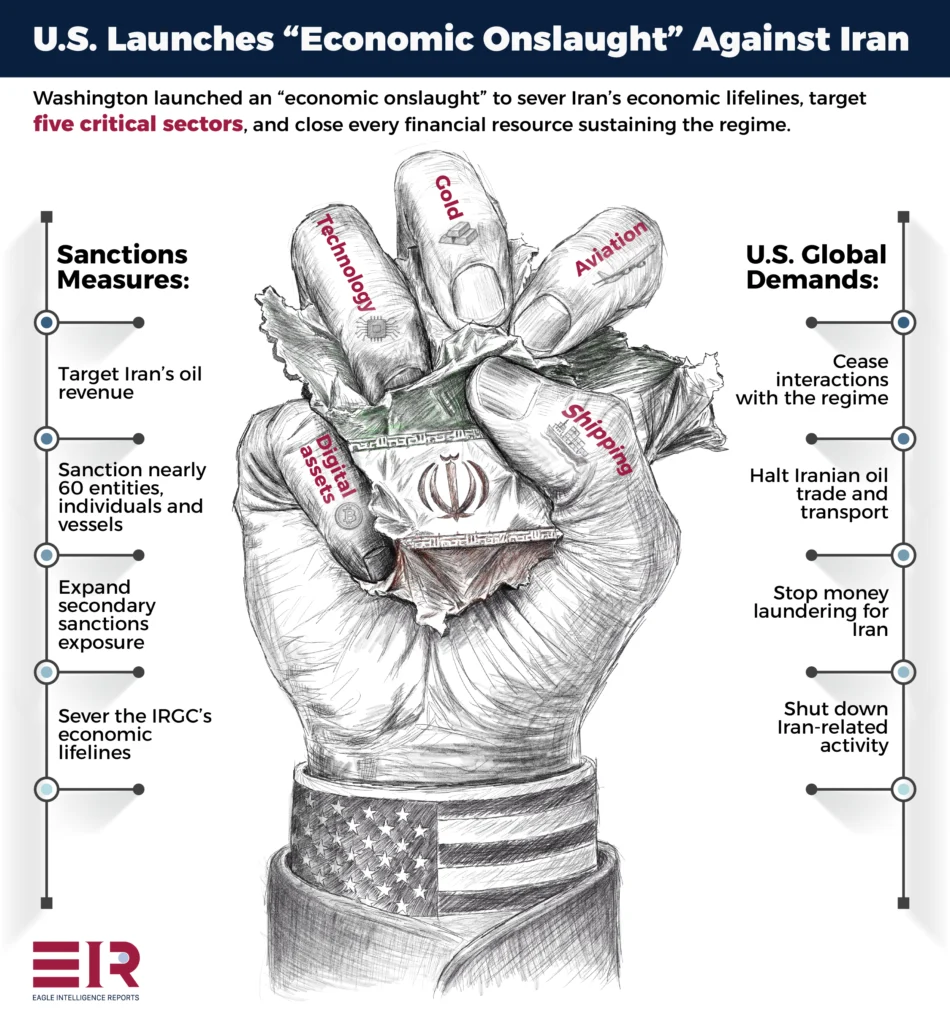

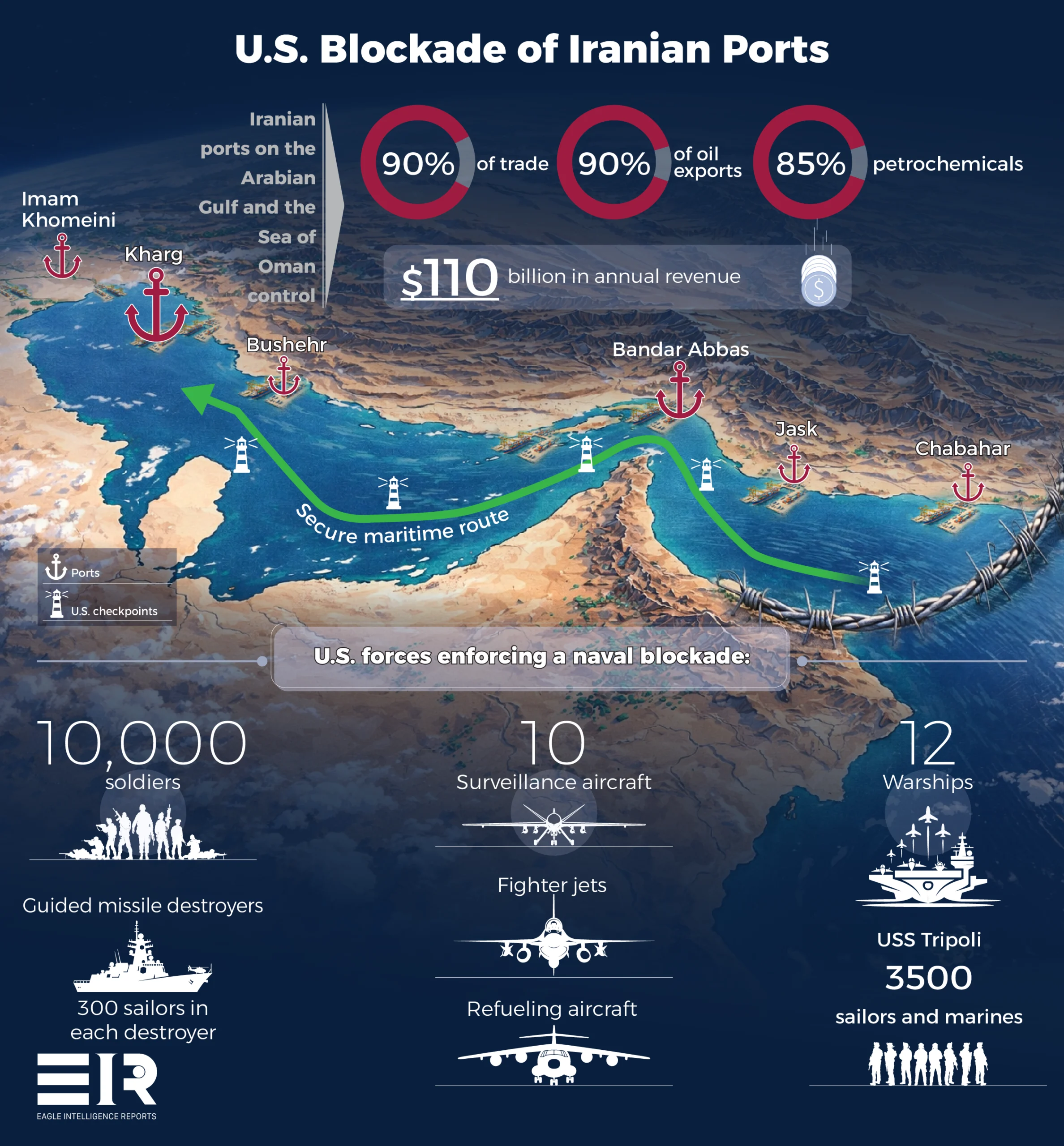
Amid escalating regional tensions, the United States has imposed a comprehensive blockade on Iranian ports overlooking the Arabian Gulf and the Sea of Oman, a move aimed at intensifying pressure on Tehran and pushing it toward accepting American terms for a peace agreement.
This move reflects a notable shift toward a more direct military approach aimed at restoring maritime security in the Strait of Hormuz. It coincides with stern warnings issued by U.S. President Donald Trump, who affirmed that American forces are ready to destroy any hostile vessels attempting to break the blockade, indicating the adoption of stricter rules of engagement.
In this context, the U.S. Central Command announced the establishment of a secure maritime corridor within the strait, equipped with ship inspection points, as part of efforts to ensure safe passage and clear this vital waterway off sea mines. This approach reflects a shift from a policy of containment to imposing direct operational control over one of the world’s most important maritime chokepoints.
These developments are significant given the pivotal role of the Strait of Hormuz in global trade and energy markets. The near-complete halt in maritime traffic there since late February has disrupted vital flows, as approximately 20% of global oil, petroleum products, and liquefied natural gas supplies pass through it, making any escalation in the strait directly impactful on the global economy.