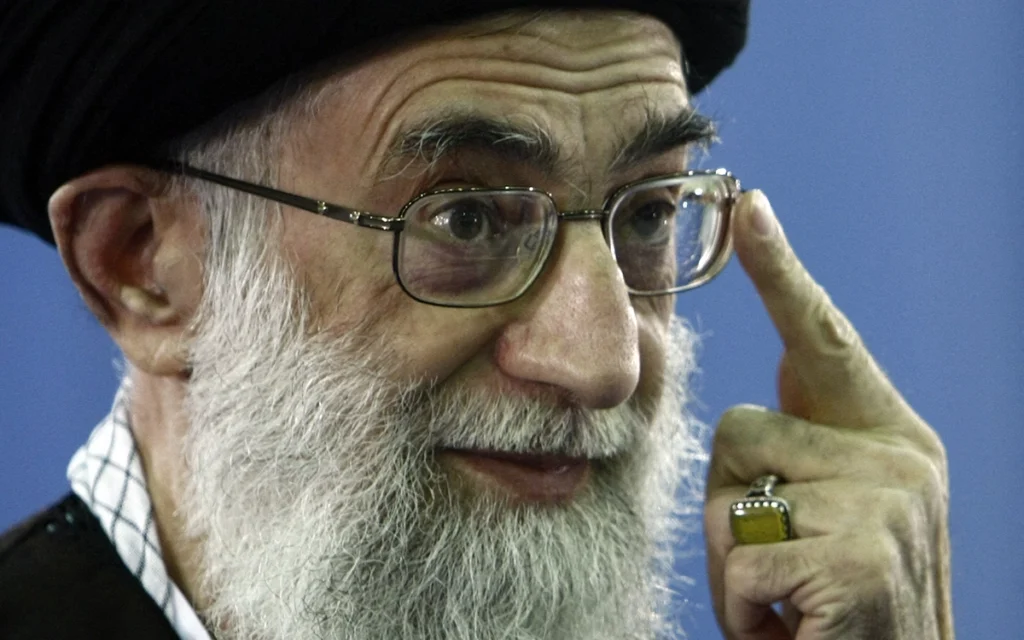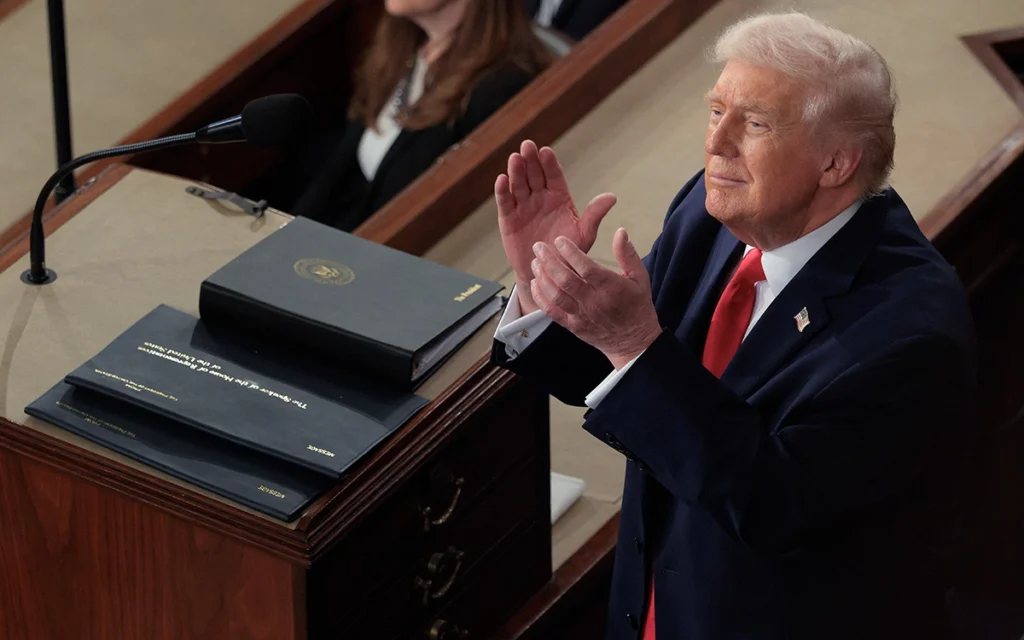


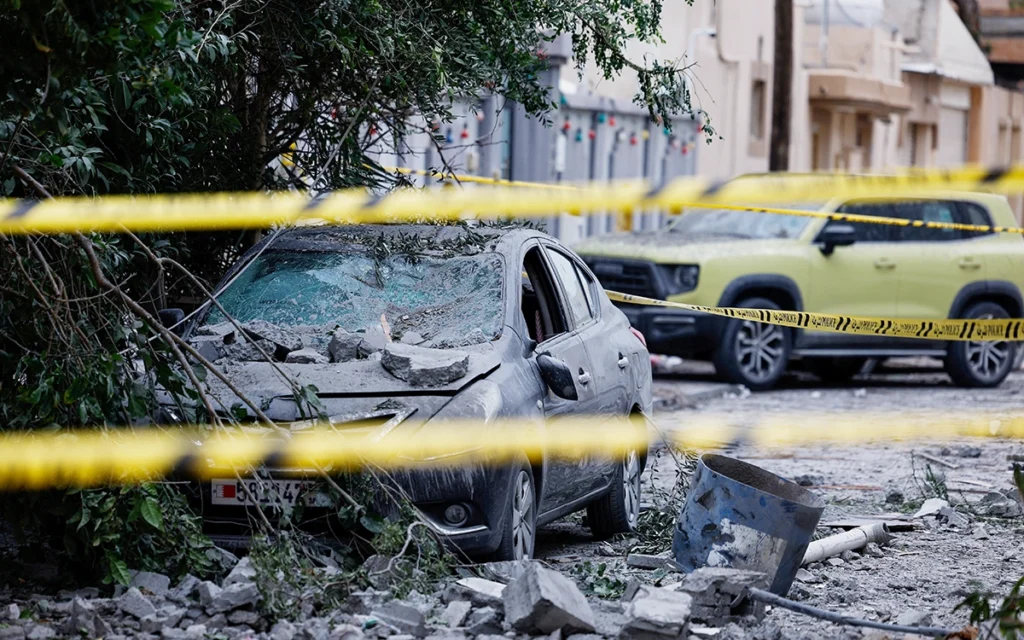
Regardless of how the U.S.–Israeli war on Iran ends, its conclusion is unlikely to produce stability. Instead, it will mark the beginning of a more complex and dangerous phase for the Gulf states—one defined by unresolved threats, volatile wartime objectives, and deep strategic uncertainty. It is a historically unprecedented test for the region.
The dilemma facing the Gulf states is not a simple choice between stability and chaos, but rather between two outcomes, both of which carry significant risks and long-term implications for the regional security architecture.
The dilemma facing the Gulf states is not simple but rather between two outcomes, both of which carry significant risks and long-term implications
The first is a weakened but intact Iranian regime. In this scenario, Tehran has the opportunity to rebuild—likely in a more disciplined, entrenched, and securitized manner—while framing survival as strategic victory and possibly emerging again with more aggressive behavior. The second option is regime collapse without a viable alternative. This scenario could push Iran into a state of internal disorder, the consequences of which would spread across the entire region, particularly given the fragility of the surrounding environment.
If the war ends without eliminating the sources of threat, it will not mean stability but rather the reproduction of risk in a more complex form. An Iran that survives direct confrontation will frame that outcome domestically and externally as evidence of a strategic resilience capable of withstanding attacks from major powers, reinforcing regime confidence, strengthening its appeal among allies and proxies, and encouraging more assertive and confrontational behavior.
Conversely, if the war leads to the fall of the regime, the region would be confronted with a different form of instability. No serious consideration appears to have been given at the outset of the conflict to the challenge presented bythe lack of a viable alternative capable of maintaining order, controlling separatist movements, and preserving state cohesion. Such instability would not be contained within Iran’s borders.
For the Gulf, neither outcome offers resolution—only the continuation of conflict in an altered form, and possibly the beginning of a broader conflict. States positioning themselves as global financial and economic hubs cannot rely on fragile or temporary stability. Capital investment does not respond to the absence of war alone, but to the absence of the probability of its sudden outbreak. Any environment that remains vulnerable to sudden escalation is a deterrent to sustained investment, regardless of a state’s economic strength.
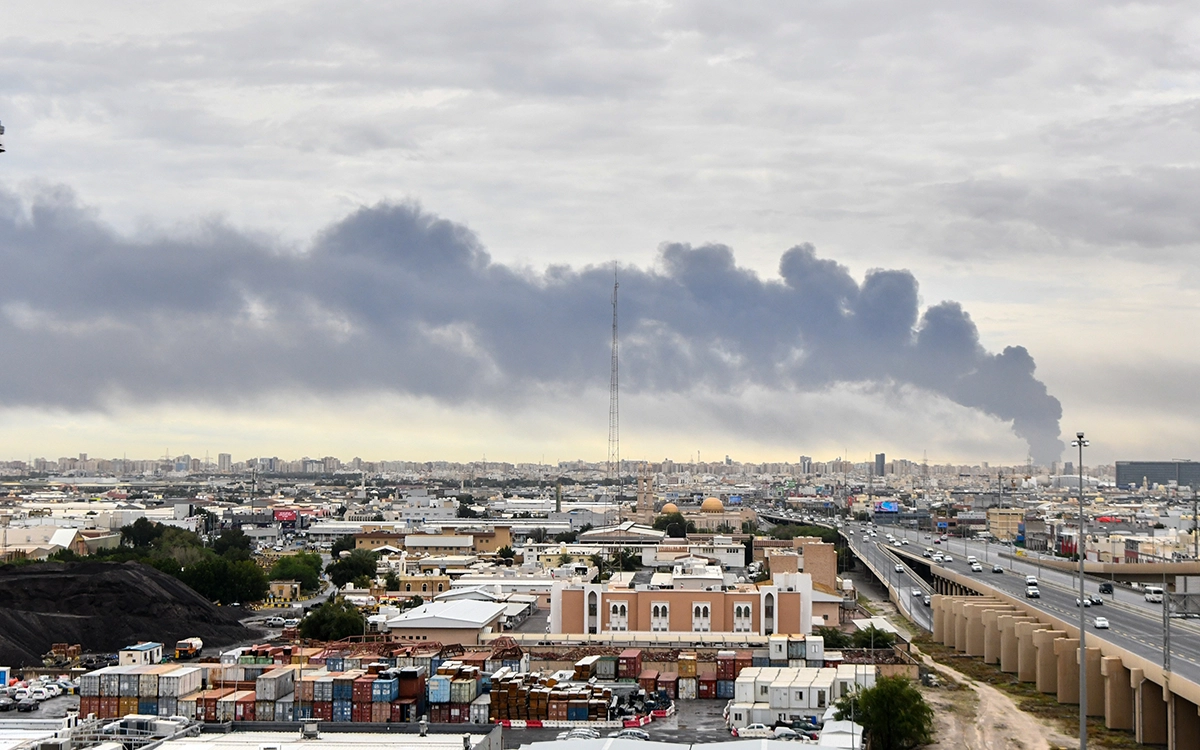
The Strategic Necessity of Collective Initiative
Within this complex landscape, three scenarios can be envisioned for the Gulf’s strategic posture:
The first is passive defensive positioning—monitor the war and wait for its outcomes. While this may appear to minimize short-term costs, it effectively places the future of the Gulf in the hands of external decision-making, exposing it to outcomes that do not reflect its interests and that may undermine its image as a region with strategic agency.
The second scenario is collective initiative. This would require a unified Gulf position capable of exerting real political pressure on Washington to pursue a comprehensive resolution of underlying threats, while simultaneously accelerating the development of a joint defense and security architecture. This approach shifts Gulf states’ posture from reactive adaptation to active shaping of outcomes.
The third scenario is fragmented action, with each state responding individually and independently according to its own calculations. While this may offer short-term flexibility, it opens the door to fragmented solutions and enables external actors to manage Gulf divisions rather than resolving the underlying crisis.
Neither the first nor the third offers a viable exit. Both entrench either inertia or fragmentation—conditions that have already demonstrated their limitations. The second scenario, centered on collective initiative, emerges not merely as an alternative but a strategic necessity imposed by the nature of the threat itself.
From this perspective, the Gulf states are entering a decisive phase in which the need for a unified position becomes evident. They must not merely reject partial fixes but clearly define what constitutes a durable solution. If the war results in a weakened but intact Iranian regime, Gulf states must ensure that key threat vectors are addressed—ballistic missile capabilities, unmanned aerial systems, proxy networks, and regional intervention mechanisms. Ignoring any of these elements risks preserving the threat in altered forms.
The Gulf states are entering a decisive phase in which the need for a unified position becomes evident. They must not merely reject partial fixes but clearly define what constitutes a durable solution
Recalibration in the Age of Uncertainty
If, instead, the war leads to regime collapse, Gulf states must prepare for a new phase of Middle Eastern instability. In this context, they must recognize that the policies which previously shielded them from regional effects of conflicts may no longer be effective. They must also be prepared to address spillover across the Iraqi border and into Syria, both of which already suffer from structural instability.
This leads to a central conclusion: the Gulf states are entering a fundamentally different phase than that which preceded the U.S.–Israeli war on Iran. This requires a profound reckoning with new realities and a recalibration of strategy that elevates defense and security priorities to the forefront of planning.
The transition is complicated by pre-existing internal divisions. Even before the war, Gulf states were marked by a competition for influence that at times undermined collective cohesion and limited the effectiveness of joint positioning.
Coordination, Not Competition
This challenge also reflects a deeper structural issue in Gulf states’ engagement in the broader regional environment. In previous phases, Gulf states relied on certain Arab and regional actors as strategic depth. But this reliance was shaped less by coordinated partnership than by competitive influence-building. This produced asymmetrical relationships in which each Gulf state sought to expand its influence through support or investment in regional actors. Rather than producing cohesive strategic alliances, this dynamic contributed to a pattern in which actors engaged with the Gulf primarily as a source of funding rather than as a genuine partner in security and stability.
With the outbreak of the crisis, these structural weaknesses became evident. Some regional actors positioned themselves as mediators, while others remained passive observers, leaving the Gulf states to confront the consequences largely on their own. In this increasingly complex environment, a unified defense framework is no longer optional—it is a strategic necessity. Confronting either a wounded but intact Iran or the chaos of regime collapse will require a collective and coordinated response, particularly in the defense and security domain. Any vulnerability or weakness in one state would reverberate across the others.
Gulf states must understand that a unified defense architecture is the best guarantee of security; it is not necessarily a framework for resolving political differences. It is possible for states to maintain flexibility in their political divergences as well as differing approaches to regional issues and external relations. Such differences should not be permitted to undermine unity in defense.
It is possible for Gulf states to maintain flexibility in their differing approaches to regional issues and external relations. Such differences should not be permitted to undermine unity in defense
Political Realism and Future Gulf Relations
The shift must also reflect the changing character of conflict. Recent conflicts have revealed the limitations of traditional defense systems, demonstrating that threats are no longer confined to ballistic missiles but now include low-cost unmanned systems, cyber operations, and hybrid attacks that strain traditional defense models. Defense doctrine must be flexible and develop intelligent systems capable of addressing these evolving threats. At the same time, the fragility of arms supply chains has exposed the risks of overdependence on external sources, reinforcing the need to invest in local defense industrial capabilities that ensure continuity even during a crisis.
Politically, the current crisis demands a reassessment of regional engagement—not from the perspective of rupture, but through a lens of political realism. Gulf states must redefine partnerships based on mutual interests and place self-reliance and integration at the core of any future vision for security and stability.
Ultimately, however, the decisive factor is internal: Gulf states must overcome the counterproductive logic of competition. Gulf security cannot be built on internal rivalry over leadership but on a collective recognition that the threat is shared and thus the response must be unified. The question is no longer who leads, but how a genuine collective leadership can be built.
The danger of this war lies not only in its immediate effect, but in its conclusion. Outcomes that preserve the sources of threat do not resolve conflict—they reproduce it in more complex forms. The challenge for the Gulf states is no longer to await the war’s end, but to take the initiative and prepare for what follows. Only a coherent and unified security architecture can provide resilience—and ensure it is ready for the next crisis.
The challenge for the Gulf states is no longer to await the war’s end, but to take the initiative and prepare for what follows