

NATO’s role in the Arctic has undergone a dramatic transformation, shifting from a Norwegian policy of “High North, Low Tension”—designed to promote regional stability and cooperation with Russia after the Cold War—to one of strategic necessity. Yet NATO’s expanding political commitments have outpaced its actual capacity to maneuver and sustain forces in extreme latitudes. This widening readiness gap has created a structural vulnerability that Russia and China are exploiting through joint naval patrols and the development of dual-use Polar Silk Road infrastructure.
Consequently, NATO’s northern flank is no longer a sanctuary but a contested theater in which rhetorical ambitions are consistently challenged by the physical and military-industrial realities of its rivals. Despite the rapid expansion of political commitments—including the accession of Finland and Sweden and initiatives such as Arctic Sentry—NATO’s capacity to maneuver and sustain forces in a high-latitude environment remains inferior. As the Arctic shifts from a peripheral maritime boundary to a central flank of great-power competition, the gap between policy ambition and hardware reality represents a significant vulnerability in NATO’s deterrence posture.
As the Arctic shifts to a central flank of great-power competition, the gap between policy ambition and hardware reality represents a significant vulnerability in NATO’s deterrence posture
The inclusion of seven of the eight Arctic states within NATO creates the appearance of geopolitical dominance. Yet this numerical advantage is undermined by critical shortfalls in icebreaking capacity, cold-weather logistics, and command integration. In Moscow and Beijing, these deficiencies are not viewed as temporary oversights but as exploitable openings to challenge NATO through gray-zone operations that the alliance remains ill-equipped to intercept.
Increasing Russia–China Arctic Partnership
The Arctic has long been treated as an exceptional space—a sea and air corridor linking Europe and the Asia-Pacific where harsh conditions encouraged cooperation over conflict. However, climate change has opened new maritime routes and intensified strategic competition. Russia is expanding its Northern Fleet while China accelerates its Polar Silk Road, declaring itself a “near Arctic state” despite lacking an Arctic coastline. Joint naval patrols near Alaska and growing Sino-Russian military coordination have transformed the High North into an active theater of strategic alignment. For NATO, containing this partnership has become an operational imperative.
The Moscow–Beijing strategic alignment has solidified into a comprehensive partnership that treats the Arctic as a theater for challenging Western influence. What began as joint naval drills have evolved into sustained patrol operations near Alaska. This reflects a functional division of labor—Russia provides sovereign access and military infrastructure while China contributes capital and advanced dual-use technology, filling gaps left by Western firms after Russia’s invasion of Ukraine.
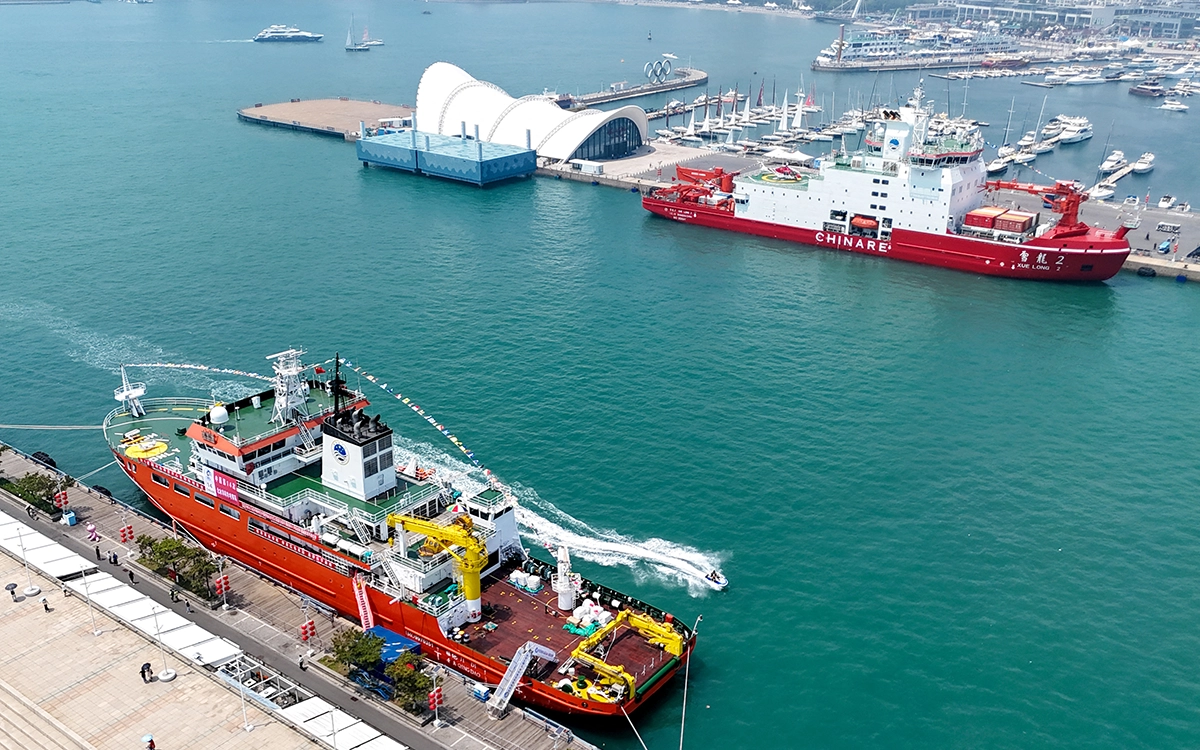
Beijing’s “science-first” posture reinforces this alignment. Research vessels such as the Xue Long 2 and Ji Di conduct critical sub-surface mapping that is essential for naval navigation but masks a latent military capacity. At the same time, Chinese-owned firms have increased their presence in the Russian Arctic by 87 percent between 2020–2021 and 2022–2023, operating there under the guise of establishing the Polar Silk Road. The project is creating new Arctic shipping lanes, ports, and satellite ground stations that could also serve as strategic assets for the People’s Liberation Army Navy near NATO member territories like Svalbard and Greenland.
Russia, for its part, has responded to its conventional military depletion by reinforcing its “Arctic Bastion” defense posture to ensure air dominance over the Northern Sea Route and protect its Kola Peninsula-based strategic nuclear forces. In 2026, Moscow carried out a comprehensive modernization of the Nagurskoye and Rogachevo air bases, extending runways to accommodate the Tu-160 heavy strategic bombers and MiG-31K interceptors capable of carrying the Kinzhal hypersonic missile.
By granting Chinese assets access to these forward-operating bases for logistics and refueling, Moscow has also effectively incorporated Chinese military and economic power along its northern coastline, strengthening joint deterrence against NATO. This alignment aims to impose strategic overstretch on Washington: by threatening the North American homeland via polar trajectories, the quasi-alliance ensures that any U.S. naval surge in the Taiwan Strait or the Baltic Sea would be constrained by the need to defend a vulnerable and under-equipped Alaskan flank.
But this deepening Sino-Russian coordination does more than introduce a new threat; it exploits NATO’s unresolved readiness gap. The alliance remains constrained by fragmented interoperability and the absence of a unified procurement strategy for cold-weather hardware, despite broad political consensus on the Arctic’s importance.
Deepening Sino-Russian coordination does more than introduce a new threat; it exploits NATO’s unresolved readiness gap
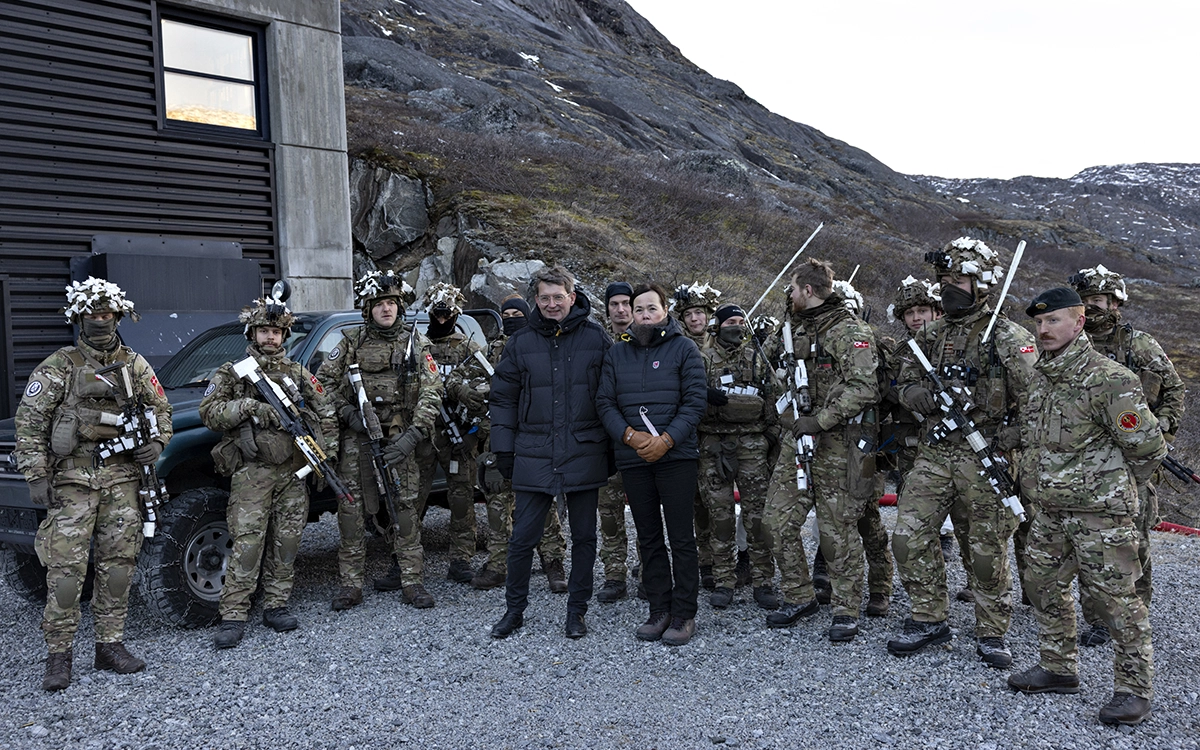
Moreover, NATO’s Arctic posture is not a monolithic front but rather a coalition of unevenly distributed capabilities and divergent national priorities. The United States provides the overarching nuclear shield and satellite surveillance from installations such as Pituffik Space Base in Greenland. But it remains almost entirely dependent on Nordic allies for actual ground-level maneuverability and specialized cold-weather expertise. Finland and Sweden field elite Arctic-ready infantry and advanced sub-surface sensing capabilities, but they lack the naval capacity to project sustained power beyond their immediate coastlines.
The modernization of Russian bases—now accessible to Chinese assets—exposes a critical weakness in NATO’s kill chain geography. An alliance that relies largely on seasonal, fair-weather maritime deployments is insufficient to counter a year-round adversary anchored in hardened infrastructure. In effect, the Sino-Russian alignment exploits the structural lag between NATO’s expansive diplomatic promises and its limited, static, ice-constrained naval operating capacity. It also places increased strain on U.S. force allocation, something that Washington cannot resolve through rhetoric alone.
This imbalance is aggravated by acute intra-alliance friction, particularly the dispute over Greenland that has strained U.S.–Danish relations and exposed a strategic incoherence in NATO’s Arctic strategy. In response, some European allies are pursuing autonomous regional security frameworks like Arctic Sentry to insulate themselves from Washington’s unpredictable shifts. By overstating NATO’s collective strength, the alliance risks ignoring the reality that its northern flank is currently held together by a fragile trust that is being tested by both external adversaries and internal political volatility.
The Icebreaker Gap and Naval Stagnation
The most important vulnerability within NATO’s Arctic operational profile is the icebreaker gap—a deficit that severely curtails power projection and situational maritime domain awareness. Russia, by contrast, currently operates over 40 icebreakers, including formidable nuclear-powered Arktika-class vessels and the even larger, next-generation Project 10510 ships capable of maintaining year-round navigability in challenging polar conditions.
The most important vulnerability within NATO’s Arctic operational profile is the icebreaker gap—a deficit that severely curtails power projection and situational maritime domain awareness
By comparison, the United States Coast Guard—the main operator of U.S. polar surface vessels—currently fields only three icebreakers, two of which are decades old. Although expansion plans include 11 new Arctic Security Cutters starting in 2028 and the Polar Sentinel beginning in 2030, the United States will remain limited in its capacity for prolonged deep-ice operations for the next few years.
Middle-tier Arctic powers face similar constraints. Canada operates 18 icebreakers—the world’s second-largest fleet—but procurement delays will postpone delivery of its first new heavy polar icebreaker until the early 2030s. Norway and Denmark maintain four and seven ice-strengthened vessels, respectively, leaving European Arctic states technologically capable but numerically constrained. This compromises their ability to independently challenge the growing Russian–Chinese icebreaker collaboration in the deep High North.
The severity of this disparity prompted a political response at the highest levels in July 2024, with the signing of the Icebreaker Collaboration Effort Pact between the United States, Canada, and Finland. Although Finland lacks an Arctic coastline, it is a global leader in maritime Arctic technology and has designed around 80 percent of the world’s icebreakers. While this agreement is a necessary step toward pooling vital shipyard expertise and resources, the reality of shipbuilding lead times for these highly specialized, complex vessels means that NATO’s collective capability will remain fundamentally ice-locked—or strategically constrained—for the better part of the next decade.
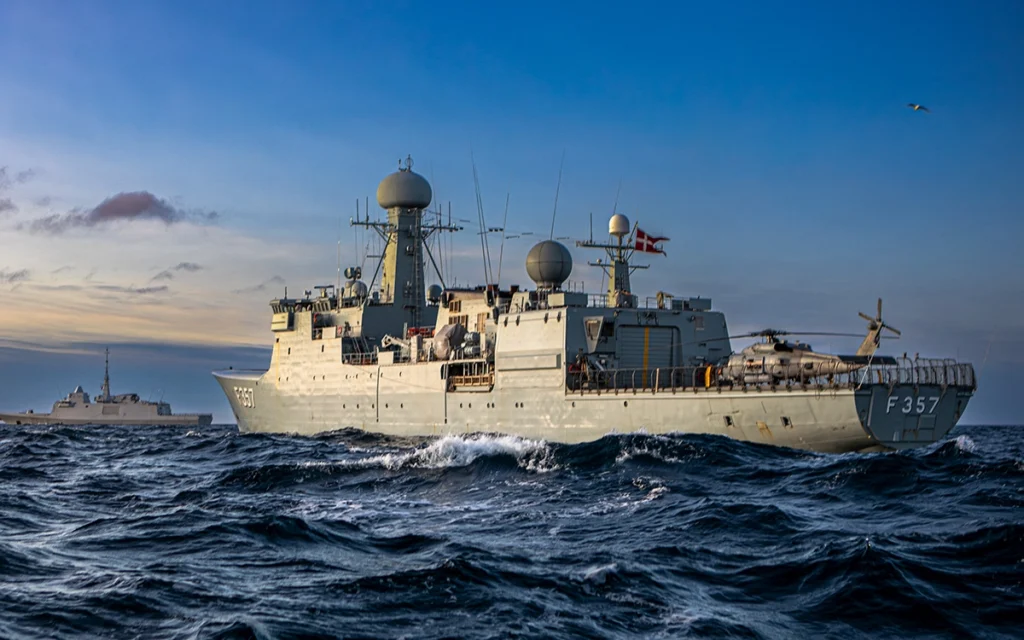
The strategic challenge is compounded by systemic limitations across the broader NATO naval inventory. Most Allied destroyers and frigates—optimized for the temperate waters of the North Atlantic, the Mediterranean, or the Indo-Pacific—lack the ice-strengthened hulls and specialized engineering required for sustained polar deployment. These vessels cannot safely operate in challenging brash ice conditions or prolonged sub-zero temperatures without risking catastrophic damage to the hulls, propulsion systems, and, critically, sensitive sensor arrays and sonar domes.
Consequently, NATO’s Arctic presence remains seasonal and performative. Exercises such as Operation Dynamic Mongoose—an annual anti-submarine warfare and anti-surface warfare exercise conducted during the summer thaw—provide valuable training but do not establish sustained operational endurance. Without year-round deployment capacity, these transient exercises do little to demonstrate the endurance, logistical resilience, and operational reach required for credible deterrence. This conveys a strategic message of limited commitment, effectively ceding relative dominance in the Arctic to Russia.
This disparity grants Moscow a crucial operational advantage. Limited heavy icebreaking capacity constrains NATO’s surface operations largely to the marginal ice zone, areas of less severe and seasonal ice coverage. The deeper High Arctic—north of that boundary—remains a veritable sanctuary for Russian strategic assets. These include ballistic missile submarines operating beneath the Arctic ice, which pose a critical threat to NATO’s nuclear deterrence posture.
The Greenland Crisis and Strategic Distraction
The Trump administration’s attempt to buy Greenland from Denmark was likely caused by Washington’s growing awareness of Russia’s strategic advantage and the extent of Russia–China cooperation in the Arctic. This strained relations and generated friction within NATO, symbolized by Trump’s threat to impose tariffs on European nations that host U.S. troops. Framing Greenland as a strategic minerals hub and a forward defense platform, the administration advanced a more transactional approach to the “Greenland Question,” risking a U.S.–Nordic rift. Although the 2026 Davos speech ruled out the use of force, the annexation rhetoric has damaged U.S. ties with Denmark and the EU.
The administration’s intensified focus on Greenland reflects a broader effort to secure what it describes as “hemispheric defense,” positioning the island as central to the North American shield. This vision, which Trump sees as a revived Monroe Doctrine, frames Greenland as a vital bulwark against the encroachment of Moscow–Beijing naval and air force assets in the Arctic.
The US’s intensified focus on Greenland reflects a broader effort to secure “hemispheric defense,” positioning the island as central to the North American shield
From Washington’s perspective, Russia’s militarization of the Arctic and its expansion of the Northern Fleet represent a direct threat to the Greenland–Iceland–UK (GIUK) gap, the key transit corridor between the Arctic and the North Atlantic. Greenland’s critical mineral reserves are also viewed as a potential flashpoint, raising concerns about increased Chinese or Russian strategic presence in the Western Hemisphere. Although the United States Space Force maintains the Pituffik Space Base in northern Greenland, Washington’s proposals for total sovereign access reflect an effort to strengthen forward positioning and foreclose these maneuvers, ensuring that the Arctic Northwest Passage does not become a contested waterway similar to the South China Sea.
The so-called Davos Framework, reportedly established in January 2026 between Trump and NATO Secretary-General Mark Rutte, represents a pragmatic compromise that trades removal of tariffs on European partners for stronger collective Arctic security commitments. Under this agreement, Greenland would be the core of a trilateral security architecture involving the United States, Denmark, and Greenland’s autonomous government.
This framework converts a transatlantic trade conflict into a collaborative military build-up, securing European commitment to increased Arctic Endurance exercises and deployment of advanced military assets to upgraded Greenlandic airfields. It also secures cooperation on the Golden Dome missile defense system designed to protect U.S. territory from Russian and Chinese threats via the North Pole. Ultimately, the framework reflects Trump’s view that “peace through strength” in the Arctic requires treating Greenland as the northernmost frontline of the American mainland.
Scenario 1—The Success Path
In this scenario, NATO strengthens its northern flank by accelerating procurement between 2026 and 2030, greatly expanding the fleet of modular, ice-capable patrol ships and establishing a permanent multinational Arctic task force in hubs like Tromsø or Keflavík. By pivoting from high-cost, vulnerable surface platforms to a distributed network of A2/AD systems—including the Golden Dome missile defense shield—NATO pursues parity.
The success criterion here is deterrence denial. While Russia may retain superior icebreaking capacity, NATO offsets this imbalance through a technological edge in undersea drone systems and long-range hypersonic interceptors, limiting Russia’s Arctic dominance.
The primary strategic trade-off is the abandonment of Arctic exceptionalism in favor of a sustained militarization of the High North. NATO stands to gain a credible deterrent that secures the North American mainland at the cost of narrowing space for environmental or scientific cooperation. Escalation dynamics would also shift from conventional gray-zone incursions to a high-stakes “New Cold War” posture that extends into the stratosphere, requiring a massive, long-term reallocation of resources from the Indo-Pacific to the Arctic.
Scenario 2—The Failure Path
In this scenario, the operational gap proves insurmountable, prompting a tactical withdrawal under the guise of prudent restraint. Washington and its partners cede physical control of the High Arctic to the Sino-Russian partnership, choosing instead to focus on remote maritime domain awareness via satellites. This path is framed as a strategic pivot to the Indo-Pacific, treating the Arctic as a secondary theater where costs outweigh potential asset value. The failure criterion here is hegemonic atrophy: reduced ability to protect sovereign maritime lanes and allied interests in the face of adversarial presence.
Although this trajectory provides short-term fiscal relief, it risks becoming a potential Suez moment for NATO, which stands to lose credibility as the guarantor of global maritime freedom. If China and Russia successfully establish a monopoly over the Transpolar Sea Route, NATO’s primary mission is fundamentally undermined. The most dangerous consequence is intra-alliance fracture. Nordic and Baltic states assess that they have been deprioritized by a “Washington-first” Arctic policy and pursue independent nuclear development or pragmatic accommodations with Moscow.
While not inevitable, this scenario carries longer-term strategic costs. It narrows NATO’s ability to shape Arctic governance and balance competition in the High North, signaling a potentially perilous retreat from global leadership that adversaries will likely exploit in other theaters.