

The Red Sea is emerging as a second front in a dual-chokepoint crisis driven by the ongoing war in Iran. The Strait of Hormuz is already operating under sustained disruption, placing pressure on a primary corridor of global trade and energy flows. Instability in the Red Sea extends that pressure into a second maritime corridor, linking both into a single operational system. As flexibility in energy and shipping networks narrows and oil prices rise above $115 per barrel, the margin for absorbing shocks without cascading long-term effects is shrinking.
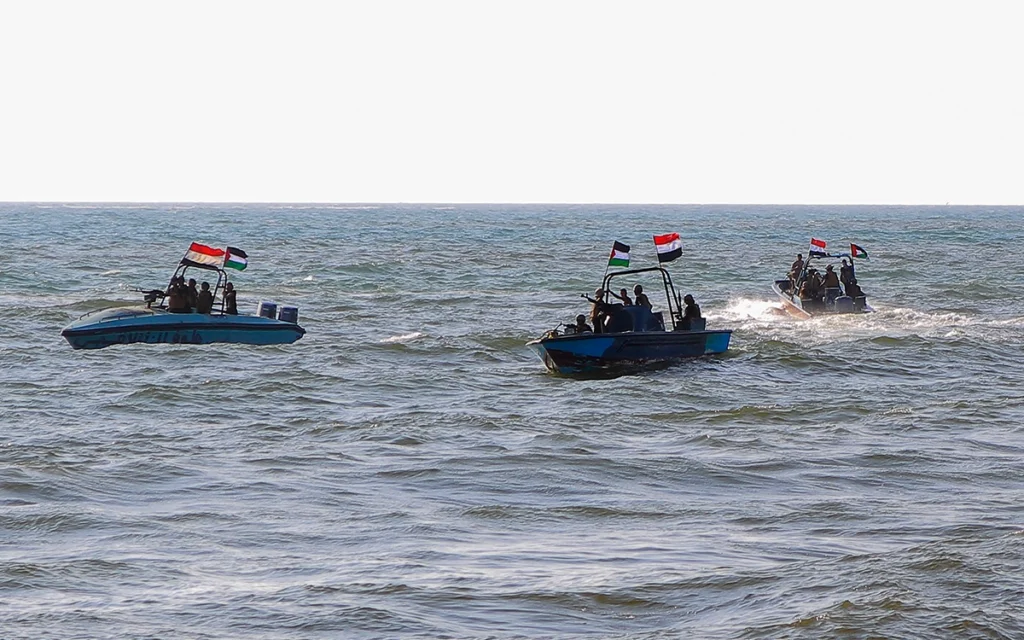
Escalation dynamics suggest that this pressure is no longer confined to the Gulf. Houthi forces have now entered the conflict by launching strikes on Israel. They have signaled readiness to resume maritime attacks as well, which would shift the Red Sea from a potential front into an active escalation pathway. Houthi maritime capability functions as a scalable instrument of pressure, allowing disruption to extend from the Gulf to the Red Sea without requiring direct state-on-state naval confrontation. Recent targeting patterns indicate sustained operational capacity rather than episodic activity, with repeated low-intensity disruption reducing predictability and replacing isolated shocks with cumulative pressure.
As a result, disruption in one chokepoint increasingly transmits stress into the other, impacting commercial rerouting, insurance adjustments, and the security postures of nearby states. The central issue is not whether disruption will occur, but whether it will expand across both chokepoints simultaneously, consolidating the Red Sea as a second pressure point within an already constrained global system increasingly shaped by escalation in the Iran war.
Disruption in one chokepoint (the Strait of Hormuz or Bab-el-Mandeb) increasingly transmits stress into the other, impacting commercial rerouting, insurance adjustments, and the security postures of nearby states
Disruption as Structural Leverage
The Red Sea–Suez axis carries approximately 12 percent of global trade and nearly 30 percent of container traffic, while between six and seven million barrels of oil per day transit Bab el-Mandeb. This concentration leaves the corridor systemically exposed to instability, where even limited operational activity can generate outsized effects. Pressure does not need to be sustained to be effective: targeted attacks and credible threat signals trigger adjustment across shipping and insurance markets before physical flows are interrupted, shifting behavior in anticipation of risk rather than in response to loss.
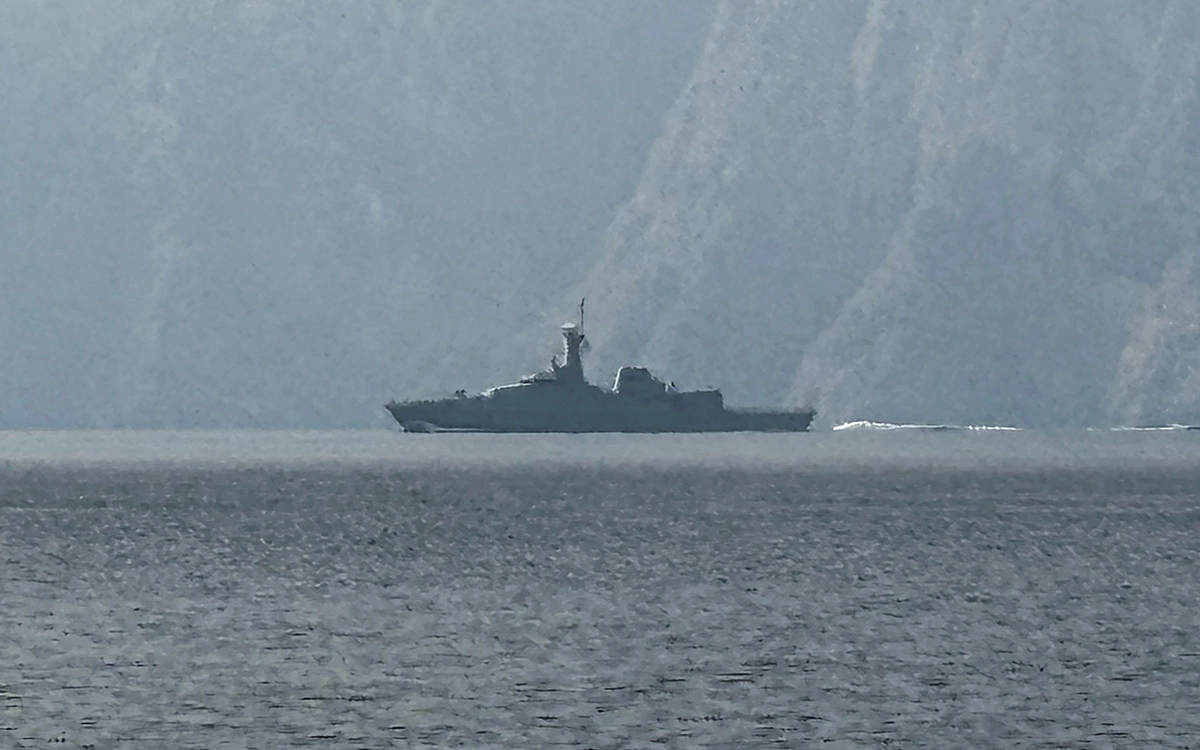
Rerouting around the Cape of Good Hope adds up to 15 days to transit times and roughly 3,500 nautical miles to Asia–Europe routes. As vessels remain in transit longer, effective shipping capacity declines, freight rates rise accordingly—by as much as 50 to 100 percent on key routes during peak disruption periods—while margins compress and cargo prioritization follows. Insurance markets adjust in parallel, with war-risk premiums increasing several-fold and additional surcharges imposed per transit through high-threat zones. As cost and risk converge, the threshold for commercially viable routing rises, shifting traffic away from the corridor.
Such dynamics interact rather than operate in isolation. Shipping delays and insurance costs reinforce one another, amplifying pressure across corridors rather than within a single route. Over time, these adjustments become embedded in commercial planning, reshaping baseline expectations of transit time, cost, and risk. In this sense, the Red Sea functions as a leverage point within the global system, where limited disruption redistributes cost, time, and risk across the entire logistics chain rather than at the point of impact alone.
The Red Sea functions as a leverage point within the global system, where limited disruption redistributes cost, time, and risk across the entire logistics chain rather than at the point of impact alone
The Iran–Houthi Escalation Link
The critical variable is not Houthi capability, but its integration into Iran’s broader strategic escalation framework. Houthi forces have demonstrated sustained strike capability using missiles and drones, enabling disruption to be applied continuously rather than through isolated incidents. In the first phase—between late 2023 and mid-2024—Houthis targeted roughly 70 to 80 commercial vessels, actually striking around 25 to 30 of them, after which incidents have continued intermittently. This pattern reflects operational persistence, indicating that disruption can be sustained rather than episodic.
At present, this activity reflects controlled disruption, but that control remains conditional. The absence of sustained escalation reflects sequencing rather than limitation, with maritime pressure in the Red Sea calibrated to developments in other theaters. In this sense, the Red Sea functions as a scalable extension of the conflict, where disruption can be increased or reduced in line with broader escalation dynamics, transforming the corridor into an instrument of calibrated pressure rather than a fixed operational front.
If activated at scale, that restraint would erode. Targeting would expand toward oil tankers, LNG carriers, and maritime infrastructure, shifting from signaling to direct interference with energy transport. As attack frequency increases, the operational problem shifts from interception to saturation, as defensive systems face growing strain and volume begins to outweigh precision. Under these conditions, naval protection would not be able to scale effectively, and the Red Sea could transition from a managed disruption zone to a contested operational environment in which control is no longer sustained but continuously challenged.
Bab El-Mandeb as a Constraint Multiplier
Bab el-Mandeb functions as a constraint multiplier, converting localized disruption into system-level pressure. Its narrow transit lanes and dense traffic concentration increase exposure while reducing operational flexibility, limiting rerouting options within the corridor. Naval forces can intercept isolated threats, but these systems are not designed for sustained saturation, particularly in multi-vector attack environments where volume, rather than precision, determines outcomes. As attack frequency rises, interception capacity becomes a limiting factor, raising the probability of successful strikes as defensive systems are stretched and shifting outcomes from prevention toward partial mitigation. At the same time, multiple naval forces operate within a confined space, meaning that rising operational density complicates coordination and introduces gaps and delays in response.
Beyond a certain threshold, these constraints become systemic. The corridor cannot be stabilized through escort and interception alone, especially as threat volume exceeds continuous management capacity. Under these conditions, Bab el-Mandeb amplifies escalation by reducing system control as activity intensifies, allowing localized attacks to scale into corridor-wide effects through cumulative pressure.
Bab el-Mandeb amplifies escalation by reducing system control as activity intensifies, allowing localized attacks to scale into corridor-wide effects through cumulative pressure
Dual-Chokepoint Constraint Dynamics
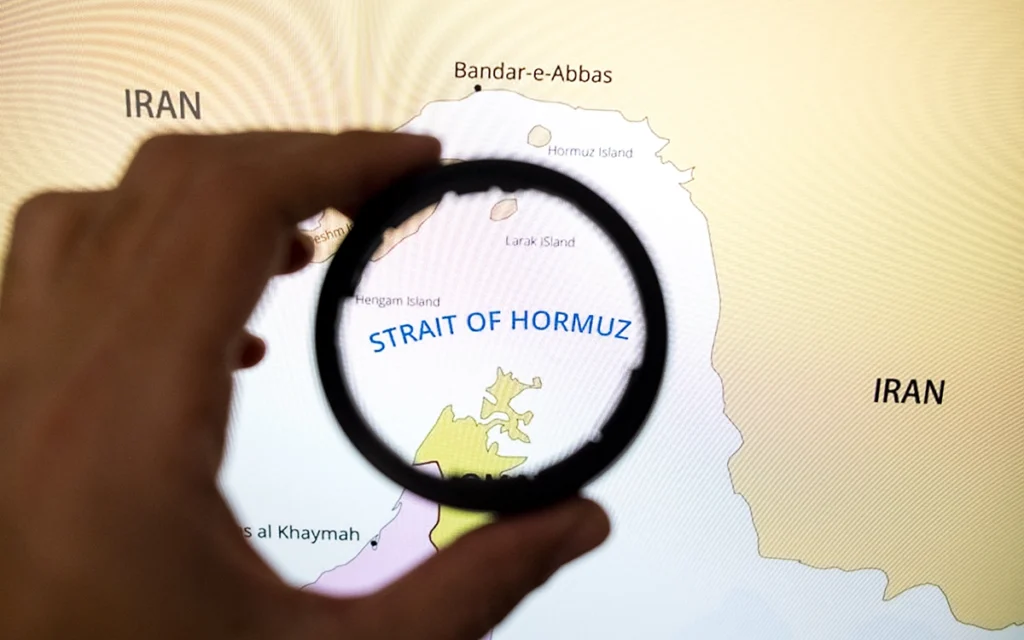
Disruption at Bab el-Mandeb would extend directly into a wider system dynamic shaped by the ongoing war in Iran, which has already placed sustained pressure on the Strait of Hormuz. Together, these corridors form an increasingly integrated operational system, limiting the ability to assess Red Sea instability in isolation. Hormuz alone handles roughly 17 to 20 million barrels of oil per day—close to one-fifth of global consumption—making any disruption immediately consequential. Price effects follow rapidly, with spikes exceeding 10 percent within days of escalation, reflecting limited substitution capacity at this scale.
As pressure extends to the Red Sea, system redundancy diminishes. Energy flows become constrained simultaneously across both primary routes, while redistribution becomes slower, more complex, and more costly. Under these conditions, a dual-chokepoint constraint emerges in which a significant share of global trade and energy flows is exposed to simultaneous disruption, concentrating risk rather than dispersing it.
The effect is multiplicative: stress in one corridor increases sensitivity in the other through both market reaction and physical rerouting limits. Markets cannot stabilize through substitution under conditions of sustained dual-corridor pressure. Instead, the system shifts from balancing flows to managing disruption, while adjustment mechanisms become increasingly limited and efficiency is compromised by crisis-level prioritization.
Escalation Sequence: From Pressure to Constraint
Under current conditions, the crisis is already unfolding as a sequence rather than as a series of isolated events, with each phase emerging from observable adjustments in shipping activity, pricing, and risk behavior. In the initial phase, shipping activity declines and price volatility increases, while core flows remain partially intact. Stress accumulates across the system without immediate breakdown, as markets and logistics networks absorb disruption through rerouting, pricing adjustments, and short-term substitution.
The second phase is characterized by sustained activity in the Red Sea, where pressure becomes interactive rather than localized. Adjustments in one corridor begin to transmit directly into the other, as shipping routes are rerouted simultaneously, insurance costs rise across both corridors, and operational risk becomes embedded across trade networks. This process eliminates the geographic isolation of disruption. System-wide sensitivity increases as redistribution capacity begins to tighten.
The system appears to be moving toward a third phase defined by dual-chokepoint constraint, in which simultaneous pressure exceeds the capacity for rerouting, substitution, and defensive measures to offset disruption. A substantial share of global trade and energy flows becomes restricted, while system redundancy approaches minimal levels. As adjustment mechanisms weaken, rerouting capacity tightens, alternative supply routes prove insufficient, and substitution becomes increasingly limited.
The system does not collapse abruptly. Instead, it persists in degraded form as progressive constraints increase pressure within the system. Flexibility declines with each phase as buffers are progressively exhausted, and markets and supply chains lose the capacity to absorb disruption.
The system does not collapse abruptly. Instead, it persists in degraded form as progressive constraints increase pressure within the system. Flexibility declines with each phase as buffers are progressively exhausted
Economic and Policy Constraints
As the system transitions toward sustained dual-chokepoint constraint, the economic effects of the ongoing Iran conflict are already visible across global energy and trade systems. If instability extends across the Red Sea, pressure spreads across both trade and energy systems, as rerouting reduces effective shipping capacity, increases freight costs, and alters cost structures across industries.
Extended transit times of up to 10 to 15 days reduce fleet availability, creating bottlenecks across key Asia–Europe routes. Logistics networks tighten, scheduling reliability declines, and inventory risk increases, particularly for supply chains in Europe and Asia that depend on predictable delivery of intermediate goods and energy inputs. Insurance markets reinforce these effects, as both corridors are treated as high-risk zones, embedding elevated war-risk premiums into long-term contracts and raising baseline operating costs. Under these conditions, the risk begins to shift from price volatility to commodity availability.
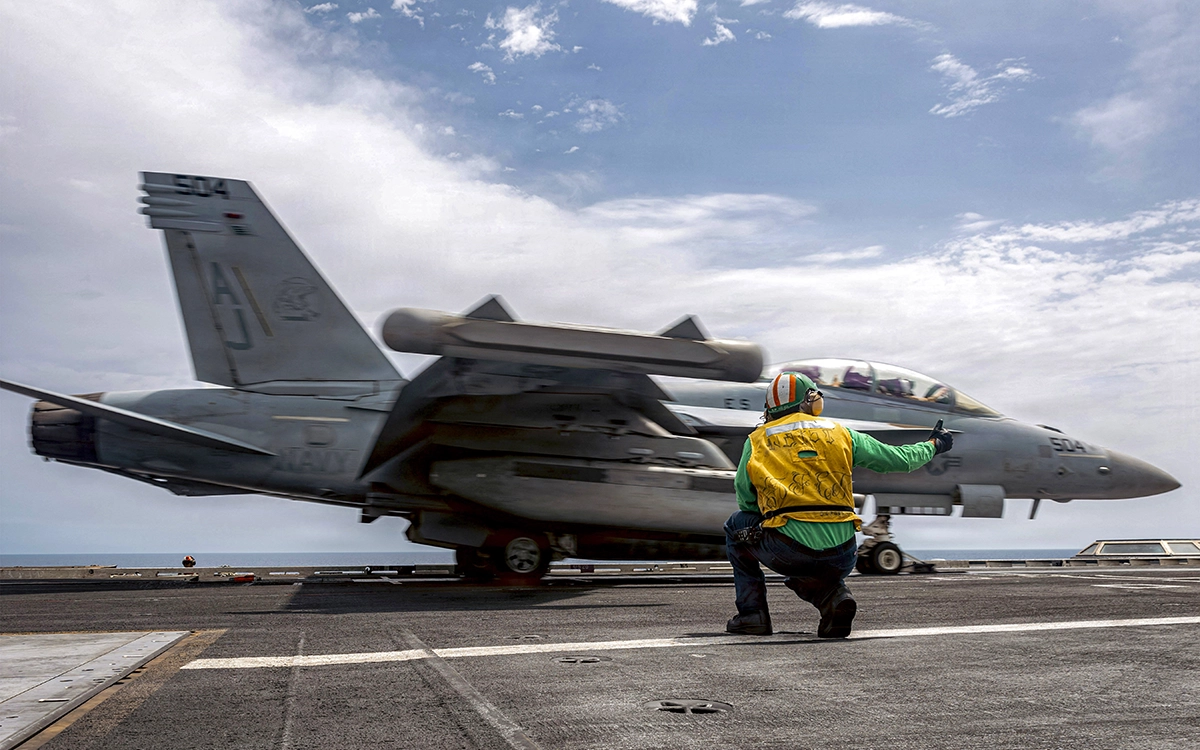
For policymakers, the dilemma is structural. Naval protection mitigates risk but cannot secure both corridors under sustained attack conditions, making asset prioritization unavoidable. Securing maritime routes requires continuous allocation of military resources, while escalation dynamics constrain expansion and increase exposure elsewhere. If baseline conditions cannot be restored, the system remains persistently degraded.
The Red Sea provides a recent precedent for failure under lower-intensity conditions. Between 2023 and 2025, sustained interception efforts did not translate into corridor security. Vessels were lost, and commercial traffic rerouted away from a route that previously carried a substantial share of global trade. Shipping shifted toward longer routes around the Cape of Good Hope. Hormuz presents a larger battlespace against a more capable state military actor.
System Outcome
In this context, the Red Sea functions as the second front of a dual-chokepoint crisis, with its strategic relevance defined by interaction with the already disrupted Strait of Hormuz rather than isolated activity. The central risk lies in escalation through integration: activation of Houthi capability at scale would extend pressure across both corridors simultaneously, linking regional confrontation directly to global trade and energy systems. These dynamics are shaped by the ongoing war in Iran, through which regional escalation increasingly translates into global economic pressure.
The Red Sea functions as the second front of a dual-chokepoint crisis, with its strategic relevance defined by interaction with the already disrupted Strait of Hormuz rather than isolated activity
Localized disruption is creating significant systemic constraints. Pressure across both chokepoints reduces redundancy, increases market sensitivity, and limits the ability of external actors to stabilize flows through substitution or short-term intervention. The outcome is sustained structural pressure across supply chains, energy distribution, and maritime security frameworks, with costs increasing and reliability declining.
The system does not break in a single moment. It tightens progressively as pressure expands across multiple nodes while preserving partial functionality, with efficiency giving way to managed scarcity. The Red Sea remains operational, but not stabilizable. Maritime security depends on continuous management rather than resolution, making persistent resource allocation a requirement rather than a contingency. This tightening defines the current phase of the crisis and is likely to persist as long as escalation dynamics and structural dependencies remain unresolved.
The viability of the current global logistics and energy system is thus increasingly tied to the trajectory of the Iran war. As sustained disruption across both chokepoints limits the capacity for transit stabilization, system normalization may only be possible within a broader de-escalation framework for the conflict.