

The Ukrainian political and military system stands at a critical juncture, as rival factions risk deepening internal divisions.
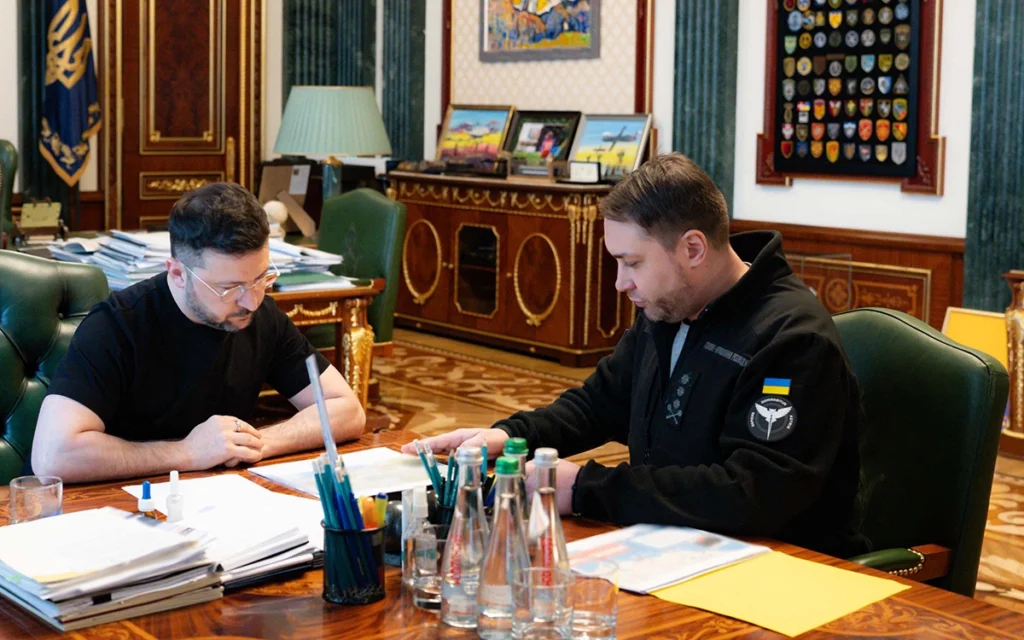
Recent developments suggest that President Volodymyr Zelensky’s January appointment of former military intelligence chief Kyrylo Budanov as chief of staff was not merely an administrative change. Rather, it marked the beginning of a subtle but consequential redistribution of power within Ukraine‘s security and intelligence apparatus.
Parallel Leadership: Signs of Intensifying Strain
Although Oleg Ivashchenko formally succeeded Budanov as head of military intelligence, Budanov—now chief of staff—continues to exert discreet influence over the agency, reportedly without Ivashchenko’s knowledge.
Budanov—now chief of staff—continues to exert discreet influence over the agency, reportedly without Ivashchenko’s knowledge
A source working with the intelligence service, who requested anonymity for fear of repercussions, told Eagle Intelligence Reports that he continues to receive direct instructions from Budanov. According to the source, the agency’s new head remains unaware of the nature and scope of these directives.
This revelation underscores a jarring discord between the recently appointed security leaders and the presidential office. Subsequently, the emergence of parallel channels for orders and operations within the state’s security structure indicates a growing crack in the leadership pyramid.
The source further stated that his team assembles Chinese FPV (first-person view) drones for sale to the Ukrainian military and remains in direct contact with Budanov, as the prior working arrangement has continued unchanged since Ivashchenko assumed office.
This dissonance in the political and military sphere extends beyond administrative ambiguity. It directly affects war management, decision-making timelines, and internal cohesion on the home front at a critical stage in the war against Russia.
Yermak’s Bid to Return
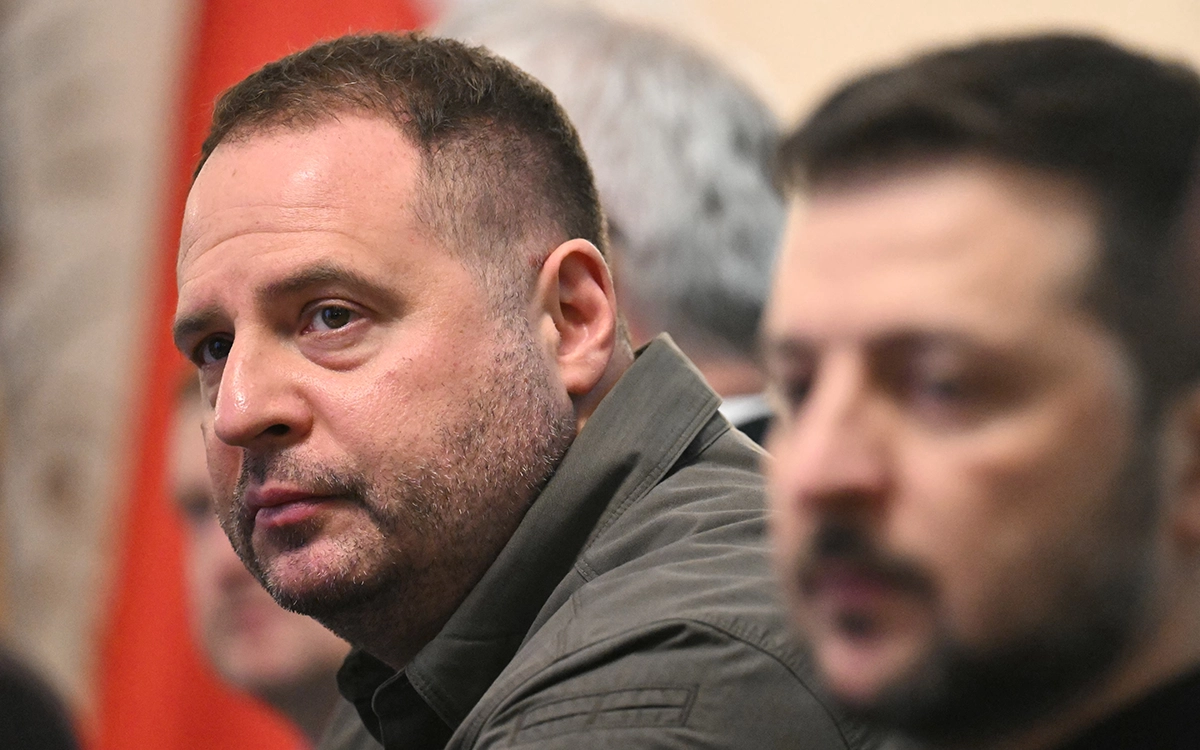
Three Ukrainian sources familiar with the situation in Kyiv said that former presidential chief of staff Andriy Yermak is attempting a political comeback by cultivating ties with key political and security figures, including Ivashchenko, the current head of military intelligence, Oleksandr Poklad, the first deputy head of the Security Service of Ukraine, and Oleksandr Sersky, the commander-in-chief of the Ukrainian armed forces.
Former presidential chief of staff Andriy Yermak is attempting a political comeback by cultivating ties with key political and security figures
Yermak’s move is aimed at counterbalancing Budanov’s growing influence within the decision-making center while also exonerating himself from the corruption charges that forced his resignation and triggered widespread public anger in late 2025. Conversely, Budanov is said to be actively working to accelerate judicial and security investigations into Yermak in order to block his political return.
Sources also confirmed that President Zelensky has moved to effectively restrict Budanov’s authority to avoid excessive concentration of power in the hands of one individual, particularly given the sensitivity of ongoing trilateral negotiations aimed at ending the war and the mounting internal and external pressures surrounding them.
Budanov, 39, led Ukraine’s military intelligence agency from 2020 until his recent appointment. During his tenure, he oversaw multiple covert operations against Russian forces, expanded the scope of intelligence work, and directed special operations aimed at weakening Russian military capabilities beyond the front lines.
Following the appointment, Zelensky wrote on X, “Ukraine needs to focus more on security, the military, and diplomacy,” adding that Budanov “has the experience and strength to achieve results.” Ivashchenko previously led Ukraine’s Foreign Intelligence Service.
Government Corruption
In late November, Ukraine’s National Anti-Corruption Bureau (NABU) uncovered a “criminal nexus” operated by Timur Mindich, Zelensky’s close personal associate, in which about $100 million was laundered offshore through a Kyiv-based “back office” in collusion with key officials and businessmen.
The Midas scandal involved the country’s nuclear energy company Energoatom and resulted in the dismissal of two ministers and Yermak. Former Energy Minister German Galushchenko was arrested while attempting to cross the border in connection with the case.
Oleksandr Abakumov, head of NABU’s detective unit, stated that investigators recovered 527 dossiers containing personal data of investigators, journalists, politicians, officials, and security officers from Mindich’s office. Mindich, now a fugitive, was previously Zelensky’s partner at an art production company founded in 2003.
Today, President Zelensky faces one of the gravest political crises since Russia’s invasion of Ukraine. Anti-corruption reforms remain a priority for the Ukrainian government’s bid for European Union membership, placing additional pressure on the administration.
Observers of Ukrainian affairs increasingly view such developments within Kyiv’s decision-making circles not as isolated rivalries or individual conflicts but as signs of an increasingly fragile war-management structure. The convergence of security, politics, and corruption has emerged as a test of national resolve and institutional cohesion at a moment when the state requires the highest levels of military and political alignment.